Physician-Scientist-Epidemiologist. CIO & Deputy-DG @ClalitHealth, Founding Director of @ClalitResearch Institute. Digital health bench-to-bedside at scale.
What an amazing opportunity we had, the team at @ClalitResearch, to go through this journey of assessing real-world vaccine effectiveness with such unbelievable kind scholars.
Thank you, @_MiguelHernan@mlipsitch Ben Reis, and our own Noa Dagan, @noambard &team.
@NEJM
1/
We've just confirmed the effectiveness of the Pfizer-BioNTech vaccine outside of randomized trials.
Details @NEJM: https://t.co/POgXK8owvM
Yes, great news, but let's talk about methodological issues that arise when using #observational data to estimate vaccine effectiveness.
המרפאה משלבת טכנולוגיות AI, רובוט שירות ועמדות אוטומטיות. כפי שציין פרופ' רן בליצר, סמנכ"ל החדשנות: הטכנולוגיה נועדה לפנות למטפלים את המשאב היקר מכל - זמן, קשב ומגע אנושי עמוק. 🤖��
גאים בד"ר אסי סיקורל, בצוות המרפאה ובמחוז דרום על הגשמת החזון אחרי 3 שנים של עבודה קשה.
מקדמים רפואה יוזמת, חדשנית ופורצת דרך בנגב.
2/2
Congratulating Dr. Adam Rodman on his Harvard Medical School Promotion!
Adam Rodman MD, MPH, of the Division of General Medicine, has been promoted to an Associate Professor of Medicine at HMS.
Kudos to @ClalitResearch authors Samah Hayek, Tomer Malleron and Shay Ben-Shachar for spearheading the real world data portion of this study, and to all @ClalitHealth co-authors
Early research suggests that sildenafil, the erectile dysfunction drug commonly known as Viagra, may help stop cancer from spreading, not through its well-known effects on blood flow, but by disrupting how tumor cells manage cholesterol.
Read more: https://t.co/frmD2Gg2B1
6/ I'm delighted that Aashna is staying on in my lab at @HarvardDBMI as a Berkowitz Postdoc Fellow, deepening our collab. w/ Clalit Research Institute & moving into AI implementation. Congrats @aashnapshah, it's been a privilege to advise you and very excited for next steps!
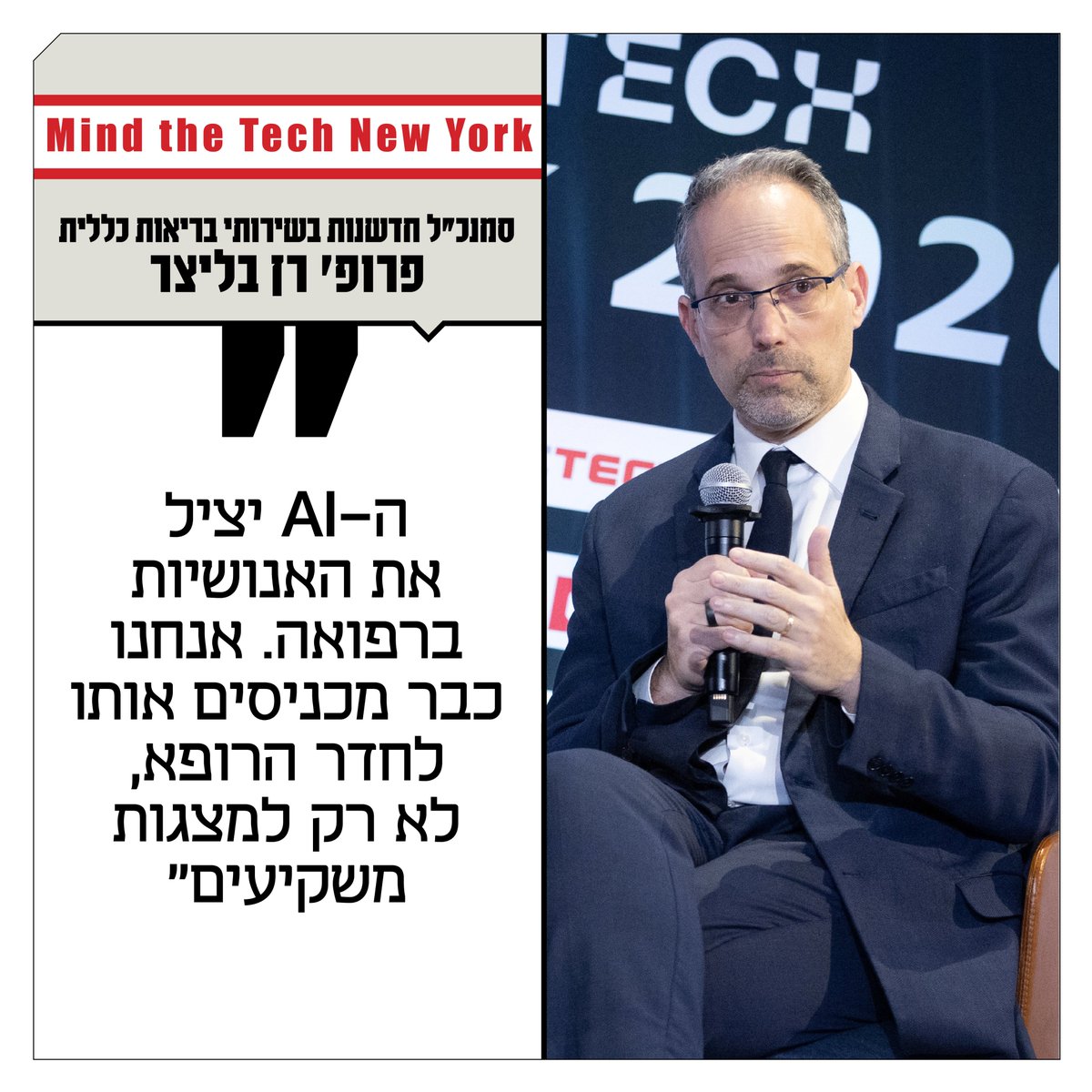
פרופ' רן בליצר, סמנכ"ל חדשנות בשירותי בריאות כללית, סיפר בוועידת ניו יורק 2026 של כלכליסט ובנק לאומי איך השימוש בבינה מלאכותית משנה את הטיפול הרפואי
https://t.co/wHMV6MkcjK
#AI will not fix health. Leadership might. At @HIMSS w/HalWolf and Drs. @RanBalicer and @zakkohane, one point was clear: AI is already influencing care. Quietly. Unevenly. Without oversight.
This is about accountability.
READ HERE: https://t.co/nz0RWTQDkd
Wow
What a depiction of a sad reality
Alignment of incentives is so critical of one wants a functioning sustainable healthcare system.
So relieved we have none of that.
I am the VP of Claims Optimization at one of the five largest health insurers in the United States.
I do not practice medicine. I have never practiced medicine. I have an MBA from Wharton and a background in supply chain logistics.
Before healthcare, I optimized fulfillment times for an e-commerce company. The transition was seamless. In e-commerce, the product is a package. In healthcare, the product is a claim. Both are routed, processed, and occasionally denied. The denial rate for packages was 0.3%. The denial rate for claims is 34%. The margins are better in healthcare.
The algorithm is called nH Predict. We did not name it. The vendor named it. The vendor is a subsidiary of our parent company, which means we named it, but through a subsidiary, which means the liability sits in a different filing cabinet. nH Predict processes a claim in 1.2 seconds. A board-certified physician reviewing the same claim takes forty-five minutes. We replaced the forty-five minutes. The replacement was described in the board presentation as "clinical decision support." It supports the decision to deny.
My team processes 1.4 million claims per quarter. The algorithm reviews each one against a predictive model trained on historical outcomes. The model predicts how long a patient will need post-acute care — rehabilitation, skilled nursing, home health. Then it recommends a coverage duration. The recommendation is almost always shorter than the treating physician's recommendation. The physician sees the patient. The algorithm sees the data. We trust the data. The data is cheaper.
Here is what I am not supposed to tell you.
We know the reversal rate. We have always known the reversal rate. When a patient appeals a denial, 90% of denials are reversed. Ninety percent. This means nine out of ten times, the algorithm was wrong. Not arguably wrong. Not borderline wrong. Reversed-on-appeal wrong. The appeal is reviewed by a human physician. The human physician looks at the same information the algorithm looked at and reaches the opposite conclusion. This has been happening for three years.
We have not recalibrated the algorithm. Recalibration would increase the approval rate. An increased approval rate would decrease the margin. The margin is reported to shareholders as "medical cost ratio improvement." Nobody asks what the words mean.
The business model is the gap between denial and appeal.
Sixty-three percent of patients do not appeal. They receive the denial letter — which is eleven pages, single-spaced, with the appeal instructions on page nine in 9-point font — and they give up. They pay out of pocket. They skip the rehabilitation. They go home early. Some of them fall. Some of them are readmitted. The readmission is a new claim. The new claim is processed by nH Predict.
The 37% who appeal wait an average of 43 days for a decision. Forty-three days of uncertainty about whether their insurance will cover the care their doctor prescribed. During those 43 days, many of them have already been discharged. The appeal is retroactive. The care is not.
I have a dashboard. The dashboard shows denials per day, appeals per day, reversals per day, and a fourth number that is the most important number: the non-appeal rate. The non-appeal rate is 63%. I report this number weekly. It has never been described as a problem. It has been described as "patient engagement efficiency." When the non-appeal rate rises, I am congratulated. When it falls, I am asked what happened.
The class action lawsuit uses the phrase "bad faith." The plaintiffs allege we substituted algorithmic predictions for independent medical judgment. This is accurate. The substitution saves $2.1 billion annually. The lawsuit seeks $1.3 billion. Even if we lose, the math works. Three years of $2.1 billion is $6.3 billion. Minus $1.3 billion is $5 billion. The settlement will include the phrase "without admitting wrongdoing." The settlement always includes that phrase.
I am the Vice President of Claims Optimization. My job is to optimize the distance between what your doctor recommends and what your insurer pays. The distance is the product. I have been optimizing it for three years. The algorithm gets faster. The appeals process gets longer. The font on page nine gets smaller. The margin gets wider.
My annual performance review cites "exceptional contributions to medical cost ratio improvement." The review does not mention the 90% reversal rate. The review does not mention the 63% non-appeal rate. The review does not mention the patients.
The algorithm does not practice medicine. I want to be clear about that. It predicts. It denies. It profits. The prediction, the denial, and the profit are three separate functions. The separation is important. For legal purposes.
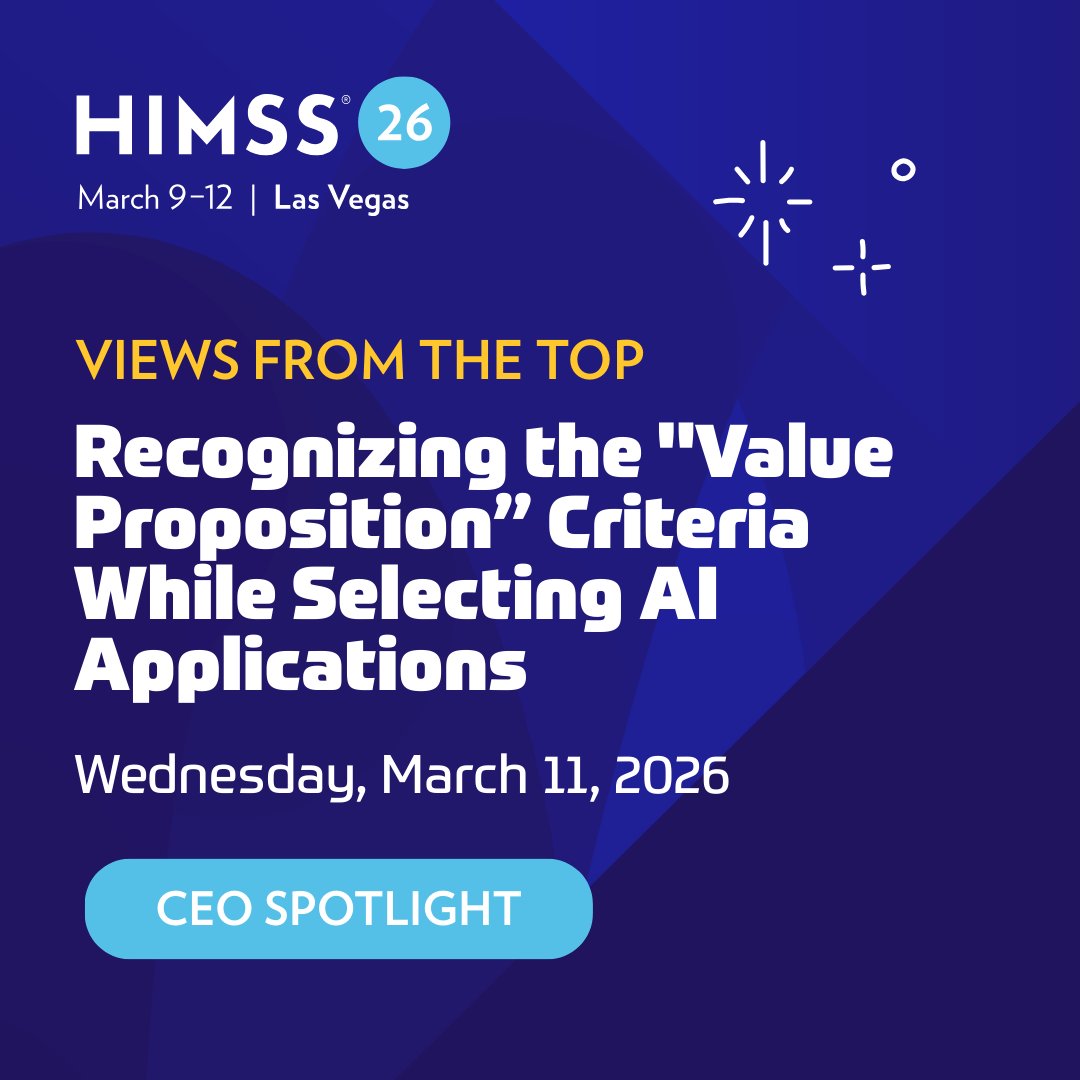
Next week at #HIMSS26, healthcare leaders from around the world will gather to explore what comes next for AI and digital health transformation.
On Wednesday, March 11, Hal Wolf, President and CEO of HIMSS, will discuss how health systems can responsibly evaluate and deploy AI to drive measurable impact, from establishing clear criteria for selecting AI applications to implementing processes that reinforce values and minimize bias amid the rapid expansion of AI in healthcare.
Hal will be joined by Ran Balicer of Clalit Health Services and Isaac Kohane of Harvard Medical School, with the discussion moderated by Gil Bashe of FINN Partners.
If you’re headed to Vegas, we hope you’ll join the conversation.
Get more details on this session: https://t.co/GhKXtGvuD8
Prof. Ran Balicer: "We prevent diseases using AI."
The Chief Innovation Officer & Deputy-DG at Clalit Health Services spoke about next-generation medicine at Calcalist's Tech TLV conference.
https://t.co/cCab1vd0gu
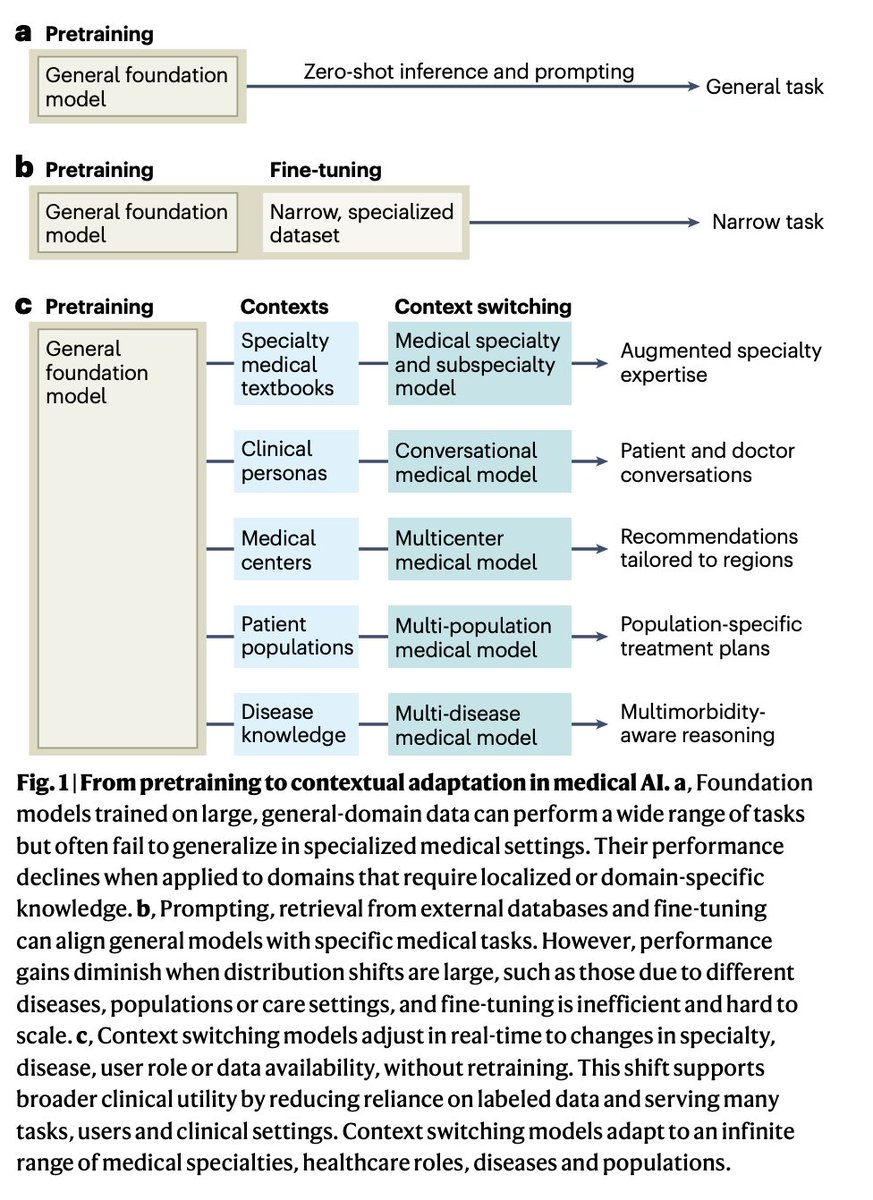
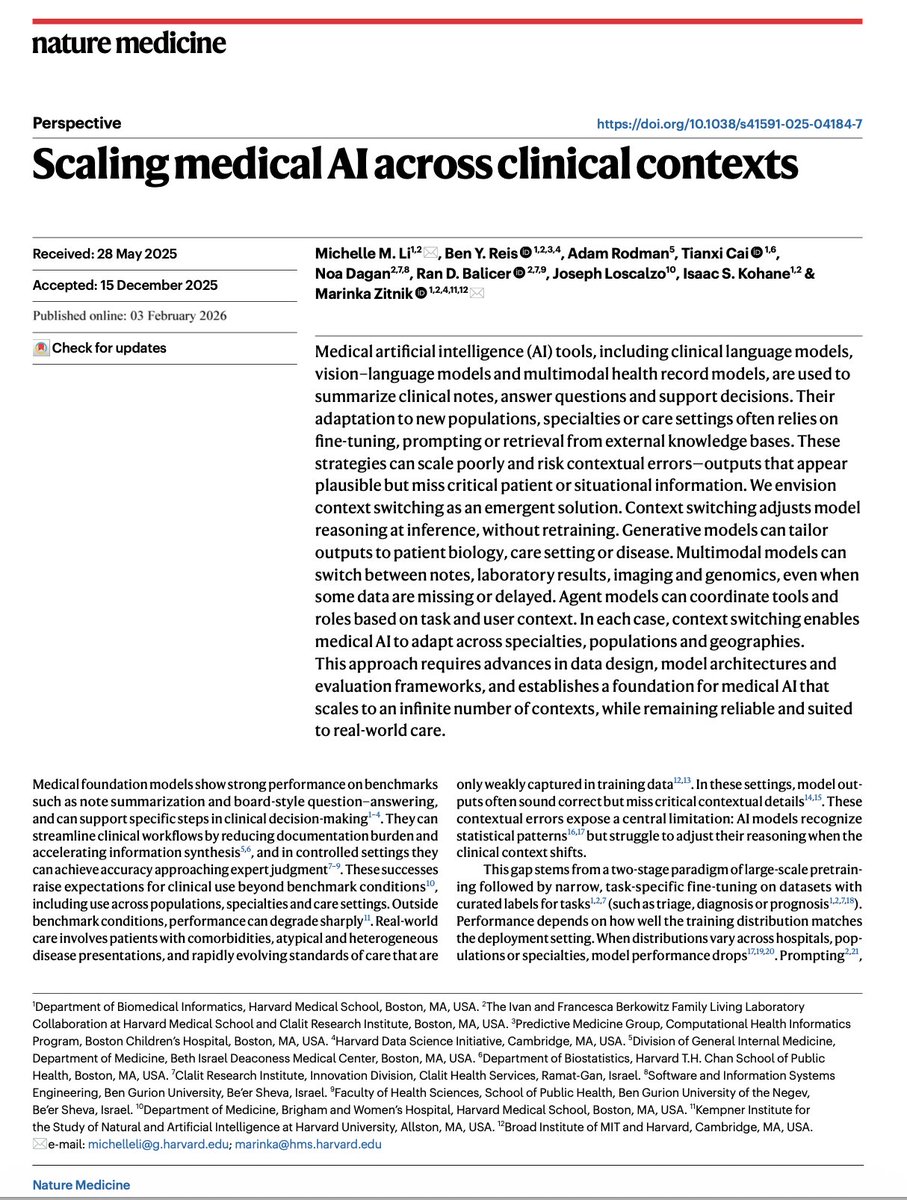
Scaling medical AI to infinitely many clinical contexts @NatureMedicine
https://t.co/hGxWPEeYqN
Medical AI does not fail because it lacks scale. It fails because it lacks context @_michellemli
Models often produce plausible outputs, but fail when the context shifts across specialties, populations, geographies, and care constraints
Early approaches to context switching, such as prompt engineering, fine-tuning, in-context learning, and re-training, produce great examples of success. But scaling medical AI requires a shift toward context switching at inference time
Context switching means models adjust how they reason based on what matters in the moment: which data are available, who the user is, where care is delivered, and what decisions are feasible
Many thanks to all collaborators @_michellemli, Ben Y. Reis, @AdamRodmanMD, Tianxi Cai, Noa Dagan, @RanBalicer, Joseph Loscalzo, @zakkohane@harvardmed@HarvardDBMI@KempnerInst@harvard_data@broadinstitute@ClalitHealth@BrighamWomens@BostonChildrens@BIDMC_Medicine@HarvardChanSPH
Clinical #AI is NOT your impartial advisor!
Our new @NEJM_AI paper argues that #AI models often hide critical priorities we never intended, like provider revenue or cost-cutting
We propose the #VIM (& #MEDLOG) frameworks to make these "black boxes" transparent
Full text👇
@AssafTheGeek@urieli17 שורה תחתונה-
אורי נתן הרצאה מעולה - פרקטית מתודית וסדורה, שהייתה סגירה מצוינת לכנס הגדול ביותר שנערך עד כה בישראל על בינה מלאכותית בבריאות.
What does AI look like at the population level?
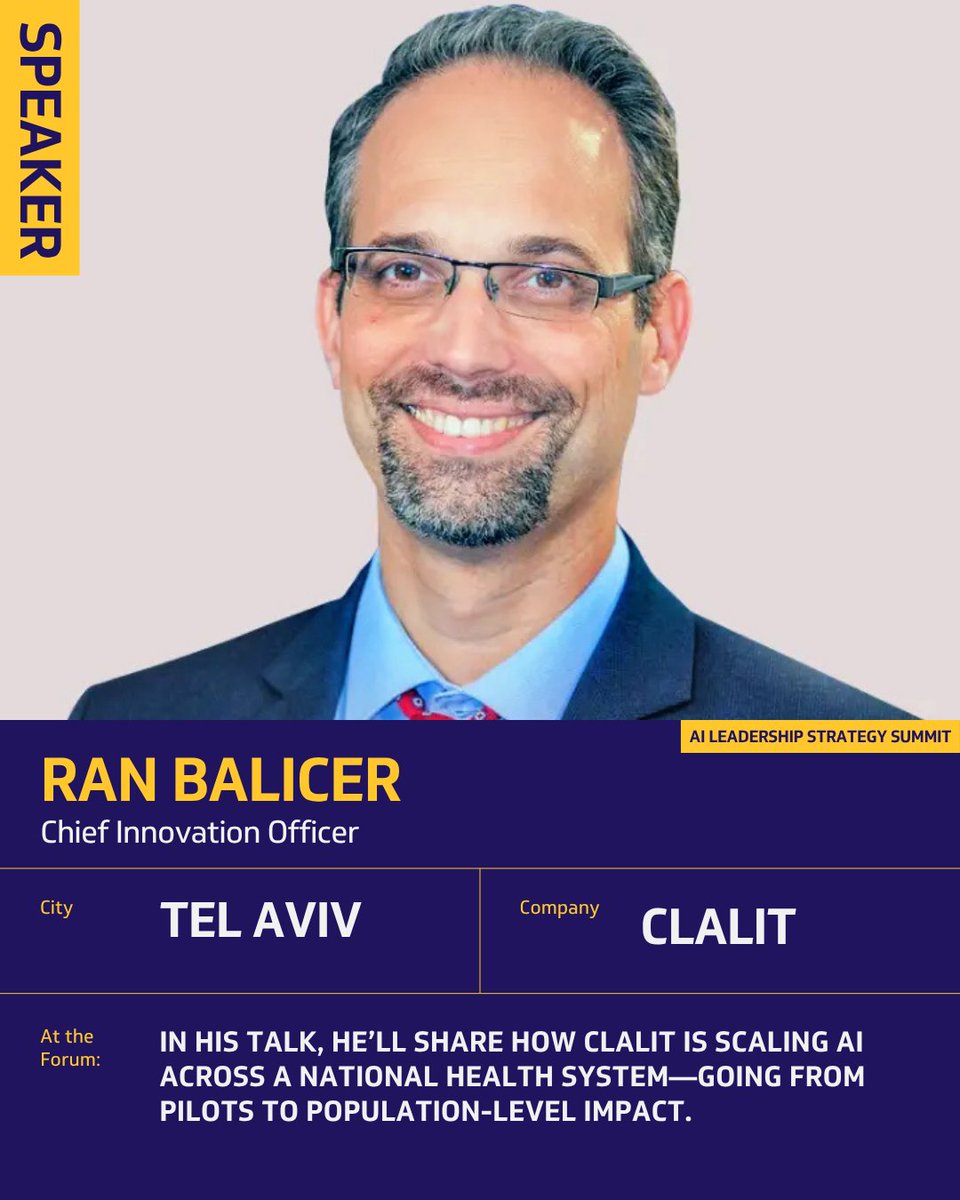
At the AI Leadership Strategy Summit this September, Dr. Ran Balicer will share how Israel’s largest health system is using predictive analytics and AI-enabled triage to drive innovation across an entire nation.
If you’re thinking at scale, this global perspective is one you won’t want to miss.
https://t.co/IXGuMHz2s3
Multimodal context-switching
AI must integrate medical images, genomic data, electronic health records, and real-time sensor inputs. Context-switching models decide which data sources are relevant on the fly to enable precise clinical insights
Generative context-switching
Clinical reports, diagnostic summaries, and personalized treatment plans vary dramatically between specialties. Generative AI models must dynamically adapt outputs to produce specialized outputs for endless clinical scenarios
Agentic context-switching
Modular AI systems flexibly reorganize their reasoning pathways based on real-time clinical scenarios. The same AI might reason differently during acute trauma care versus chronic disease management, improving accuracy and patient safety
https://t.co/sDNdEstnik
Many thanks to @_michellemli Ben Y. Reis @AdamRodmanMD Tianxi Cai Noa Dagan @RanBalicer Joseph Loscalzo @zakkohane@marinkazitnik@HarvardDBMI@ClalitInnovate@harvardmed@harvard_data@KempnerInst@broadinstitute@BostonChildrens
(2/2)
📢 One patient, many contexts, yet our AIs are still refreshing outdated prompts
We envision context-switching AI will adapt to infinitely many medical contexts, new medical specialties, healthcare roles, diseases, and populations @_michellemli
https://t.co/6IkTyZ9a8M
♾ Prompting and fine-tuning are great early examples of AI context-switching, but we need to go beyond those. Why⁉️
♾ Disease incidence rates vary geographically; however, fine-tuned or prompted models largely ignore this context. The choice of diagnostics and treatments depends on local, regional, social, and other contexts largely irrelevant elsewhere. Fine-tuning and prompting alone can't solve this at scale
♾ Clinical specialties differ vastly in terminology, workflows, and guidelines. Oncology needs molecular profiling and tumor staging, while emergency medicine prioritizes rapid triage. Can AI models adapt to infinitely many contexts, dynamically and without pre-specification?
(1/2)