The Slotkin lab is hiring for an exciting project that involves gene editing, transposable elements and plant transformation! Please RT! https://t.co/gfaaxgavee
The Genetics Society Seed Plant Research Meeting is on again!
Where: Durham, UK
When: 8th and 9th of April 2025
Cost: registration £75/£95 for Genetics Society members/non-members, accommodation £58/night
What an year! Excited to share our work on Crosskingdom RNAi in plant-fungus symbiosis @NewPhyt as part of a wonderful collaboration with Prof. Luisa Lanfranco in @unito (more to come!) https://t.co/qof6mycQ8F
Joanne Chory's work on light signaling was an inspiration to me, especially in the early years of my research career. Now her light is gone. Rest in Peace. https://t.co/CHSOqAaB7J
I’ve noticed people leaving Twitter (or X, whatever) again, saying it’s horrible. But Twitter has always been horrible—that's how the 2016 elections happened, long before the current ownership.
It's up to us to shape it into something valuable. For me, that means sharing and learning from stakeholders, promoting our lab and colleagues, and staying connected with quality science. It’s hard to replicate decades of work somewhere else, and who can guarantee those new platforms won’t become just as toxic and filled with misinformation?
My department has two open Asst. Prof searches:
Plant Systems Biology or Biotechnology (https://t.co/uE9UgP21Vg)
and Translational Plant Sciences (https://t.co/paI5g0ugoZ).
Patricia Lang @plantricia shows in @NatureEcoEvo that genetic variants in Arabidopsis' stomata genes have changed in the last 200 years probably lowering stomatal density in leaves, which may be adaptive under climate change since they have more CO2!
https://t.co/OxHKXabaOb
@klsywd@ADSteinbrenner@UW@michelmorelab It's going to be great! UW is awesome and your interests are perfectly aligned with the Steinbrenner lab. Win-win situation.
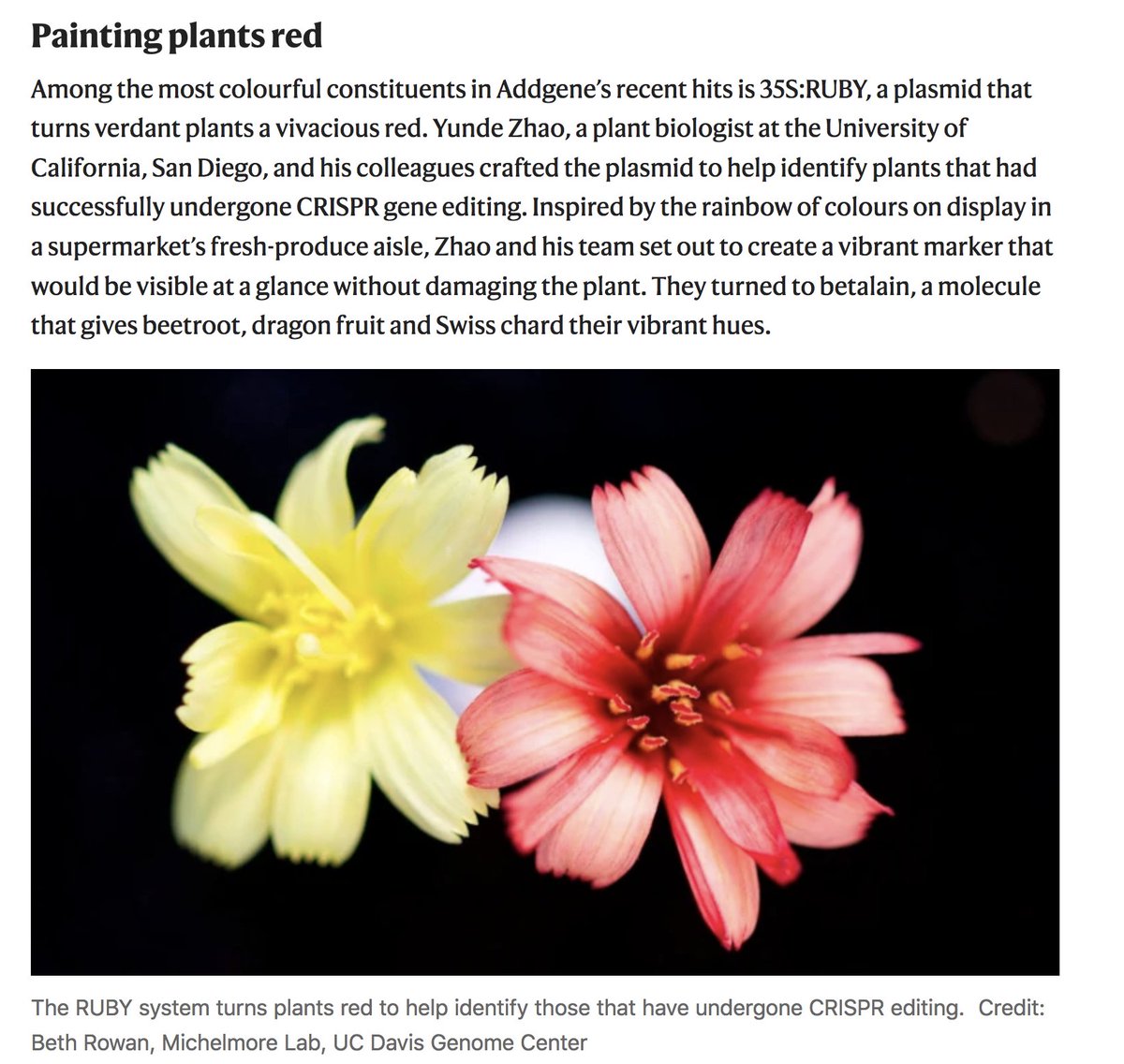
Thanks to both @YundeZhao and @Addgene for making this to available to the community. Both @klsywd and I have a collection of RUBY plasmids that will go into Addgene upon publication, but contact us if you want any of them ahead of publication.
RUBY has been a fantastic tool for us. This image is of lettuce flowers with and without RUBY driven by the lettuce ubiquitin promoter, which was derived from @YundeZhao's 35S::RUBY that we obtained from @Addgene to study transgene expression designs for lettuce.
35S:RUBY, one of the most popular plasmids at Addgene, is featured in @Nature . A great tool for crop engineering, basic research, and teaching of plant genetics. https://t.co/29QbCNLn4T
Revealing real-time 3D in vivo pathogen dynamics in plants by label-free optical coherence tomography https://t.co/sJR58JKw1b . Great collaboration of the @tudelft and @UniUtrecht together with @RijkZwaan. Smart technology to image downy mildew infection in lettuce.
📣 The application deadline for the Plant Physiology Assistant Features Editor program is in two weeks!
If you're a postdoc or late-stage PhD student, consider applying. @PlantPhys
https://t.co/fQXpaniJmG
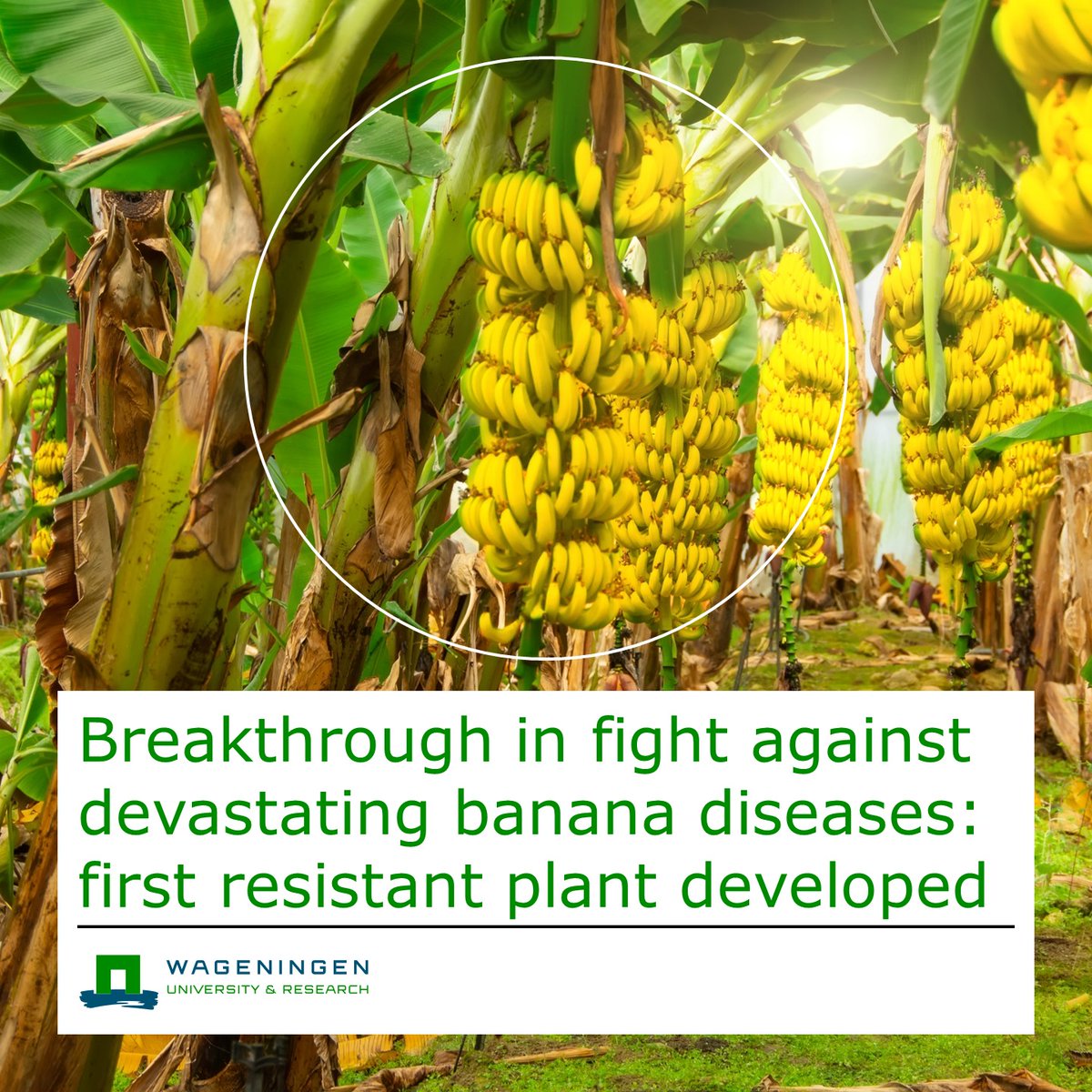
🙌 Breakthrough in the fight against devastating banana diseases: first resistant plant developed 🍌 Professor of #phytopathology Gert Kema: “This is of great importance for the future of banana farming” 👉 https://t.co/yKfbA8vYHE #TR4#blacksigatoka#plantbreeding
Also need to thank my undergrad Zoey Mayo for doing the cloning, @random_roll for assisting and supervising, and Megan Reeves for lettuce transformation. And Richard @michelmorelab for letting us work on this side project. #BlueLettuce
Here’s a comprehensive (48-page) review of DNA extraction methods developed for point-of-need DNA-based testing that could be useful for DNA testing practitioners, students of PCR, fieldwork researchers, and anyone interested in DNA extraction chemistry. 👇
The authors, Lee et al. (2023), review methods suitable for use outside of conventional laboratories, ranging from quick and dirty extractions to affordable and easy-to-use extraction testing devices for mass distribution, such as lab-on-a-chip devices.
They also dive into the chemistry and processes behind each extraction option with referenced examples, comprehensive tables, and some great illustrations of the different methods. So this is a great learning/teaching/lookup reference even if all of your work is lab-based.
Importantly, the authors examine recent DNA extraction methods devices in the context of the World Health Organisation’s REASSURED criteria for point-of-need testing, and assess their usefulness for users within this framework.
You can read the article here:
Lee et al. (2023). Chemical Trends in Sample Preparation for Nucleic Acid Amplification Testing (NAAT): A Review. Biosensors, 13(11), 980.
https://t.co/QXOxpaZdol
Thrilled to share our study @NatureComm, in collaboration with @DenisKutnjak, on the conservation of the molecular interface between plant and viruses!, we contribute the first comparative study including the non-vascular plant Marchantia polymorpha 🧵https://t.co/m7KPWizCDf
A very cool thing about living near the Oregon Coast is that there are local glass artists that hide glass floats on the beach for people to find. This is the one we found yesterday! #FindersKeepersLC