Vision does not only set you in action but set you on a mission to create a solution.
https://t.co/3iwddccpnc a solution SMEs want.
One of the proof that the market exists is that we have 4 in 5 prospects signing up to use Boons.
Hi everyone, Raphael here — Product Leader, Tech Nation endorsed, and someone who has supported many applicants on this same journey.If there’s one document that quietly holds more power than most people realize, it’s the Personal Statement. Not because it’s long, not because it’s formal, but because this is where your story truly begins.
Many applicants rush past it. They think: “It’s just an essay about why I want to come to the UK.”
But in reality, the Personal Statement is your narrative foundation. It shapes how the assessor understands everything else that follows — your documents, your evidence, your letters, your impact.Think of it this way: your Personal Statement is where you begin to carve the story of who you are, what you’ve done, and why you matter.
Not in a loud way. Not in a desperate way.
But in a clear, intentional, and strategic way that says:
“Here’s why I belong in the UK tech ecosystem — and here’s how I will contribute.”
How to Write a Strong Personal Statement (The Strategic Approach)
A good Personal Statement does 3 things:
Establishes your mission
Connects your past impact to your future value
Shows exactly how the UK benefits when you succeed
And yes — it must follow Tech Nation rules:
Why you want to come to the UK
What you plan to do (professionally)
Where you will live
How the UK digital tech sector benefits from your work
But rules alone don’t make it memorable.
What makes it powerful is the story. Your story.
A Good, Strategic, Human Personal Statement Introduction
(Educational sample — do NOT copy. For inspiration only.)
“My name is Samuel and I have always seen the world through the eyes of a designer. Growing up, my family quickly discovered that I had a natural sense of color and balance. At just eleven years old, every morning before an event or a family outing, my parents and siblings would come to me to ask, “Does this outfit go together?” or “What do you think I should wear?” They trusted my taste in colors, patterns, and how things looked together. Without knowing it, I had started my journey into design, not through software or technology yet, but through curiosity, creativity, and an eye for what feels right.”
Years later, that same instinct evolved into a design-led career in digital product development — designing user experiences now used by over 2 million people across Africa and Europe. Today, I’m applying for the UK Global Talent Visa because I see the UK as the ideal ecosystem to expand inclusive product design, collaborate with emerging fintech innovators, and mentor upcoming design leaders through London’s growing UX communities.
I plan to base myself in Manchester, where I will continue leading scalable design work, while also partnering with community hubs and accelerators such as Enterprise City to support product teams building user-centric financial products.
My work has always been about improving how people interact with technology — and in the UK, I intend to scale that impact even further.
(Notice: personal history → industry impact → UK focus → clear contribution)
Under the industry impact you will have your impact, contribution, innovation and recognition.
A “Not Terrible, But Still Weak” Personal Statement
(Looks professional on the surface, but still fails strategically.)
My name is Samuel, and I am a Senior Software Engineer with five years of experience building fintech and SaaS products. I am applying for the UK Global Talent Visa because I believe the UK is the best place for me to grow my career, deepen my expertise, and contribute to a thriving tech ecosystem.
I have worked on several products during my career, including payment systems, internal tools, and customer-facing applications. I have led technical teams, built scalable architecture, and contributed to successful product launches. I believe these experiences make me a strong candidate for the UK tech sector...Continue reading https://t.co/83awZQtmAY
In my opinion: One of the major reasons Tech Nation applicants get rejected is self‑authored evidence.
Over the past few months, one rejection reason keeps appearing again and again, evidence dismissed as self‑authored. When applicants book consultation calls with me, many don’t fully understand what this means. Others feel their evidence was unfairly judged. But the truth is this, in most cases, Tech Nation’s feedback on this is true.
I’m not saying applicants are lying or fabricating documents. Most are not. The real issue is how the evidence is presented and the type of evidence being submitted.
What “self‑authored” really means
People think self authored only means you made it up. But it’s deeper than that.
If your evidence can be easily created by you or anyone else, Tech Nation may treat it as self authored, even if it’s true.
For example:
Dashboard screenshots made from something like a Canva templates
Charts created in Excel self designed visuals showing revenue, users, or growth you manually entered. These things can be created by anyone in minutes. There is no external validation. No third party source. No independent confirmation. Even if your numbers are real, Tech Nation, I believe will begin to doubt. And let’s be honest, mistakes happen when people manually enter numbers into Excel or Canva. That alone, is enough to creates doubt.
What I Believe Tech Nation trusts more
From my experience with successful applicants. Evidence from credible, external, independent sources carries far more weight. Let’s continue with the instance above, instead of using canva template or excel to show earnings, use
1. Payment gateway earnings (Stripe, PayPal, Flutterwave, etc.)
2. Audited financial statements
3. Signed statements of account from a Bank
These sources are harder to fake, harder to manipulate, and easier for Tech Nation to trust. Because it involve people, organisations, platforms they can trust, contact if they need to.
The simple rule to avoid rejection as a result of self authorship
This is one of the simple rule that has helped most of the successful applicants I have guided. If you also want to reduce the risk of your evidence being dismissed, make sure every piece of evidence comes from, or is backed by, a credible platform, organisation, or individual.
If it looks like something you could have created yourself, Tech Nation may treat it as self authored, even if it’s genuine. Your evidence should remove doubt, not create it. Your job is to make Tech Nation’s job easy.
Raphael here! I provide experience‑based guidance for Tech Nation Endorsement (Stage 1) applications, leveraging proven strategies that have helped numerous successful candidates. I am not an immigration lawyer, and my guidance is based solely on practical experience, successful evidence structuring, and real‑world application insights.
Leave your questions in the comments, I’m happy to answer.
All the best.
From my experience guiding Tech Nation application applicants, I’ve come to believe that awards can be incredibly powerful evidence. They validate achievement, show recognition, and highlight meaningful contributions in the tech sector.
But I’ve also noticed something important over the years, about 95% of the awards people show to me when they seek guidance are not credible, acceptable or strategically presented.
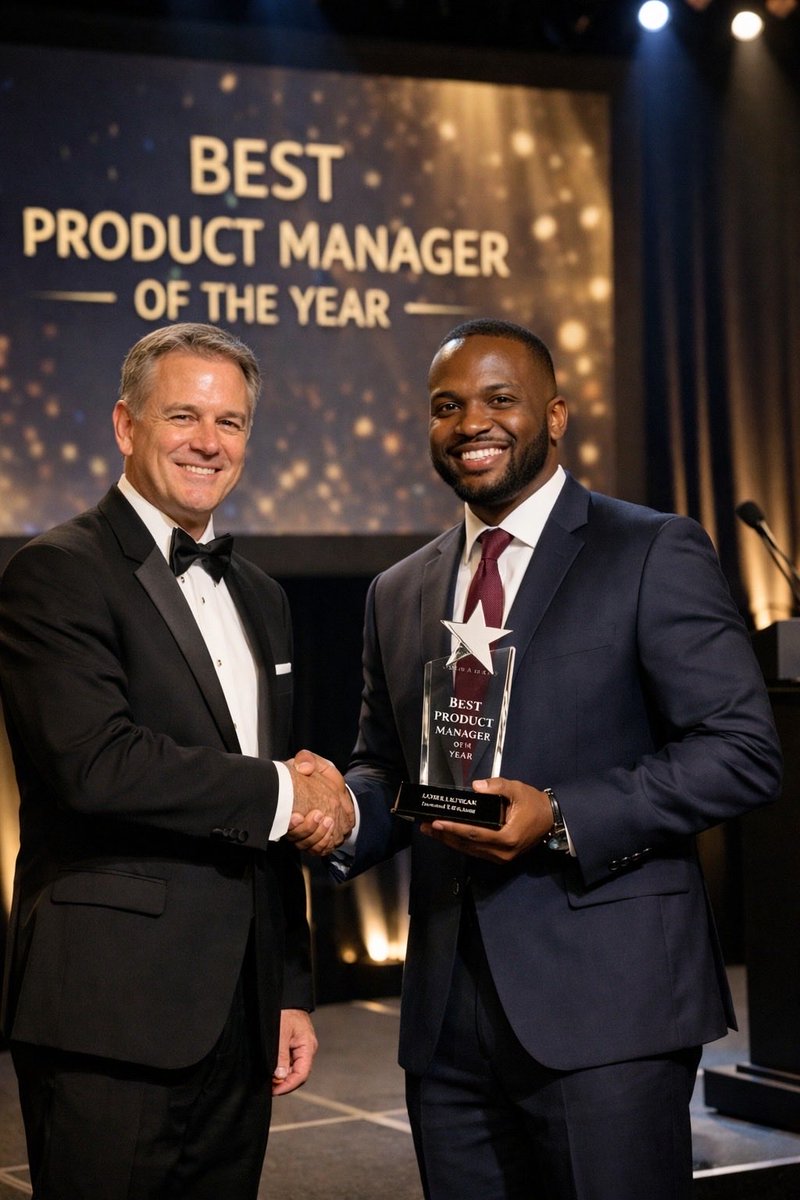
Most awards I see are simply role-based titles like best Product Manager of the Year, outstanding CTO Award, top Tech Leader of the Year. But the first question I always ask is: Best for what? What did you actually do? What achievement led to this recognition?
A role is not an achievement. A title is not impact. An award without context is not evidence. And my simple relatable analogy is Certificates vs Transcripts
I often explain it this way, let’s relate an award to a university certificate. It validates your achievement but when you apply for a master’s programme, the school doesn’t accept the certificate alone. They’re not doubting you, they simply want to see how you earned it, which is why they ask for a transcript.
In the same way, I’ve seen that award evidence is rarely accepted unless you show the achievement behind it. Except for a few awards that are self validating. In my opinion, some awards are so globally recognised and so selective that they almost validate themselves. Awards like Turing Award (the “Nobel Prize of Computing”), IEEE Medal of Honor, Millennium Technology Prize to mention but a few. These are internationally recognised, extremely selective, and tied to groundbreaking technological contributions not job titles or popularity. Kindly note, that this is informational purposes, not a list of what is acceptable.
Over time, I’ve observed that strong awards usually meet three criteria:
1. They come from a credible, recognised body : A body with strict selection criteria and a reputation for excellence.
2. They recognise achievements, not roles : You must show what you built, solved, created, or contributed.
3. They are self‑validating or clearly validated with external evidence : You need to demonstrate exactly what you achieved that led to the award.
One example I always share: In October 2022, the Nigerian Government honoured Paystack co‑founders Shola Akinlade and Ezra Olubi. Not for being CEO and CTO but for
building a successful digital product,
solving a national problem in payments,
advancing technology and finance in Nigeria,
creating jobs and economic impact.
That’s an award rooted in achievement, impact, and sector advancement.
In contrast, most applicants present awards like: Best Product Leader of the Year with no externally validate evidence to show what they did or what they were recognised for.
My summation is that an awards can be excellent evidence but only when they’re presented strategically and backed by real achievements. In my experience, the award itself is not the evidence, the achievement behind it is what matters. An award is a validator that validates that one was recognised for achieving or doing something.
Important Note: I am not an immigration lawyer, and my guidance is based solely on my experience with my own application and successful applicants I have guided, and real world application insights.
Leave your questions in the comments. I’m happy to answer.
All the best.
I’ve been endorsed!!!
It’s Not Over Until You Win — Your Success Story Could Be Next
I believe the fastest way to reach your goal is to walk with someone who’s already been there. That’s why platforms like this https://t.co/irEw5E1n5K exist, to help you learn from others who’ve travelled the same path. Ask questions. Share your drafts. Seek feedback. It’s not weakness, it’s wisdom.
Endorsement isn’t luck, it’s strategy, clarity, and hope working together. Here are five things, from my experience that can increase your chances of Tech Nation endorsement:
1. Understand the criteria deeply — Don’t just rely on examples in the guide or what another applicant submitted. Learn what each criterion really asks for as relative to your narrative, then get or align your evidence to rightly meet the requirements. For instance, MC is not only about speaking in high-profile digital technology sector events, you need to show the recognition element, impacts and reach clearly to rightly meet the requirement for speaking for MC.
2. Strategically present your evidence — Think of your 10 pieces as a story. Strong evidence should come first — psychology tells us first impressions build trust. A balanced structure could be 3–4 evidence sets for the Mandatory Criterion, 3 for the first Optional Criterion, and 3 for the second. But then, your formation should be dependent on the strengths of each, your story and narrative.
3. Choose reputable referees —Letters should be from a reputable experts, who speak from the perspective of those who have oversight over your work and not like a colleague. Also, the letters should be consistent with part of the evidence you present. Not saying you did something with a recommender, that no evidence is presented to show.
4. Craft a powerful personal statement — Personal statement should not just be about your roles, responsibilities and personal achievements but should talk about your impact, contribution, innovation, should be structured around where you are coming from, where you are and what you can do and will do in the UK as a result of your past and present.
5. Stay hopeful — Every endorsement story started with uncertainty. Keep believing. Hope fuels persistence, and persistence gets results.
My thoughts and prayers are with you.
My name is Raphael. I am a Strategic Product Leader, Agile Expert, and Digital Transformation Enthusiast. I provide experience‑based guidance for Tech Nation Endorsement (Stage 1) applications, leveraging proven strategies that have helped numerous successful candidates — including myself — achieve endorsement.
I am not an immigration lawyer, and my guidance is based solely on practical experience, successful evidence structuring, and real‑world application insights. My contributions and insights have supported countless applicants, as reflected in my activity and community support on https://t.co/d1UO5Lksw7
Leave your questions in the comments, I’m happy to answer.
All the best.
I thought you might be interested in this free online course from HP LIFE. To get started, create an HP LIFE account, enroll in this course—or any other course that interests you—and begin your learning journey! https://t.co/mA6sI7qihs
When we are not engaged in thinking about some definite problems, we usually spend about 95 percent of our time thinking about ourselves. That's selfishness if you ask me.