@LibbyHughes24 I think apps like this are so awesome! It helps for people who may be anxious about the stigma of someone going to therapy. They can do the app much more discreetly and still get the help they need.
@JanosFHunyadi I think so too. I also like Gardeners terms of "app enablers" and "app-dependence." It really puts his concept into a perfect perspective. While apps are dangerous to rely on, using them isn't always a bad thing.
@Haleemah0527 @nytimes I agree. They even mention how easy it is to track our unique ID back to our names. There's no point in trying to make it seem less invasive than it is. I don't believe they should have all this information about us either.
PsychExplorer is an app on IOS that allows psych majors to find current news and research relating to their major. It offers relevant information outside of your usual textbook info which connects you to your field. You can build identity by tweeting this relevant information.
@GrothDanielle3 I always sleep with my phone next to me. I think now I will try to move it away from me, because it distracts me at night and makes my sleep worse. Becoming app dependent would make me a less competent person.
App companies will buy and sell personal information, which can be used to push relevant ads for the consumer. Apps will track your location as often as every 20 minutes, and can even discover your unhealthy eating habits, according to a NY Times article.
Being “app-dependent” can make someone incapable of daily tasks, like navigation. They will not be able to make decisions on their own. Do not only use apps for these tedious tasks.
Source: Gardner & Davis, 2014, Are Apps Becoming a Human Crutch?, https://t.co/SEkAoFwEzb
Howard Gardener describes how teenagers of this generation are different than those from 20 years ago. I was surprised to learn that teenagers are now more risk aversive. I also feel like I am attached to my social media “brand” and I’m a different person outside of social media
@Haleemah0527 I definitely agree with you. I feel like the clergy that are afraid of social media are just abusing their power. There is no reason why social media can't be beneficial in a religious sense as well. What do you think will happen to these clergies in the future?
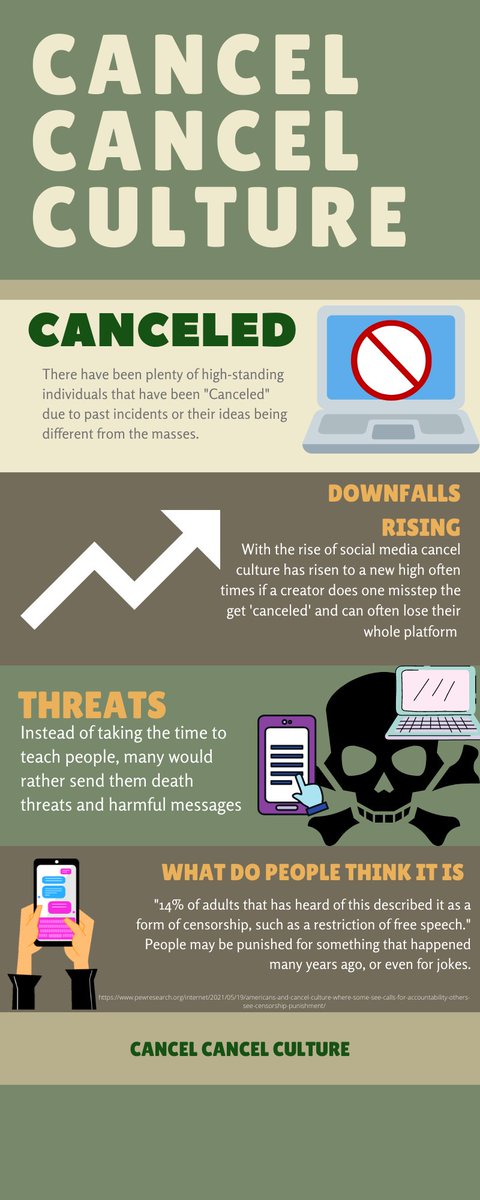
Recently I have been seeing more and more creators being afraid of cancel culture, while some creators don't deserve a platform, I fully believe cancel culture is something we should leave behind.
@JacquelineZafr1 Hi Jacqueline!
I also agreed with Mr. Haidt, his video showcases how our hostile attitude towards opposing views only makes our country more divided. What was something Mr. Haidt said that you could personally relate to?
@TheChristinab4 Hi christina! I also found it interesting that his marketing team shifted the goal from "who can get the most votes" to "we need 270 to win." I feel like an overlooked part of any process is defining your goal. Do you think we can use that step in our digital identity process?
During the COVID-19 pandemic, churches would create Youtube videos to still connect. Also in 2020, religious slogans were used often, specifically praying after the death of a person and for their family during COVID and the protests. It was a way for people to connect.
I learned that religious practices like prayers can be changed on social media. Prayers can be widely shared whether it is a public tragedy or private concern.
I learned that churches used to oppose social media, because they saw it as a distraction, but now they encourage it.
I learned that our digital identity is important even in the religious world. Even church members will look on others’ accounts for personal traits. https://t.co/EqeghlEdzG. #Digital_Identity