Most tech events talk about the future.
Cursor Build Night Accra is where we build it.
This Saturday at Accra Innovation Center:
• Live AI building
• Cursor workflows
• Builders, devs & designers
• Collaboration + shipping energy
Reserve your seat: https://t.co/zLB0DC7tuf
The signal that the NITA bill is sending to the very people who are building the tech ecosystem might end up damaging the very ecosystem it intends to regulate.
Calling developers ‘IT Professionals’ in quotes tells us exactly how much respect you have for the people actually building Ghana’s digital economy. We don’t need your quotation marks. We need you to justify GH¢30,000 fees on people you clearly don’t take seriously. #KILLTheBill
@DevCongress Big foreign companies can survive heavy compliance.
Small Ghanaian startups usually can’t. If regulation becomes too heavy, who are we really protecting?
@DevCongress So if someone graduates with a Computer Science or Software Engineering degree, are they still expected to get certified by NITA before they can legally work as an ICT professional?
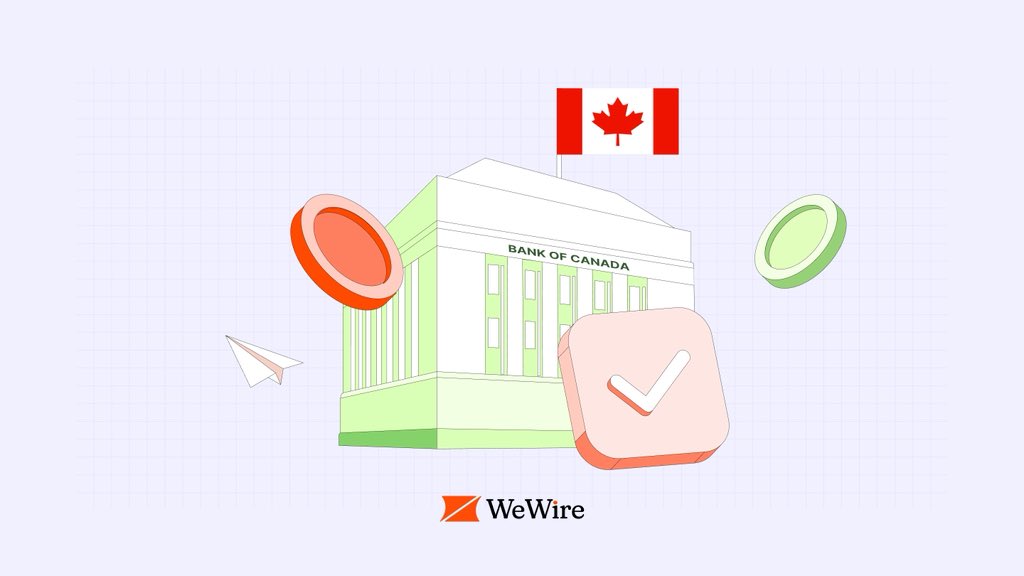
I am thrilled to share that @usewewire has officially been granted a Payment Service Provider (PSP) license, which makes us a registered fintech under the bank of Canada….
Read more: https://t.co/4PZe5nP1BS
Naval Ravikant on why it's 10,000 iterations, not 10,000 hours:
"The only true test of intelligence is if you get what you want out of life. And there are two parts to that: one is getting what you want, so you know how to get it. And the second is wanting the right things, knowing what to want in the first place."
Naval believes most people are proceeding unconsciously through life.
As he puts it:
"If you're not careful you can end up in a place in life not only that you don't want to be, but one that you didn't even mean to get to. Usually, people end up there because they are going on autopilot with societal expectations or people's expectations. Out of guilt or mimetic desire, our desires are picked up from other people."
On how little time we spend deciding:
"We run on these four-year cycles. You go join a startup, you vest your stock over four years. College you go for four years, high school you go for four years. These are very long cycles, the amount of time we spend deciding what to do and who to do it with? Very short. Very, very short."
He continues:
"We spend three months deciding, one month deciding on a job where we're going to be for 10 years or 5 years. People decide frivolously which city to live in and that's going to decide who their friends are, what their jobs are, their opportunity, their weather, their food supply, their air supply, quality of life. It's such an important decision but people spend so little time thinking it through."
His rule:
"I would argue that if you're making a four-year decision, spend a year thinking it through. Like really thinking it. 25% of the time."
On the secretary theorem:
"The optimal time to search is somewhere around a third of the way through. You take the best person you've worked with and try to find someone that good or better. By the time you've got about a third of the way through, you have seen enough that you now have a sense of what the bar is. Then anybody who meets or exceeds that bar is good enough."
But here's the catch:
"It's actually not time-based; it's not based on one-third of the time, it's iteration-based. The number of candidates, the number of shots you took on goal. So you want to have lots and lots of iterations. You need to bail out quickly, and you need to be decisive quickly."
On failed relationships:
"If you go back and you look through failed relationships, probably the biggest regret will be staying in the relationship after you knew it was over. The moment you knew it wasn't going to work out, you should have moved on."
His reframe of Malcolm Gladwell's 10,000 hours:
"I would say it's actually 10,000 iterations to Mastery. It's not actually 10,000; it's some unknown number, but it's about the number of iterations that drives a learning curve. Iteration is not repetition—repetition is doing the same thing over and over. Iteration is modifying it with a learning and then doing another version of it. That's error correction."
On modern society:
"Modern society is far more forgiving of failure. Once you find the one business you're meant to plow into and compound returns, it's okay if you had 50 small failed ventures or 50 small failed job interviews. The number of failures doesn't matter."
His approach:
"You want to be skeptical about specific things—every specific opportunity is probably a fail. But you want to be optimistic in the general. Something in here is going to work out. You want to investigate and explore very, very quickly until you find the match. And then you have to be willing to go all in."
On labels:
"Labels like pessimist, optimist, cynic, introvert, extrovert, these are very self-limiting. Don't define yourself by trauma or PTSD because then you lock it into your identity and you're just going to loop on it. It's better to stay flexible because reality is always changing and you have to be able to adapt to it."
Spend a year deciding. Take 10,000 iterations. Then go all in.
I've released a lot of updates for @rncomponents.
* New UI to view component codes.
* Templates ( new )
* Apps (new)
* Tools ( shadow generator )
and more...
The first thing will be releasing the BASE starter template (everything is ready-to-go from auth to payments).
Haptics in React Native are still pretty limited.
Most options either don’t support full AHAP-style patterns, or they’re constrained to the JS thread.
That’s why we built react-native-tickle.
All attention is on the CSA bill but the Data Harmonization bill by NITA is even more unsettling.
If that too is passed, here is what will happen:
(check comments to read the full bill)
1. One agency gains access to every citizen’s data. NITA will aggregate data from GRA, NHIA, DVLA, Births & Deaths, Passport, telcos, banks, etc. A single national file on each person ie identity, income, health, location, and communication history.
2. No court oversight before access or sharing. NITA can compel any institution to hand over data or connect to its system. There’s no requirement for judicial approval or citizen consent before integration.
3. Political control over all public data. NITA answers directly to the Minister of Communications, not Parliament or an independent board. Whoever controls that ministry controls the country’s entire data infrastructure.
4. End of institutional independence. Agencies like GRA or NHIA lose autonomy over their databases. They must follow NITA’s standards and directives or be sanctioned.
5. Legalised data sharing with private companies. “Data-sharing partnerships” allow NITA to connect private systems (telcos, banks, fintechs) to the government hub. All private-sector data effectively becomes state-accessible.
6. No ownership or deletion rights for citizens. The Bill never states who owns data once harmonised.. You can’t demand correction, deletion, or know how long your data is stored.
7. Cross-linked datasets let the state profile citizens in real time ie our spending habits, movements, political activity.
8. One hack, leak, or insider breach exposes the entire population.
9. Every new digital product that touches public data must first meet NITA’s approval.
10. Once systems are merged and infrastructure centralised, you can’t undo it. Every future government inherits total visibility into our lives.
This is also why the bill is absurd.
Ghana has checks and balances. This bill bypasses them.
The CSA is supposed to be a technical regulator, like the FDA or NCA where it sets standards, audits compliance, and issues licences. That’s fine.
But this new bill goes far beyond regulation.
It gives the CSA the power to:
1. Investigate crimes (law enforcement function)
2. Prosecute cases (judicial/Attorney-General function)
3. Freeze property or accounts before a court rules
4. Force disclosure of private data
5. Conduct searches and seizures
6. Decide who can or cannot offer cybersecurity services
That’s a single agency performing executive, judicial, and regulatory roles all at once no independent oversight in between.
Normally , if the police arrest you, a court must authorise searches, seizures, or freezing orders. Under this Bill, CSA officers can do much of that before court approval. The CSA doesn’t report to the IGP (like police) or Parliament (like EOCO’s budget oversight).
It reports to the Minister of Communications @samgeorgegh, an executive appointee.
That means the executive branch directly controls a law enforcement body that operates in the digital space where dissent, journalism, and innovation live.
It’s like giving the FDA power to arrest, prosecute, freeze your bank account, and search your house just because they regulate food. Or giving the NCA (which manages telecom licences) the power to jail people for tweets.
That’s what this bill does in the digital sector.
Build something great → they call it “critical” → they can walk in, check your systems, copy your data, and fine you if you resist.
That’s not cybersecurity. That’s intimidation.
#ScrapCSABill2025
There’s a part in the new Cybersecurity Bill that could quietly kill Ghana’s start-up culture — and almost nobody is talking about it.
Lemme break it down for you 🧵
@rayganofficial@YawAntwiOwusu@billcobbinah_
There’s nothing that protects your trade secrets or IP in that section. Once they ‘inspect,’ your code is basically exposed. How are founders supposed to build in peace under that?
#ScrapCSABill2025
Bro, imagine you build your own AI or payment system or something that gives you small advantage, and then one day they say it’s “critical.”
Next thing, they can enter your office, copy your code, your data, everything — just give you 7 days’ notice.
No reason sef 😩
Do you know that:
Without a warrant, a cybersecurity officer from the cybersecurity authority can enter and search your workplace? Or even go through your workplace computer?
What does that mean for the confidentiality of work files? Client information, trade secrets?
1. All he needs to do is notify you 7 days in advance that he is coming to search. He doesn't need to tell you what or why he is coming to search.
2. He must just have a reasonable belief that the search is necessary to ensure compliance with the Cyber Security Law.
3. Then, when he arrives on the day of the search, he will inform you of the exact purpose of the search and present his credentials as an authority in cybersecurity.
Cybersecurity is important, but without safeguards, it becomes a tool for surveillance. I might be wrong or taking things out of context but this is what I think after reading the bill.
Let’s fix the bill before it fixes us.
#CyberSecurityBill#Ghana#PrivacyMatters
There’s a part in the new Cybersecurity Bill that could quietly kill Ghana’s start-up culture — and almost nobody is talking about it.
Lemme break it down for you 🧵
@rayganofficial@YawAntwiOwusu@billcobbinah_
Ghana is a democracy. We have the right to security and privacy.
If cybersecurity laws give the government unchecked access to our data, then we’ve crossed into something else entirely.