A salute to flydubai’s brave Indian pilot, Captain Smit Machchhar. Stabbed and wounded, yet he stood his ground. With the courage of "Arjuna" in the face of danger and the resolve of "Hanuman" when duty called, he fought back, opened the cockpit door, and gave the passengers and crew the chance to prevent disaster. He helped save 174 lives.
Tonight, from the UAE to India to Israel, people are united in gratitude, wishing Captain Machchhar a swift and full recovery.
A hero to his passengers, to aviation, and to people everywhere.
Salute, Captain.
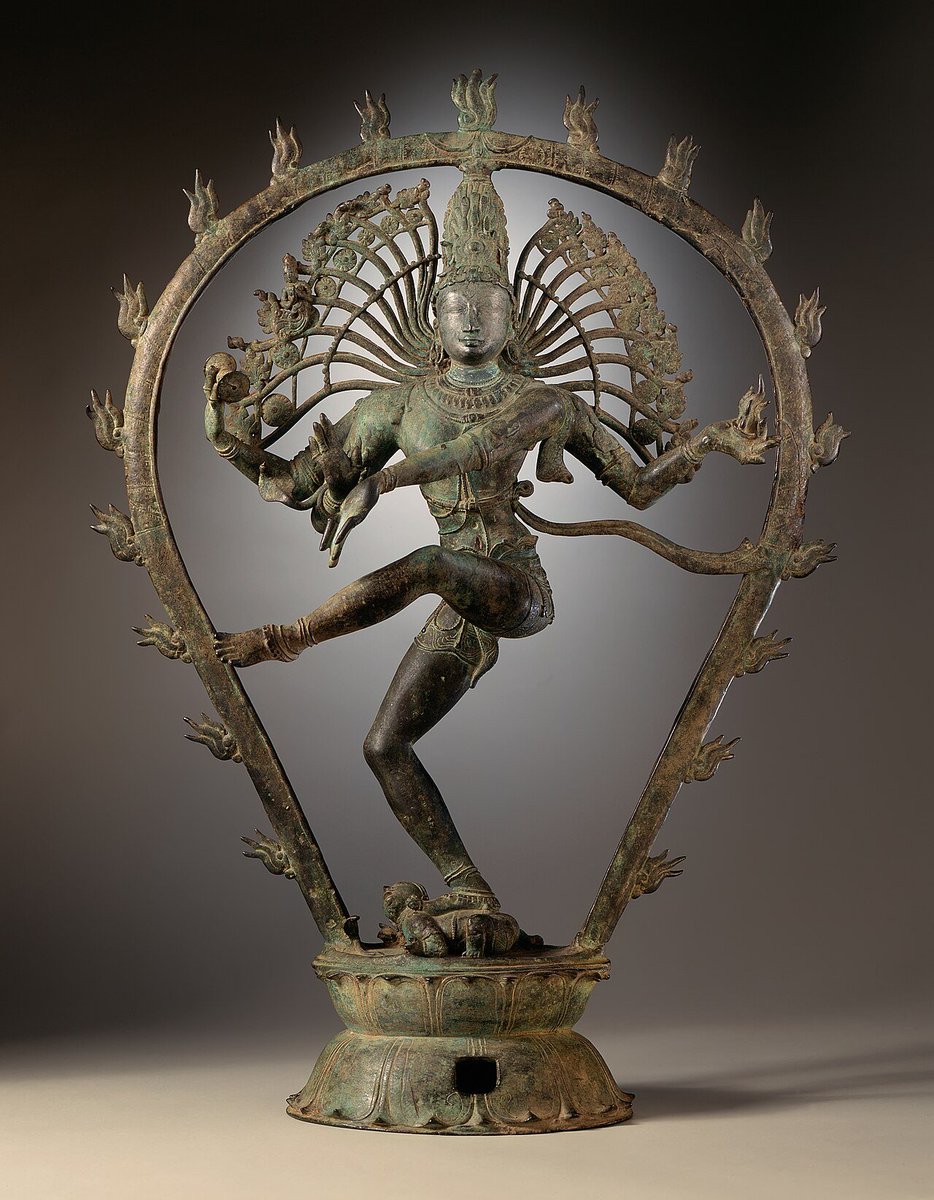
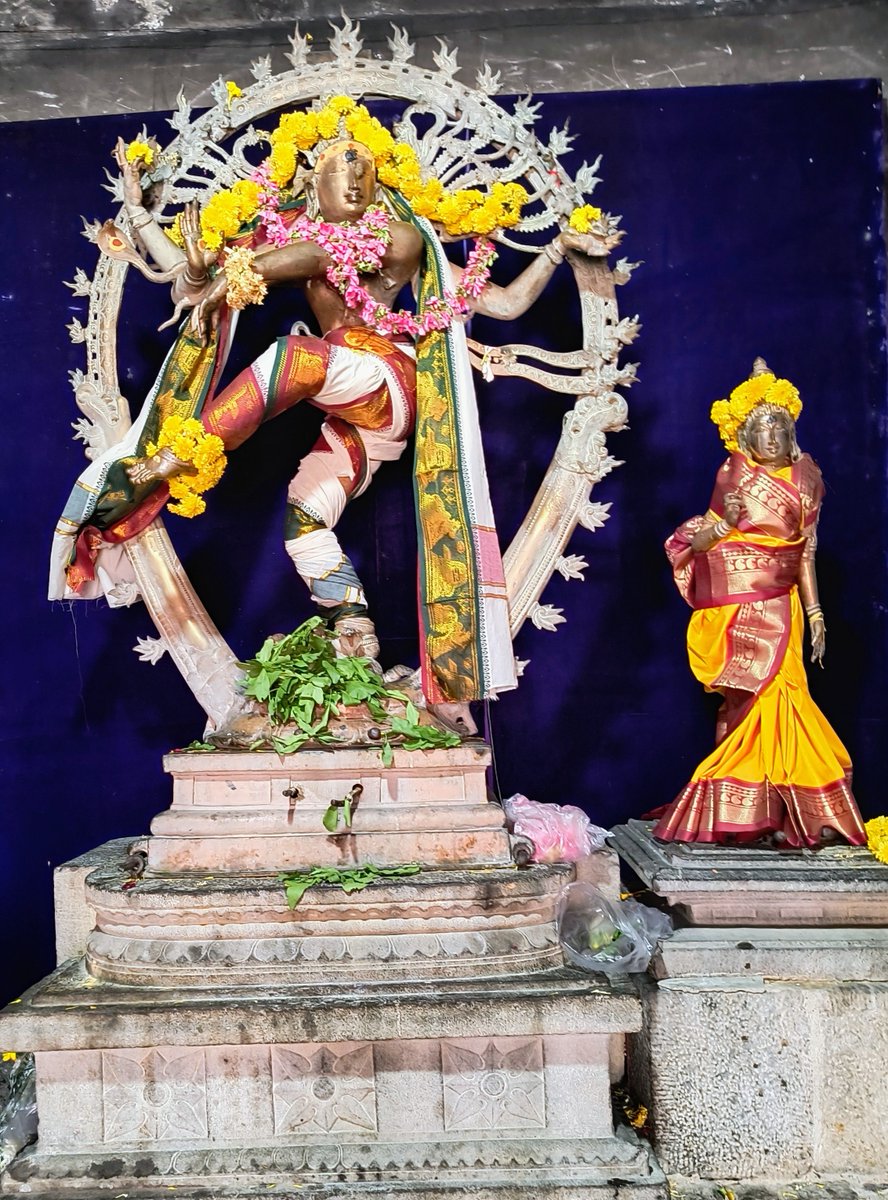
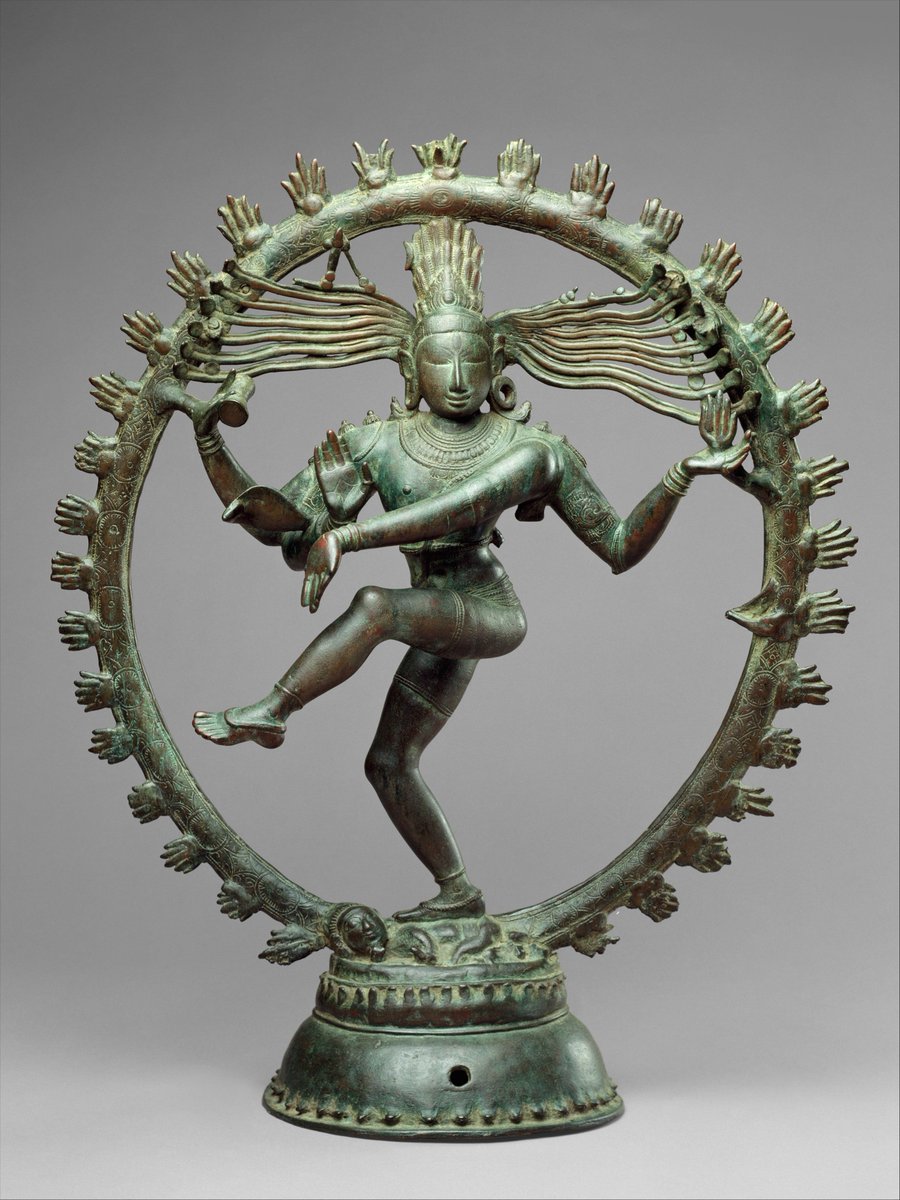
Chola Nataraja bronzes capture Shiva’s Ānanda Tāṇḍava, the dance of bliss.
Cast in bronze through the lost-wax process, the image unites creation, destruction and liberation: drum, flame, raised foot and Apasmara transform cosmic theology into movement.
Clove has 67x more antioxidants than blueberries and can help fight bacteria, fungi, and resistant biofilms but hardly anyone talks about it. Here is what it is actually doing inside your body.
Here is what the research shows
Statue of Kumārajīva in front of the Kizil Caves, China. Born to a Kashmiri priest who traveled to Kucha and married a princess, Kumārajīva (344–413 CE) became one of the most renowned translators of Sanskrit texts into Chinese.
Hiranyagarbha Sukta: What the Rigveda Says About the First Being to Emerge in Creation… 😱
The Hiranyagarbha Sukta (Rigveda 10.121) is one of the Rigveda's great hymns on creation. It describes Hiranyagarbha, the “Golden Embryo” or “Golden Germ,” as arising at the beginning and becoming the sovereign of all that exists.
हिरण्यगर्भः समवर्तताग्रे भूतस्य जातः पतिरेक आसीत्।
स दाधार पृथिवीं द्यामुतेमां कस्मै देवाय हविषा विधेम॥
Hiranyagarbha arose in the beginning. Having come into being, he became the one lord of all that exists. He upheld the Earth and Heaven. The hymn then asks its recurring question: To which Deva should we offer our oblation?
य आत्मदा बलदा यस्य विश्व उपासते प्रशिषं यस्य देवाः।
यस्य छायामृतं यस्य मृत्युः कस्मै देवाय हविषा विधेम॥
He is described as the giver of life and strength, whose authority even the Devas acknowledge. Both immortality and death are poetically described as existing under his dominion.
यः प्राणतो निमिषतो महित्वैक इद्राजा जगतो बभूव।
य ईशे अस्य द्विपदश्चतुष्पदः कस्मै देवाय हविषा विधेम॥
He became the sole sovereign over everything that breathes and moves. He is presented as lord over both two-footed and four-footed beings, extending his sovereignty across the living world.
यस्येमे हिमवन्तो महित्वा यस्य समुद्रं रसया सहाहुः।
यस्येमाः प्रदिशो यस्य बाहू कस्मै देवाय हविषा विधेम॥
The greatness of the snow-covered mountains, the ocean and the directions themselves are attributed to him. The directions are poetically imagined as his arms, presenting the cosmos almost as an extension of his greatness.
येन द्यौरुग्रा पृथिवी च दृळ्हा येन स्वः स्तभितं येन नाकः।
यो अन्तरिक्षे रजसो विमानः कस्मै देवाय हविषा विधेम॥
Through him, Heaven and Earth are established and the celestial realm is supported. He is described as the one who measures or orders the vast space between them.
यं क्रन्दसी अवसा तस्तभाने अभ्यैक्षेतां मनसा रेजमाने।
यत्राधि सूर उदितो विभाति कस्मै देवाय हविषा विधेम॥
Heaven and Earth, sustained by his power, are portrayed as looking toward him. It is within the cosmic order associated with him that the rising Sun shines forth.
आपो ह यद्बृहतीर्विश्वमायन्गर्भं दधाना जनयन्तीरग्निम्।
ततो देवानां समवर्ततासुरेकः कस्मै देवाय हविषा विधेम॥
The hymn then turns to the primordial waters. These vast waters contained the cosmic embryo and generated Agni. From this primordial condition arose the one divine principle associated with the life of the Devas.
यश्चिदापो महिना पर्यपश्यद्दक्षं दधाना जनयन्तीर्यज्ञम्।
यो देवेष्वधि देव एक आसीत्कस्मै देवाय हविषा विधेम॥
He is the one who, through his greatness, beheld the waters as they carried creative power and brought forth Yajna. The hymn describes him as the one Deva above the Devas.
मा नो हिंसीज्जनिता यः पृथिव्या यो वा दिवं सत्यधर्मा जजान।
यश्चापश्चन्द्रा बृहतीर्जजान कस्मै देवाय हविषा विधेम॥
The poet now invokes him directly as the creator of Earth and Heaven, asking that he not harm his worshippers. He is also credited with bringing forth the great and radiant waters.
प्रजापते न त्वदेतान्यन्यो विश्वा जातानि परिता बभूव।
यत्कामास्ते जुहुमस्तन्नो अस्तु वयं स्याम पतयो रयीणाम्॥
The mystery finally receives a name: Prajapati.
The hymn declares that none other than Prajapati encompasses all these created beings. The worshippers ask that the desires for which they offer sacrifice be fulfilled and that they become possessors of abundance.
👉 Follow @_TheSanatani for more timeless wisdom of Sanatana Dharma.
👉 Join me on Telegram for all the Archives: https://t.co/NIElWWJflO
Nasadiya Sukta: What the Rigveda Says About What Existed Before Creation… 😱
The Nasadiya Sukta (Rigveda 10.129) contains seven extraordinary mantras exploring what existed before creation, how existence emerged, and whether the origin of the universe can ever truly be known.
नासदासीन्नो सदासीत्तदानीं नासीद्रजो नो व्योमा परो यत्।
किमावरीवः कुह कस्य शर्मन्नम्भः किमासीद्गहनं गभीरम्॥
There was neither Asat (non-existence) nor Sat (existence). There was no atmosphere and no sky beyond it. The hymn immediately takes us to a condition where the familiar categories of reality had not yet appeared. It then asks: what covered everything, where was it, and was there an unfathomable cosmic depth?
न मृत्युरासीदमृतं न तर्हि न रात्र्या अह्न आसीत्प्रकेतः।
आनीदवातं स्वधया तदेकं तस्माद्धान्यन्न परः किंचनास॥
There was neither death nor immortality. There was no distinction between night and day. Yet there was Tad Ekam... “That One”, existing through its own inherent power, without ordinary breath. Apart from That, the hymn says, there was nothing else.
तम आसीत्तमसा गूळ्हमग्रेऽप्रकेतं सलिलं सर्वमा इदम्।
तुच्छ्येनाभ्वपिहितं यदासीत्तपसस्तन्महिनाजायतैकम्॥
Darkness was hidden within darkness. Everything existed in an undifferentiated condition, described through the imagery of primordial waters. From this concealed state, That One emerged through the greatness of Tapas, carrying the sense of heat, intensity, or generative power.
कामस्तदग्रे समवर्तताधि मनसो रेतः प्रथमं यदासीत्।
सतो बन्धुमसति निरविन्दन्हृदि प्रतीष्या कवयो मनीषा॥
Then arose Kama... desire, longing, or primordial impulse. The hymn calls it the first seed of mind. The sages, searching within their hearts through wisdom, sought the connection between Sat and Asat, existence and non-existence.
तिरश्चीनो विततो रश्मिरेषामधः स्विदासीदुपरि स्विदासीत्।
रेतोधा आसन्महिमान आसन्स्वधा अवस्तात्प्रयतिः परस्तात्॥
A mysterious Rashmi, a line, cord, or ray, stretched across. The hymn asks what was below and what was above. It speaks cryptically of generative powers, potentiality, and force as differentiation begins to emerge within primordial reality.
को अद्धा वेद क इह प्र वोचत्कुत आजाता कुत इयं विसृष्टिः।
अर्वाग्देवा अस्य विसर्जनेनाथा को वेद यत आबभूव॥
📌 Then comes the radical question:
👉 Who actually knows?
👉 Who can say where creation came from or how it arose?
The hymn points out that even the Devas came after the emergence of creation. If the Devas themselves appeared afterward, who could have witnessed its absolute beginning?
इयं विसृष्टिर्यत आबभूव यदि वा दधे यदि वा न।
यो अस्याध्यक्षः परमे व्योमन्त्सो अङ्ग वेद यदि वा न वेद॥
The final mantra pushes the question even further.
Perhaps the highest overseer, dwelling in the supreme heaven, knows whether creation was established intentionally or otherwise.
👉 And then the Nasadiya Sukta ends with one of the most remarkable possibilities in ancient religious literature:
यदिवा न वेद — “Or perhaps he does not know.”
Neither existence nor non-existence.
Neither death nor immortality.
Darkness within darkness.
Then Tapas.
Then Kama.
Then differentiation.
And finally... Who truly knows?
The Nasadiya Sukta does not force certainty where certainty may be impossible. Instead, the Rigveda takes human thought to the very edge of creation... and leaves us standing before the mystery itself.
👉 Follow @_TheSanatani for more timeless wisdom of Sanatana Dharma.
👉 Join me on Telegram for all the Archives: https://t.co/NIElWWJflO
In the Ṛgveda, the Asuras are not Demons or Dravidians.
They are the Anu. The Anavas. The proto Indo Iranians & proto Greeks! 🔥
And once you see this, the entire Indo-European story realigns.
In the Ṛgveda, the great civilizational divide is not “good vs evil”.
It is Anu vs Puru.
The Devas are the ancestral gods of the Puru / Pauravas.
They are the Ādityas, sons of Aditi, the mother of the gods, working under Tvāṣṭar, the divine architect.
Tvāṣṭar is not a marginal figure.
In the Ṛgveda he appears repeatedly as father-in-law to major god's wives, linking lineages.
He is the god of craft, metallurgy, design, and construction, the civilizational signature of the Harappan–Sarasvatī–Sindhu world of North-West India.
On the other side stand the Anu / Anava.
The Ṛgveda describes them with remarkable precision:
Anindra – those who reject Indra
Avrata – those who do not follow Vedic ritual norms
Vadhri-vācāḥ – those who speak different dialects
Not barbarians.
Linguistic cousins.
Proto-Avestan and other early Indo-European speech forms.
This is why the Anavas are consistently hostile to Indra because Indra is the great god of the Purus.
Now pause here.
The Anu are not a minor Vedic clan.
👉 Anu is the supreme god of the Sumerians.
That is not coincidence.
From the Anavas emerge two great branches remembered in Itihāsa-Purāṇas:
Daityas
Dānavas
The Daityas correspond to proto-Iranians.
Their sacred river is named Daityā in the Avestan text Vendidad - identified with the Jhelum.
The Dānavas correspond to proto-Greeks, Albanians, and wider Europeans.
Their sacred river is Danu, preserved as Danube, Don, Dnieper, and more.
Even Greek memory is explicit.
The heroes of the Iliad and Odyssey trace themselves to the Danaans.
And Ireland?
The Irish gods trace their divine ancestry to Danu, their great grandmother goddess.
Now return to the Ṛgveda.
Here, Dānu does not mean a demon queen.
It means dew, ice, flowing waters, rivers born from Himalayan glaciers.
Sapta Dānu = Seven Rivers = Sapta Sindhu.
Only later, in the Itihāsa-Purāṇas, do we see a theological reshuffle:
Aditi, Diti, and Danu are turned into wives of Kaśyapa Prajāpati.
But Kaśyapa is a Late Ṛgvedic figure, prominent mainly in the Late Ṛgveda, associated with Kashmir-region Ṛṣis.
The very concept of Prajāpati itself emerges only in the 10th Maṇḍala.
In effect: 👉 The cosmic role of Ṛgvedic Tvāṣṭar is retro-assigned to Kaśyapa.
👉 Older civilizational memory is reorganised into later genealogy.
So what we are seeing is not mythology, but layered historical memory:
Puru vs Anu
Indra-worshippers vs Indra-rejecters
Indo-Gangetic ritual core vs outward-moving Indo-European branches
Read literally, you get demons and gods.
Read historically, you get the Indo-European split preserved inside the Ṛgveda.
If this perspective is new to you, say YES in the comments.
If you want a deep dive into Anu > Danu > Daityas & Dānavas, react 🔥
If this reframes Indo-European history for you, share & retweet.
More threads coming, if people want them.
Consciousness may be older than the individual who experiences it.
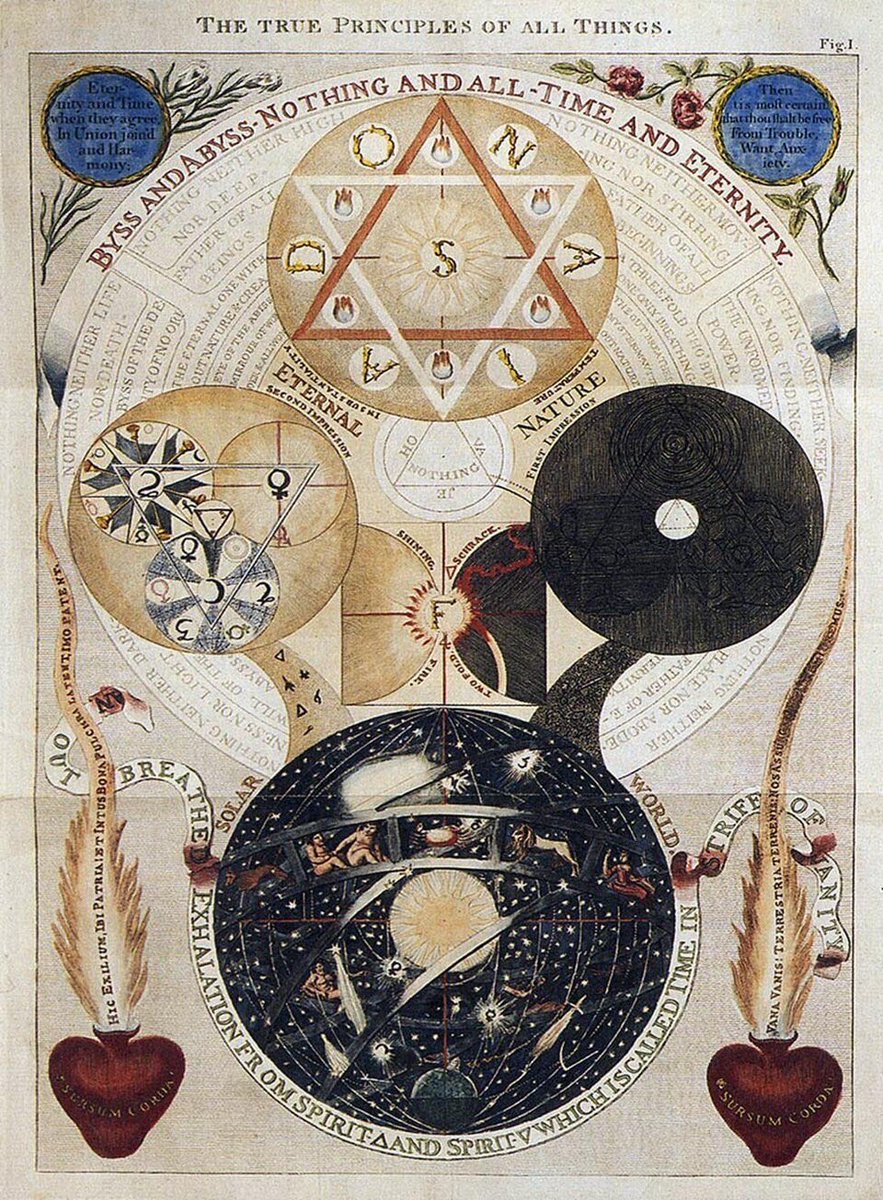
Jakob Böhme (1575–1624) was a German Christian mystic who built an entire metaphysical system around a concept he called the “Ungrund”, the groundless. It describes the divine source before ordinary distinctions exist, beyond form, limitation and opposition.
For Böhme, creation was not simply the production of matter. It was a process of manifestation. Divine will and desire unfold into differentiation, and with differentiation come opposing forces such as light and darkness, attraction and resistance, spirit and nature. These oppositions make manifestation and experience possible. The human being occupies a special position within this system. Böhme described humanity as a microcosm, containing within itself the same tensions found throughout creation. The human soul is therefore not isolated from the cosmos but reflects its structure.
This gives consciousness a central role. Böhme did not have a modern theory of the brain or mind, but his writings treat human awareness as a place where the deeper structure of creation can become known. Self-knowledge becomes a path toward knowledge of the divine. His idea of spiritual rebirth follows the same logic. The old mode of selfhood has to die so that another can emerge. Böhme’s concern was not simply what happens to a person after biological death, but how the soul changes its mode of existence.
He also expressed this cosmology through symbolic diagrams. The “Philosophical Sphere” presents relationships between the divine source, opposing forces, nature and humanity. It is not a map of physical space but a visual model of Böhme’s metaphysics. Dionysius Andreas Freher (1649–1728) lived more than a century later and created his own elaborate diagrams based on Böhme’s writings. Freher did not simply reproduce Böhme’s imagery. He interpreted and extended the system through symbolic geometry, spheres, correspondences and opposing forces.
Böhme supplied the mystical philosophy. Freher developed a visual language for it. Together, their work presents reality as a process of manifestation, differentiation and consciousness. The human being becomes the point where that process can turn back upon itself and seek its own origin. #Mysticism
Image source:
“An illustration by Dionysius Andreas Freher” (1776), Dionysius Andreas Freher.
Source: Wikimedia Commons
Version checked: 27 March 2017.
License checked: 3 September 2026 - Public Domain.
“Böhme Philosophische Kugel” (1682), unknown author.
Source: Wikimedia Commons
Version checked: 1 March 2012 (file upload). License checked: 3 September 2026 - Public Domain / CC Public Domain Mark 1.0.
A Syrian traveler wrote this about the state of girls in Delhi under the pious Islamic rule of Muhammad Tughlaq in 14th century:
“…200,00 tankas, and even more, are paid for young Indian girls. I inquired the reason and was told that these young girls are remarkable for their beauty, and the grace of their manners.”
Of course, Tughlaq followed the most feminist man in the history of everything.
In the 7th century, Indian mathematicians innovatively used negative numbers in calculations. Europeans, by contrast, dismissed such numbers as absurd until the 17th century, when their practical value in accounting and bookkeeping led to widespread acceptance.
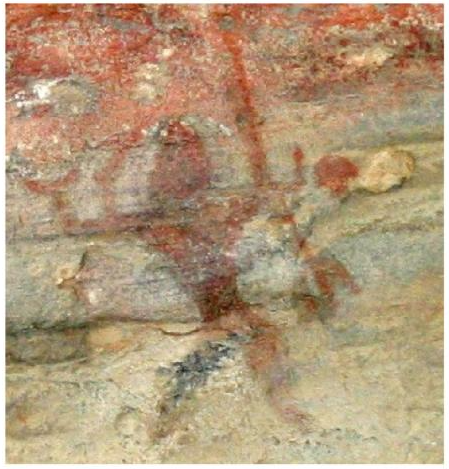
10,000 - 30,000 years old - Bhimbetka Cave Paintings depicting hunts, dancers, horse riders, and animal herds in red and white ochre.
UNESCO World Heritage Site.
Raisen, Madhya Pradesh, India.
A painted figure at Bhimbetka in Madhya Pradesh, as much as thirty thousand years old. The historian Michael Wood, standing in front of it, said it reminded him of the dancing Shiva sold on pilgrim posters in India today.
Most of the world's religions were imposed by conquest and/or migration. India's was not. What that continuity means for the history usually taught is the subject of my new essay.