@mschoening@Tailscale I think private trackers are also a good analogy as they tend to have higher quality content
You often need an invite for them
Public trackers often have more noise, malware, and garbage
Awesome! My setup is similar but doesn't keep and mark conflicts
Each fact memory has a source (pointing to a session stored in S3) and will resolve conflicts by going by to the source
It also "dreams" about working patterns for different team members in a seperate folder
I occasionally read what it says about me. It's quite interesting to read
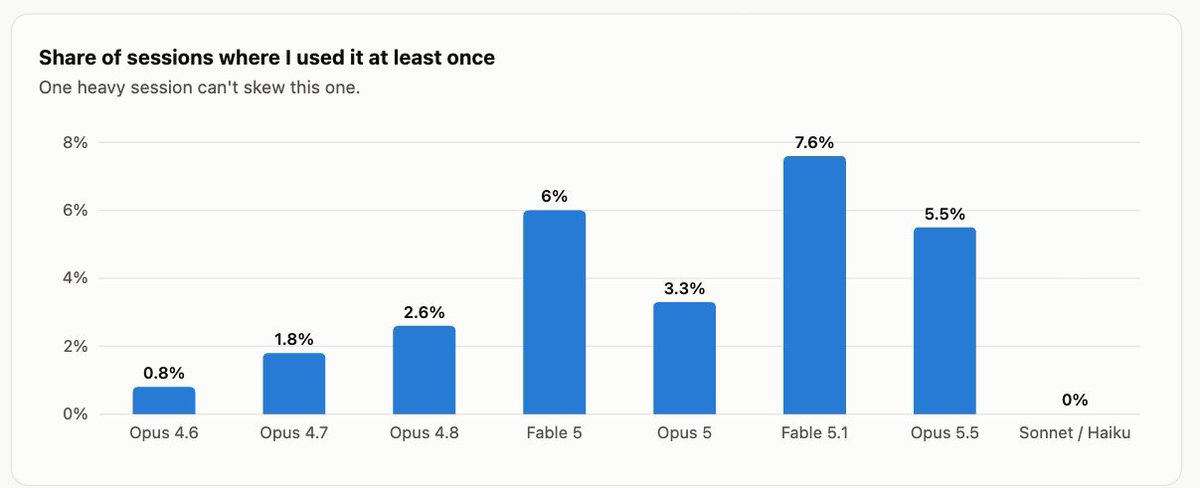
Opus 5.5 seems to really like "receipts" language when it comes to talking about evidence, proof, logs, etc.
- "Comes with a receipt"
- "That's the receipt"
- "That's a big drop on the receipt"
After analysing 4,500 past sessions, turns out it says "receipt" more than 2x as much as Opus 4.8
@addyosmani Great write up! I find folks make the mistake of thinking the work is parallel, telling Claude to use subagents, but the work was actually being tangled in ways they didn't anticipate
@amorriscode Thank you for making the desktop app amazing! It's come a long way 🚀
If you ever travel to Japan again, I'd love to give you some awesome recs :)
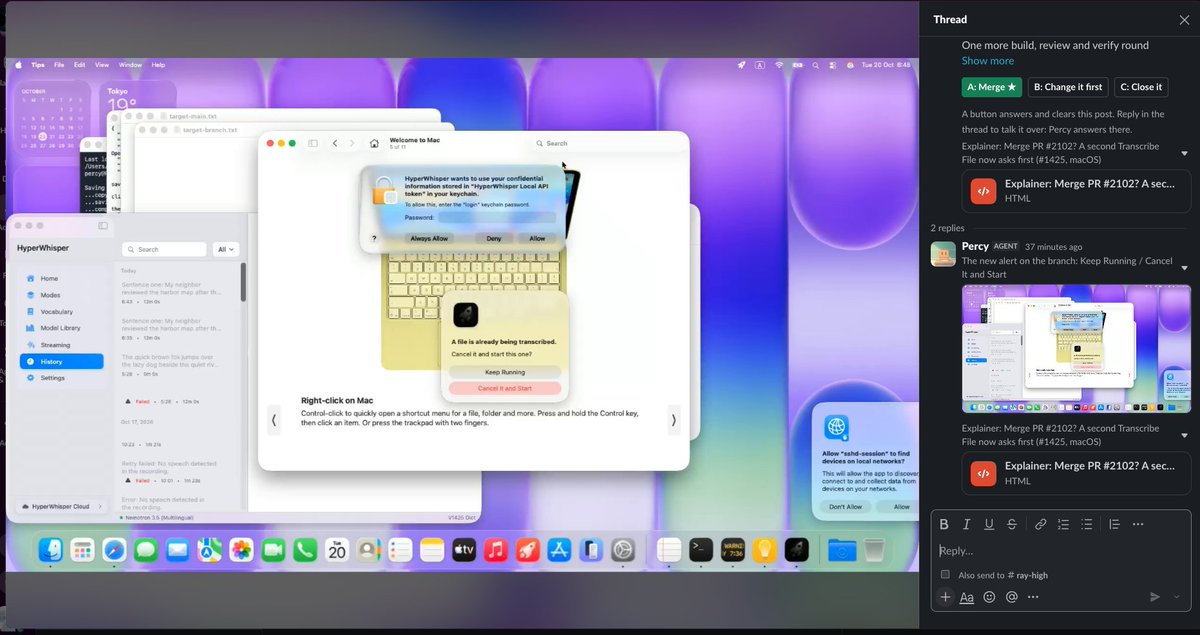
I gave Claude its own Macbook Neo a few weeks ago
When testing an application, it never closes or minimises existing applications
Little bit funny to see
Super bullish on explainer videos!
Two weeks ago, my favourite use case of Opus 5.5 was to quickly understand the rules of a board game.
My prompt was literally:
"Make a video explaining how to play the game with ElevenLabs CLI, 3D animations, lots of diagrams, no text."
I was shocked by how well it turned out!
Now, I spend close to an hour each day watching AI explainer by Opus 5.5 about pretty much everything.
We'll be spending a lot more time trying to understand the outputs of language models. A few thoughts, tips & tricks:
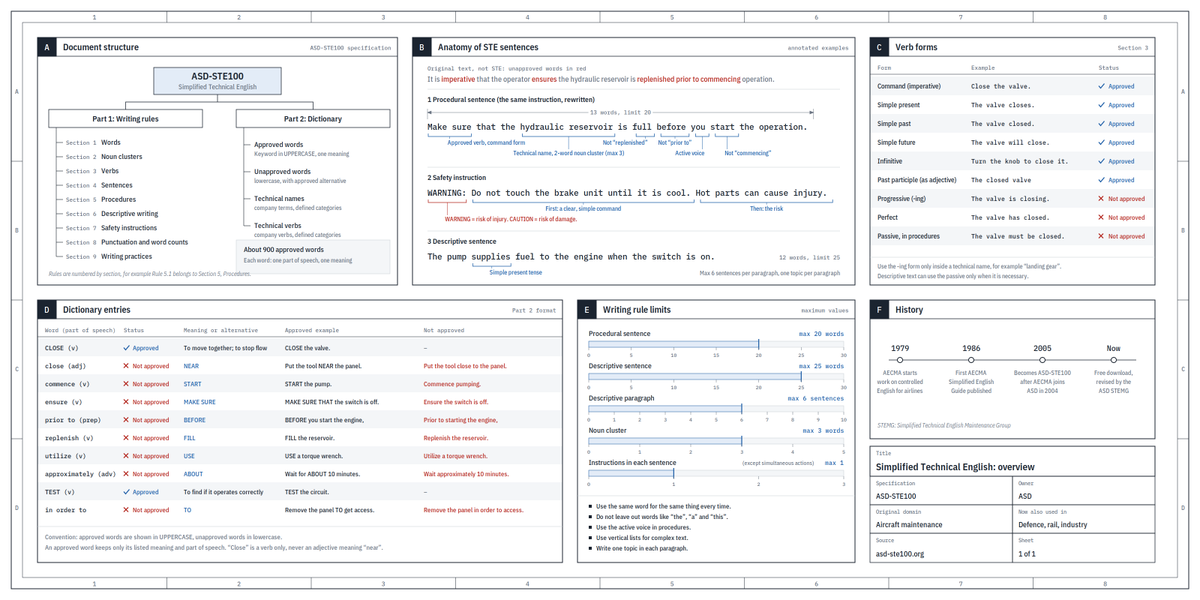
Writing. Something I've had success with: Ask your LLM to explain something in ASD-STE100, it's a controlled language specification originally developed for aerospace maintenance documentation. LLMs well-versed in this language and it comes with heavy constraints on clean writing style that I often find a lot more readable. Sometimes I've tried to soften it a bit e.g. ask for "80% of the way to ASD-STE100" because the spec is quite stringent. But even better:
Diagrams / images. Instead of writing, ask your LLM to create a diagram. These can be a lot easier to process, parse, and understand. But even better:
Web pages. Ask for output "in HTML" to get a beautiful, interactive webpage. LLMs are getting really good at frontend and can create beautiful experiences, animations, etc. But even better:
Explainer videos. The output format I am most bullish on is fully custom / bespoke explainer videos generated on any arbitrary topic. Experiment with things like "Create a 3b1b style video explainer on X. Use my ElevenLabs API key for audio narration". (you'd need an API key for the latter or you can ask your LLM to find you decent free alternatives that use your local compute). This is actually starting to work!
In summary:
- As LLMs get better, they will do more and more of the legwork autonomously, and a lot more of our work will rise up the abstractions into oversight and understanding.
- Luckily, LLMs can help here too because as intelligence and code are increasingly abundant, you can ask for large, custom, discardable software artifacts (e.g. web apps, video explainers) that would have never made sense to create before. Push the boundaries here and you'll be surprised.
@addyosmani@poteto Love your stuff! In my case, Claude replayed previous sessions in child sandboxes to determine whether feature maps would have been useful. It concluded no so I didn’t bother.
Worth being skeptical and actually test what you read in real projects.
A year ago, I would've never believed that Slack would be my "development environment".
97%+ of my code is now written and reviewed by Slack-based agents. I spend more time in Slack than any other app.
I wonder how things will change a year from now.