Did a very different format with @reinerpope – a blackboard lecture where he walks through how frontier LLMs are trained and served.
It's shocking how much you can deduce about what the labs are doing from a handful of equations, public API prices, and some chalk.
It’s a bit technical, but I encourage you to hang in there - it’s really worth it.
There are less than a handful of people who understand the full stack of AI, from chip design to model architecture, as well as Reiner. It was a real delight to learn from him.
Recommend watching this one on YouTube so you can see the chalkboard.
0:00:00 – How batch size affects token cost and speed
0:31:59 – How MoE models are laid out across GPU racks
0:47:02 – How pipeline parallelism spreads model layers across racks
1:03:27 – Why Ilya said, “As we now know, pipelining is not wise.”
1:18:49 – Because of RL, models may be 100x over-trained beyond Chinchilla-optimal
1:32:52 – Deducing long context memory costs from API pricing
2:03:52 – Convergent evolution between neural nets and cryptography
It's wild looking at old pictures of when Ferrari was just a racing team, not a car company.
Enzo started off by racing Alfa Romeos... and just painted the Scuderia Ferrari logo on the side!
OpenAI wants $100BN in ad revenue by 2030. That requires growing ARPU from $3.50 to $60 — a 151% CAGR. WAU growth alone won't cut it; the real bet is shifting from $60 CPMs to conversion-optimized ads, Meta-style.
https://t.co/g2kZgVFzDg
Wow, this tweet went very viral!
I wanted share a possibly slightly improved version of the tweet in an "idea file". The idea of the idea file is that in this era of LLM agents, there is less of a point/need of sharing the specific code/app, you just share the idea, then the other person's agent customizes & builds it for your specific needs.
So here's the idea in a gist format: https://t.co/NlAfEJjtJV
You can give this to your agent and it can build you your own LLM wiki and guide you on how to use it etc. It's intentionally kept a little bit abstract/vague because there are so many directions to take this in. And ofc, people can adjust the idea or contribute their own in the Discussion which is cool.
LLM Knowledge Bases
Something I'm finding very useful recently: using LLMs to build personal knowledge bases for various topics of research interest. In this way, a large fraction of my recent token throughput is going less into manipulating code, and more into manipulating knowledge (stored as markdown and images). The latest LLMs are quite good at it. So:
Data ingest:
I index source documents (articles, papers, repos, datasets, images, etc.) into a raw/ directory, then I use an LLM to incrementally "compile" a wiki, which is just a collection of .md files in a directory structure. The wiki includes summaries of all the data in raw/, backlinks, and then it categorizes data into concepts, writes articles for them, and links them all. To convert web articles into .md files I like to use the Obsidian Web Clipper extension, and then I also use a hotkey to download all the related images to local so that my LLM can easily reference them.
IDE:
I use Obsidian as the IDE "frontend" where I can view the raw data, the the compiled wiki, and the derived visualizations. Important to note that the LLM writes and maintains all of the data of the wiki, I rarely touch it directly. I've played with a few Obsidian plugins to render and view data in other ways (e.g. Marp for slides).
Q&A:
Where things get interesting is that once your wiki is big enough (e.g. mine on some recent research is ~100 articles and ~400K words), you can ask your LLM agent all kinds of complex questions against the wiki, and it will go off, research the answers, etc. I thought I had to reach for fancy RAG, but the LLM has been pretty good about auto-maintaining index files and brief summaries of all the documents and it reads all the important related data fairly easily at this ~small scale.
Output:
Instead of getting answers in text/terminal, I like to have it render markdown files for me, or slide shows (Marp format), or matplotlib images, all of which I then view again in Obsidian. You can imagine many other visual output formats depending on the query. Often, I end up "filing" the outputs back into the wiki to enhance it for further queries. So my own explorations and queries always "add up" in the knowledge base.
Linting:
I've run some LLM "health checks" over the wiki to e.g. find inconsistent data, impute missing data (with web searchers), find interesting connections for new article candidates, etc., to incrementally clean up the wiki and enhance its overall data integrity. The LLMs are quite good at suggesting further questions to ask and look into.
Extra tools:
I find myself developing additional tools to process the data, e.g. I vibe coded a small and naive search engine over the wiki, which I both use directly (in a web ui), but more often I want to hand it off to an LLM via CLI as a tool for larger queries.
Further explorations:
As the repo grows, the natural desire is to also think about synthetic data generation + finetuning to have your LLM "know" the data in its weights instead of just context windows.
TLDR: raw data from a given number of sources is collected, then compiled by an LLM into a .md wiki, then operated on by various CLIs by the LLM to do Q&A and to incrementally enhance the wiki, and all of it viewable in Obsidian. You rarely ever write or edit the wiki manually, it's the domain of the LLM. I think there is room here for an incredible new product instead of a hacky collection of scripts.
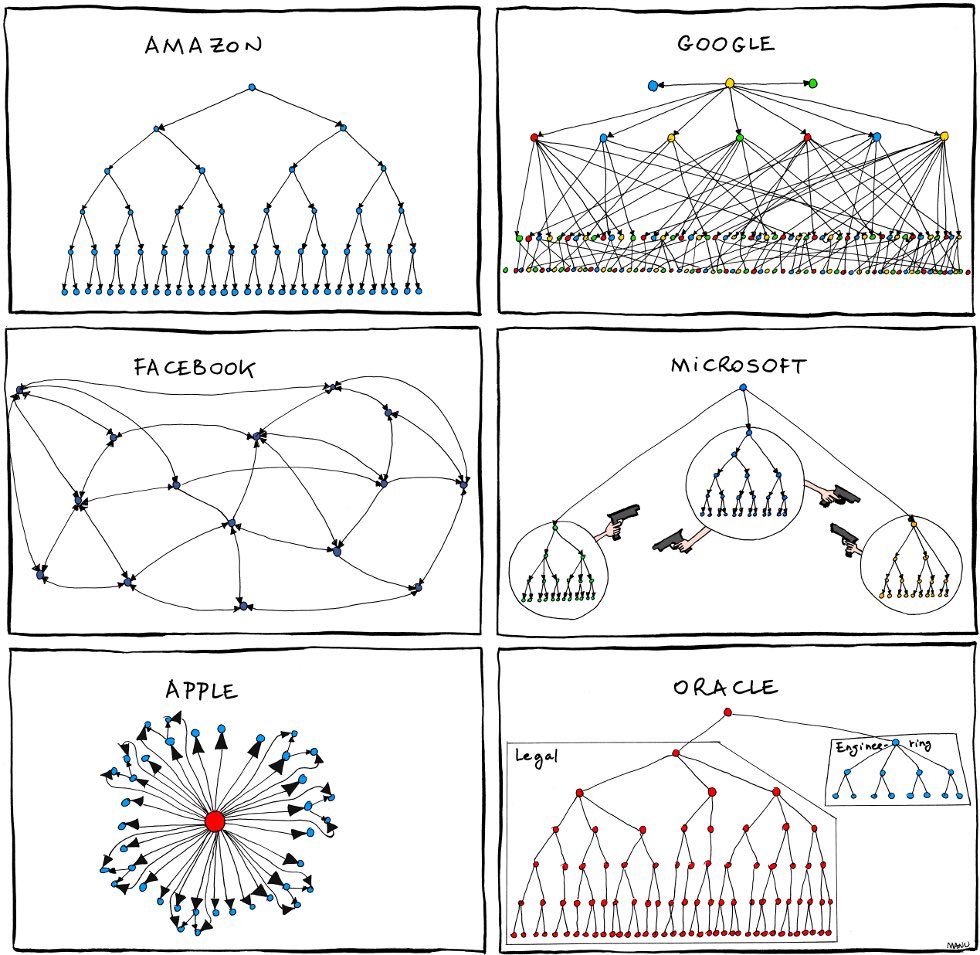
All of these patterns as an example are just matters of “org code”. The IDE helps you build, run, manage them. You can’t fork classical orgs (eg Microsoft) but you’ll be able to fork agentic orgs.
My information consumption is now 1/4 X, 1/4 podcast interviews of the smartest practitioners, 1/4 talking to the leading AI models, and 1/4 reading old books. The opportunity cost of anything else is far too high, and rising daily.
@bcherny : "We usually recommend explanatory cuz that tends to be better for new code bases um that you kind of haven't been in before.""
/output-style -> Explanatory
https://t.co/9QvcT1WQsk via @YouTube
OpenAI may have ignited the AI revolution, but as models rapidly commoditize and competitors close in, they must face a harsh reality: flawless execution is just an aspiration, not a defensible strategy.
https://t.co/29VCd2s3jD