Picture this: you're building the next big thing on @ethereum
Your app allows users to __ ERC20 tokens. Cats, dogs, penguins, the US dollar, you name it, anything that's a token, users can __. They click the button. Something breaks.
Let's explore the dark side of ERC20s👇🧵
> The ancient Greeks called the atom “atomos,” meaning “uncuttable.” They were wrong. Spectacularly, violently, world-changingly wrong.
Amazing read so far, great primer.
We've had to let some talented people go at @Sablier for financial reasons.
They're top-tier engineers (smart contracts, frontend, backend).
If you're hiring, DM me.
Built a small market “intel” dashboard
Prompted my way through stock charts, deribit options, live feeds and gimmicks like earnings calendars and price target trackers
Finessed with some smooth ui from the likes of @Jakubantalik and @benjitaylor
https://t.co/x5wg8N5031
Hosted on vercel for my own needs but public source for anyone to fork and have fun with
Time to bring this analysis back because this statement from Chamath is questionable at best. What he is stating here sounds nice enough on paper, but it requires a lot of nuance, so let me take a stab at it.
Yeah sure, solar energy does come from fusion in the sun (hence why he refers to solar as a form of nuclear, which in terms of reliability is like comparing a Rolls-Royce to a 2006 Fiat Punto. Both drive, but one is a bit more reliable than the other), yet a photovoltaic fleet behaves like an intermittent surface capture technology whose output is synchronized to daylight and weather, while nuclear plants are built to run as high capacity factor thermal machines with fuel stored on site.
Capacity factor is the first place where the comparison breaks in my view. US utility-scale solar PV averaged about 25% in EIA’s multi-year sample of operating plants, which is a reasonable anchor for real-world delivered output once you include night, winter angles, cloud variability, and operating constraints. Nuclear routinely sits in a different regime. Global reactor capacity factor was 81.5%, and US reactors have historically clustered higher than the global mean in many years with some coming in around the 92% mark, which is the practical reason nuclear is treated as firm capacity in grid planning. If I translate that into energy math (I know, nobody likes math, but bear with me) replacing 1 GW of nuclear annual generation usually takes roughly 3–4 GW of nameplate solar, and the multiple rises in higher-latitude grids where winter output is weaker.
The “combine it with a little storage and it’s always-on” claim is a duration claim, so I look at duration data. EIA calculated that utility-scale batteries built through 2020 could discharge at nameplate power for about 3.0 hours on average, and regional operators like CAISO still describe most large-scale systems in operation as having a maximum duration of 4 hours. That profile helps with peak shifting and ramping, yet “always-on” requires coverage through multi-day weather events and winter weeks, which pushes you into far more storage energy capacity, larger overbuild, and heavier transmission buildout.
Land use follows directly from energy density and this is so important to realize. Empirical benchmarks for utility-scale PV land requirements land around 2.8 acres per MWdc for fixed-tilt and 4.2 acres per MWdc for tracking at the median, and IPCC literature summaries commonly cite roughly 4–6 acres per 1 MW for solar electricity production depending on configuration. Nuclear’s operational footprint per unit of electricity is materially smaller, and land-use comparisons I have seen that were synthesized by Our World in Data show solar PV using vastly more land per unit energy than nuclear, with the ratio often presented on the order of tens of times, as in we are talking nuclear being about 18–27× more land-efficient than ground-mounted solar PV on a per-unit-electricity basis, so in other words the nuclear footprint is roughly 18–27× smaller for the same delivered energy.
Finally, asset life and system replacement cycles matter, because of course they do. US nuclear plants were licensed for up to 40 years, with renewals granted in 20-year increments, and 60-year operation is common while 80-year extensions are now being approved. Solar hardware has improved a lot, yet the system includes inverters, transformers, trackers, and degradation that create ongoing replacement capex, which becomes more visible once you try to make an intermittent resource behave like firm supply.
I personally end up viewing solar and nuclear as complementary tools, with solar excelling at low-marginal-cost daytime energy including on smaller scale and nuclear excelling at compact, fuel-secure, high-capacity-factor electricity that reduces the scale of storage and transmission the grid needs. To state we don't need nuclear because the sun provides fusion is far too simplistic of a take. We need both.
After advising 50+ consumer companies over the last year, the one thing that separates those who can execute and those who can't:
Having a full-time designer in the room at all times
I've met with countless companies that have raised millions—and even one that has raised billions—that do not even have a designer on payroll.
This makes product development broken:
1/ You simply cannot have constructive conversations about ideas without visualizing them in real-time
2/ Your experiments will frequently have inconclusive results because users cannot discover features or they misunderstand how they work
3/ There is no one who can galvanize the team with a vision of what the product could look and feel like
And to be abundantly clear: I'm not referring to visual UI or graphics. I'm talking about someone who can think through the fundamental building blocks of product comprehension—like navigation, interaction and copywriting—and is technically savvy enough to visualize those components in high resolution.
There can certainly be exceptions to not having a designer, like where the CEO is an exceptional visual thinker, but that does not scale beyond a small team.
At the end of day, products live and die in the pixels: it's what the users see and tap. And without someone shepherding that process, you are effectively wandering the desert blind.
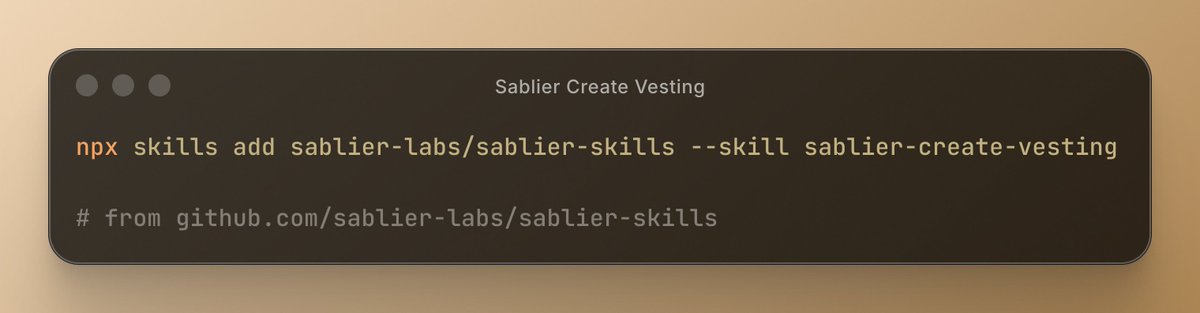
Our new Claude Code skill lets you deploy Sablier Lockup streams on 30+ EVM chains — directly from the command line.
→ Multiple vesting shapes
→ Single or batch creation
→ Built-in safety checks
Simply run /sablier-create-vesting, and the agent handles the rest.
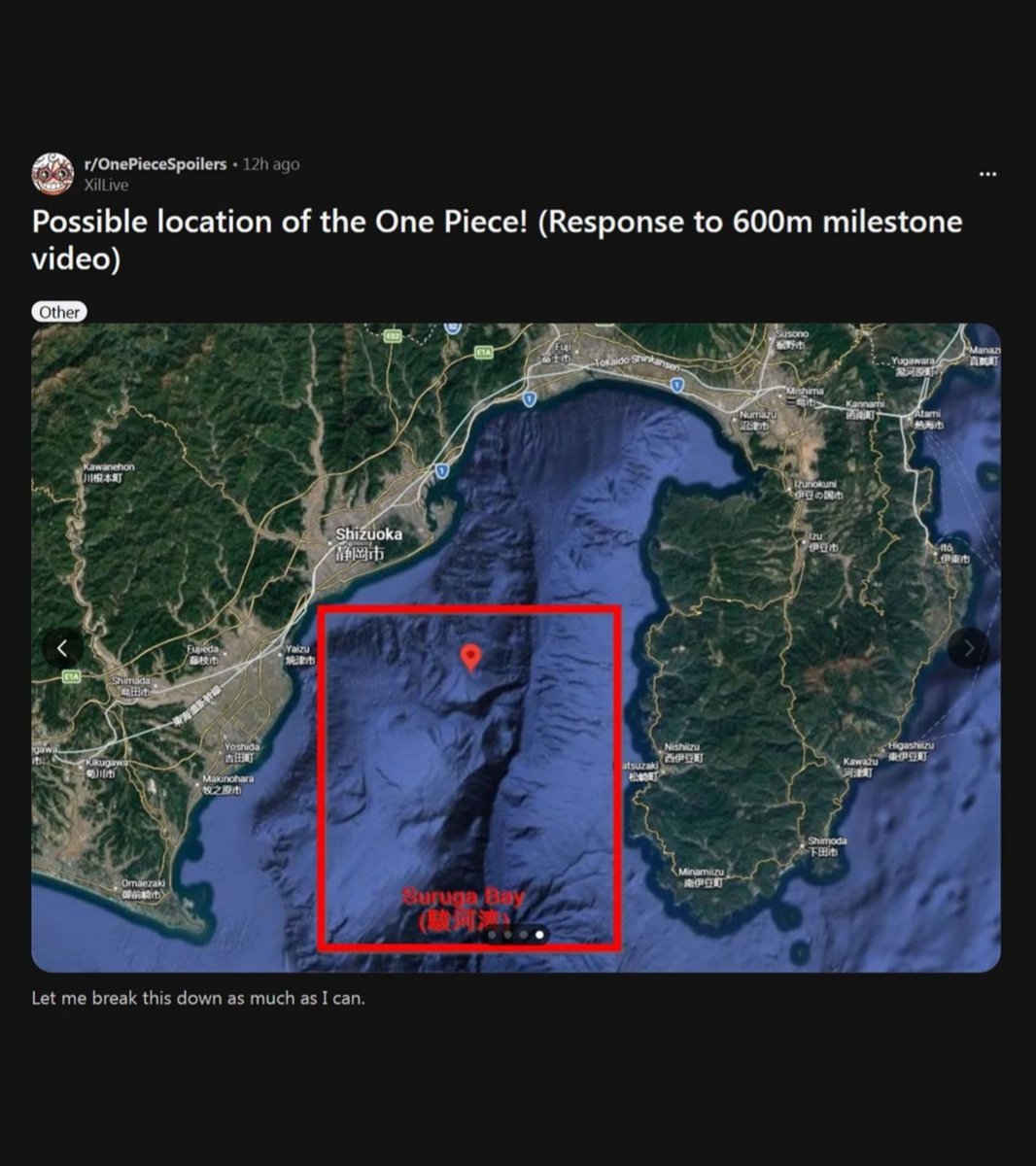
After Eichiiro Oda hid the secret of the 'ONE PIECE' in the Ocean's depths, within 24 hours fans have come forward, claiming to have located its general coordinates
The race for the One Piece has begun
Sites may prevent AIs from fetching content due to obvious reasons.
For personal use it's still fun to filter data or get agents to understand it.
TIL you can rely on @vercel_dev agent-browser sdk + skill. Ask your CLI agent to open websites and "manually" interact with them.
Just shipped Zentat! 🛡️
A browser extension that converts fiat prices to ZEC in real-time. Amazon, flights, news, everything priced in Zcash.
Stop thinking in fiat.