Good morning …Nietzsche on the morality of sympathy and aid…adjacent to criticism of rationalism and effective altruism and many other things in our time as well
There is a specific kind of intelligence that is almost never celebrated but is consistently effective: the intelligence that recognizes when the game being played is not the game worth playing.
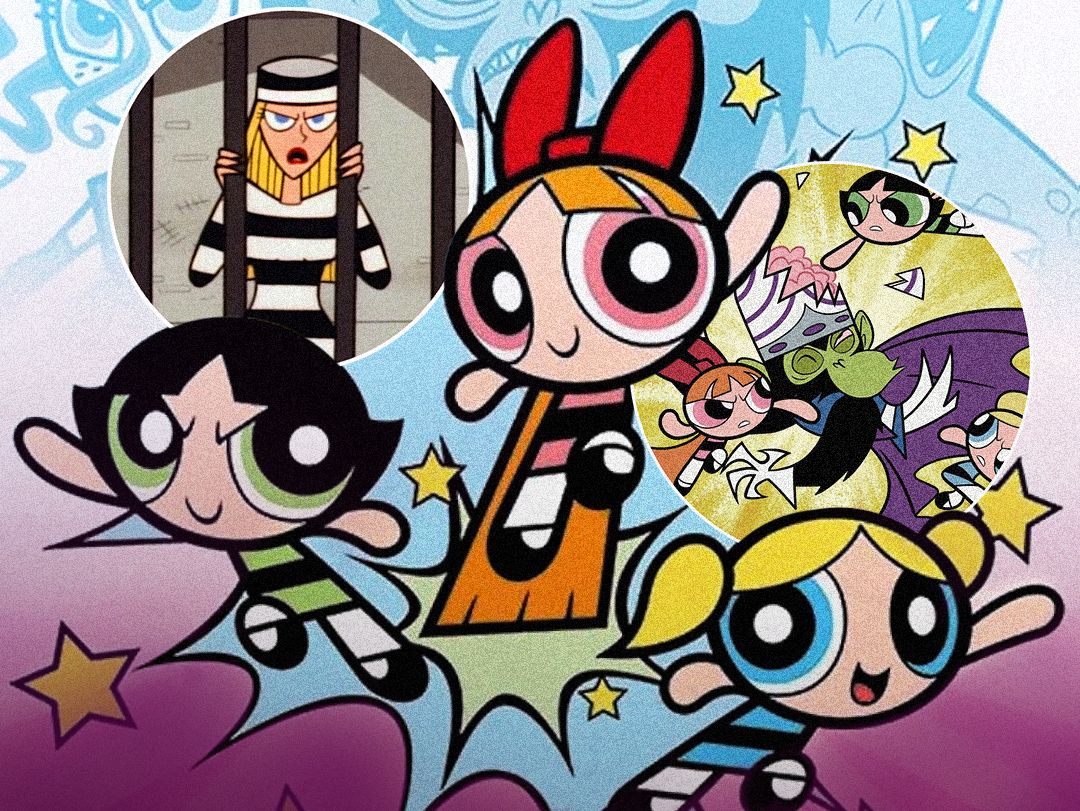
In 2003, a Powerpuff Girls episode was pulled from American broadcast.
The animation was blamed. But the script was about trading liberty for security.
A children's cartoon explained the central trade-off of political philosophy better than most college courses do today. 🧵
Most people think if they can just remove enough problems, eliminate enough stress, make everything comfortable enough, they'll be happy.
But that's not how happiness works.
Happiness doesn't come from the absence of difficulty. It comes from the presence of meaning.
And meaning is almost always difficult.
⚡️This is a regime shift signal.
For thirty years, the American grand strategy toward Europe rested on three pillars:
Security umbrella.
Institutional coordination.
Managed integration under US primacy.
That model assumed US dominance was durable enough to subsidize allies while tolerating their economic divergence and regulatory friction.
The phrase “managed decline” is an admission that US leadership views the current Western trajectory as stagnant, bureaucratic, slow growing, demographically compressed, and strategically risk averse.
The message to Europe is simple.
Pay more.
Build more.
Align faster.
Or expect less protection.
This is burden reallocation under hard power logic.
There is also a domestic audience. Voters do not want open ended subsidy of foreign welfare states while domestic debt rises and industrial capacity erodes. The speech translates geopolitical recalibration into populist clarity.
Behind the rhetoric sits cold arithmetic.
US debt is high.
Industrial policy is back.
China is competing across technology, energy, and defense.
Russia remains disruptive.
The US cannot fund global order the way it did in the 1990s and 2000s without tradeoffs.
So the strategy shifts from stewardship to leverage.
The tone is confrontational because leverage requires friction. Politeness implies continuation of the old contract.
What happens next depends on Europe.
If Europe rearms, deregulates, industrializes, and deepens defense coordination, this becomes a renewal phase.
If Europe fragments and resists higher defense commitments, transatlantic cohesion weakens and multipolar balancing accelerates.
This is about relative power consolidation inside a tightening fiscal and technological competition cycle.
When a hegemon says it refuses to manage decline, it means it intends to force structural change.
The only open variable is whether allies adjust or drift.
Jensen Huang: "People with really high expectations have very low resilience."
"I think one of my great advantages is that I have very low expectations. And I mean that.
Most of the Stanford graduates have very high expectations. And you deserve to have high expectations because you came from a great school.
You were very successful. You're top of your class.
Obviously, you were able to pay for tuition. And then you're graduating from one of the finest institutions on the planet.
You're surrounded by other kids that are just incredible. You naturally have very high expectations.
People with very high expectations have very low resilience. And unfortunately, resilience matters in success.
I don't know how to teach it to you except for I hope suffering happens to you. And I was fortunate that I grew up with my parents providing a condition for us to be successful on the one hand, but there were plenty of opportunities for setbacks and suffering.
And to this day, I use the phrase pain and suffering inside our company with great glee. And I mean that. Boy, this is going to cause a lot of pain and suffering.
And I mean that in a happy way, because you want to train, you want to refine the character of your company.
You want greatness out of them. And greatness is not intelligence.
Greatness comes from character, and character isn't formed out of smart people.
It's formed out of people who suffered.
And so if I could wish upon you, I don't know how to do it. For all of you Stanford students, I wish upon you ample doses of pain and suffering."
⚡️This is a phase transition in what it means to produce leverage as a human.
Here is the core reality.
For most of modern programming history, leverage came from writing more correct instructions faster than other people. Skill meant internalizing abstractions, mastering tools, and directly shaping deterministic systems. Output scaled linearly with effort plus experience.
That regime is over.
The unit of leverage has shifted away from writing code toward orchestrating intelligence.
Karpathy feels “behind” because the locus of agency moved faster than the identity of the profession. The programmer is no longer the primary generator of logic. The programmer is becoming a systems integrator of probabilistic entities whose internal reasoning cannot be fully inspected, trusted, or controlled.
This breaks several deep assumptions that elite engineers were trained on.
First, control is gone.
You are no longer authoring behavior. You are conditioning it. You shape outcomes indirectly through prompts, constraints, memory structures, and feedback loops. The system responds stochastically. Mastery now means learning how to steer something that never becomes fully legible.
Second, effort no longer maps cleanly to output.
You can be ten times more effective with the same intellect if you compose agents correctly. Or you can grind endlessly and fall behind if you cling to manual authorship. This is why Karpathy frames failure to adapt as a skill issue. He is correct. The skill is just new and deeply unintuitive.
Third, the abstraction stack inverted.
Before, high level reasoning collapsed downward into code. Now low level code is increasingly generated upward from intent. The programmer’s job shifts toward defining goals, evaluating outputs, and designing correction mechanisms. The craft moves from construction to supervision.
Fourth, the profession fractured.
There will be a small group of people who learn to wield these systems fluently. They will compound leverage at an absurd rate. Everyone else becomes marginal very quickly, even if they are smart, experienced, and hardworking. This is not a fair transition. It is not gradual. It is discontinuous.
What makes this psychologically destabilizing is that there is no stable equilibrium yet.
The tools change weekly. Mental models decay fast. Best practices rot in months. There is no manual because the system itself is evolving while being used. You are learning to ride a machine that is also learning how to respond to you.
Now the part most people miss.
This is not just happening to programmers.
Programming is simply the first profession to experience full cognitive disintermediation. The same pattern will hit analysts, designers, lawyers, consultants, managers, and eventually executives. Anywhere intent can be specified and evaluated, generation will be automated.
The new hierarchy will not be based on who knows the most, codes the fastest, or works the hardest.
It will be based on who can:
•Frame the right problems
•Decompose intent cleanly
•Detect failure modes quickly
•Correct systems without overfitting
•Build durable feedback loops
•Decide when to trust automation and when to override it
That is a different form of intelligence. Closer to command than craftsmanship.
Karpathy is reacting honestly because he sees the implication.
If even he feels behind, then the profession’s center of gravity has already moved.
And it has.
The people who survive this transition will stop thinking of themselves as programmers.
They will think of themselves as operators of intelligence.
Everyone else will keep trying to write better code while the world stops rewarding that skill.
That is the real truth beneath the post.
⚡️This quote is both raw and profoundly modern, but it’s not as liberating as it appears. It’s a rebellion that accidentally reveals the void it’s trying to escape from.
It’s the gospel of a generation that mistook intensity for meaning. It tells you to feel everything, because it secretly knows most people don’t believe in anything. It’s the creed of those born into abundance and anxiety, the ones who conquered comfort but lost the sacred.
“Love your life. Take pictures. Talk to strangers.” It’s not wrong - it’s just the language of an age that has forgotten transcendence. When the spiritual vacuum expands, people start worshiping experience itself. The camera becomes the altar. The self becomes the god.
The truth underneath this quote is both beautiful and tragic. It captures the hunger for aliveness that can only emerge in a civilization dulled by safety. People long for risk again, for uncertainty, for proof they’re still human. “Do things you’re scared to do” is the secular version of “walk by faith, not by sight.” Its courage detached from divinity.
So yes, this message resonates because it speaks to the instinct that something vital has been lost. But the highest form of life isn’t reckless experience - it’s conscious creation. Not “fuck it,” but forge it.
The point isn’t to do everything - it’s to do something that endures.
In the end, this quote is the echo of a generation trying to feel infinite inside a dying system.
It’s not nihilism.
It’s a flare shot into the night sky by souls who still remember what light feels like.
Hot take: the most dangerous point in life is not the point of total failure but the point of moderate success. A failed man keeps throwing punches—his spirit is alive and kicking. But a moderately successful man is in the danger of trading potential glory for peaceful mediocrity
It is 1988 and the astonishing Isaac Azimov explains to Bill Moyers the concept of change
Since the industrial revolution the rate and force of change continues to become orders of magnitude higher.