I’ve wanted to tell this story for years. Never had the courage. Here it is.
I turned a presale allocation into $80 million on $OHM. Today I have $500k left.
In 2021, I got a presale allocation in OlympusDAO, then aped heavily myself on top of it. The allocation got me in the door. My own conviction made me go all in. Staked everything. Watched it compound daily. By the peak I was sitting on $80 million.
Then I started spending like the money printed itself.
Private jets to Dubai because commercial felt beneath me. $40k weekends in Monaco. A garage full of cars I drove twice. Watches I never wore. I tipped $5k at dinners just to feel something. Every purchase was a flex for an audience that didn’t care.
The casino was worse. High limit rooms in Vegas and Macau. I’d lose $2 million in a night and laugh it off because the portfolio would make it back by morning. Until it didn’t.
When $OHM unwound, I didn’t sell. I doubled down. Then I leveraged. 5x, then 10x, trying to trade my way back to the peak. Every liquidation felt like a personal insult, so I’d open a bigger position. I wasn’t trading anymore. I was gambling with a different interface.
$80 million became $20 million. $20 million became $4 million. I told myself $4 million was still life changing money. Then I levered that too.
$500k. That’s what’s left.
Here’s what I learned the expensive way:
Unrealized gains are not money. I never had $80 million. I had a number on a screen and the arrogance to believe it was permanent.
Getting in early is a gift. I treated it like a skill. The allocation didn’t make me a genius. It made me lucky. I confused the two for three years.
Lifestyle inflation is a leak you don’t notice until the ship is underwater. The jets and cars didn’t kill me. The identity did. I became someone who needed to spend to feel like a winner.
Leverage doesn’t get you back to even. It gets you to zero faster. Revenge trading is just grief with a chart open.
Nobody at the table in Monaco remembers my name.
I’ve carried this story alone for years. Too embarrassed to say it out loud. But $500k is more than most people will ever hold at once, and I’m done pretending the past didn’t happen. The next decade is about building slow and keeping what I make.
If you’re up big right now, screenshot this. You’ll need it.
@0xHaley_@Bankless@TrustlessState@Lighter_xyz the MEV side yeah it is a real concern esp on Lighter the MEC concern has been eliminated on tech side .
But tbh there is not too many evident or research saying that how huge impact of the MEV on HL .
Everyone's talking about $LIT after the @Bankless 's @TrustlessState shilled .
Here's my honest take not a call, just a breakdown.
What Lighter @Lighter_xyz actually gets right?
• ~100ms latency vs Hyperliquid's ~700ms
• Zero fees for retailer
• No validator committee for block production(less centralized )
• Buyback rate: ~6.4% of MCAP annualized vs HYPE's ~4.0%
• No major unlock until Dec 2026(the next unlock of HL is June 29 with 4.4 % mcap Hype)
On paper, a cleaner setup than people give it credit for.
But let's be precise about the latency thing
100ms vs 700ms matters enormously for HFT desks and market makers.
For the average retail trader? You will never feel this difference. I am not sure if it create the room to arbitrage or not for program.
Narratives built on tech specs that only matter to algos are fragile.
The buyback story is real, but contextualize it
$LIT: $2.2M in 30d buybacks → 0.52% of MCAP
$HYPE: $53M in 30d buybacks → 0.33% of MCAP
LIT wins on relative efficiency. HYPE wins on absolute firepower — by 24x.
Also: HYPE's buyback machine is already absorbing its monthly unlocks (~730k HYPE bought vs ~400k–1M unlocked). Net supply pressure: close to neutral.
LIT hasn't faced this test yet. Dec 2026 is when that changes.
Good read from @hell0men to learn much more about this
The unlock picture
$LIT: 50% still locked. 1-year cliff from Dec 2025 TGE → big unlocks start Dec 2026, then 36 months of linear vest.
$HYPE: Only 16.85% locked. Monthly unlocks already in motion, largely offset by buybacks.
LIT's "no unlock pressure" narrative is accurate for now. But the back half of the story is 3 years of gradual dilution starting in 6 months.
Per-event unlock: 5.56% of MCAP for LIT vs 4.46% for HYPE. LIT's relative hit is actually larger — amplified by thinner liquidity.
Can check it on @RootDataCrypto
Where Lighter genuinely falls short
The zk-SNARK architecture is legitimately impressive and I would say probably Lighter is the most technically complex perp DEX ever built.
But technical complexity is not a moat in DeFi. Execution is.
Hyperliquid shipped HIP-1 through HIP-4 from spot, perp, anything to Perp by anyone ,prediction markets with zero major bugs.
And never ignore that CoreWriter is opening composability for the next wave of builders. The ecosystem flywheel is already spinning.
Lighter has the better whitepaper. Hyperliquid has the better traction and possibility on innovation and ecosystem .
The wallet integration gap
@MetaMask . @phantom . @Rabby_io for such mainstream wallet have integrated the perp feature powered by Hyperliquid . Even there are some wallet specifically for Hyperliquid such as @BasedOneX
User habits are sticky and the switching costs are real. Lighter needs more than superior tech to convince user to move.
That reason doesn't exist yet from my observation .
One more thing about the KOL pump
When Bankless starts covering a $400M MCAP asset, ask yourself: who is still left to discover this?
Narratives that go mainstream don't disappear but the easy money usually already moved.
My read
Lighter is a technically serious project with a real (if narrow) edge on tokenomics through 2026.
But "better in a spreadsheet" rarely beats "already has the users."
HYPE would need a serious self-inflicted wound such as exploit, compliance action, execution failure then there would be the oppurturnities for LIT to realistically close the gap.
I'm watching. Not concluding.
DYOR.
HyperLiquid
Some good material to learn more about Lighter
- David's post : https://t.co/bHTAjUBH2r
- Dashboard of Lighter from @Delphi_Digital@trevor_flipper
https://t.co/jeG77T5NtB
- Price discover performance comparison from @ArrakisFinance
https://t.co/skFB4OAUE6
Surprised that the lag performance of @Lighter_xyz is even better than @HyperliquidX
But not sure how exactly the user feel and how's the impact for high frequency traders ?
Echoed by @eigencloud as what I rmb that EigenCompute also take lots of effort on deterministic computation for LLM but not sure what if the huge AI giant such as Nvidia also focusing on it . How can those web3 company respond .
@sreeramkannan Sreeram I would like to learn much more from you about this
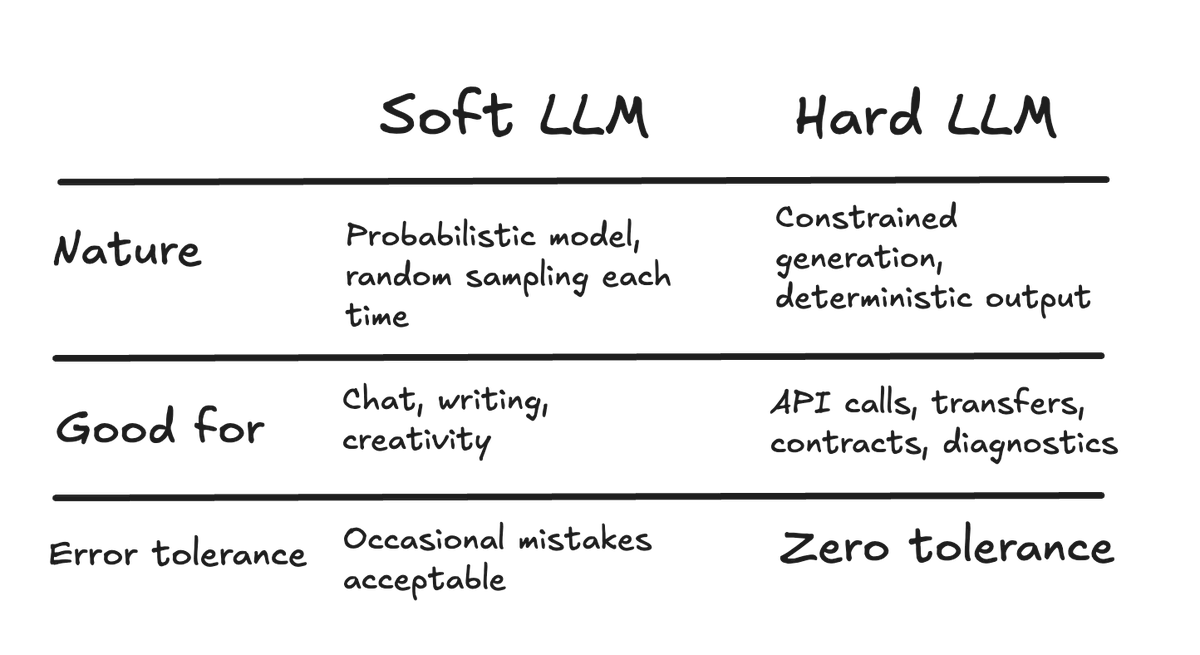
What is the "Hardness" that Jensen from Nvidia said in the GTC presentation ?
One concept is forming from today for AI computation : Hardness .
Hardness isn't hardware performance but it means "determinism" whether an LLM can produce reliable, verifiable, zero-deviation output when facing structured tasks.
Why the hardness is the bottleneck: Models keep getting smarter but less reliable. Ask the same question twice and get two different answers ,we can say this feature in conversation is a strength cause much more diversity,but it is a fatal flaw for Agents if it is not reproducable .
No bank, hospital, or law firm will hand critical tasks to a system that's only "probably right" cause there is no room and zero tolerance for 1 mistake happen on AI .
So there are two solutions so far
1. Constrained Decoding : adds a "grammar firewall" during generation, mathematically guaranteeing 100% format correctness
2. System layer validation : Agent self-checks before executing, cross verifies via SQL/API calls
And here one thing Jensen hide is that agentic AI is making SQL and relational databases critically important because Agents need "Ground Truth." SQL's ACID properties provide the determinism is exactly what LLMs lack most .Yeah Echoed by Vera CPU's 3x SQL performance.)
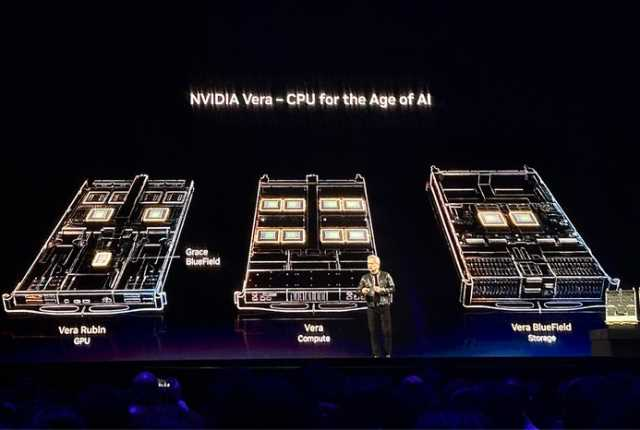
And here Jensen also show what the Nvidia's hardware play to build the infrastructure for the "Hard Agent" Era
1. Vera Rubin (now in full production): not a GPU, but a complete agentic computing system. Grace Blackwell was built for inference, Vera Rubin is built for agents
2. Vera CPU: first CPU designed for Agents, living in the "nanosecond" world with SQL 3x, streaming 6x
In the future ,there is not just GPU from Nvidia but all the computation related business from GPU to specific CPU to Agent.
After reviewing the Terminal data, we’ve decided to conclude the season early, and sunset our Terminal program.
The points distribution for Week 3 has gone out as normal and a snapshot has been taken of all user activity up to this point, which will be used in our final calculations. This decision did not come easy, but we believe this is what’s best to support our ecosystem.
Next week, we'll run a supplemental points distribution to thank all users who have been exploring and experimenting with the different apps throughout the program.
Eligible Terminal participants will receive a share of the rewards pool in USDM, based on the points accumulated to date as well as activity that supported Mega.
Early next week, we'll open a place on Terminal for one week so you can designate a wallet address to receive your rewards.
Terminal’s main features will be merged with Rabbithole, transitioning everything into one unified chain experience.
Thank you to everyone who has supported us this far. We can’t wait to show you what we have in store.
A note from Shuyao on what’s next:
Actually it would be a bit arrogant when a decentralized layer2 project doesn’t take the communication with community on the biggest platform you exposed as an important thing . Unless the program you are working overtime everyday can hit a home run ,or it must lead some concern.