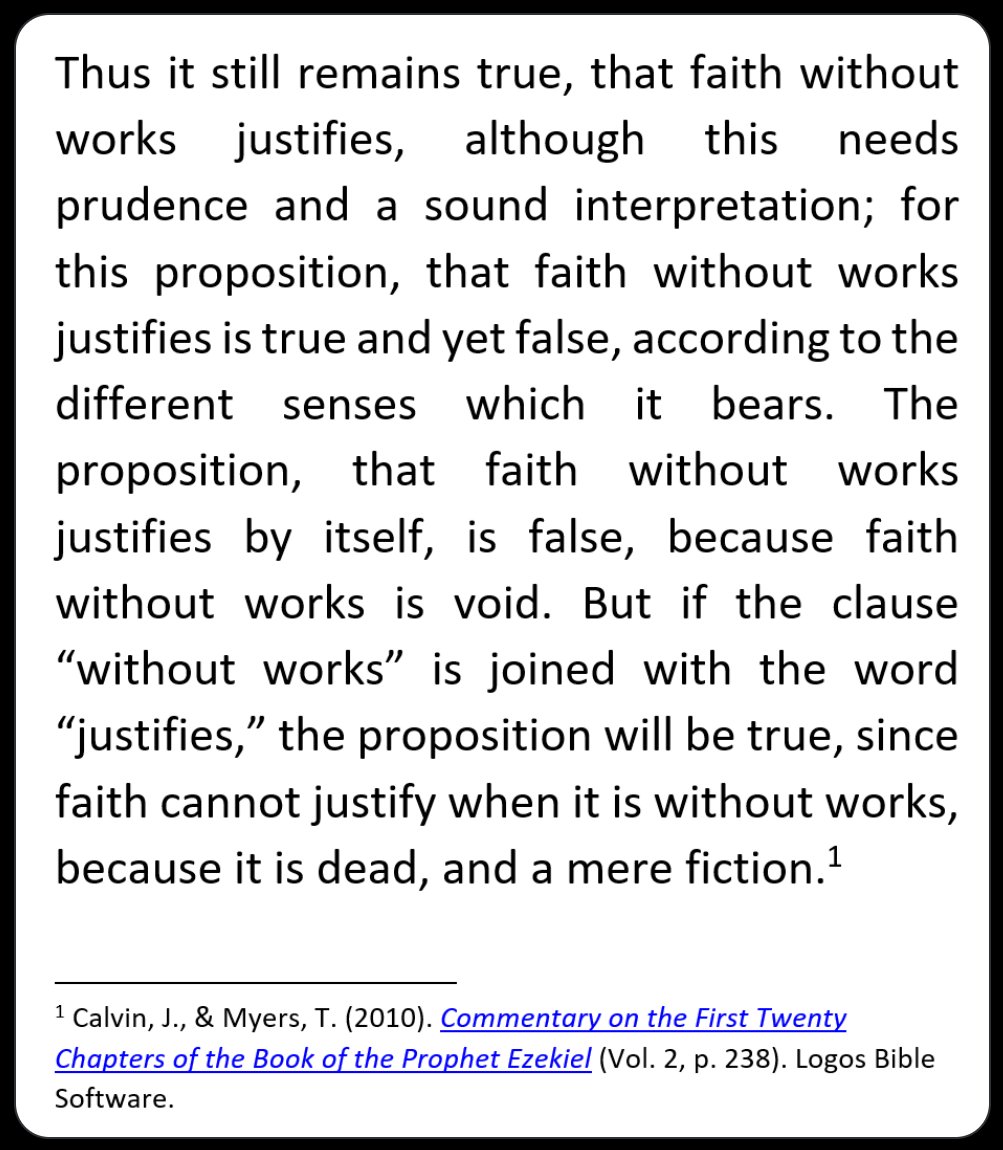
False would mean no one does what he is saying occurs. True would mean this actually occurs. The ones who say false apparently are the "some" who do this. If you take "faith alone" to mean this wear it proudly and say true.
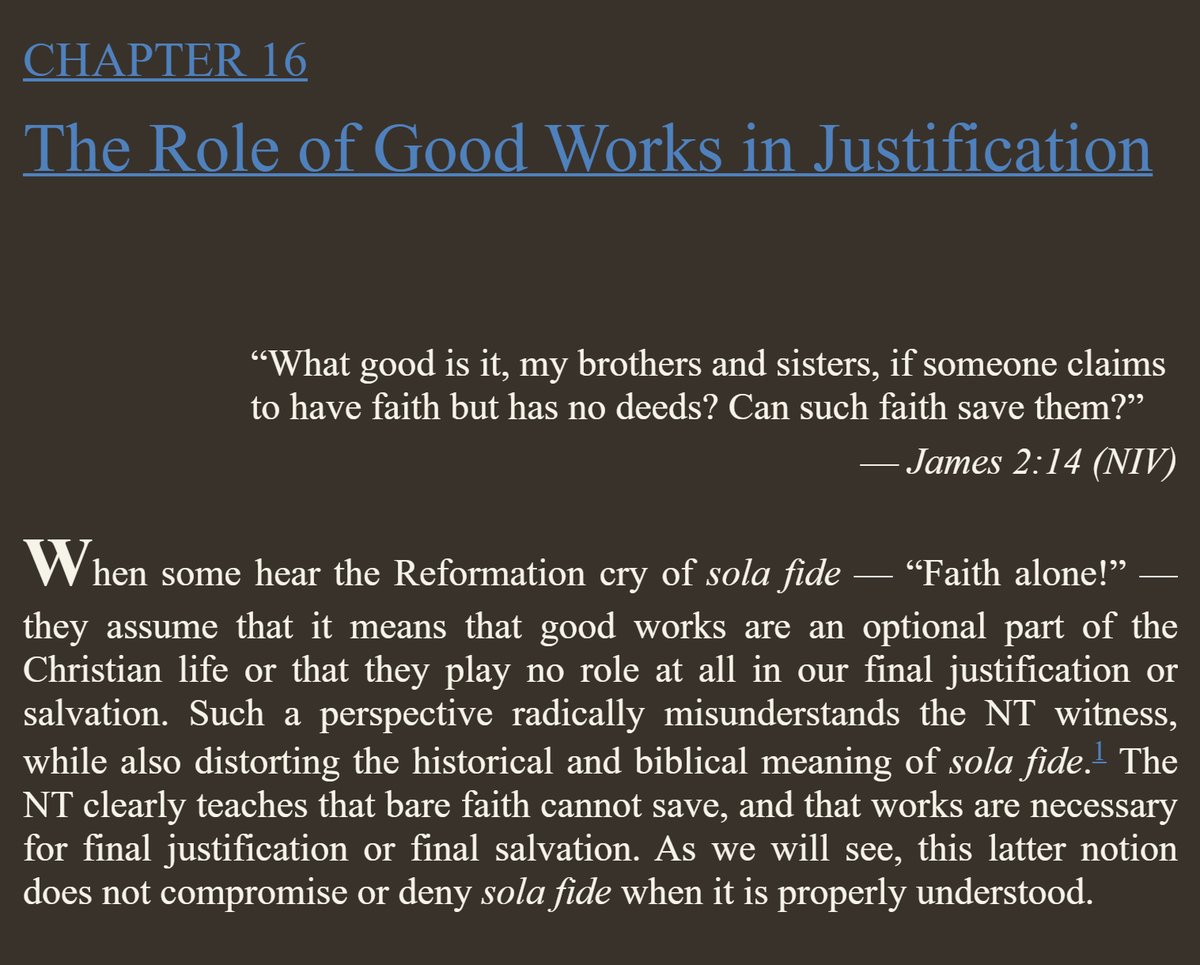
“When some hear the Reformation cry of sola fide...they assume that it means that...they [good works] play no role at all in our final justification or salvation. Such a perspective radically misunderstands the NT witness"
@PatAbendroth Like many incomplete phrases you share, you invite judgments of true or false without context. Context always matters, yet you gain attention and likes from those with limited discernment. This seems to come from Douglas Moo; either way, my point remains.
It seems that part of the spread of antinomianism in Reformed circles is due to an influx of dispensationalists adopting covenant theology, who bring with them the antinomian tendencies prevalent in much of that framework and apply them to their law-gospel distinction.
@7ummumbonum@MarkMacdonald75 It seems to me that his restitution was a fruit of his repentance, displaying that he had true repentance. So Christ saying “salvation has come to this house” shows the necessity of repentance in our Lord’s mind.
@dprmsy@7ummumbonum Every threat to a Christian is a threat to be placed under the covenant of works. It cannot but be by its very nature. Romans 6 states very clearly that to walk in the spirit is to walk in obedience, and to walk in the flesh is to be under the covenant of works.
"Do you know what your profession of faith in Jesus Christ is worth if you don’t bear fruit by doing the will of the Father? Absolutely nothing" Paul Washer, Narrow Gate Narrow Way.
But what if doing the will of the Father is not good works, but believing in Christ? John 6:40
To argue that repentance is not a necessary condition for salvation because, it in itself, will not save is a fallacious deduction. This is to say that a thing (repentance) cannot be a necessary condition because it is not a sufficient condition.
Sproul, R. C. (1991).
@MateyYanakiev Calvin nor the reformers were marrow men. Easily displayed in the reformers seeing the necessity of repentance for salvation without deviation. No repentance, no salvation, remission of sin. Repentance is not instrumental cause of salvation but without it is impossible.
Therefore, they do not distinguish well between Law and Gospel, who say that the Law only commands, accuses, and threatens: but the Gospel only promises.
Amandus Polanus
Catholics, reminder:
You can free a soul from purgatory every day this week.
From Nov 1–8, the Church grants a plenary indulgence, applicable to the souls in purgatory, each day you:
1. Visit a cemetery and pray for the dead (even silently)
2. Go to confession (within about 20 days before or after)
3. Receive Holy Communion
4. Pray for the Pope's intentions (an Our Father and Hail Mary is enough)
5. Be detached from all sin, even venial
Today only (All Souls Day): you can also gain one by visiting a church and praying the Our Father and the Creed.
One confession covers the whole week. Communion and the prayer for the Pope are needed for each day's indulgence.
And if you're not fully detached from sin, you still gain a partial indulgence. So go anyway.
Repost this to spread the word. The souls in purgatory need our help.
By 1555, Calvin...planted five churches in France. Four years later, they had planted 100 churches in France. By 1562, Calvin’s Geneva...had planted more than 2,000 churches in France. Calvin was the leading church planter in Europe.
https://t.co/xWhDj23P42
Calvin and Geneva sent missionaries not only to France but also to Italy, the Netherlands, Hungary, Poland, and the free Imperial city-states in the Rhineland. We even know of two missionaries sent from Geneva in 1557 to Brazil.
https://t.co/xWhDj23P42
This is what God's sanctification does to His own "we may...say that the life of a Christian man is a continual effort and exercise in the mortification of the flesh, till it is utterly slain, and God’s Spirit reigns in us."
John Calvin
"Sanctification is not our best efforts to be better nor our cooperation with God unto a better life and improved behavior, but is a work of God's grace. Sanctification is something God does to us as believers.”
— Harrison Perkins @PastorPerks
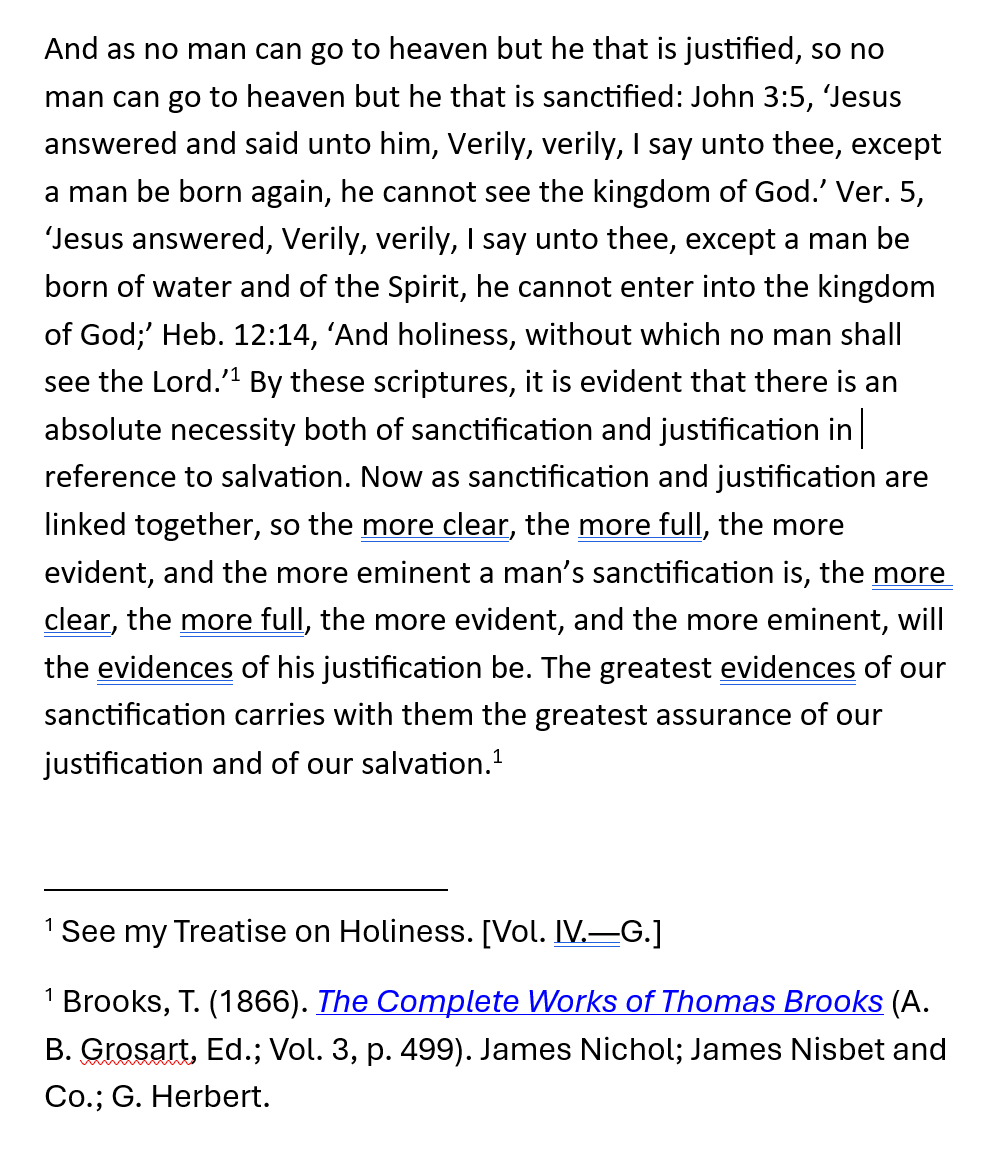
By these scriptures, it is evident that there is an absolute necessity both of sanctification and justification in reference to salvation.
Thomas Brooks below:
@_TSSinclair@PastorPerks This is what God's sanctification does to His own "we may...say that the life of a Christian man is a continual effort and exercise in the mortification of the flesh, till it is utterly slain, and God’s Spirit reigns in us."
John Calvin