"His music rarely gives the impression of a composer escaping tradition. Rather, it gives me the impression of a composer carrying tradition forward into territories it had not previously inhabited."Much brilliance in @lalitha_ram's essay to decipher Raaja
https://t.co/pDUx1JRuM1
14th May 1976 - is a historic day for Tamil Film Music.
50 years of Maestro Ilaiyaraaja. There has been a lot of interesting incidents in his long & illustrious magic journey, continuing till date. As a part of #qfr tribute, I will be sharing 50 such. Let's celebrate #Rajasir
காதல் ஓவியம் பாட்டுல ஒவ்வொரு lineம் ஒரு ராகமாம். எந்த ராகம் எதும்னுலாம் நமக்கு புரியல. ஆனா கேக்கறப்ப மயங்கிர்றோம்ல😍😍 இவரே இப்டி decode லாம் பண்ணி வச்சாதான் உண்டு. இன்னும் 200yrs கழிச்சும் வர்றவங்களும் திருக்குறள் மாதிரி படிச்சுபடிச்சு உரை எழுதிட்டுதான் இருப்பாங்க @ilaiyaraaja❤
I’ve been posting stories about exotic locations & landscapes, but touring the great temples of India is a worthy obsession in itself…
Visiting them is more than a spiritual trip; the temples are visually breathtaking.
But it’s also an exploration of the world’s most sophisticated ancient engineering.
Brihadeeswara Temple in Thanjavur was built between 1003 and 1010 CE and constructed from granite, without any mortar, using a sophisticated interlocking stone technique that has withstood earthquakes for a millennium.
Video courtesy: @iAkankshaP
#SundayWanderer
Before basslines were grooves, #Ilaiyaraaja made them melodies. ✨
Exploring 150 tracks where the Maestro pioneered the bass guitar as a storytelling instrument across languages
What's the one IR bassline thats your fav and i missed below? 🎶"
https://t.co/o7ddPmXRIM
What we witness in the scene, with its seemingly simple music, may look easy, but it isn’t.
Let’s see how:
The guitar keeps running underneath throughout the scene. It clearly hinting the horse, that almost anyone can sense that.
1/4
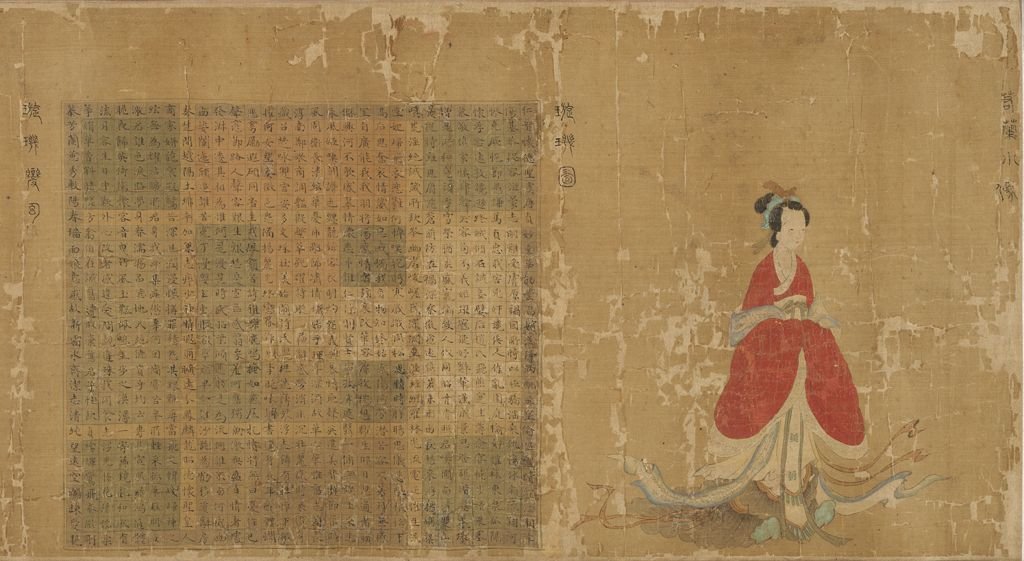
This strange square 👇 is undoubtedly the most extraordinary work of literature in human history. Yet, unfortunately, barely anyone in the West has ever heard of it.
There was this woman poet in 4th century China called Su Hui (蘇蕙), a child genius who had reportedly mastered Chinese characters by age 3.
At 21 years old, heartbroken by her husband who left her for another woman, she decided to encode her feelings in a structure so intricate, so beautiful, so intellectually staggering that it still baffles scholars to this day.
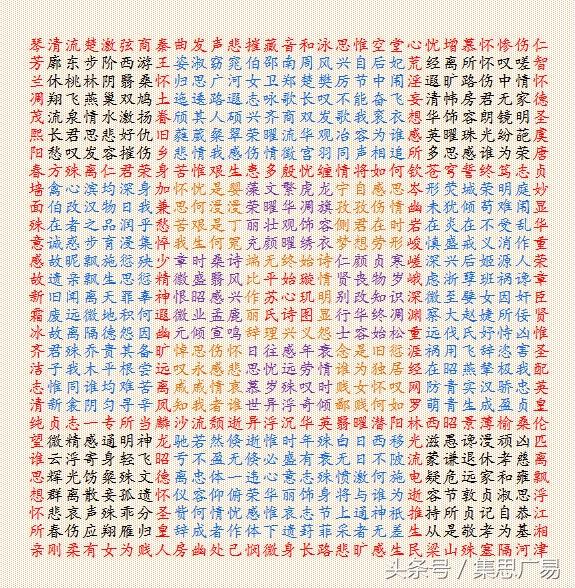
Came to be known as the Xuanji Tu (璇璣圖) - the "Star Gauge" or "Map of the Armillary Sphere" - it's a 29 by 29 grid of 841 characters that can produce over 4,000 different poems.
Read it forward. Read it backward. Read it horizontally, vertically, diagonally. Read it spiraling outward from the center. Read it in circles around the outer edge. Each path through the grid produces a different poem - all of them coherent, all of them beautiful, all of them rhyming, all of them expressing variations on the same themes of longing, betrayal, regret, and undying love.
The outer ring of 112 characters forms a single circular poem - believed to be both the first and longest of its kind ever written. The interior grid produces 2,848 different four-line poems of seven characters each. In addition, there are hundreds of other smaller and longer poems, depending on the reading method.
At the center a single character she left implied but unwritten: 心 (xin) - "heart." Later copyists would add it explicitly, but in Su Hui's original the meaning was even more beautiful: 4,000 poems, all orbiting the space where her heart used to be.
Take for instance the outer red grid of the Star Gauge. Starting from the top right corner and reading down, you get this seven-character quatrain:
仁智懷德聖虞唐,
貞志篤終誓穹蒼,
欽所感想妄淫荒,
心憂增慕懷慘傷。
In pinyin, it is:
Rén zhì huái dé shèng yú táng,
zhēnzhì dǔ zhōng shì qióng cāng,
qīn suǒ gǎnxiǎng wàng yín huāng,
xīn yōu zēng mù huái cǎn shāng.
Notice how it rhymes? táng / cāng / huāng / shāng
The rough translation in English is: "The benevolent and wise cherish virtue, like the sage-kings Yao and Shun, With steadfast will I swear to the heavens above, What I revere and feel - how could it be wanton or dissolute? My heart's sorrow grows, longing brings only grief."
Now read it from the bottom to the top and you get this entirely different seven-character quatrain:
傷慘懷慕增憂心,
荒淫妄想感所欽,
蒼穹誓終篤志貞,
唐虞聖德懷智仁。
The pinyin:
Shāng cǎn huái mù zēng yōu xīn,
huāngyín wàngxiǎng gǎn suǒ qīn,
cāngqióng shì zhōng dǔzhì zhēn,
táng yúshèngdé huái zhì rén.
It rhymes too: xīn and qīn, zhēn and rén
And the meaning is just as beautiful and coherent: "Grief and sorrow, longing fills my worried heart, Wanton and dissolute fantasies - is that what you revere? I swear to the heavens my constancy is true, May we embody the sage-kings' virtue, wisdom, and benevolence."
That's just 2 poems out of the over 4,000 you can construct from the Xuanji Tu!
At the very center of the grid, the 8 red characters wrapped around the central heart, she "signed" her poem with a hidden message:
詩圖璇玑,始平蘇氏。 "The poem-picture of the Armillary Sphere, by Su of Shiping."
Or reversed:
蘇氏詩圖,璇玑始平。 "Su's poem-picture - the Armillary Sphere begins in peace."
Many scholars, and even emperors, throughout Chinese history have been completely obsessed by Su Hui's puzzle.
For instance, in the Ming dynasty, a scholar named Kang Wanmin (康萬民) devoted his entire life to the poems (https://t.co/4exP9zpqbc), ending up documenting twelve different reading methods - forward, backward, diagonal, radiating, corner-to-corner, spiraling - and extracting 4,206 poems. His book on the subject ("Reading Methods for the Xuanji Tu Poems", 璇璣圖詩讀法) runs to hundreds of pages.
Empress Wu Zetian herself, the legendary woman emperor of the Tang dynasty, wrote a preface to the Xuanji Tu around 692 CE (https://t.co/yW7aR73MPc).
Incredibly, there's even far more complexity to the Xuanji Tu than just the poems:
- The name 璇玑 (Xuanji) - Armillary Sphere - is astronomical in meaning and the way the poems can be read mirrors the way celestial bodies orbit around a fixed center. It's a model of the heavens.
- Her original work, with the characters woven on silk brocade, was in five colors (red, black, blue/green, purple, and yellow) which correspond to the Five Elements (五行) - the foundational Chinese philosophical system that explains how the universe operates. So it's also a model of the entire cosmic order according to ancient Chinese philosophy.
- It's also of course deeply mathematical with this 29 x 29 perfect square grid, with sub-squares, lines and rectangles, and a structure which allows for symmetrical reading patterns in all directions
- Last but not least, the content of the poems themselves contain multiple registers. On top of expressing her personal grief and longing for her husband, it's also filled with accusations against the concubine (Zhao Yangtai) he left her for, reflections on politics (with many references to sage-kings) and philosophical reflections.
So the Star Gauge is simultaneously:
- A love letter (expressing personal longing)
- A legal brief (arguing her case against her rival)
- A cosmological model (structured like the heavens)
- A Five Element diagram (encoding the fundamental structure of the world according to ancient Chinese philosophy)
- A mathematical construction with perfect symmetry and precision
And yet, for all this complexity, we should not forget this was all ultimately in service of the simplest human message imaginable: a 21-year-old woman asking the love of her life "come back to me".
Her husband did, eventually. According to what empress Wu Zetian herself wrote in her preface to the Xuanji Tu, when he received Su's brocade he was so "moved by its supreme beauty" that he sent away his concubine and returned to his wife. As the story goes, they lived together until old age.
The heart at the center was filled after all.
vegam vegam povom povom from anjali movie
the way #ilayaraaja weaves the journey of a group of kids cycling into cloud into the musical elements of this song is amazing. makes me listen again and again.
In a world where most music directors ignore milieu, time period and the rooted context of a story, #Ilaiyaraaja still does the work. He understands place. He understands emotion as culture, not just sound.
This is the work going on for weeks now causing congestion and chaos on the roads of Kaggadasapura 6th Cross, CVRaman Nagar. When is this going to complete? Please deploy traffic police during peak hours. Our children are suffering.
@ICCCBengaluru@GBAChiefComm@blrcitytraffic
Arattai is on the surface a simple product but it has a lot of depth inside.
Let me list the engineering frameworks (all homegrown) that power Arattai.
First is what we call our messaging/AV framework. This has been the "real time" workhorse of Zoho for a while and this is what offers you those crisp calls and meetings that connect quickly. It has been perfected for 15 years.
Then we have a distributed framework that allows us to distribute the workload among many servers and databases, and provides fault tolerance, performance monitoring, security and so on. This is the backbone of Zoho and powers a lot of what you see on the surface and also keeps our systems secure. We have been perfecting this for over 20 years now!
We have teams actively working on these frameworks and they provide strong support to the Arattai team.
Our staying power comes from the depth of all the R&D we do. Recently I have moved full time to R&D and you will see many more innovations from us.
Finally being a dedicated engineer is like being a Rishi.
This is what I told our Arattai team yesterday: all of you have worked hard for over 5 years without expecting that the product would ever take off.
Allow neither praise nor criticism nor fame to distract you, resolutely stay the course.
That is our mindset.
We have faced a 100x increase in Arattai traffic in 3 days (new sign-ups went vertical from 3K/day to 350K/day). We are adding infrastructure on an emergency basis for another potential 100x peak surge. That is how exponentials work.
As we add a lot more infrastructure, we are also fine tuning and updating the code to fix issues as they arise. We have all-hands-on-deck working flat out.
As a matter of fact, we had planned on a big release by November, with a lot of the features you expect, a huge capacity addition and a marketing push. And then it suddenly went vertical!
We have a lot more planned for Arattai, please give us some time. Thank you for your patience and support! Jai Hind 🙏
Introducing my father.
Not as an actor, director, producer, singer, lyricist, music composer… but as an explainer.
With a special appearance by @vtvganeshoff#TR#TRNation
A recent distress call: a student has taken about ₹70L ($80K) debt at 12% to get a master's degree in a small college in the US.
The problem: the job scene in IT is bad, especially so for foreign students and payments on the loan are starting soon.
I don't know what we could do in this situation because we have not been hiring much as we transform ourselves for the AI era. That caution in hiring is also because we have a policy of not resorting to lay-offs.
I urge students and parents to be cautious in borrowing heavily to pursue degrees abroad. Borrowing heavily to pursue degrees in India is unwise too.
I strongly believe we should not trap young people in debt in the name of education. The only smart course is for prospective employers to fund training programs and for the industry to broadly accept such alternative credentials rather than ask for formal degrees.
The best investment we make as a company is in training and skill development. I hope companies do this widely so we don't strand young people in debt.
Everyone has an opinion on design.
There's always an immediate gut reaction: "Ooh, I love this!" or "Meh."
But how do you go beyond that to honing your skills of giving helpful, actionable feedback?
Here are the 7 questions I run through when critiquing a product's design
1) What is the user journey to get here?
You can’t furnish a room if you don’t know how someone lives.
So learn the context: Who is the user? When do they use this product? Why? How did they arrive here, and what's on their mind?
Don't critique unless you know this.
2) What do we want users to feel and achieve here?
“If you don’t know where you’re going, you’ll end up someplace else.”
Let’s understand what a successful outcome looks like before we start lobbing feedback about the design.
3) How important is this page/experience?
In a perfect world, we make everything perfect.
In the real world, let's spend more collective energy on the stuff that really matters. More eyeballs? More high-stakes? = more thorough inspection of every detail.
4) What is our scope/timeline/team?
If speed is critical, let’s get the greatest bang for the least effort. If we have more time and people, then let's remove constraints (#7) and dream bigger. The "best" design differs according to the time/people/money you have.
5) For every proposed design change, am I confident it is better that what currently exists?
If no:
a) cut it
b) iterate on / improve the design
c) get more user feedback
d) A/B test it
6) What can we remove from this experience and have it work just as well?
When faced with a problem, we bias toward adding stuff to solve it rather than removing. So gut check if it's necessary.
7) If we could throw all our constraints away, would we still design it like this?
While we can't typically throw all constraints away (see #4), it's still worthwhile to ask because we accept some things as constraints (due to legacy, etc) when they really aren't.