You’re likely not going to be able to go skiing at 70.
You can no longer do the season in Ibiza at 45.
Some experiences are only available to you right now.
Go and do them.
The distance between a thousand dollars and a million dollars is skills.
The distance between a million and 100 million is character.
The distance between a 100 million dollars and a billion dollars is time.
A concept everyone needs to understand:
The 7 Types of Rest
Burnout has become a common phenomenon of the modern era.
We all need a plan for rest, but there's more to rest than meets the eye.
Author and speaker Dr. Saundra Dalton-Smith proposed that there are 7 Types of Rest:
1. Physical Rest: Can be passive (sleeping, napping) or active (yoga, stretching, massage).
2. Mental Rest: Take short breaks between tasks and meetings, create a power-down ritual to separate work from personal, meditate.
3. Sensory Rest: Turn off social media, get away from screens and bright lights, switch from Zoom to phone call.
4. Creative Rest: Can be natural (taking in a sunrise/sunset, walking in the woods) or man-made (going to a museum, experiencing new music).
5. Emotional Rest: Spend time alone or with people with whom you can be your full, authentic self.
6. Social Rest: Spend less time with people who drain your energy and more time with people who give you energy.
7. Spiritual Rest: Connect with something bigger than yourself. Can be through volunteering, working on a purpose-driven job, or participating in spiritual or faith-based activities.
While this may seem like a lot, you can actually hit multiple types of rest with simple additions to your weekly routine.
For example, adding a daily tech-free walk in nature is a perfect way to hit physical, mental sensory, creative, and emotional rest.
As you think about your days, make sure you are finding ways to incorporate the seven types of rest into your life. You'll feel more comprehensively recharged and ready to take on life's challenges as a result.
Reframe rest and recovery as a core part of your daily systems, not a reward for your efforts.
You don’t need to “earn” your recovery—it should be a central part of your ritual that allows you to thrive.
If you enjoyed this or learned something, follow me @SahilBloom for more in the future.
You’re gonna lose sleep.
You’ll doubt whether it’ll work.
You’ll stress to make ends meet.
You won’t finish your to do list.
You’ll wonder if you made the right call - and have no way to know for years.
This is what ‘hard’ feels like.
And that’s okay.
Until you're comfortable with the disapproval of others, you are not truly free yourself.
You must develop the ability to be disliked in order to free yourself from the prison of other people's opinions.
Life lessons from my father that I want to teach to my son:
1. You can tell everything you need to know about a person by observing how they treat service workers.
2. Hard work will never be overrated. You have to work hard if you want to get ahead.
3. You don't need to have an opinion on everything. It's perfectly reasonable to have no opinion on something that you haven't researched or don't understand.
4. You can get pretty damn far in life by just saying what you're going to do and then doing it.
5. Showing up early costs very little and pays off handsomely in the long run.
6. Waking up early is the easiest way to improve your odds of success. You don't have to wake up early to be successful, but you rarely find an early riser that isn't winning.
7. Having good posture is a physical and mental unlock for life.
8. Being kind to people is the only real life hack. Kindness remains severely underrated.
9. Consistency is everything. You should never bet against a person who just keeps showing up.
10. Most of us need fewer friends and more intellectual sparring partners. Friends are pleasant and easy to come by, but intellectual sparring partners question our assumptions and force us to level up.
Those are 10 life lessons I learned from my father that I want to teach to my son.
If you enjoyed this, follow me @SahilBloom for more in future.
I’ve been thinking about how hard we try to control our lives this week.
“Fear and ego—in other words, ignorance—are keeping your hand on the tiller. Release the tiller for whatever reason, and the steering takes care of itself.” — Jed McKenna
Just let that sink in for a moment.
What would life actually be like if you didn’t grip the tiller so hard?
(The tiller is the handle that attaches to a rudder on a boat - it’s the thing that steers)
I heard Aubrey Marcus say something similar in a video when he announced the release of his NYT Best Selling Book.
“I spent so much of my life terrified of what I was going to become and whether I was going to be right here right now.
God, how much time did I waste afraid I wasn’t going to be right here right now?
If I could change, the only thing I’d change about my whole life would be fearing less that I wouldn’t get right here - the place I was going anyway.
I wouldn’t change all the mistakes and mishaps, I needed those.
But all the constantly worry that I wasn’t going to make it, that took me out of enjoying the moment.
It took me out of enjoying these experiences, smiling or eating my lunch or doing whatever I was doing.
Know your mission, have faith you’re going to get there.
Wherever you go, it’s going to be alright.
Just find ways to get out of your head.”
Beautiful.
Humour me for a second…
Just imagine that the outcomes in your life are predetermined.
Imagine that where you’re going to end up - the achievement of your goals, the attainment of your pursuits are predestined and you’re going there anyway, no matter how much you fear or worry.
You still need to work, you still need to do the things, but you don’t need to fear about completing the work or worry about whether you’ll do the things.
The things you need to do will get done, and the ones you don’t, won’t.
How differently would you experience life?
You’d be able to just BE.
In the world but not of the world.
Doing the things but not afraid of the things.
“You observe events and you allow the flow of things to do the steering and you go where you go.” — Jed McKenna
I really think there’s something to this.
“Release the tiller” is a mantra we all should be reminded of when we find ourselves gripping too hard to fears or expectations.
Why fear about whether you’ll get to the place you were going to all along?
5 Things All Fools Do (From The Stoics):
1. Care what other people think (Epictetus)
2. Wait until tomorrow (Marcus Aurelius)
3. Act like they’re going to live forever (Seneca)
4. Suffer before it’s necessary (Seneca)
5. Make up ‘reasons’ to not do the right thing (MA)
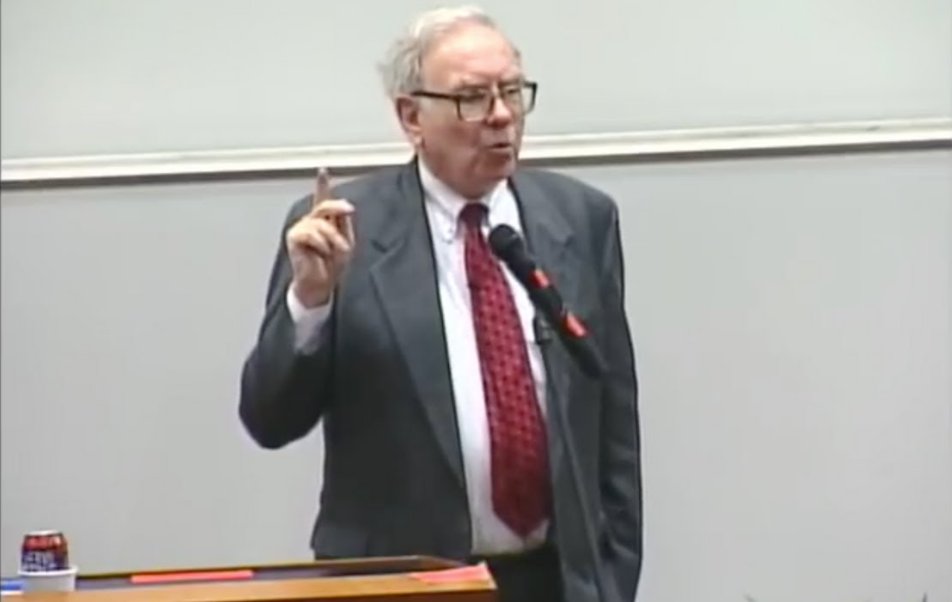
In 2001, Warren Buffett gave a talk at the University of Georgia.
He asked them the most Warren Buffett question ever:
• If you could invest in a friend and get 10% of their income for life -- who would you pick?
Once the students answered the question, he then asked this:
• Why would you invest in that person?
• What character traits do they have?
Now they have a list of character traits to adopt.
Shortly after this, Buffett asked:
If you could short a friend's earnings, who would you pick and why?
Now you have a list of character traits to avoid.
----
1. Do not think this thought experiment is only about money.
You can use it for whatever currency you value.
E.g. Happiness coin
If you could get 10% of a friend's happiness, who would you invest in and why?
If you could short someone's happiness, who would you pick and why?
You can run the same thought experiment with Fitness coin, Friendship coin, Romance coin, etc`
2. This thought experiment is genius because it hacks a bug in life's video game:
Humans are terrible at self-awareness.
But we are great at spotting things in other people.
E.g. If your friend is in the wrong relationship, you can realize in 10 minutes what may take them 10 years.
Daniel Kahneman summarised his book on cognitive biases with the following:
“The premise of this book is that it is easier to recognize other people’s mistakes than our own.” - Daniel Kahneman
3. Nuance - It has to be purely from merit.
Buffett says it can't be because someone will inherit a large sum from their parents.
It has to be based on their behavior.
E.g. If you want 10% of someone's fitness coin, it's not because of incredible genetics -- is because of the actions they take.
The proverb in the ancient world was: “If you dwell with a lame man, you will learn how to limp.” It’s a pretty observable truth. We become like the people we spend the most time with.
"I don’t believe in specific goals. Scott Adams famously said, Set up systems, not goals.' Use your judgment to figure out what kinds of environments you can thrive in, and then create an environment around you so you’re statistically likely to succeed."
@naval
If you keep beating it up, and keep working it, you can make it work.
You just gotta be willing to sit with it for longer than you thought.
And you might need to make 20x the variations to get there.
But in the end, the work done right, is the ultimate payoff.
“It’s good to criticise the vile aspects of the world, but there is nothing more vile than to do nothing about it and convince others to do the same.” — @RyLazChi