Launch update 🚀We stood down from today’s launch attempt due to LOx temperatures being out of bounds for flight, but the resolution is well underway for the next attempt.
After assessing the weather, we are now targeting no earlier than Wednesday 5 June NZST for the launch of PREFIRE and Ice, the second of two climate launches for @NASA.
What we’re building today will enable sending around a million people and several million tonnes to the Martian surface in the years to come → https://t.co/F8OOgqMFfh
About last night 👀
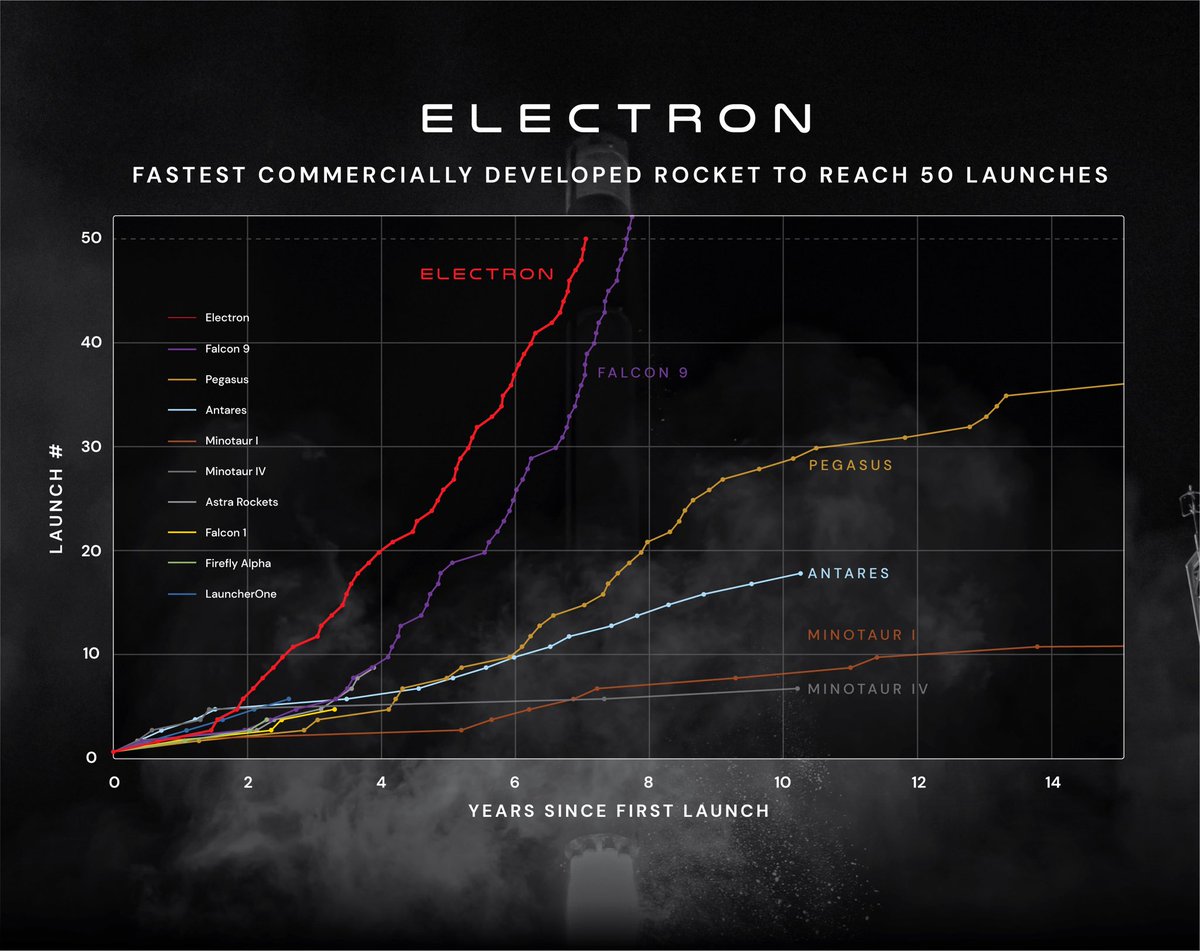
Our 46th Electron launch was a beautiful sight at Wallops Island. If you hit the snooze button too many times, relive our early morning lift-off for the @NatReconOfc over at our webcast https://t.co/zT3SZhLp0x
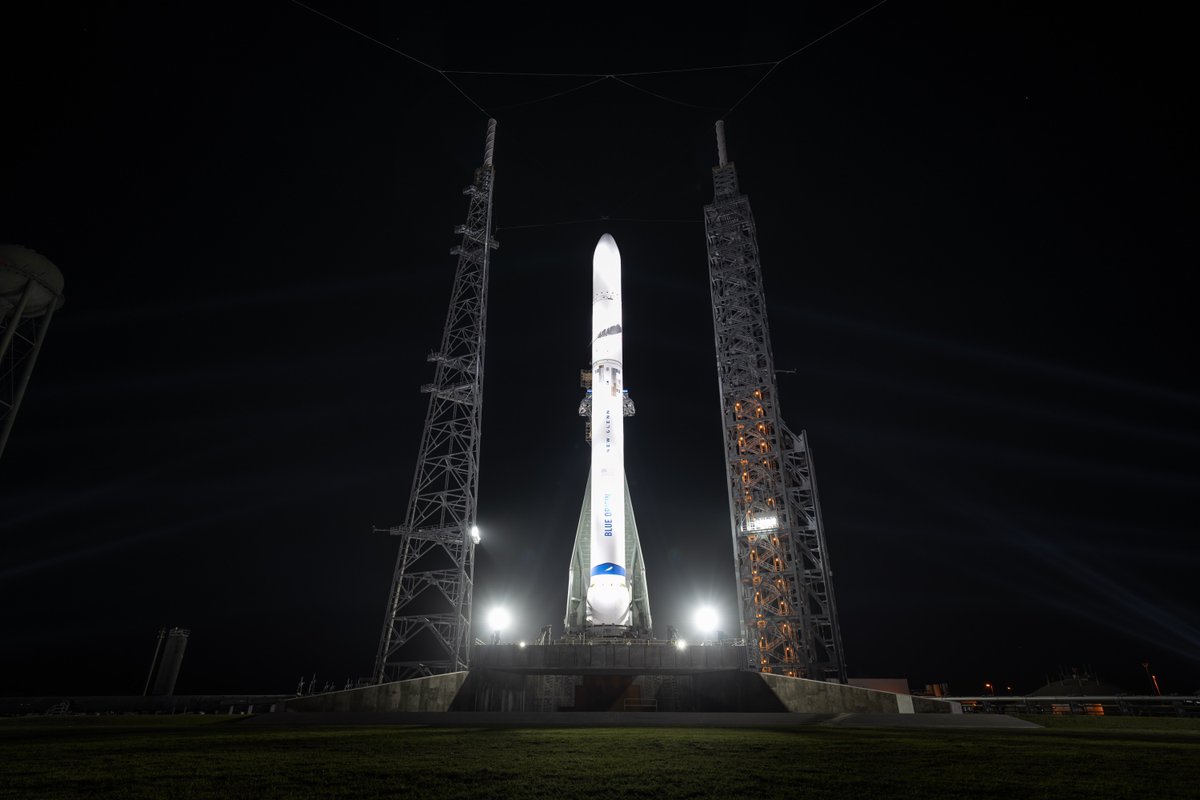
Meet New Glenn! Our vehicle upended on its launch pad today for the first time. The rocket will remain vertical for at least a week for a series of tests in preparation for its first launch later this year. Thank you to our customers, partners, and everyone else championing efforts to build a road to space for the benefit of Earth. Learn more: https://t.co/jr1ON8Dk1g
Welcome to Electron's busiest year yet, with a record number of launches scheduled from LC-1 and LC-2.
The next Electron in the queue is undergoing final launch preparation. We can't wait to share the details of its exciting mission with you very soon.
The first and second stages of New Glenn’s test vehicle mate for the first time, enabling us to exercise our tooling and stage interfaces in preparation for our first launch later this year.
“Why most scientists don’t get too excited about UAP phenomena.”
I was thinking to write this as an op-ed, but realistically I don’t have time. Here’s the outline for your reading pleasure.
====
1. Scientists are generally not against the idea of aliens visiting and watching us
◦Either technological ET civilizations exist in our Milky Way or not
◦If they do exist, there’s (IMO) a strong chance they are watching us (based on observed exponential growth of tech in our own world)
◦Example: The movie Contact: monitoring us from a nearby star. (Not so impatient in that view, watching from lightyears away)
◦Seth Shostak argues for a 1AU telescope. ET would likely have that capability and thus already know we are here, even from very very far away. Because of deep time they have had plenty of time to get here.
◦Example: Astronomers looking for evidence of monitoring artifacts in our solar system. Appreciates deep time as lunar geology degrades those artifacts. Would an elemental signature survive in lunar soil?
◦Many scientists think that if any aliens are watching, they are likely machine intelligence that has solved problems of deep time and long distance, not biological that would be too limited in such a large cosmos
◦We are within 100 years of an in-space, autonomous, industrial supply chain that can scale up a million fold then a billion fold and spread to other stars. Geologically or cosmologically, the remaining time for us to get there is the blink of an eye. We are on the cusp of a true phase change in the nature of our civilization. Any civilization older than ours should already have it.
◦Establishment of superintelligent AI is possibly the most important period that should be monitored by ET, since it would make us rapidly capable of altering things on a galactic scale. So being watched closely right now is probably not considered crazy by many scientists. (Not by me, at least)
◦So AFAIK, scientists are not in principle against the idea of alien tech monitoring us or even being nearby to monitor closely. Aliens would’ve seen signs of biological activity on our planet for billions of years and have had plenty of time to get a closer view then later get here.
◦What we mostly disbelieve is all the UAP evidence (non-evidence) that is claimed for ET actually being here.
◦it depends on the bigger questions: (1) how prevalent is life, (2) does civilization survive long times, and (3) do they “ascend” in some way or remain engaged in the affairs of the galaxy for a long time?
2. Human cognition is bad
◦Scientific method was developed to counteract this
◦Most UAP phenomena are outside this scientific process: not testable, not repeatable. Most discussion on UAP have skipped the scientific process. It is not hard to see how skipping the process is leading to wrong conclusions
◦“But aviators are super human!” Give the response to that. (They are cognitive experts at particular skills to win aerial combat or deal with flight emergencies, but solving unknowns like UAP events requires withholding judgement for a long time while slowly evaluating conflicting evidence, which is an opposite skill to that of aviators. Explain why withholding judgement is crucial to the process to avoid cognitive bias. Perception is affected by our beliefs.)
◦Most non-scientists greatly overestimate their cognitive abilities, both collectively and individually, to get right answers. Many scientists do, too. We are truly bad at thinking.
◦Examples of rigor in human research, and subtle failures of rigor that have produced wrong results, showing why rigor is mandatory. Double blind needed in studies, etc.
◦Without the rigor, you get wrong results. Period. So none of this discussion about UAPs can be believed. Period.
Continued… (1/2)
it feels good to say it’s laaaaaaunch day again 🚀
it’s been almost 3 months since our last launch, and i’m so happy to see Electron back on the pad today!
📷 @RocketLab
Rutherford & Archimedes have a new home!
Today we officially opened our new Engine Development Center in Long Beach. The 144,000+ sq/ft manufacturing complex will support high-rate production of Rutherford + development & production Neutron’s Archimedes engine.
Thanks to @LongBeachMayor and @SenGonzalez33 for helping us celebrate!
📸 @akd_ams
Our first suborbital hypersonic test launch put on a stunning light show after lifting off from LC-2 at @NASA_Wallops in June this year.
With at least 5 more HASTE launches now scheduled, this is set to become a familiar sight in Virginia skies! https://t.co/jo5uaIAljZ