SUPER-SIZED: Palo Verde is Arizona’s only nuclear power plant and one of the largest generators in the U.S.
Unit 1 first connected to the grid on this day in 1985.
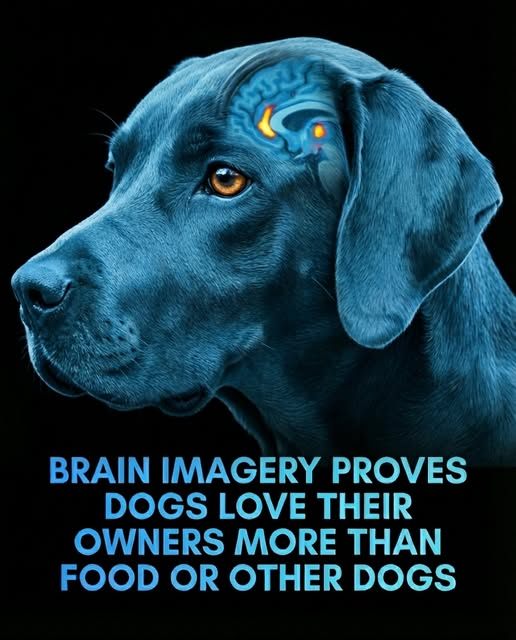
Your dog likely loves you more than anything — and science finally proves it.
A new brain-imaging study has provided scientific proof of what most dog owners have always suspected: many dogs love their humans even more than they love food.
Published in Social Cognitive and Affective Neuroscience, the research led by Emory University neuroscientist Gregory Berns used fMRI scans to watch how dogs’ brains lit up in response to different rewards. Dogs were first trained to associate one toy with food and another with enthusiastic praise from their owner.
The findings were striking: while a few dogs leaned toward treats and some showed no clear favorite, a remarkable four out of the fifteen participants consistently chose praise over food—even when both were offered at the same time. For those dogs, the neural reward centers activated more strongly for their owner’s happy voice than for the promise of a snack.
This builds on earlier work from the same lab showing that dogs’ brains respond more powerfully to their owner’s scent than to the scent of any other person or dog.
The message is clear: for a significant number of dogs, the bond with their human isn’t just about getting fed. They genuinely crave our affection and approval, which means praise can be every bit as motivating (and far healthier) than treats when it comes to training and strengthening that special relationship.
Real plasma in a stellarator filmed at CERN:
Non-axisymmetric coils sculpt a quasi-symmetric magnetic field, confining 10⁸ K ions in stable helical orbits; no tokamak disruptions, just pure 3D topology taming chaos.
Drunken elephants really do exist, and their chaotic behavior is hilarious. Thanks to fermented marula fruit (which has an alcohol content similar to that of beer), these gentle giants end up getting drunk.
The first heartbeat isn't flipped on like a switch.
Many cells gradually become active until, at a critical threshold, the whole tissue suddenly synchronizes and the heart beats.
In 1953, Salvador Dalí created “The Royal Heart,” a gold jewelry piece with 46 rubies, 42 diamonds, and a hidden mechanism that made it beat like a living heart.
Bismuth is strongly diamagnetic, so it generates a magnetic field that opposes an external one. When a small neodymium magnet is placed near bismuth, the repulsion can balance gravity and make the magnet levitate.
WATCH 👀 this amazing test footage out of @INL
Critical heat flux is a physical phenomenon that occurs when a fuel rod first begins to overheat and can no longer transfer additional heat to the water.
Learn more: https://t.co/ud4qp8icQ8