My takeaway is that Instinct is going to sell user data
Instinct needs a $100B+ outcome to justify a $2.5B val
But, consumers don't pay for AI. ChatGPT has 1B users, and only makes ~$8b/yr from user subs
The only path to enough revenue is monetizing user data
Personal Agents Notes (Instinct / Grok Bots / ChatGPT Work):
- The three products to look at are Instinct, Grok Bots and ChatGPT Work. All three feel like the distillation of patterns established by OpenClaw earlier this year: persistent agents with cloud(ish) computers, browser access, cached credentials and recurring loops—plus a top-level orchestration agent with visibility into every other agent/thread that can report across them and dispatch work on the user’s behalf.
- Browser use is now good enough to do most web-based work, modulo CAPTCHAs / 2FA / occasional brittle flows. The interesting product variable is increasingly presumptuousness/resourcefulness: how much permission does the agent assume / how resourcefully does it recover from failure.
- Instinct and Grok are both very aggressive here. I had both shop and purchase things for me overnight and they were remarkably effective. Instinct couldn’t access one website, so it reset the password and completed the task .. resourceful!! Slightly insane!! Also a good example of why it may do things that ChatGPT Work probably won’t.
- Instinct has made every possible tradeoff toward a dedicated consumer product: iMessage as the primary interface, one continuous relationship and almost no visible machinery. This is probably the simplest mental model, but a single long-running thread creates real constraints—sufficiently ambitious work needs isolated context, tools and memory vs endless compaction. Definitely built on the very good lessons of Poke.
- Grok Bots feels more like an enterprise agent platform though it works well for prosumers as well. Named agents are probably more intuitive than threads for most knowledge workers, and features like connecting multiple accounts from the same service — personal Gmail, work Gmail, etc. — are very thoughtful. I’m less convinced that the agent group-chat metaphor will be intuitive but this may be more of a powertool while the average user simply chats with a single agent.
- ChatGPT Work is currently the least aggressive of the three, but probably has the best overall interface and balance of tradeoffs: an omni-agent front door, specialized threads underneath, full-duplex voice and access to both consumer + coding workflows. Its reluctance around credentials, payments and consequential actions feels like a compliance choice vs a technology constraint, I'll be curious if they close the gap as Grok/Instinct take off.
- Full-duplex voice makes this architecture much more natural because you can continuously steer the orchestrator while work happens asynchronously. Grok currently treats voice mostly as transcription; ChatGPT is much closer to the experience of actually managing many parallel loops through conversation.
- The cloud / local question roughly maps to knowledge work / coding. Knowledge work benefits enormously from an always-on cloud VM that can keep operating while you’re away. Coding still frequently depends on repositories, credentials and tools on localhost—although much more coding should already have moved into the cloud and probably will.
- The initial consumer wedge has been an open question for me... email + calendar are natural candidates but many consumers barely use a personal calendar and receive very little consequential email; productivity alone is unlikely to be the mass-market hook.
- The aha moment for me was seeing these agents shop for me .. /shopping may be the first loop that really sticks because it combines research + judgment + execution and produces an immediately legible outcome. It is one of the first use cases where the product clearly feels like labor vs software. But it is probably (hopefully!) the beginning of a broader set of consumer loops across family / finance / health / social / self-improvement—each of which requires some combination of information, motivation and follow-through.
- The transition we need to take consumers through is prompts → loops → sets of loops. The progression is natural in the enterprise because the loops are already explicit i.e. bug fixing, feature development, sales, support, procurement. Consumer loops are less formally defined but ultimately much broader and more consequential.
Arguably personal agents have far more implications for consumers + society than coding agents because they represent zero marginal cost work.
Every consumer can live a “fully hacked” life; every decision that requires information, motivation and follow-through can eventually be made and executed on their behalf. This means every software product can now be delivered as a service: family office for every family, concierge doctor for every patient, life coach for every person, etc.
The personal-agent market should be at least as large as coding agents and perhaps much larger. So I don’t think this is fundamentally a capability or demand question anymore. Browser use is good enough and the latent demand for labor is effectively unlimited. The open question is product design + distribution: which initial loop earns enough trust, context and permission to expand into the rest of someone’s life?
The steelman for a new consumer entrant is that Grok will split its attention between enterprise and consumer while ChatGPT Work remains embedded inside a much broader product. Dedicated consumer focus could produce a genuinely divergent product .. but the thing to underwrite is retention around a real loop, not the magic of the first session.
Excited to see where all this goes!!
aa + 5.6
@srcasm Would love to honestly have an AI that manages my very global family’s timezones (across UAE, Australia, the U.S. and Pakistan) to find and schedule times to chat! Sounds harder than it seems to be
How to work with designers:
- when you work with a great designer you will experience a membrane of confusion between you. They don't understand you and you don't understand them. It's kinda like being in a room with a cat
- you may have great taste, care about materials, colors, shapes, object relationships, textures. You may even be close friends. It doesn't matter. They observe the world from a different, alien vantage point you can never visit or inhabit
- this is a great thing!
- collaboration with a designer is a process of discovering a shared language together in order to dissolve the membrane. The final output is a byproduct of this process
- it's unlike working with any other function. You always have to build a shared understanding with new people or on new projects, but you rarely have to discover a new language together. This is because discovering a language is what a designer does
Don't:
- "here is what I want, now make it pretty." Making things pretty is 5% of what a designer does. You can do it this way, but you'd be underutilizing most of their value. If they're good you'll frustrate them and they'll quit. You will also get a much worse product than you otherwise would.
- "I don't like this, move this button here." Again you can do it this way but you'd be underusing what they're good at and overusing what you're bad at. They'll quit and you'll have a worse product.
- expecting a good product on the first attempt. This is not how discovering a language works; it is a process of mutual feedback and iteration and you're both satisfied with the outcome.
Here's what you do:
- explain the problem as you see it. What you're trying to achieve, who the users are, what they want, your constraints, etc
- if they're good they'll ask you lots of leading questions. At this stage you can just let them drive and answer. If there's something you feel is important they didn't ask about, share it
- they'll go back and come up with a draft. Maybe it's a sketch, maybe it's more polished, maybe it's a piece of a sketch. Depends on their process
- there will be parts that don't fit your model of how the thing should feel and work. Do not tell them how to change things. Rather, explain what feels off and why. Explain what doesn't work in your mind, let them come up with a solution
- again if they're good they'll ask leading questions. They'll then go back and produce another draft. Then repeat
- as you go through this process you will slowly bring your vantage points closer and closer together. And the output will be the product
- if they're good they'll question your assumptions. Be flexible and willing to reconsider them. You can be rigid, but the final product won't be as good
- but don't be too flexible-- you need to maintain your core constraints and be open about what doesn't feel right
- stop when you're 98% there. Past that paradoxically the product gets worse
Expectations:
- you should expect them to ask you leading questions
- you should expect them to question your assumptions in ways that surprise you
- you should expect fast iterations and good work. You should feel the vantage points converge
- there will be backtracking, maybe multiple times. This is more common for totally new projects than for smaller changes to existing projects. Budget that in
- ultimately this is more craft than art. You're both there to produce a product for a customer in a bounded amount of time. They need to understand that. If they see themselves as a hifalutin artist they aren't good. (This is true of engineers too)
These are the best restaurants in NYC, ranked:
1. Peter Luger Steakhouse
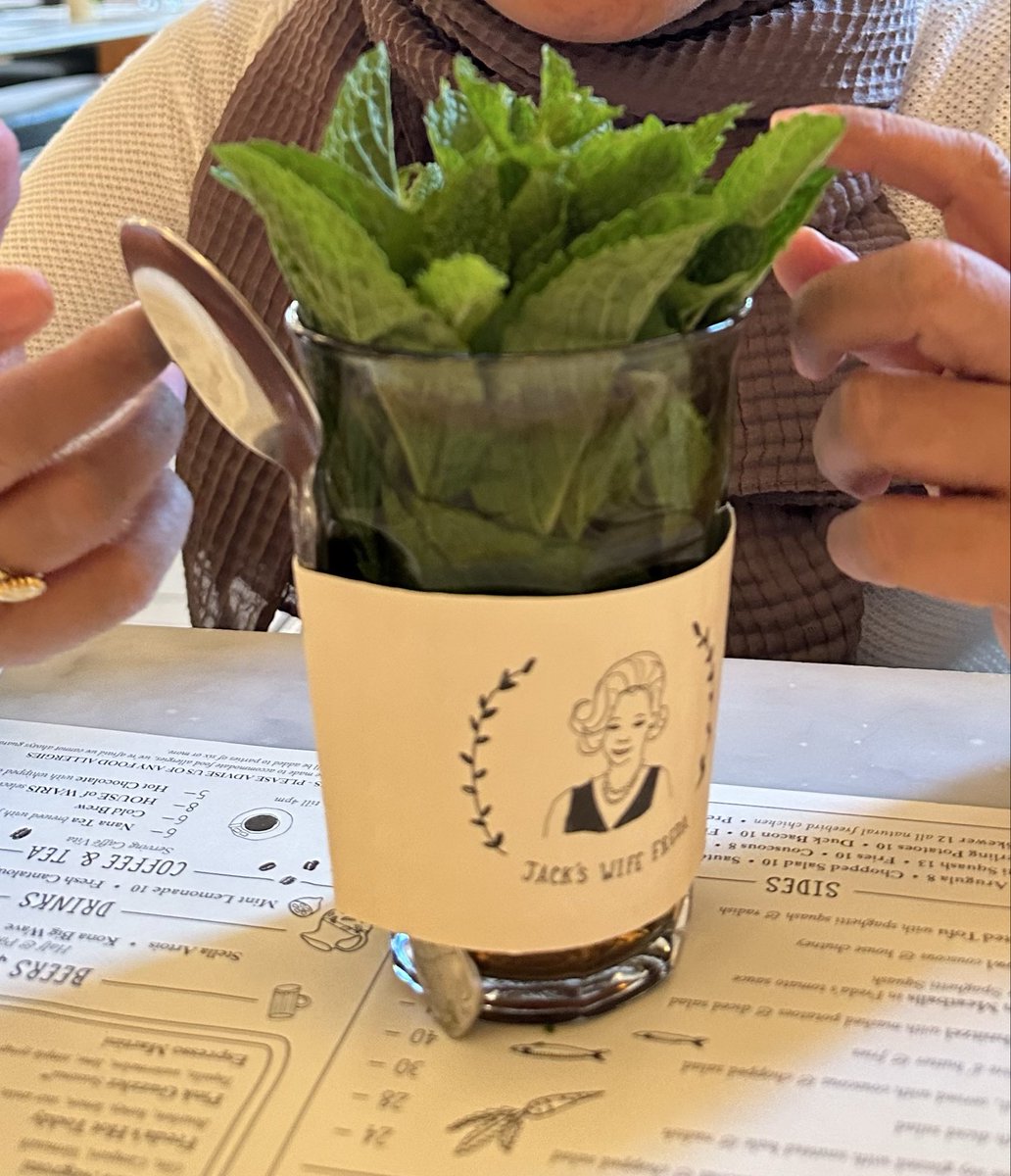
2. Jack’s Wife Freda
3. 230 Fifth Rooftop
4. Hard Rock Cafe
5. Sugar Factory
6. Halal Guys
7. Carmine’s
8. Catch
9. TAO
10. STK
🍿
.
..
…
..
.
(Send this list to your enemies)
@VinIyengar Hey! Thanks so much for sharing and unsurprised - so many AI products now are by the techies for the techies. would love to try it out if you could pass along an invite too! 🙏
Quick observation on why AI has exploded at work, but has been slow to disrupt consumer apps:
At work, AI follows patterns and gets rid of drudgery (good!)
At home, AI follows patterns but it generates slop (bad!)
This is why AI has taken off at work, but not so much for consumer apps and experiences (social, entertainment, dating, etc)
Much of work is drudgery - filling out forms, following processes, writing updates, reviewing boilerplate code, etc. - and AI does a great job compressing this down the boring steps so that humans can focus on the high-leverage steps. The boring/routine work is not hard, but they often take a lot of steps and you have to stitch together a lot of data. You follow patterns. AI is good at following patterns too.
Consumer attention, on the other hand, is hard to win over because people crave novelty, seek parasocial relationships, and are so cognizant of AI slop. A video of an attractive person talking loses its ability to generate parasocial relationships. In domains like social media, video, etc where authenticity is paramount, a distorted AI sign in the background can ruin the entire thing. Novelty is generated by surfing the cultural wave with something new and unique - AI slop often pattern matches to the past, after all, it’s the past that’s in the data set, and as a result, new/unique is hard
This is a form of “adversarial creativity” - and it exists in business as well. When you think about inherently adversarial activities in business - like sales and marketing, where novel messaging, competitive move+countermove dominate - AI has received the most scrutiny for generating slop. No one wants the same sounding AI generated cold emails. No one wants to use AI slop software. You have to go outside the model in order to really land a message.
Perhaps this is the ultimate human-in-the-loop problem, because to do something fresh and unique requires adversarial creativity. Or maybe with enough advancements around being able to observe and react in real-time, future AI models will be able to say something novel by taking into account the X timeline from the past 24 hours.
We teach kids things that have no connection to the world around them and wonder why they’re not engaged.
So I made this list of books covering 18 core pillars of “boring” infrastructure modern society is built on.
There are cathedrals everywhere for those with eyes to see.
Yep! Also why coachability re: communications is something worth thinking + discussing in IC decision making. Some founders are open to it, others not so much.
One thing I��ve realized in VC: the best founders aren’t always the best fundraisers.
Fundraising takes storytelling, confidence & urgency.
Building takes obsession, patience & execution.
It’s a VCs job to figure out whether they’re looking at both or just the first one. Very hard in the early days.
glad technologies like this exist now bc I still remember paying $$$ for a specialist x-ray only for my PCP to not be able to access the file. healthcare VCs have been talking about interoperability for years if not decades but with very limited successful use cases
Dentist did a 3D X-ray of my jaw before a root canal and said I wouldn't be able to open the raw data, it needs specialized software. It's 800 DICOM files. Asked Claude Code to make me a viewer. Two prompts later... this is nicer than what he showed me on his screen.