@runliftrunlift 😅😅😅its been so massive this year i love it though. The them is to be on the roof everyday. Poor older guys are always up there in the country side.
I’m 54, a physicist, have spent decades using mathematics to study the universe, solve problems, and build things.
If your work touches numbers, now or in the future, and you want to learn math properly, this thread shows a from-the-ground-up math you’ll actually need:
@runliftrunlift I have seen massive amounts too, reminds me of 2021-22-23. Luckly Japan doesn’t see a lot of days of black eyes. We would be walking like ducks all day.
I have stayed in snowy side of Japan for almost 10+ years, and its only over the last half where my body has gotten used to it. My health suffered for 5-6 months, but I have found the solution to be right clothing. Because I want to maintain more movement, and working towards running a marathon next year, I have resolved to getting to walk as much as possible.
☄️Day 21-32 of 500DaysOfLittlePromise:
The heat is something out of this world this year. I travelled from my current work place north of Japan to the south side in Fukuoka.
Seriously, I didn't expect the weather to do a number on me like this:
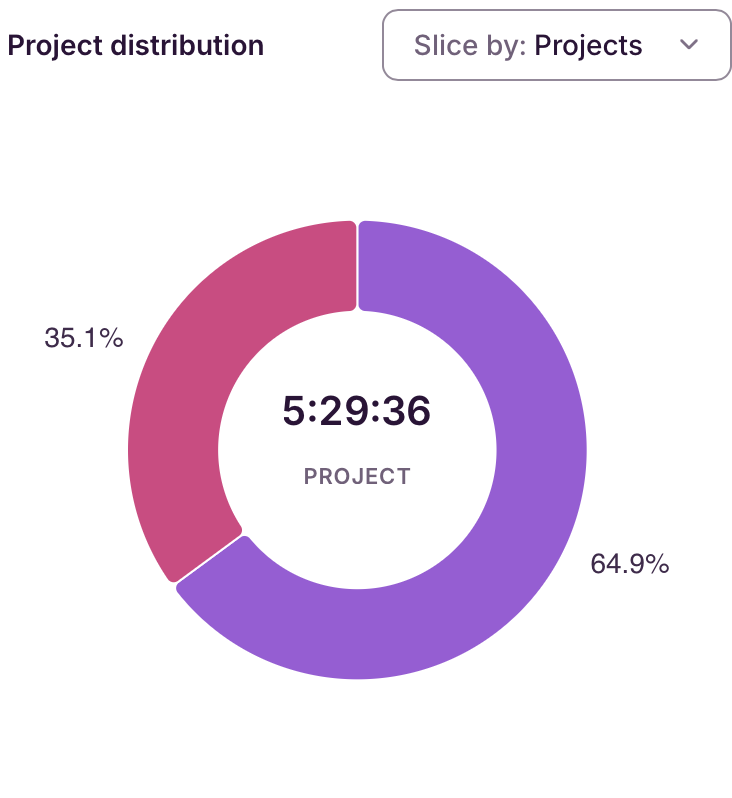
Here is a record of how much time was recorded for week 30(21-27): 64.9% was attributed to learning the OOP concepts, covering concepts such as collaborator object, the mechanism of how they fit into an 00P program, thus in week 31(07/28-08/02) I started working on the Rock Paper Scissors and adding more features. The program is in-progress, will report tomorrow on it..
A good time to slow down and zoom in and out as i work through this problem.
Also, I have been reading the book to get better at improving my time and this concept of making daily highlights, and scheduling on the calendar as suggested by Jake Knapp and John Zeratsky has been keeping me sane.
#productivity, #100DaysOfCode, #selfLearner #TimeManagement
☄️Day 14-20 of 500DaysOfLittlePromise
A super quick update on
1️⃣ Technical Learning
I ended up committing 13hrs 32min this week compared to the 16hrs planned. But it's no sweat, I realise that I have also done a few other activities that are related to my overral progress in covering and establishing a solid foundation for OOP concepts like:
ª Inheritance: which discusses the inheritance of state and behaviors between classes.
ᴮ Collaborator Objects: perhaps the toughest one that I am still trying to develop a mental model on: but in a nutshell, it describes the ability of an object's state to be stored in another. There are some key principles and some design considerations to implement this in code, and perhaps thats exactly what's keeping my head focused.
c. Module in Ruby: a different form of inheritance, important to Ruby because Ruby's inheritance is mostly single-class inheritance; therefore ,to allow more methods to be shared between classes, we do mixin with modules.
- I followed these with a lot of practice problems, and I find myself doing a lot more mind mapping in this course than in the previous 🧘🏽.
2️⃣ Non-technical Strengthening my focus
- We are distracted with a lot of things, and sometimes when we want to work on our goals, its like the world wants to work against us, trying to get fit and cut sugar, suddenly you brain cant stop thinking about the soda, oh goodness and the vending machines every 200meters in Japan don't make it easy.
- For this, my target is to implement a strategy:
Ⓐ Keeping a scoreboard for time spent to my learning session(target for week 30 is 16hrs).
Ⓑ Allocate specific time to make this a deliberate intention.
Recap Way forward for #500DaysOfLittlePromises
🧘🏽Non-Technical
- I have been thinking a lot about discipline and focus concepts.
- Why does my discipline wane when I have to do important things? Can I force myself to focus through discipline?
I think discipline has its limits when it comes to focus, even worse when one's mental model has been bruised, when discipline has been scared by not achieving or getting rewarded for what was thought might have bring rewards after a disciplined endeavour.
I say this as someone who had to send their technical papers to journals after many months of disciplined hard work, and then getting rejected during my graduate studies.
So for this, here are my plans to bring a different idea to stay focused on my endeavours, particularly upskilling in programming, working full time and maintaining important parts of my life.
1️⃣ Designing my environment:
- What are my external and internal distractions?
- Last week I recorded time spent on the phone, shocking, so i am going to put some constraints on this during the day, especially afternoon. This is where I find myself wanting to scroll on it the most, leaving me drained.
2️⃣ Constructing the right internal scripts:
- Here, I intend to allocate 90 minutes per session for my work and personal projects, thereby making explicit limits. Often it gets very difficult, especially when I have to work in the morning and then rush for my commute.
3️⃣ Lastly, following my internal scripts; I want to be more intentional about my routines: my record shows commitments to my current long project of upskilling in programming, but its sessions have been sporadic. I am also hoping that by allocating specific times to this work and designating it as a package for its intent, I can be able to let go and take care of other things.
That being said. This is likely to end up as a two-week sprint of testing these frameworks. I will report back.
Days 11-13 of #500DaysOfLittlePromises
🧑🏽💻 Technical Reviews - Programming OOP
This week, I completed reading the OOP book from @LaunchSchool. The material from them is beginner-friendly and a good way to advance in this apprenticeship in programming.
My key takeaways for understanding OOP are that we have three major concepts:
1. Encapsulation: which deals with the bundling of states and behaviours of objects. It is also a concept that describes the privacy of interfaces.
2. Polymorphism describes the ability for different data to respond to a behaviour.
3. Inheritance deals with the sharing of behaviours between classes.
But what makes it possible for the implementation of these major concepts/frameworks? How do we see them in action?
- This is where we have tools such as instance variables and methods, and class variables and methods to implement these frameworks.
⚙️How do they work?
- Instance methods and variables can be thought of as a mechanism that helps achieve encapsulation by bundling object-specific state and behaviour:
I found the demonstration of this encapsulation implementation through a problem that required me to parse a method that can modify and change the `name=`.
- For this,I also learnt that the constructor only serves one purpose, at initialisation... lazy much...
- Class methods and variables provide some class-level functionality that can be shared across all instances.
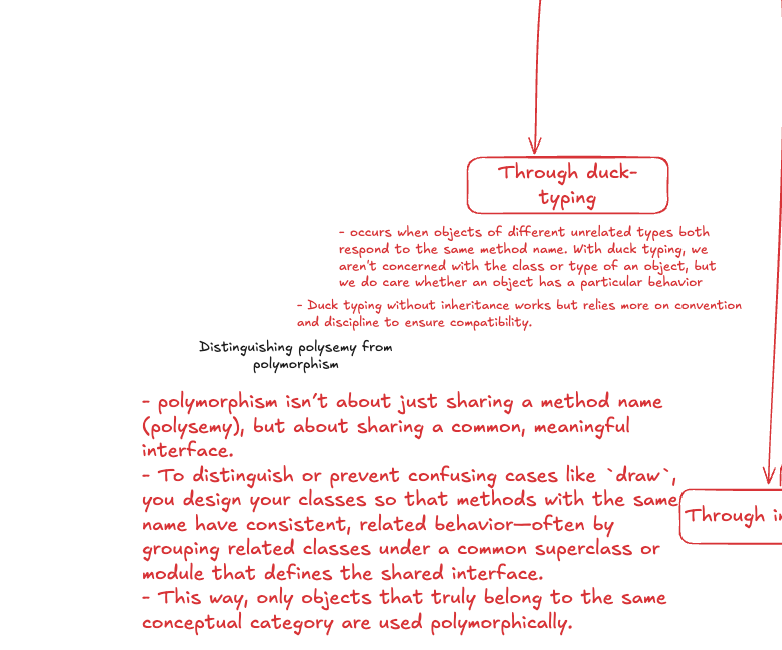
- There is a lot that has gone on and obviously can't fit into this post, here is a diagram of my current mental mapping of the material.
💭 I have been thinking a lot about why I am taking this journey of programming, having to forgo other opportunities that seem great at this point.
It may be the frustration of having to deal with productivity dragons that lingers, as I must budget and use my time wisely.
Today, I came across an interesting research study that offers a different point of view on why we might procrastinate in the moment and wait until the 11th hour to do the work.
💡Prof. Piers Steel suggests that the culprit could be impulsiveness instead of the widely held belief that perfectionism is why we procrastinate.
👀Checking the phone at the first instance of discomfort when having to work on intellectually challenging things is an act of impulsiveness. It's an ongoing read as I am deeply interested in the topic of focus and how it plays to mastery.
☄️Day 9-10 of #500DaysOfLittlePromise
Anyway, today I had a session with one of the students who is taking the Ruby intermediate course that I just completed at @LaunchSchool.
It's those sessions that I'm always happy to be in, as they help me keep my fundamentals in check, and it's a way for me to give back my two cents.
Speaking of two cents, I also had another session with a student ahead of me who quizzed me on the OOP concepts I just completed from the OOP book.
While I haven't covered some sections, such as the difference between Namespacing as a concept under modules compared to namespacing in the context of constant variable scoping across classes, my current approach to the material is suggesting that by being engaged in every sessions I create for my self, I can see slightly in to the near future, or make sense before I even get to the material. That's motivating 😁!
In the end, I completed all the end-of-chapter questions for the introduction to OOP.
I now understand WHAT and WHY I need to understand these concepts. It's moving forward to HOW.
🔂Of course, this will be a circular approach to the material whenever I get stuck on some question, but my coverage is good enough for me to know what to look for when I reach that point of revisit.
Also, I must admit that this summer, I am so exhausted in the evenings that I can barely keep my eyes open.
Any remedies?
@runliftrunlift A few weeks ago, i asked for your help in getting into running, im in my 30’s and it’s definitely true that letting it be personal is best approach.
Still working on getting into some consistency into between learning , fulltime job in a Japanese company💪🏾
It has been a while since my #100DaysOfCode logs. I haven't been slacking, in that time I have passed the @LaunchScohool Ruby Intermediate assessment and have moved on to OOP programming. 💪🏽
Because of the 100 Days of Coding, I have found it to be a generally good accountability partner, so in that spirit, I am moving on to 500-days challenge. But with a twist, this is going to be #500DaysofPromises. 📶
The reality is that, while this career transition is my first and most important priority, there are other parts of life that I must maintain to make sure I attain this goal.
In the spirit of what these days📅/weeks/months🗓️ will look like, I will give 2-3 focus points for each week (I only provide 1 for this week for brevity🙏🏽)
1️⃣A daily highlight to mark the most important thing that needs to be taken care of.
-- I am using this system to ensure that I keep track of my focus on the most important things that need to be taken off each day of the week.
And the highlight for today, Day 8 of #500DaysofPromises, was to complete the reading in the OOP book.
Here are the key takeaways:
- 3 major key concepts make up the foundation for an Object Model in OOP. These include:
✉️ Encapsulation: describes the bundling of data and its behaviors. These bundling properties control what can be shown to the public and what can be hidden during implementation.
- Polymorphism: explains the common behaviors that different data types share.
- Inheritance: describes a property in which classes inherit from other classes.
- Interestingly, in this concept, we learn that there are other ways in which inheritance occurs, and that is through interface inheritance, which is described by utilising the mixin of a module into a class.
- I get why OOP was created because dealing with so many features needs some thoughtful design as programs grow larger.
I am honing my skills and will focus on practising problems using @launchschool material.