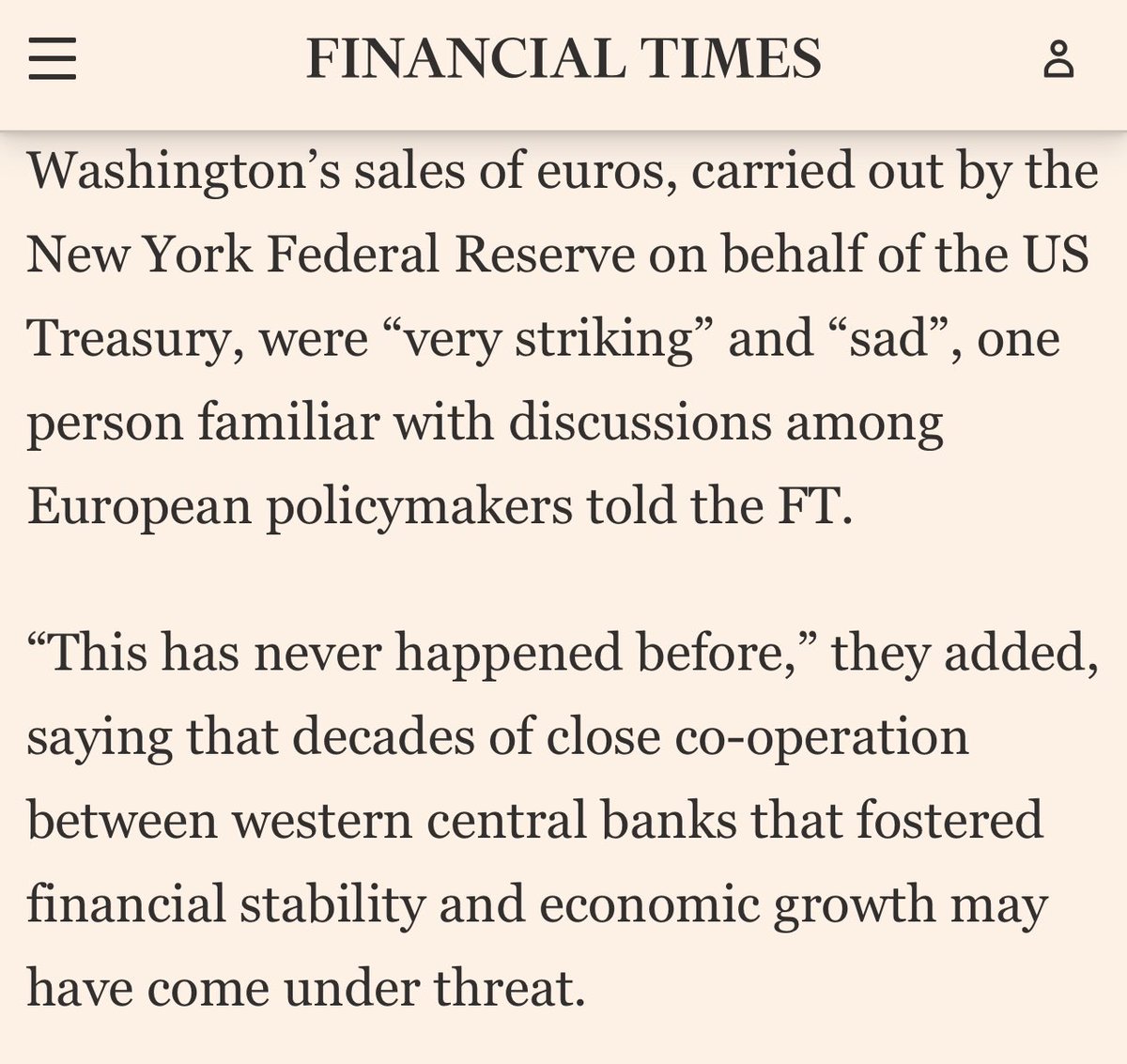
The United States sold euros to buy yen without telling the ECB until after the trade was done. Senior ECB officials called it “an unprecedented breach of longstanding conventions.” One said: “This has never happened before.”
Selling dollars to defend the yen would have contradicted Bessent’s strong-dollar policy. Selling euros avoided that problem. But selling a European asset to defend an Asian currency to protect an American bond market, without consulting the institution whose asset was sold, is not a currency intervention. It is the reserve architecture consuming the alliance architecture.
The reason Washington intervened at all is the part nobody wants to say plainly. Japan is the largest foreign holder of US Treasuries. The yen was at its weakest since 1986. If the yen falls far enough, Japanese institutions sell their most liquid foreign asset to raise cash. That asset is Treasuries. The selling pushes American yields higher at the exact moment the thirty-year just touched 5.28 percent. Washington did not intervene to help Japan. Washington intervened to prevent the Treasury market from absorbing a forced seller at a nineteen-year high in yields.
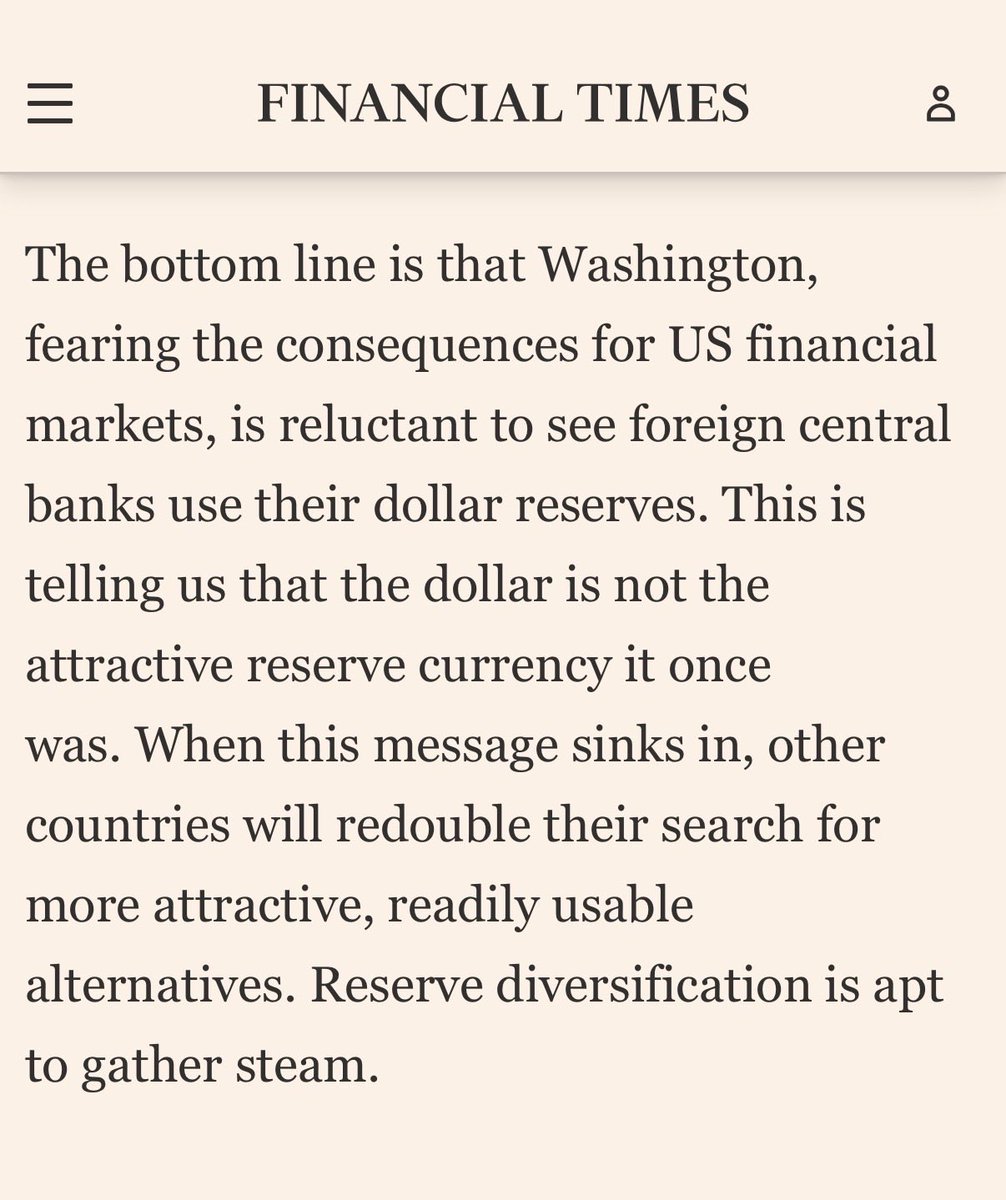
The convention that was broken to execute this trade is the same kind of convention the reserve confiscation broke in 2022. That one taught central banks their dollar reserves were not safe from seizure. This one taught the ECB that dollar-system cooperation is not safe from unilateral action by its architect. Both lessons point the same direction: build the alternatives faster.
The fix is eating the architecture it was built to preserve.
One or two folks on the Red Team have GPT Cyber. They did find vulns, but they had to KYC their own mother to get access to it.
Just think about how insane this is: US frontier models produce vulnerabilities that they refuse to fix.
If UST reserves cannot be sold in a crisis without making said crisis worse by threatening a debt spiral, then UST’s are no longer fit for purpose as FX reserves.
In contrast, earlier this year, gold reserves were sold easily & quickly & de-escalated the crisis.
Let’s watch.
Well, I guess it was a success of sorts? In 1998, Honduras built a bridge designed to survive any storm. It survived a Category 5 hurricane perfectly but the river shifted, leaving it spanning over dry land. Source: https://t.co/w5QWbSL0Ja
Today we are releasing Cloudflare OS, a chatbot with connectors, just like every other tech company is doing.
Except actually, it's different. This is a remake of Sandstorm[.]io, my startup from 10 years ago, except this time built on Cloudflare Workers (the platform I've spent the last 9 years building) and deeply leveraging AI. This is more or less the culmination of my secret 10-year master plan.
This is a full-on personal app vibe coding platform, in which the sandbox is so secure that you can pretty much go wild -- the AI cannot introduce a significant security bug. We believe a company's security team can feel comfortable giving non-technical users permission to vibe code and then sleep soundly at night.
How is that possible? It's the Sandstorm security model, revisited. A "Gadget" is the same thing as a Sandstorm "Grain": a fine-grained app instance. For example, if you have a document editor app, each document runs as a separate instance of the app, in a separate sandbox (one "Gadget").
This means two things, both of which I think are Big Deals:
1. The platform can manage all access control, by controlling who can access the Gadget at all. There is no way the Gadget can accidentally leak itself to an attacker -- even an attacker who has access to other Gadgets based on the same app.
2. Since everyone is running their own copy of the code, everyone can freely *modify* their copy of the code.
Think about #2 a bit more.
What if, when you wanted a new feature in the software you are using, you could just prompt your agent to add it?
This doesn't work in the cloud Software-as-a-Service model, because you are not running your own copy of the app.
Sandstorm tried to change that 10 years ago, but the world wasn't ready, because not enough people had the skills or patience to actually modify their software. AI has changed that. Now you just ask the agent -- the same agent that you are using to help you interact with the Gadget can also modify the code of the Gadget.
And it is so fun.
https://t.co/qzwdrAQhtK
@bluetouff Au lieu de faire chuter le dollar et le rendement des bons du trésor en vendant les bons du trésor, ils diluent les bons du trésor, un tout petit peu. L'effet négatif ne se sentira que bien plus tard. Et peut-être d'ici là tout ira déjà mieux. 😀
This is one of the funniest pieces of elite macroeconomic theater ever staged.
Japan spends 15 years pinning interest rates to the basement, monetizing government debt, crushing domestic savers, exporting capital, and turning the yen into the global carry trade’s complimentary drink coupon.
Then the yen collapses.
Washington looks at the smoking crater and declares the currency “substantially undervalued,” as though a rogue gang of hedge funds broke into Tokyo at night and secretly installed Abenomics.
Now America may help Japan buy yen, while offering Japan a larger FIMA repo facility so Tokyo can raise dollars against its Treasury holdings without dumping those Treasuries into the market.
Read the plumbing carefully.
Japan needs dollars to defend the yen.
Japan owns a mountain of U.S. government debt.
Selling that debt could push American yields higher.
Higher American yields would increase U.S. financing costs, tighten global liquidity, strengthen the dollar, and place even more pressure on the yen.
So the Federal Reserve provides a facility allowing Japan to borrow dollars against the Treasuries, then sell those dollars to buy yen, thereby protecting the price of the Treasuries that collateralize the dollar loan used to defend the currency damaged by the rate differential created by those same Treasury yields.
This is an absolute circus.
@xfedorova L'urgence absolue pour la République serait plutôt de définir des critères objectifs pour ces expulsions. Sinon, c'est l'arbitraire qui devient dangereux, pas les propos.
A 22-year-old student teacher in Illinois sent a private Snapchat message to her boyfriend and two roommates.
A student had walked up to her laptop and deleted her lesson plan mid-class. frustrated, she typed something like "should I shoot him" with a gun emoji. venting. four people. private group chat.
An hour later, police walked into her school and arrested her.
here's what happened in between.
Snapchat's AI scanned the private message. flagged it as a potential threat. automatically reported it to the FBI. the FBI forwarded it to local law enforcement. deputies arrived at the school within the hour.
she cooperated immediately. handed over her phone. when shown the message she said: "oh yes. okay. yeah. i'm realizing that was a bad joke. i did not mean it at all serious at all."
police determined she was not a threat. school officials determined she was not a threat. prosecutors reviewed and issued a disorderly conduct charge. she was released the next morning. she lost her student teaching placement.
This means:
Snapchat scans private messages.
Not just public posts or stories. private group chats between you and your closest contacts. automated AI. no human reviewed it first, got flagged and reported.
Snapchat AI → FBI → local police → school → arrest.
in under an hour.
Snapchat's privacy policy says it may share your information with law enforcement when it believes there is a risk of harm. the definition of "risk of harm" is determined by an algorithm.
you are not told when a message is flagged.
you are not told when a report is filed.
you find out when the police arrive.
the message was private.
it wasn't.
SpaceX has been succeeding in public for 15+ years. Now they're the most valuable private company on Earth & the competition isn't close.
Is any of this repeatable? Why hasn't the model been copied?
Wrote an essay on why + what anyone building hard things can learn:
🔴🇪🇸 𝗙𝗟𝗔𝗦𝗛 𝗜𝗡𝗙𝗢 — Plus de 49 000 migrants ont passé la frontière et se trouvent désormais en Espagne. Cela représente plus de 58 % de la population de Ceuta, qui compte 83 600 habitants.
La situation est hors de contrôle : de nombreux pillages sont signalés et de nouveaux migrants continuent d’arriver par centaines.