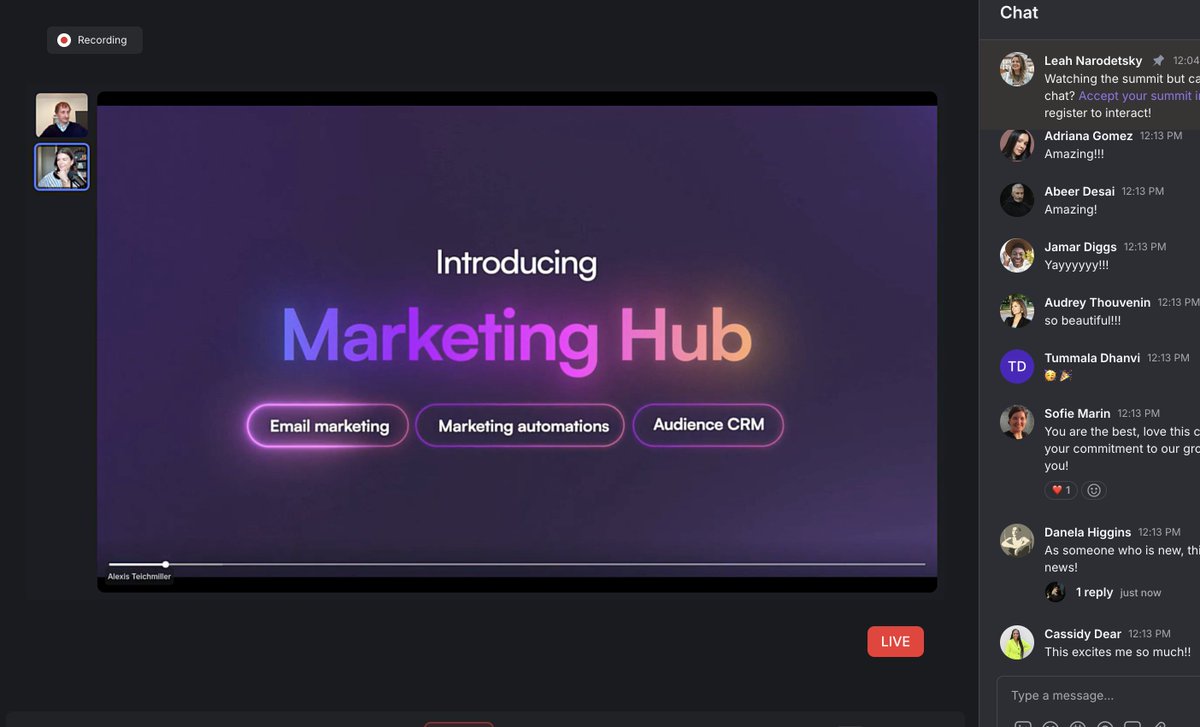
2024 was the most exhilarating year we’ve ever had at Circle.
We shipped over 150 improvements — including Circle 3.0, Marketing Hub, Developer Platform, and more.
To give everyone perspective, I made a short video to recap the year.
We have an open position for Lead Engineer at @circleapp
Apply if you’re skilled in full-stack development, with deep knowledge of Ruby on Rails, React, Sidekiq, Kafka and payment integrations (we heavily use Stripe).
- $150,000 - $170,000 a year
- Fully remote: work from anywhere in the world!
- Autonomy and trust to do your job: we care about outcomes over everything else.
- Paid time away: all employees are given 35 days of PTO annually. We also offer a paid sabbatical after 5 years.
- Generous U.S. benchmarked compensation and startup equity no matter where you are in the world.*
- Awesome medical coverage with 100% coverage for you and your family, or medical reimbursement options where applicable!*
- Parental leave for parents expanding their family, or just starting one.
- Home office stipend to help you get up and running.
- Learning & development stipend to help you level up your professional skills.
- Annual bonus potential for roles that don't already receive variable income or commission.
- Company retreats: Twice a year, the Circle team gets together for a fully paid company retreat in incredible places around the world! We’ve had past retreats in Colombia, Portugal, and Mexico, with more planned on the horizon.
Apply at:
[Link in first comment]
We couldn't be more thrilled to introduce “The Making Of”, our brand-new podcast featuring stories from the world’s most successful entrepreneurs and creators.
🥁Meet our first guest: Pat Flynn (@patflynn), Founder of SPI Pro. From losing his dream job as an architect to becoming a best-selling author, business owner, and podcast host with over 80 million downloads, Pat’s journey is one of resilience and impact.
In this episode, Pat explores how empathy shapes his leadership and parenting, shares lessons from writing his books, finding time for passion projects, and unlocking YouTube success during the pandemic.
This conversation’s not just about business—it’s about empathy, community, and finding joy in what you do.
Available now on YouTube, Spotify, and iTunes.
Watch here: https://t.co/LnIyM2WRLW
Listen here: https://t.co/GgCuUDLT0t
Venha para o Comunidades Digitais Summit da Circle! Com palestrantes como Laís de Oliveira, Emiliano Agazzoni e muito mais! É 100% online, gratuito e exatamente o que os criadores de comunidades precisam para prosperar em 2024. https://t.co/mREKh3PWrK
"Between VSCode, WSL, and Intel’s latest desktop chips, I’ve been living with a PC that runs my programming tests faster than an M3 Max, and generally feels like a completely viable alternative to macOS." https://t.co/tP4UQNk1Ss
𝗪𝗵𝘆 𝗱𝗼𝗲𝘀 𝗚𝗼𝗼𝗴𝗹𝗲 𝗿𝗲𝗰𝗼𝗺𝗺𝗲𝗻𝗱 𝗠𝗼𝗱𝘂𝗹𝗮𝗿 𝗠𝗼𝗻𝗼𝗹𝗶𝘁𝗵𝘀 𝗶𝗻𝘀𝘁𝗲𝗮𝗱 𝗼𝗳 𝗠𝗶𝗰𝗿𝗼𝘀𝗲𝗿𝘃𝗶𝗰𝗲𝘀?
In the last decade, we have seen a massive trend of using microservices everywhere. We were building systems for a few hundred or thousand users and wanted to know how to make a system for millions of users. This was over-engineering and needed to be corrected. Why it was wrong? Because the development lasted long and we created incredibly complex systems, hard to maintain. This is especially true for startups that must go fast and stay simple.
A recent paper by authors from Google found that most of their developers split binaries for one of the following reasons: it improves performance, fault tolerance, and abstraction boundaries and allows for flexible rollouts.
Yet, splitting applications into microservices has its challenges:
🔸 𝗜𝘁 𝗵𝘂𝗿𝘁𝘀 𝗽𝗲𝗿𝗳𝗼𝗿𝗺𝗮𝗻𝗰𝗲. The overhead of serializing data and sending it across the network is increasingly becoming a bottleneck
🔸 𝗜𝘁 𝗵𝘂𝗿𝘁𝘀 𝗰𝗼𝗿𝗿𝗲𝗰𝘁𝗻𝗲𝘀𝘀. It is incredibly challenging to reason about the interactions between every deployed version of every microservice.
🔸 𝗜𝘁 𝘁𝗮𝗸𝗲𝘀 𝘄𝗼𝗿𝗸 𝘁𝗼 𝗺𝗮𝗻𝗮𝗴𝗲. Rather than having a single bi-nary to build, test, and deploy, developers must manage 𝑛 different binaries, each on their release schedule.
🔸 𝗜𝘁 𝗳𝗿𝗲𝗲𝘇𝗲𝘀 𝗔𝗣𝗜𝘀. Once a microservice establishes an API, it becomes easier to change by breaking the other services that consume the API.
So, they proposed the following approach:
𝟭. 𝗪𝗿𝗶𝘁𝗲 𝗺𝗼𝗻𝗼𝗹𝗶𝘁𝗵𝗶𝗰 𝗮𝗽𝗽𝗹𝗶𝗰𝗮𝘁𝗶𝗼𝗻𝘀 that are modularized into logically distinct components. A component is a long-lived agent, similar to an actor.
𝟮. 𝗟𝗲𝘃𝗲𝗿𝗮𝗴𝗲 𝗮 𝗿𝘂𝗻𝘁𝗶𝗺𝗲 𝘁𝗼 𝗱𝘆𝗻𝗮𝗺𝗶𝗰𝗮𝗹𝗹𝘆 and automatically assign logistical components to physical processes based on execution characteristics. So, if both components are in the same OS process, they are called regular method calls, but if they are co-located, calls are executed as RPCs over the network. Runtime decides whether these modules should be collocated or moved to different machines (and scaled, etc.).
𝟯. 𝗗𝗲𝗽𝗹𝗼𝘆 𝗮𝗽𝗽𝗹𝗶𝗰𝗮𝘁𝗶𝗼𝗻𝘀 𝗮𝘁𝗼𝗺𝗶𝗰𝗮𝗹𝗹𝘆, preventing different versions of an application from interacting.
This approach consists of two main parts: a programming model with abstraction that allows developers to write modularized applications and a runtime for building, deploying, and optimizing these applications. They claim that it reduces application latency by up to 15x and costs by up to 9x by simplifying application management and deployment.
If you want to check the framework implementing the approach from the paper, check https:// serviceweaver. dev/.
What do you think about this approach? Does it look like EJBs or CORBA?
#microservices
When we kicked off 2023, we rallied our team around one big goal:
To make Circle undeniable.
12 months and 200+ updates later, we've never been closer.
Hoping 2024 is the year Circle becomes the undeniable platform for communities 🔥
https://t.co/Lqw7TbLYaB
Nov update is live!
→ Polls
→ Preview your community as a member
→ Allow your members to go live
→ Workflow filtering options
→ Easy linking to community pages
→ Accessibility upgrades
→ 20+ other improvements
https://t.co/kUnDuoY6nh