Today, we announced that @intel has entered into an agreement to acquire @ClassiqTech, a recognized pioneer in quantum computing software and algorithms, based in Tel Aviv, Israel. This marks a transformational moment for Intel’s quantum computing group, as we establish a new Quantum Computing Business. With Classiq, Intel will become a full-stack quantum solutions provider and add QPUs to our already diverse compute platform portfolio spanning CPUs, GPUs and ASICs.
Super excited to welcome Nir Minerbi, Amir Naveh, Yehuda Naveh, and the talented Classiq team to Intel!
https://t.co/p6M3WhroFy
Intel announced it has entered into an agreement to acquire @ClassiqTech to advance scalable quantum computing.
Combining Intel’s quantum software platform, silicon spin-qubit technology and advanced manufacturing expertise with Classiq’s automated quantum algorithm synthesis platform to help create a full-stack quantum computing platform, while continuing to support a modality-and hardware-agnostic software solution that enables an open and collaborative quantum software ecosystem - https://t.co/0hn4IaHydb
New from our STEM Fellows Program: Designing more efficient quantum circuits with Claude.
Given plain-language instructions, Claude Mythos 5 designed quantum circuits that improve on the best published ones, sometimes by an order of magnitude or more.
More efficient circuits reduce the resources needed by quantum algorithms, which could bring quantum computing applications in chemistry and materials science within reach sooner.
Read more: https://t.co/QCvoJLDmBo
Same Numbers, Completely Different Interpretations
The latest Understanding Quantum Technologies 2026 report contains plenty of fascinating insights. I'd like to share a few that particularly caught my attention.
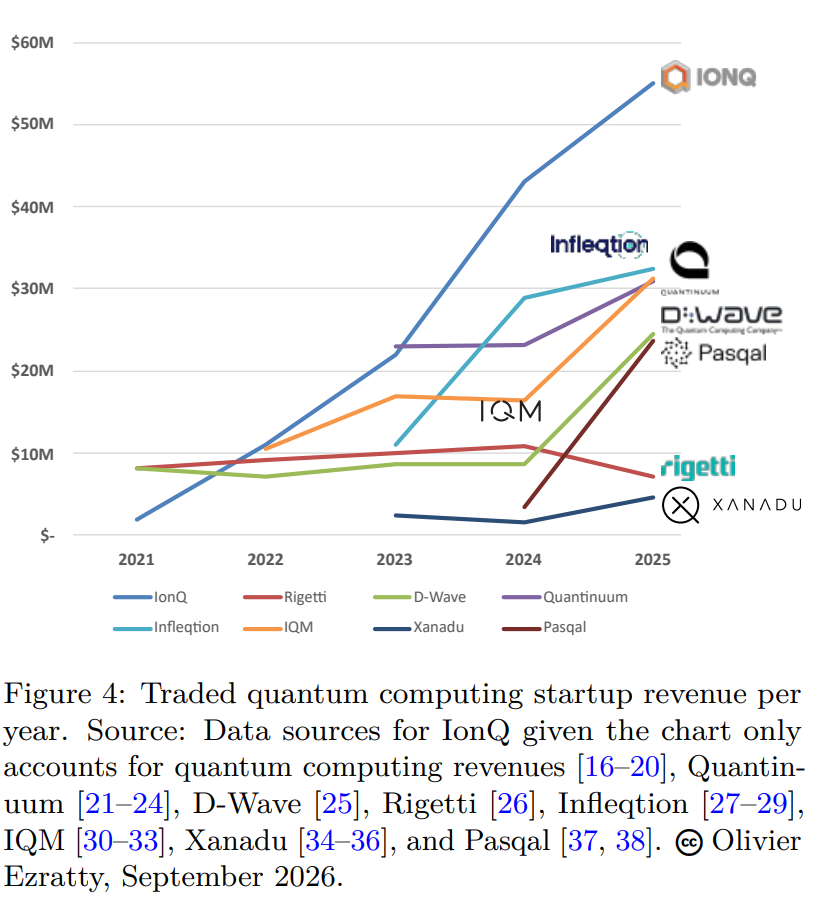
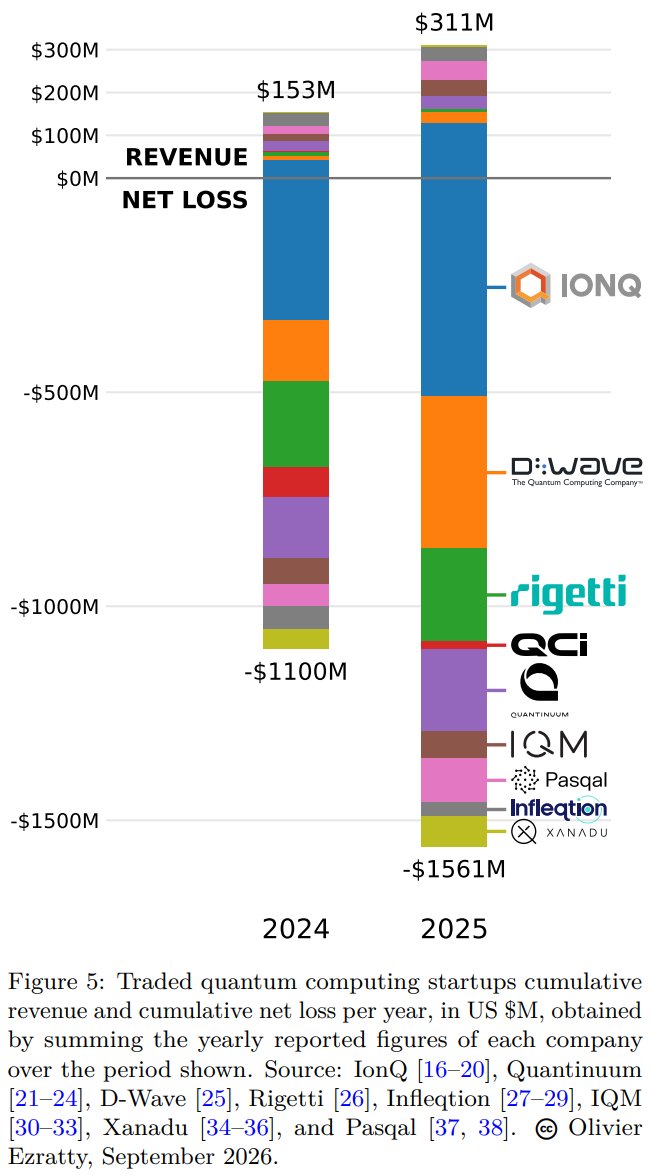
One of the most interesting findings is a comparison of revenue and net losses among major quantum computing companies.
In 2025, these companies generated approximately $311 million in combined revenue while recording a staggering $1.56 billion in combined net losses.
Interestingly, IonQ stands out in both categories. It generated the highest revenue while also recording the largest net loss.
What makes these charts particularly interesting, however, is how differently they can be interpreted depending on one's perspective.
📌 The Bearish Perspective
From a bearish standpoint, IonQ has primarily expanded its revenue through acquisitions rather than organic growth.
Despite its growing revenue, it continues to report substantial losses, raising questions about whether its aggressive spending will ultimately translate into sustainable profitability.
In this interpretation, the size of its losses matters more than its revenue leadership.
📌 The Bullish Perspective
From a bullish standpoint, IonQ is establishing a clear revenue lead while aggressively investing in the technologies and infrastructure required for the future of quantum computing.
Its acquisitions can be viewed not merely as a strategy to increase revenue, but as a deliberate effort to secure critical technologies, manufacturing capabilities, and supply chains ahead of its competitors.
From this perspective, the question isn't simply how much money IonQ is losing today, but whether these investments will position the company to capture a significant share of the market as quantum computing reaches commercial maturity.
I clearly lean toward the latter interpretation.
That doesn't mean I believe every dollar of net loss should automatically be justified as an investment in R&D. Organic growth must be distinguished from acquisition-driven growth, and spending must ultimately produce measurable results.
What matters is whether today's investments translate into technological progress, commercial adoption, and sustainable revenue growth.
However, I have little interest in arguing with those who hold strongly bearish views.
Based on my past experiences, investment debates often reach a point where they stop being discussions about data and become battles to defend existing convictions.
Two people can examine exactly the same financial statements and arrive at completely opposite conclusions. Presenting another chart or another set of numbers rarely changes deeply held beliefs.
Of course, I'm not immune to this tendency either. As someone who is bullish on IonQ, I need to remain conscious of my own confirmation bias and avoid assigning greater importance to information simply because it supports my investment thesis.
Rather than spending my time trying to change someone else's convictions, I'd prefer to focus on continuously evaluating whether my own investment thesis is actually playing out.
Ultimately, the winner of this debate won't be determined by who argues more convincingly today, but by what these companies actually deliver in the years ahead.
Fault-tolerant quantum computing changes what quantum software needs to do.
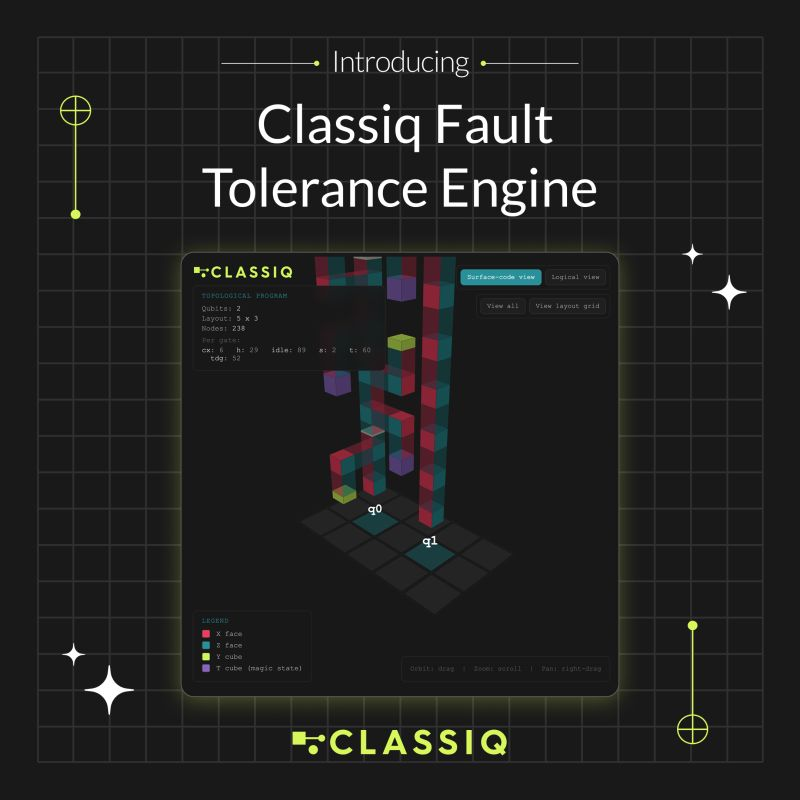
💫 Classiq has introduced the Fault Tolerance Engine, extending our platform from logical quantum program design all the way to fault-tolerant execution planning.
The engine translates an optimized logical program into an architecture-aware implementation: laying out protected qubits, routing their interactions, scheduling operations, accounting for quantum error correction, and costly resources such as T gates and magic states.
From the resulting execution plan, users can evaluate physical qubit requirements, error-correction cycles, code distance, runtime, accumulated error, and more.
The goal is to answer a much more practical question:
What will it actually take to run this application reliably on a fault-tolerant quantum computer?