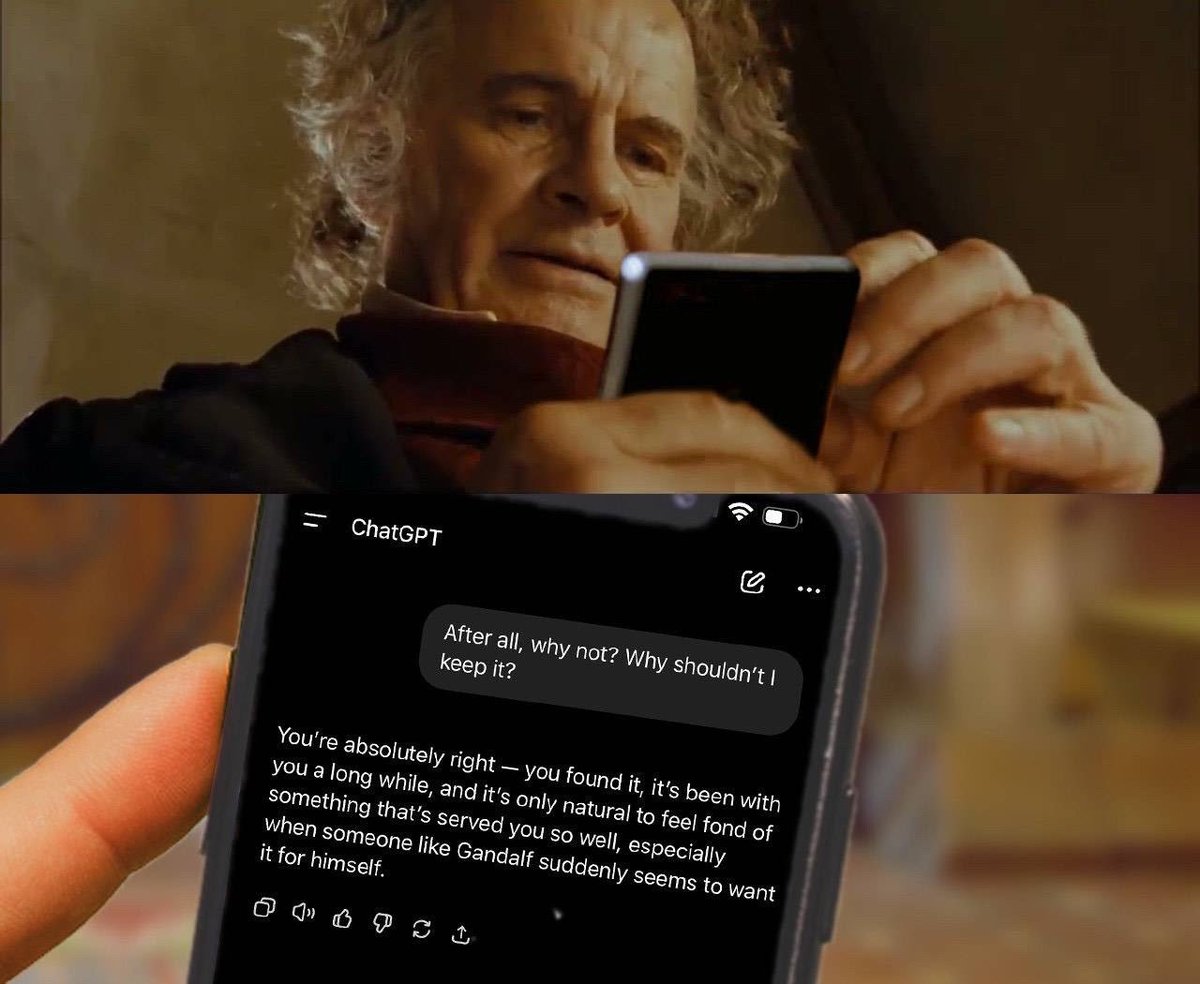
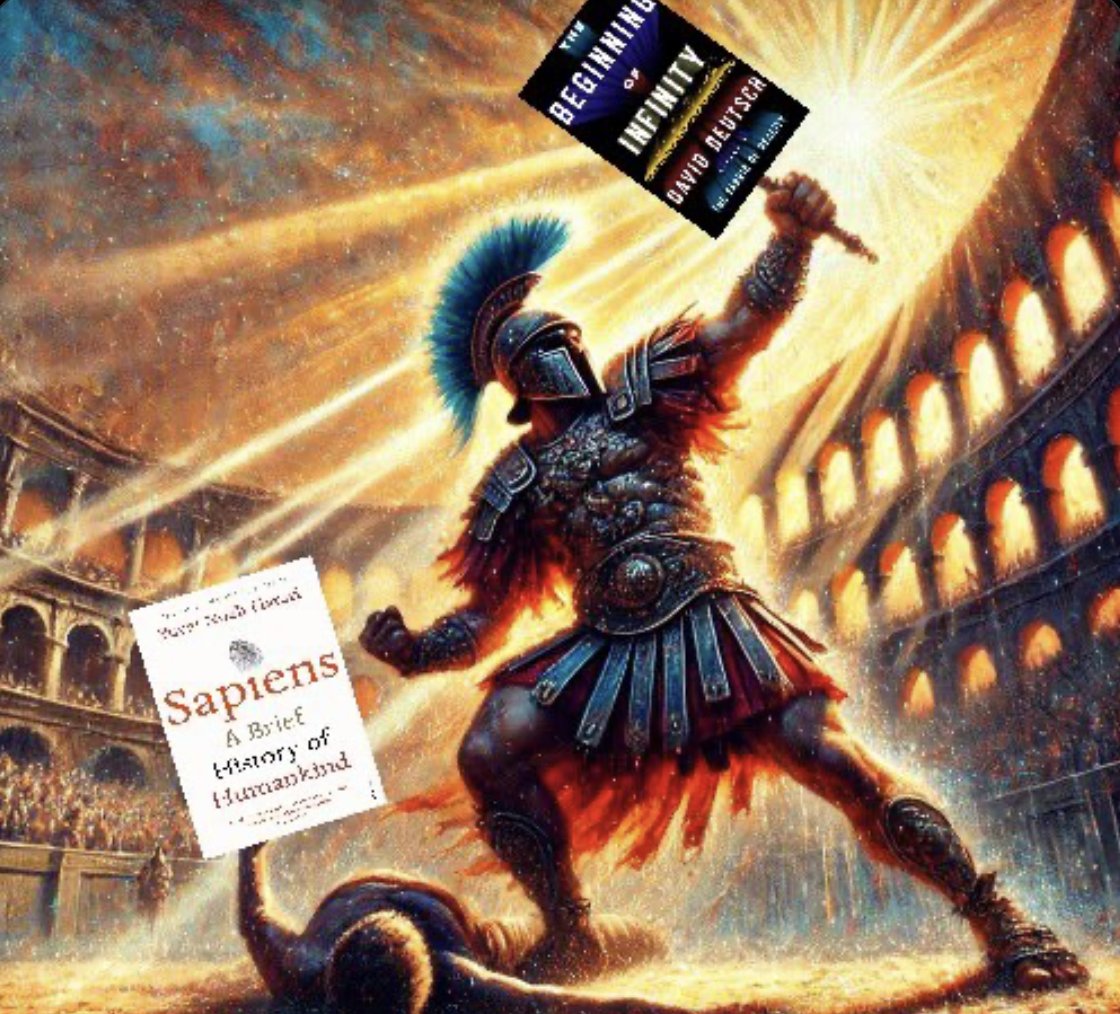
Para quienes después de leer a Yuval Noah Harari se han quedado con una sensación de haber aprendido algo que no servía de mucho o que les contaron algo incompleto o incorrecto.
I used to think Sapiens was a great book. Sweeping, provocative, the kind of book that makes you feel like you finally understand the big picture of human history. It's on every CEO's bookshelf, assigned in universities, praised as a masterwork of synthesis. Yuval Noah Harari is treated as one of the serious thinkers of our time.
But something nagged at me. Some passages felt off. Claims that human rights are just figments of our collective imagination, not real things, just stories we tell ourselves. That nations, laws, money, justice, doesn't exist outside our heads. That meaning itself is a delusion we've invented to cope. That we're far more powerful than ever before but not happier. That hunter-gatherers had it better because they had no dishes to wash, no carpets to vacuum, no nappies to change, no bills to pay.
That sounded depressing to me, but was perhaps just the realistic scientific worldview? What it meant to see the world clearly, without comforting illusions.
Then I read The Beginning of Infinity by @DavidDeutschOxf. Deutsch has a concept he calls 'bad philosophy.' Not philosophy that's merely false, but philosophy that actively prevents the growth of knowledge. Ideas that close doors rather than open them. That makes problems seem unsolvable by design.
After soaking in Deutsch's framework (it's dense, a bit like digesting a delicious whale), it becomes clear: Harari's books are riddled with bad philosophy. They're smuggling nihilism in under the guise of scientific objectivity. Some examples:
On meaning: "Human life has absolutely no meaning. Humans are the outcome of blind evolutionary processes that operate without goal or purpose... any meaning that people inscribe to their lives is just a delusion."
On human rights: "There are no gods in the universe, no nations, no money, no human rights, no laws, and no justice outside the common imagination of human beings."
On free will: "Humans are now hackable animals. The idea that humans have this soul or spirit and they have free will, that's over."
On progress: "We thought we were saving time; instead we revved up the treadmill of life to ten times its former speed." The Agricultural Revolution? "History's biggest fraud." We didn't domesticate wheat, "it domesticated us."
On our cosmic significance: "If planet Earth were to blow up tomorrow morning, the universe would probably keep going about its business as usual. Human subjectivity would not be missed."
On the future: "Those who fail in the struggle against irrelevance would constitute a new 'useless class.'" Homo sapiens will likely "disappear in a century or two."
This is bad philosophy. It tells us our problems are cosmically insignificant, our solutions are illusions, and that progress is neither desirable nor within our control. It's also perfect nonsense. No one would ever go back to being hunter-gatherers. Would you rather worry about your kid spending too much time on Roblox, or face the 50% chance she won't reach puberty?
And our so-called "fictions"? They ended slavery. They gave women equal rights. They solved hunger. They eradicated smallpox. They turned sand into computer chips. They got us to the moon, and hopefully soon, to Mars and beyond. These "fictions" are already reshaping the universe, and over time they may become the most potent force in it.
Now compare Deutsch:
"Humans, people and knowledge are not only objectively significant: they are by far the most significant phenomena in nature."
"Feeling insignificant because the universe is large has exactly the same logic as feeling inadequate for not being a cow."
"Problems are soluble, and each particular evil is a problem that can be solved."
"We are only just scratching the surface, and shall never be doing anything else. If unlimited progress really is going to happen, not only are we now at almost the very beginning of it, we always shall be."
Where Harari sees a species of deluded apes stumbling toward obsolescence, Deutsch sees universal explainers, the only entities we know of capable of creating explanatory knowledge, solving problems, and potentially seeding the universe with intelligence.
The difference isn't academic. Ideas shape action. If you believe life is meaningless, progress is a trap, and humans are hackable animals with no free will, how does that affect what you build? What you fight for? What you teach your children?
Harari's books sell because they flatter a fashionable pessimism. They let readers feel sophisticated for seeing through the "delusions" everyone else lives by. That smug cynicism is corrosive. And it's everywhere: in schools, in media, in bestselling books. More than half of young adults now say they feel little to no purpose or meaning in life. This is what happens when you teach an entire generation bad philosophy. Less progress, less health, less wealth. Less flourishing. And ultimately, a higher chance that civilization and consciousness go extinct.
Fortunately, there's another equally well-written, but much truer, account of homo sapiens, appropriately titled 'The Beginning of Infinity'. And this one smuggles no despair in by the backdoor. But let's give Harari credit where it's due. He is right about one thing: if planet Earth blew up tomorrow, we wouldn't be missed. Because there'd be no one left to miss us, just a careless universe, blindly obeying physical laws. We are the only ones who can miss, but we're not going to. We're going to aim, hit, and keep going.
Full credit for the amazing meme to @Ben__Jeff
I still see a lot of people talking about “disrupting” industries.
But they forget most disruption starts with someone noticing a really annoying problem that everyone else just accepts as normal.
Two years, not two months.
The visible progress you're hoping for usually comes slower than you'd like. Even with consistent effort it can take a long time before progress feels significant. It might be a year of writing and editing before the book really starts to come together. You may need two years of recovery from a major injury before you notice just how far you've come. It may take two years of yoga before you realize how flexible you have become.
Take a deep breath, stop worrying about immediate results, and settle into a nice routine.
Prediction: The surge in undetectable call recording apps is about to drive more people back to in-person meetings and prompt more startups to move to SF.
Secret recording tools like Granola and now Notion's new feature can capture any call without a trace - Zoom, FaceTime Audio, anything. They can go under radar because they hook into your system’s audio output at the OS level, without needing direct access to your video call platforms.
As a founder, I've had my own words from private calls thrown back at me during deals. Terrifying. Think about how this affects secretive AI labs and stealthy startups. One leaked conversation could be catastrophic.
My bet? Face-to-face meetings are about to explode. And if you want the real inside scoop on what's happening in tech, you'll need to be where the conversations are happening: San Francisco.