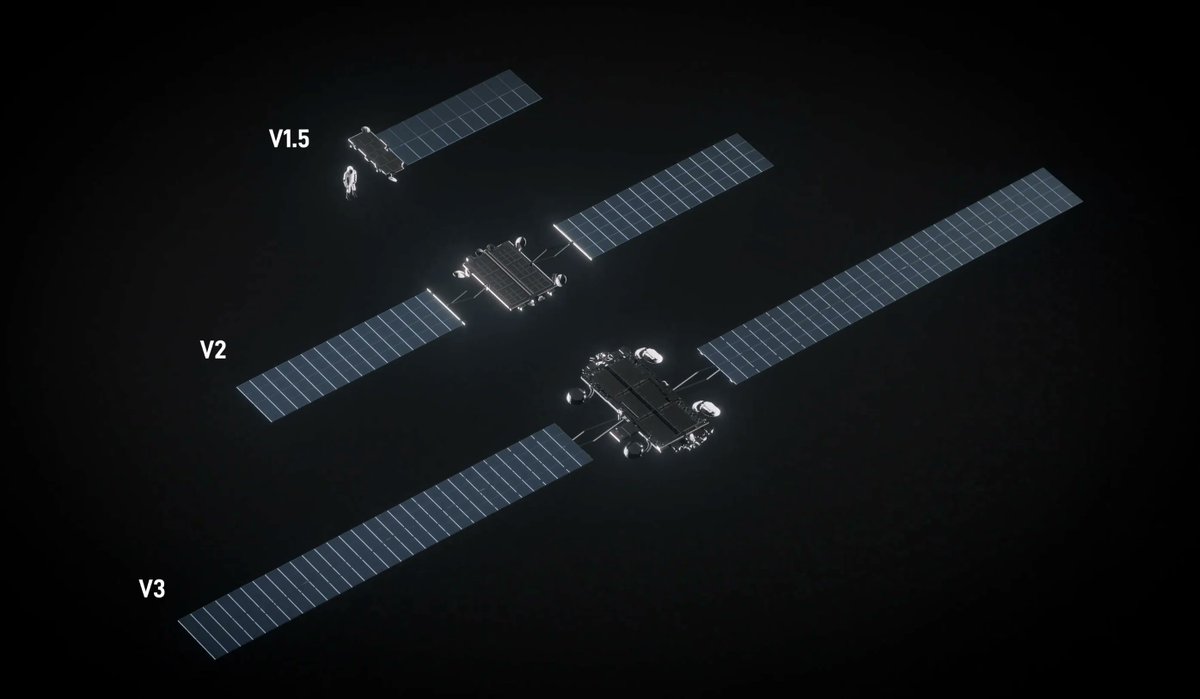
@SpaceX I use to play this song on repeat whenever I needed a deep focus session during my final year engineering exams. This will make a cool dynamic desktop background...
"You are, on the one hand, the most complex thing in the entire universe, and on the other, someone who can't even set the clock on your microwave." - Dr. J. B. Peterson.
@VigilantFox Changing a variable in a complex system that you know nothing about will seldom have the effect you are hoping for. Often it will have the opposite effect.
Criticize @SpaceX all you want, but
remember they fly actual spaceships doing actual space missions, in actual space! and on top of that they broadcast every second of it live. Rocket science has always been synonymous with extreme difficulty. And they make it look easy.
@DrJohnVervaeke The thing is you need to aim at a becoming... you define the best/most meaningful goal for yourself. During the becoming you will make mistakes and learn (what gets you closer to the goal and what does not). And when you start to accumulate *victories" meaning becomes apparent.
@elonmusk I do wonder how this will be built and where all that material will come from. We ultimately need to set up mining operations on the moon. Even if that is possible do we even know where to dig???
SpaceX just announced that they will be deploying V3 Starlink satellites for the first time during their 13th Starship test flight next week! Six of the satellites have been modified with a suite of cameras to scan Starship’s heat shield and transmit imagery.
Summary of every major upgrade and modification @SpaceX says it's made for the upcoming test flight:
• More robust stage separation flip sequence to prevent the booster from rotating off course.
• Hardware upgrades to improve Super Heavy Raptor re-light reliability during the boostback burn.
• Updated engine alarms and abort logic for multi-engine flight conditions.
• Starship propulsion system hardware and operational changes to address the Flight 12 engine-out issue.
• First deployment of 20 Starlink V3 satellites with laser links, deployable solar arrays, and antennas.
• Six Starlink V3 satellites equipped with cameras to inspect Starship's heat shield after reentry.
• White-painted heat shield tiles added as simulated missing tiles and imaging targets.
• New heat shield tile designs and attachment mechanisms, including tests on the aft flaps and aft skirt.
• Load-sensing heat shield tiles to measure stresses during flight.
• Higher dynamic pressure ascent profile to stress-test the heat shield and increase payload capability.
• Planned in-space Raptor engine relight test.
SpaceX: "For the first time, Starship will carry V3 Starlink satellites to space, which aim to greatly expand the network's capacity and user speeds. As part of this initial test, Starship is planned to deploy 20 satellites which will extend solar arrays and antennas and will attempt to connect with ground stations in South Africa and the larger Starlink constellation via high-capacity lasers. Six of the satellites have been modified with a suite of cameras to scan Starship’s heat shield and transmit imagery down to operators to continue testing methods of analyzing Starship’s heat shield readiness for return to launch site on future missions. Several tiles on Starship have been painted white to simulate missing tiles and serve as imaging targets in the test."