@easternair355 Wolves are protected in 10-15% of the state of Wyoming. In the other 85-90% they are considered predators and are shot on sight. They are not protected in S WY.
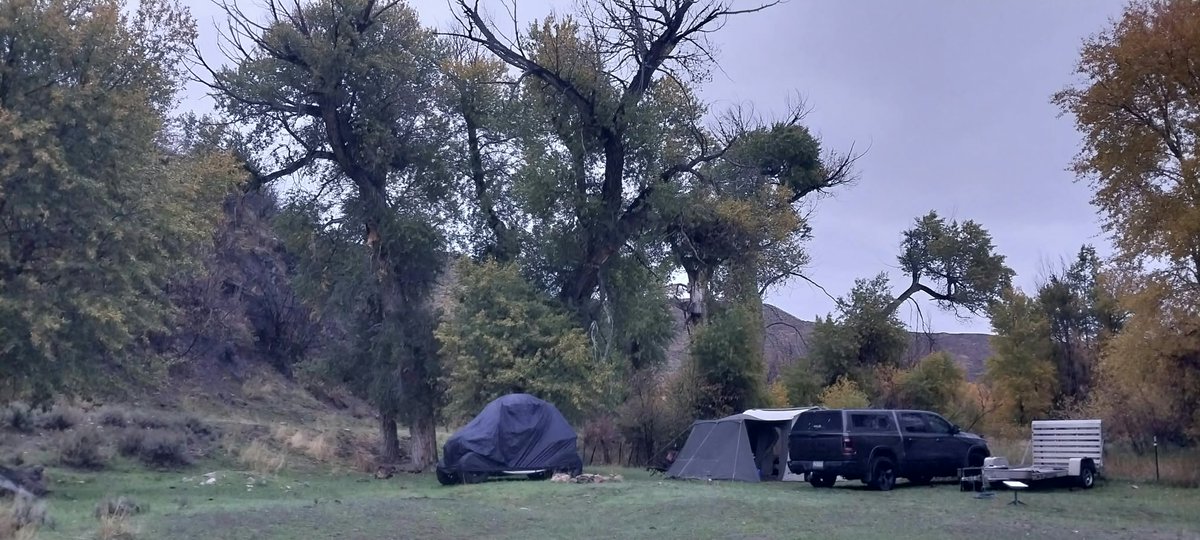
@RepSusanClarke@PantsToTravel I live in a an area where it never snows and I live on a pved road. I need 4 wheel drive because I spend my summers pulling my rv trailer to off grid camping spots in National forests. I spend my fall and winter hunting in the mountains for northern AZ, CO, WY, ID, NM and MT.
I want to be honest with you guys.
Ever since my suspension a couple of months ago, which was later reversed, my account’s reach has fallen dramatically.
Posts that regularly reached 20K+ views just weeks ago now struggle to reach even 10K.
Even the in-depth research and threads I spend hours preparing are barely reaching the people who chose to follow me.
I don’t know exactly what changed behind the scenes, but the difference is impossible to ignore.
Many of you have followed my work for years. You’ve seen my research and the countless hours I’ve spent sharing my analysis completely free.
Knowing that some of you have used it to make better decisions and avoid costly mistakes is what keeps me doing this.
And with what I believe could be one of the largest liquidity rotations in years approaching, I want this research to reach as many of you as possible.
So, for once, I’m asking for your help.
If my work has brought you value, a comment, like, or a repost of something you believe others should see would mean a lot.
I’m not asking for engagement for the sake of numbers. I just want the opportunity to reach the community I’ve spent years building.
Thank you to everyone who has stuck around.
I don’t take your support for granted, and I’ll keep putting everything I have into bringing you the best market research I can.
@juan_loves_code@Rainmaker1973 They voluntarily exchanged their labor and time in exchange for wages, benefits and security. The owner took great financial risk and dedicated his life to build that business.
@AlGeneRobi96834 You don't put a lift kit on a truck for more stability you do it to gain clearance for larger diameter tires which give you more ground clearance.
the temperature of the water you wash your hair with determines whether your follicles receive a growth signal or a stress signal and nobody in the hair care industry mentions it because the solution doesn't require a product.
a study on thermal stress and hair follicle biology found that repeated hot water exposure (above 40°C / 104°F) damages the cuticle, strips the natural lipid layer protecting the scalp, and triggers a mild inflammatory response around the follicle with every wash. you are microdamaging your hair every morning in the shower and interpreting the consequences as genetics
hot water dissolves sebum. sebum is the natural oil your scalp produces to protect the follicle opening, lubricate the hair shaft, and maintain the acidic pH that prevents bacterial and fungal colonization. strip the sebum daily with hot water and the scalp responds by overproducing it (making your hair greasier faster) while the follicle sits unprotected between washes
the mechanism is thermal dilation followed by cold shock. hot water vasodilates blood vessels on the scalp. when you leave the shower and the scalp cools rapidly, the vessels constrict. the repeated cycle of dilation and constriction creates micro stress on the vascular network feeding the follicle. over months and years this contributes to reduced blood supply
• water above 40°C strips the lipid layer from the hair shaft in one wash. the lipid layer takes 24 to 48 hours to fully regenerate. daily hot washing means the hair is permanently unprotected
• hot water opens the cuticle and allows protein loss from the cortex. the same damage mechanism that chemical treatments cause, delivered by your shower head every morning
• the overproduction of sebum triggered by hot water stripping creates a cycle: hot water removes oil, scalp produces excess oil, you wash with hot water again to remove it. the cycle accelerates with each wash
• seborrhoeic dermatitis (dandruff and scalp inflammation) worsens with hot water exposure because the stripped lipid barrier allows malassezia fungus to penetrate more easily
• lukewarm water (32 to 37°C / 90 to 99°F) cleans effectively without triggering sebum overproduction, cuticle damage, or vascular stress. the cleaning happens through surfactants in the shampoo, not through heat
• cultures with the thickest hair on earth (Japan, India, Korea) traditionally wash with warm to cool water. the hot shower is a Western invention of the last 100 years
the shampoo industry sells "repairing" and "moisturizing" products to fix damage caused by the water temperature, not the shampoo itself. the product solves a problem the temperature created. turn the temperature down and half the products become unnecessary
wash with lukewarm water (body temperature or slightly below). the water should feel comfortable, not hot. finish with a 30 second cool rinse to seal the cuticle. the adjustment costs nothing. the reduction in breakage, frizz, and scalp irritation is noticeable within one week
you've been paying $30 per month for products to repair damage caused by a shower dial set 8 degrees too high. the fix is free and takes 3 seconds to implement.