I wrote in @TheNatlInterest about how the U.S. should respond to Chinese illegal, unreported, and unregulated (IUU) fishing, which damages marine ecosystems, harms local economies, and, critically, provides Beijing with an asymmetric tool for coercive influence: https://t.co/FvXvLAHLjf
@GeoPulseLab@TheNatlInterest That’s exactly right. The South China Sea is ground zero for the CCP’s asymmetric warfare activity. I think Americans would be shocked to know how much it’s also occurring in our own hemisphere.
I wrote in @TheNatlInterest about how the U.S. should respond to Chinese illegal, unreported, and unregulated (IUU) fishing, which damages marine ecosystems, harms local economies, and, critically, provides Beijing with an asymmetric tool for coercive influence: https://t.co/FvXvLAHLjf
Chinese National and Two U.S. Citizens Charged with Conspiring to Smuggle Artificial Intelligence Technology to China
“The cutting-edge AI chips the defendants allegedly schemed to export to China represent the best of American ingenuity and years of strategic investment in maintaining our technological leadership,” said Assistant Attorney General John A. Eisenberg. “NSD is committed to protecting U.S. innovation and ensuring that those who violate U.S. export controls face serious consequences.”
🔗: https://t.co/IiVYbIcE4f
In @WarOnTheRocks, I make the argument that the recent escalation of purges to the apex of the PLA reflects a systemic, structural reality of Xi's system. And while the purges help sustain Xi's absolute power, they also foster pervasive uncertainty across the ranks.
The Inevitability of Chinese Military Purges
The scale of Secretary General Xi Jinping’s military purges is staggering, with over 100 senior leaders removed since 2022, culminating in the highly visible January ousting of China’s top general, Zhang Youxia.
While Western reporting frequently attributes Zhang’s downfall to specific transgressions—such as extreme corruption, disagreements over Taiwan, or even espionage—these explanations miss the broader systemic reality.
For over a decade, purges have been Xi's primary tool for accumulating authority, but they have now evolved into a structural necessity to preserve it.
Zhang’s removal was not the result of a discrete, time-sensitive offense, but rather the predictable outcome of a Leninist political system defined by three structural realities: endemic corruption, the dictator’s dilemma, and elite paranoia.
First, corruption is a baked-in feature of the Chinese Communist Party; because proximity to power is the ultimate currency, the system inherently fosters graft, providing Xi with an omnipresent lever to justify purging any official at any time.
Second, the "dictator's dilemma" dictates that an autocrat cannot publicly acknowledge systemic flaws without destroying their own claim to infallibility, necessitating a continuous supply of high-level scapegoats to take the blame for governance failures.
Third, elite paranoia is a rational and enduring condition in an opaque autocracy, meaning senior leaders like Zhang—who naturally develop independent influence and loyal networks through their longevity—invariably become targets for neutralization.
If this structural theory holds true, we can expect future purges to continue targeting Xi’s hand-selected inner circle using recycled, vague corruption charges, increasingly prioritizing personal loyalty over institutional continuity.
Operationally, this culture of fear fundamentally erodes initiative and risk-taking within the People's Liberation Army, incentivizing extreme caution, inflated readiness reporting, and strict deference to top-down guidance.
Strategically, the hollowing out of the Central Military Commission removes institutional friction and moderates, potentially giving Xi greater unchecked latitude to order troops into combat to achieve the unification of China with Taiwan.
The timing of Zhang’s dismissal—just 18 months before his customary retirement—proves that his removal was a deliberate political weapon meant to publicly reinforce elite vulnerability, rather than a necessary response to new wrongdoing.
Ultimately, while the current wave of purges helps sustain Xi's absolute power, it fosters a paralyzing uncertainty across the military ranks, revealing a persistent and critical vulnerability within the Chinese Communist Party.
https://t.co/f3gwg438ms
From my remarks: China is pursuing a comprehensive grand strategy to supplant the US as the world’s leading power. Increasingly that strategy is playing out at the state and local level here in the US, their primary target. It’s critical that local leaders take action. @StateArmor
China feigns shock at getting called out for manufacturing precursors, months after agreeing to take action on Chinese manufacturing of precursors #drugczar
https://t.co/OknjrG0GOj
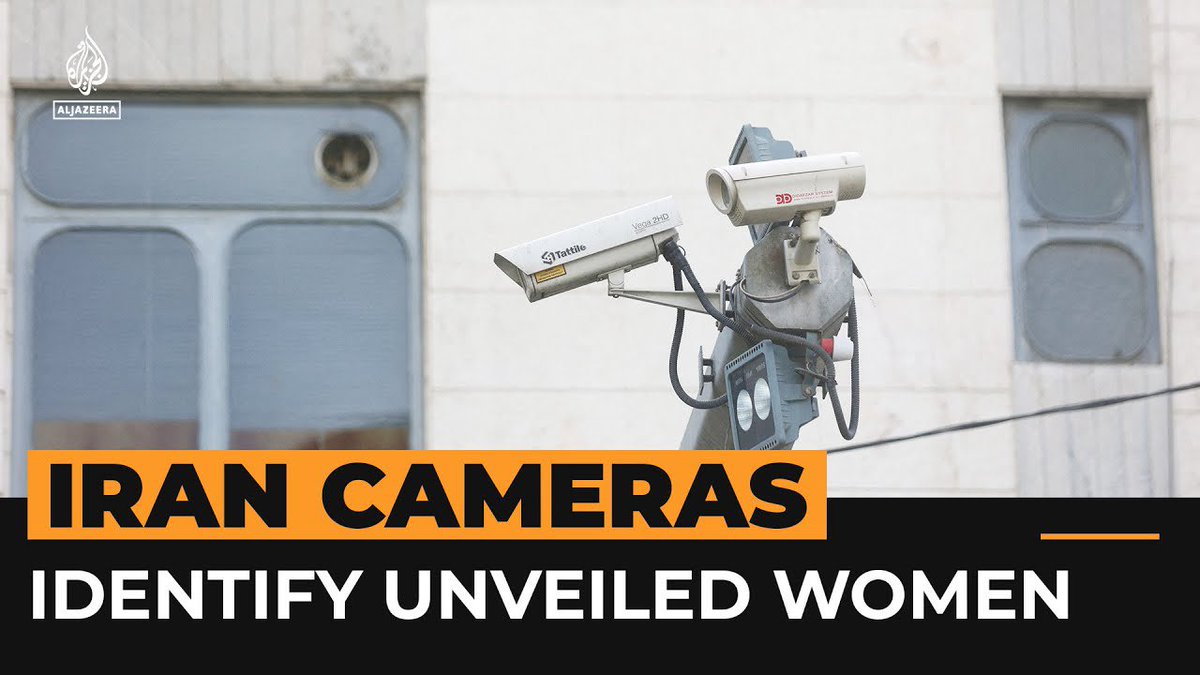
Iran built the most comprehensive civilian surveillance network in the Middle East. Cameras on every street. Facial recognition at universities. License plate readers that automatically fined women for removing their hijab in their own cars. A mobile app called Nazer that let citizens report uncovered women. Drones at beaches. The infrastructure that killed Mahsa Amini in September 2022 and crushed the Woman, Life, Freedom uprising that followed.
Israel hacked nearly all of it.
According to the Financial Times, citing two people familiar with the matter, nearly all of Tehran’s traffic cameras had been compromised for years. The footage was encrypted and transmitted to servers in Tel Aviv and southern Israel. One camera near Pasteur Street proved especially valuable. It was angled in such a way that Israeli analysts could see where members of Khamenei’s security detail parked their personal cars. Through that single camera angle, Israeli intelligence built files on the bodyguards’ home addresses, work schedules, commuting routes, and which senior officials they were assigned to protect.
Unit 8200 used algorithms to process billions of data points into what intelligence officers call a “pattern of life.” A person familiar with the process described it as “an assembly line with a single product: targets.”
“We knew Tehran like we know Jerusalem,” an Israeli intelligence official told the Financial Times. “And when you know a place as well as you know the street you grew up on, you notice a single thing that’s out of place.”
On February 28, when intelligence confirmed Khamenei would attend a morning meeting at his compound near Pasteur Street, the operation entered its final phase. Israel disrupted approximately 12 cellular antennas in the area, causing phones to appear “busy” when dialed. Khamenei’s security detail could not receive warnings. Israeli aircraft fired 30 precision munitions. The strike was carried out in daylight for tactical surprise.
Former Mossad official Sima Shine told the Financial Times that Israel’s strategic focus on Iran dates to a 2001 directive from Prime Minister Ariel Sharon. Twenty-five years of patient intelligence collection culminated in a single Saturday morning.
Here is the part that should stay with you.
The cameras Israel hacked were not military installations. They were the regime’s domestic surveillance apparatus. The same cameras that tracked women who removed their hijab. The same system that sent automated text messages to women in Isfahan accusing them of “improper veiling.” The same infrastructure the Guidance Patrol used to build digital dossiers on Iranian women and girls for the crime of showing their hair.
Israel turned the tools of the morality police into the tools of the regime’s destruction.
There is a viral claim that after the assassination, Mossad wiped the morality police’s databases on Iranian women. No Tier 1, 2, or 3 source confirms this. It traces to a single unverified social media post. I will not present it as fact.
But the verified reality is extraordinary enough. The regime built a surveillance state to control its own women. A foreign intelligence service co-opted that state to kill the man who ordered it built. The cameras that watched women became the cameras that watched Khamenei die.
That is poetic justice written in code.
https://t.co/ULBgEzZ3A8
For years, the Chinese Communist Party bet its Middle East strategy on the survival of Iran’s regime.
Xi Jinping called America a “declining power.” Beijing signed a strategic pact with Iran and relied on its leaders to counter U.S. influence.
Now that bet has collapsed.
When America's strength is tested, it delivers. And the world is watching.
https://t.co/AUPUXoVSei
Let’s put a finer point on what is happening here — a pro-CCP activist network financed by a pro-CCP millionaire living in China is organizing U.S. protests in opposition to a war against a Chinese ally, and those protests are being touted by Chinese state-run media outlets. Fun!
.@SecRubio: "In the next few hours and days, you're going to really begin to perceive a change in the scope and in the intensity of these attacks as, frankly, the two most powerful air forces in the world take apart this terroristic regime and defang it."