An EU of 40 members? Finnish President Alexander Stubb argues for it.
"We need to think big if we want to make our influence felt in the world."
We agree that Europe needs to think big, we need real power, the number isn't too important, the direction is! Growth, Unity, Power.
France is transitioning government desktops to Linux, with each ministry required to formalize its implementation plan by autumn 2026.
https://t.co/WKXjXN0rDy
#Linux#OpenSource
A small piece of EU cybersecurity law history after yesterday’s discussion with @XaverSchulze on CRA, NIS2 and ISO 27k.
I had the opportunity to comment on the first Czech cybersecurity law draft back in 2013, while delivering solutions to the people behind it. At the time when this wasn't even a thing in Europe.
France was first in 2013. Czechia followed in 2014, then Lithuania and Germany. Much of the rest of Europe only came with the 2018 NIS wave:
19 Dec 2013 — France: Loi n° 2013-1168 du 18 décembre 2013 relative à la programmation militaire...; Article 22 inserted security rules for systèmes d'information d'importance vitale used by opérateurs d'importance vitale.
However, it was not a standalone “Cybersecurity Act,” but the cyber obligations were introduced by Article 22 of the Military Programming Law, which inserted cybersecurity rules for operators of vital importance.
So the first standalone cyber law in Europe was the one that I commented.
29 Aug 2014 — Czechia: Zákon č. 181/2014 Sb., o kybernetické bezpečnosti a o změně souvisejících zákonů; the act expressly regulates rights and obligations in cyber security and the powers of public authorities.
23 Dec 2014 — Lithuania: Lietuvos Respublikos kibernetinio saugumo įstatymas (No. XII-1428); the official TAR record shows publication on 2014-12-23.
24 Jul 2015 — Germany: Gesetz zur Erhöhung der Sicherheit informationstechnischer Systeme (IT-Sicherheitsgesetz), published in BGBl. I No. 31 on 24 July 2015; the BSI notes it entered into force on 25 July 2015.
2018 — Slovakia: Zákon č. 69/2018 Z. z. o kybernetickej bezpečnosti
2018 — United Kingdom: Network and Information Systems Regulations
2018 — Slovenia: Zakon o informacijski varnosti (ZInfV)
2018 — Estonia: Küberturvalisuse seadus
2018 — Italy: Decreto Legislativo n. 65/2018
2018 — Sweden: Lag (2018:1174) om informationssäkerhet...
2018 — Croatia: Zakon o kibernetičkoj sigurnosti...
2018 — Poland: Ustawa o krajowym systemie cyberbezpieczeństwa
2018 — Portugal: Lei n.º 46/2018
2018 — Spain: Real Decreto-ley 12/2018
2018 — Ireland: NIS Regulations 2018
2018 — Netherlands: Wet beveiliging netwerk- en informatiesystemen
2018 — Bulgaria: Закон за киберсигурност
2018 — Greece: Νόμος 4577/2018
2018 — Austria: Netz- und Informationssystemsicherheitsgesetz (NISG)
2019 — Belgium: NIS framework law
2023 — Romania: Legea nr. 58/2023
2023 — Norway: Lov om digital sikkerhet
2024 — Latvia: Nacionālās kiberdrošības likums
2024 — Hungary: 2024. évi LXIX. törvény Magyarország kiberbiztonságáról
2025 — Finland: Kyberturvallisuuslaki
2025 — Denmark: NIS 2-loven
#CRA #NIS-2 #CyberSecurity #EU #Europe #History #Legal #Law #History
Have you recently heard about Sun, SGI, IBM Watson?
Netscape or Microsoft Internet Explorer?
Bell, Alcatel, BlackBerry or Nokia?
No one can compete with open source once it's widely available.
Free Software - Private Data
This is the way to make the
world safer and more free!
Congratulations to the government of #Denmark for leading by example in Europe 🇩🇰👏 By choosing #Linux & #LibreOffice, Denmark is prioritizing #DigitalSovereignty, reducing vendor lock-in, and shaping a resilient future. Other countries, take note. https://t.co/BYjbbord9Y
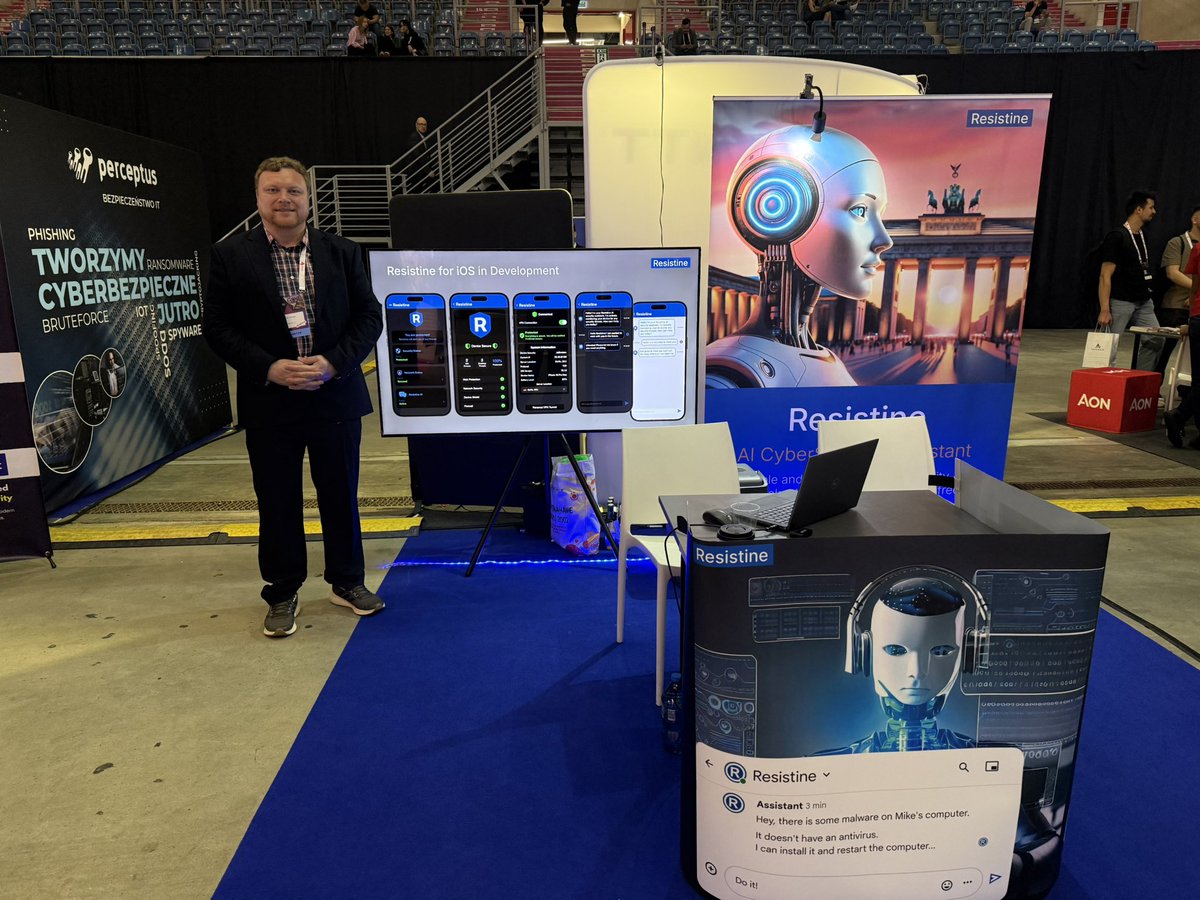
🤖Resist smarter with Resistine AI!
Easy-to-use, affordable, and enterprise-ready — visit @resistine at #CYBERSEC2025 and boost your network & info security posture. 🛡️
OpenAI launched Codex, a new coding agent that builds features and fixes bugs autonomously
It can work on many tasks in parallel, navigate codebases, implement changes, and propose pull requests for review
Available for Pro, Enterprise, and Team users
Microsoft just changed the game! 🔥
They've open-sourced bitnet.cpp: a blazing-fast 1-bit LLM inference framework that runs directly on CPUs.
Why is this a game-changer❓
You can now run 100B parameter models on local devices with up to 6x speed improvements and 82% less energy consumption—all without a GPU!
The future we've been waiting for: fast, efficient, and private AI that works anytime, anywhere.✨
The model is also available on HuggingFace, you can try it right away!
I've shared Link to the GitHub repo in next tweet, where you'll find all the details.
_____
Find me → @akshay_pachaar ✔️
For more insights and tutorials on AI and Machine Learning!
🚨 Zero-click. Wormable. Network-spreading.
New flaws in Apple’s AirPlay protocol (🔓 AirBorne) could let hackers hijack your device without a click—then ride your Wi-Fi into corporate networks.
CVE-2025-24252 + CVE-2025-24132 = silent RCE across Macs, TVs, speakers. Just being on the same Wi-Fi can be enough.
🔗 Learn more: https://t.co/PhCeZgROG0
📲 Update all AirPlay-enabled devices now—personal & work.
I’m based in the EU.
Europe's comeback is HAPPENING NOW.
After 20 years of economic stagnation, the EU just launched its most radical pro-growth plan ever.
The "Competitiveness Compass" blueprint that could make Europe a world superpower again 🧵:
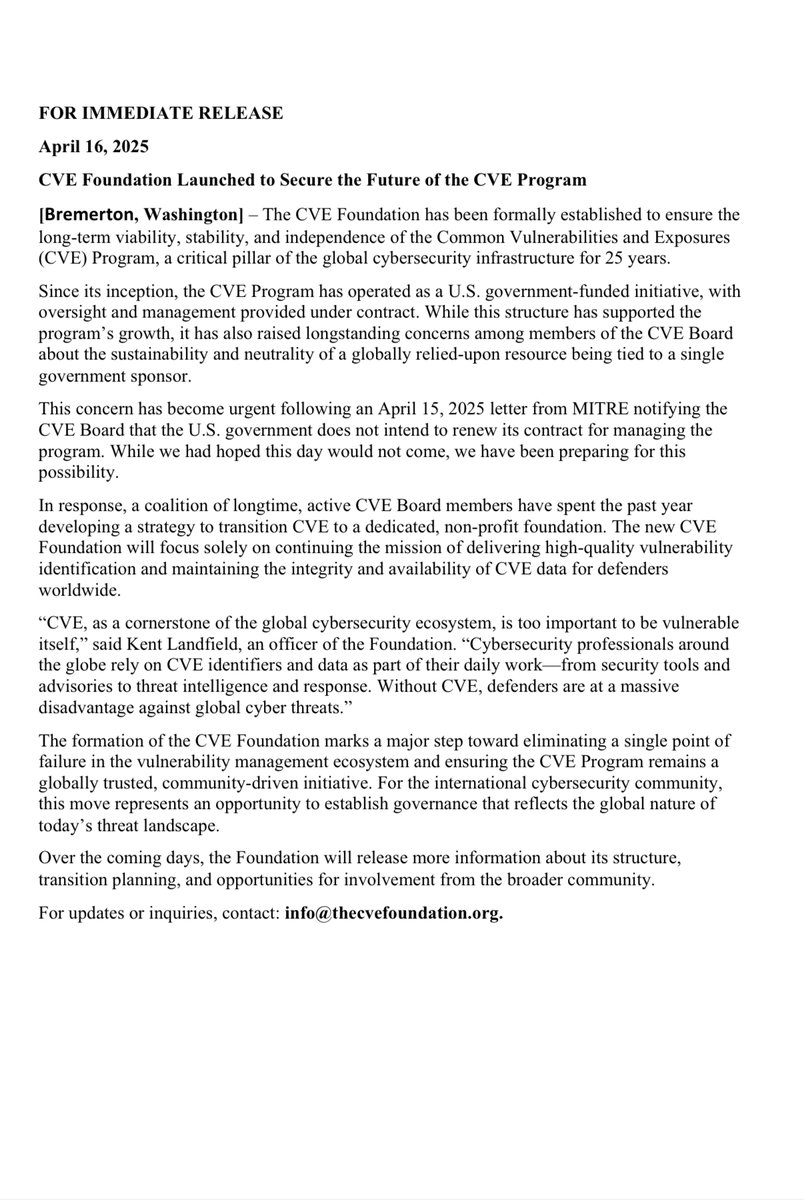
"CVE Foundation Launched to Secure the Future of the CVE Program"
Please note this is not an official CVE Board action, but the action of a rogue group within the CVE Board to try and save the CVE Program.
https://t.co/vkWsjUWZan
https://t.co/8jHSMCZWzH
This #SaferInternetDay, take control of your online security! The #FBI urges you to create strong, unique passphrases for every account — not simple passwords. For expert tips on how to stay safe online every day, visit https://t.co/8tsEEl4DLm