OpenAI Robotics is hiring, looking for exceptional full-stack hardware, ops, systems, and ML engineers to help us program and manufacture robots that are useful for society.
AI should be able to help people in the physical world. In the short term, we are focused on robots to support skilled workers to build our future infrastructure; in the long term, we imagine everyone having a personal robot doing anything they need.
Our world simulation research program, led by Aditya Ramesh (@model_mechanic), has evolved over the past year into OpenAI Robotics. Progress is rapid, and based on a foundation of co-design between robotics hardware and ML research.
If you love working hands-on across the robotics stack and want to build the future, please consider joining us. Send an email with your background and evidence of exceptional accomplishment to: [email protected]
@anushkag319 Sleep, workout, music. Just don't overthink. You can't control everything. But you have to be true with yourself. Are you really putting the efforts. If yes. Then just let it be.
The Age of AI demands planetary-scale Carbon Dioxide removal.
@AltCarbonIndia is using volcanic rock dust to geochemically pull carbon out of the atmosphere — and we just proved it works at scale. The world's largest issuance of carbon credits through Enhanced Rock Weathering.
~10,000 tonnes of CO₂ removed. Enough to offset a small AI data centre.
India has a history of scientific breakthroughs that stun the world — across medicine, space exploration, energy, & financial inclusion.🇮🇳
Climate Change is the most significant existential threat to our species. It demands Himalayan Ambitions.
We're moving mountains to make that happen. Literally.
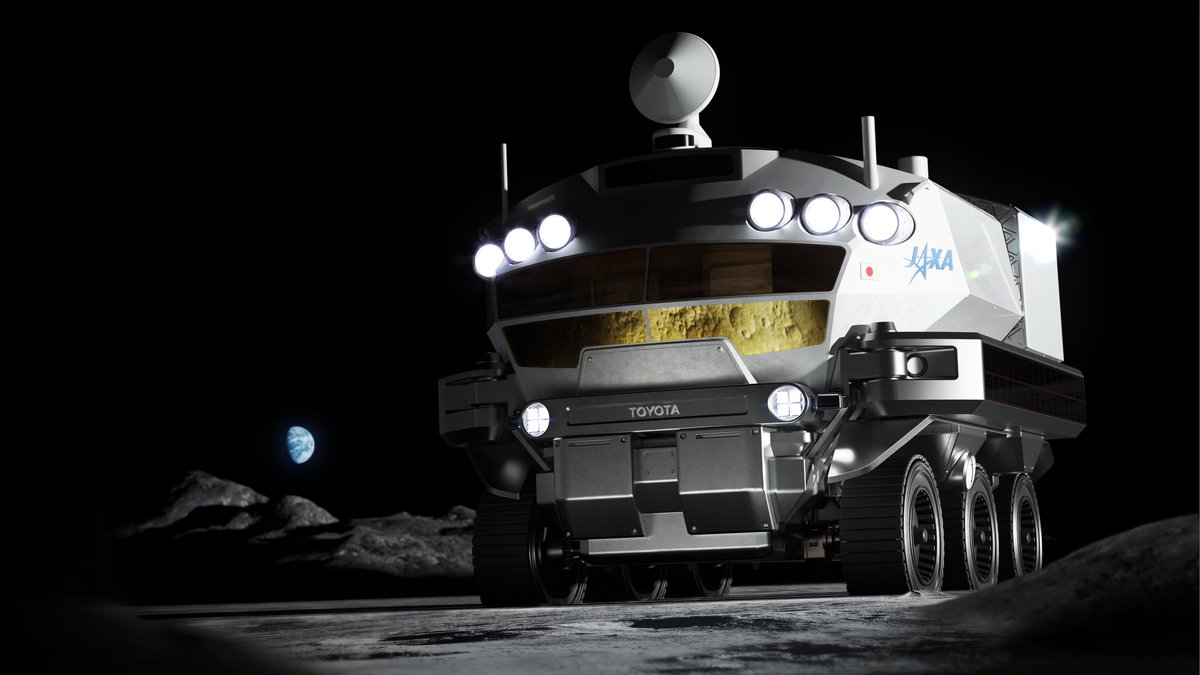
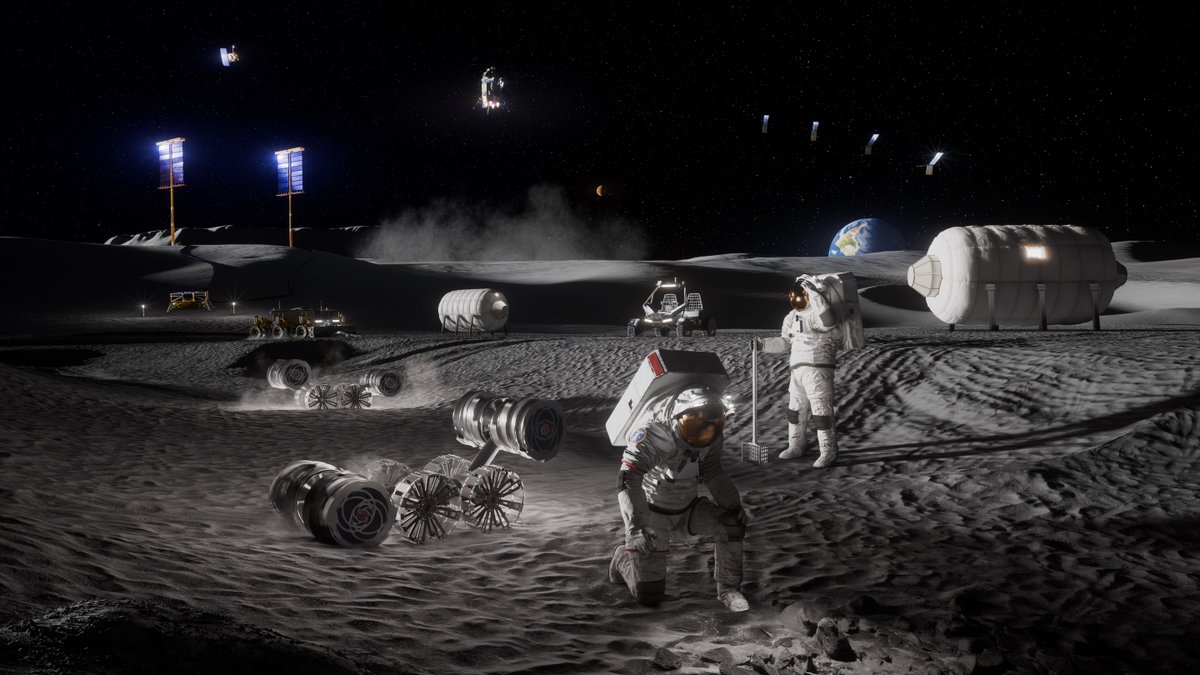
NASA has just launched a new website for its Moon Base missions, which aims to build a permanent $20 billion U.S. base on the Moon. @SpaceX's Starship rocket will play a big role in these missions.
"The Moon Base is a home away from Earth for Artemis astronauts who will live and work at humanity’s first lunar outpost. NASA is leading global teams of innovators across international space agencies, industry, and academia to build the Moon Base and establish an enduring human presence near the lunar South Pole for the benefit of all.
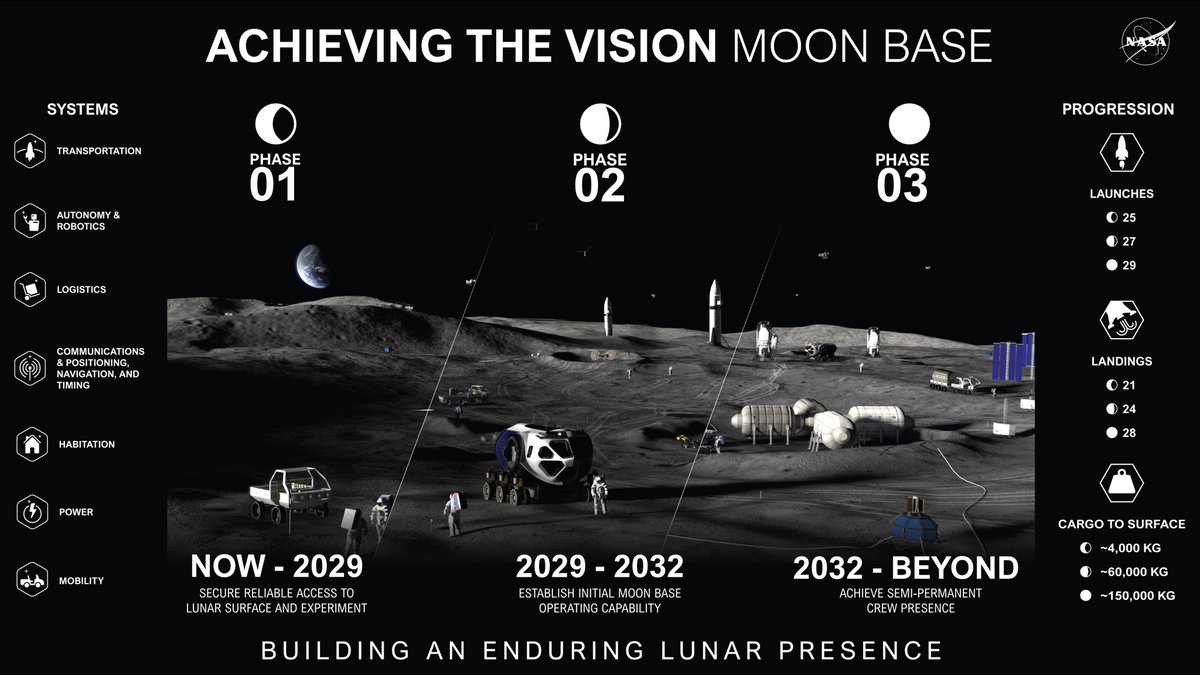
Phase One (Now–2029): Experiment and Learn
NASA will begin with a rapid series of robotic missions to scout the lunar South Pole region, test technologies, and prepare for surface operations ahead of future astronaut missions.:
• A major increase in lunar activity, with up to 25 missions, including 21 landings.
• Crewed and autonomous rovers for mobility demonstrations and surface preparation, along with four drones known as MoonFall and communications relay and observation satellites.
• Early demonstrations of power, navigation, communications, and nuclear radioisotope heater unit technologies designed to endure the long lunar night.
• Scientific payload opportunities integrated across landers and rovers.
• The first tangible footprint of Moon Base effort, with four tons of payload delivered to test what works on the lunar surface.
Phase Two (2029–2032): Early Habitation
By 2029, NASA will transition to assembling semi-permanent infrastructure and initiating early habitation and logistics operations:
• Deployment of expanded solar power systems and initial nuclear surface power capabilities, potentially including fission reactors and radioisotope power systems.
• Upgraded rovers, potential advanced MoonFall drones, and early habitation elements.
• Enhanced surface-to-orbit communications networks to provide reliable connectivity across the lunar South Pole region.
• Delivery of up to 60 tons of cargo through as many as 24 landings using low-, medium-, and heavy-class cargo landers.
Phase Three (2032 and Beyond): Sustained Human Presence
This phase will scale operations to achieve a true enduring presence, with routine crew rotations and continuous surface activity. This is when living and working on the Moon becomes a reality:
• Semi-permanent habitation modules with spacious interior for crew living and operations.
• Operational fission surface power systems capable of delivering steady, reliable energy through the long lunar nights, leveraging in situ resource manufacturing.
• Advanced logistics networks supported by crewed and autonomous rovers to keep the base supplied and functioning year-round.
• Delivery of up to 38 tons of cargo annually to sustain habitats, power systems, logistics operations, and major science outposts, enabled by low-cost reusable heavy-lift capabilities."
Moon base website: https://t.co/nefXl3J2FR
When you see too many options, sticking to one is very difficult.
But if you don't. You can't create depth. But it's important that you complete one thing first. And ignore the noise.
Every engineer should read this.
The principles for building reliable software systems have been around for a long time. Max outlines them beautifully.
Here's to getting that 99.99% on your status page.
https://t.co/HFDcriLodl