Thought Loop, Metacognition
Kab huN aazaad is muheet se mai
sochta hooN ke sochta kyuN hooN
کب ہوں آزاد اس محیط سے میں
سوچتا ہوں کہ سوچتا کیوں ہوں
asrar | اسرار
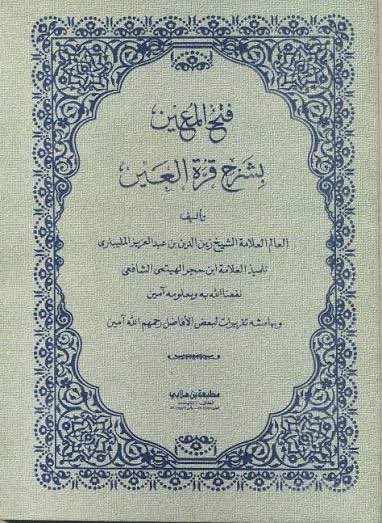
The Ponnani Tradition: South India’s Forgotten Beacon of Islamic Scholarship.
When the history of Islamic scholarship in India is discussed, the spotlight often falls on the great seminaries of North India. Yet centuries before many of them emerged, Ponnani in present-day Kerala had already become one of the subcontinent’s foremost centres of Sunni learning. Revered as the “Little Makkah of Malabar,” it stood at the heart of a vibrant scholarly tradition that connected the Malabar Coast with Makkah, Madinah, and Hadramawt.
From the fifteenth century onward, the Shaykh Makhdum family transformed Ponnani into a renowned seat of learning through the famous Ponnani Dars, where generations of students studied the Qur’an, Hadith, Shafi’i jurisprudence, Ash’ari theology, Arabic sciences, and Sufism.
Its greatest scholar, Shaykh Zainuddin Makhdum II (d. 1583), authored Tuhfat al-Mujahidin, one of the earliest indigenous histories of Kerala and an indispensable primary source on the Portuguese presence and the resistance of the Muslims of Malabar.
The influence of the Ponnani tradition was not confined to scholarship alone. It produced generations of scholars who shaped the religious, educational, and socio-political life of Kerala. Among them were Shaykh Ali Musliyar (d. 1921), one of the leading ulama associated with the 1921 Malabar uprising, and E. Moidu (Maithu) Moulavi, a prominent scholar and leader of the Khilafat Movement in Malabar. Their lives reflected a tradition in which scholarship, community leadership, and public engagement went hand in hand.
For centuries, Ponnani remained a beacon of Islamic learning, nurturing jurists, historians, teachers, and reformers while preserving the rich legacy of Arabi-Malayalam literature and maintaining close intellectual ties with the Hijaz and Yemen.
@serish A copy of Raja Rajeswar Rao Asghar's "Hindi-Urdu Lughat" published late 1930's, from DadaHazrat Riasat Ali Taaj marhoom's library (although incorrectly inscribed as Qamus ul Hind while binding).
@kabikaj55
Latest Course Now Out! The Art of Inquiry & Debate (Ādāb al-Baḥth wa'l-Munāẓara).
Read the famous Rashīdiyyah, al-Jawnpūrī’s commentary on Mīr Sayyid Jurjānī’s Al-Sharīfiya with Shaykh @ShamsTameez .
For course curriculum & more info, please visit: https://t.co/tVbLraWyzk
“Ramadan is a rejection of what the modern world forces onto humanity: gluttony, hyper-consumerism, the mechanization of time, and the obsession to exercise control over our lives.”
First of a series of "rules" giving advice on academic writing about history of philosophy, which I'll be posting on my blog over the coming days. Hope people will find this useful and interesting! Feedback more than welcome!
https://t.co/r03r5dgytW
My best friend left Hyderabad City to other state at a long distant location on Job purpose. I was a bit down due to this. Sometimes goodbyes are the hardest, yet need to accept that nothing is permanent 💔
In an ideal world, a type of public library would let you house your collections, stay their custodian, & make it publicly accessible.
Space for you, access for everyone.
Ops, log, etc. handled by lib. staff - partly crowd-funded, with local govt. support.
یا کبیکج @Kabikaj55
Why Javed Akhtar's Take on Housing Discrimination Against Muslims in Mumbai is Problematic
Akhtar's articulation is so wanting in depth and sensitivity that it might cause one to question the insidious nature of 'celebrity' intellectualism.
@vizagvala✍️
https://t.co/c13K3SxOxX
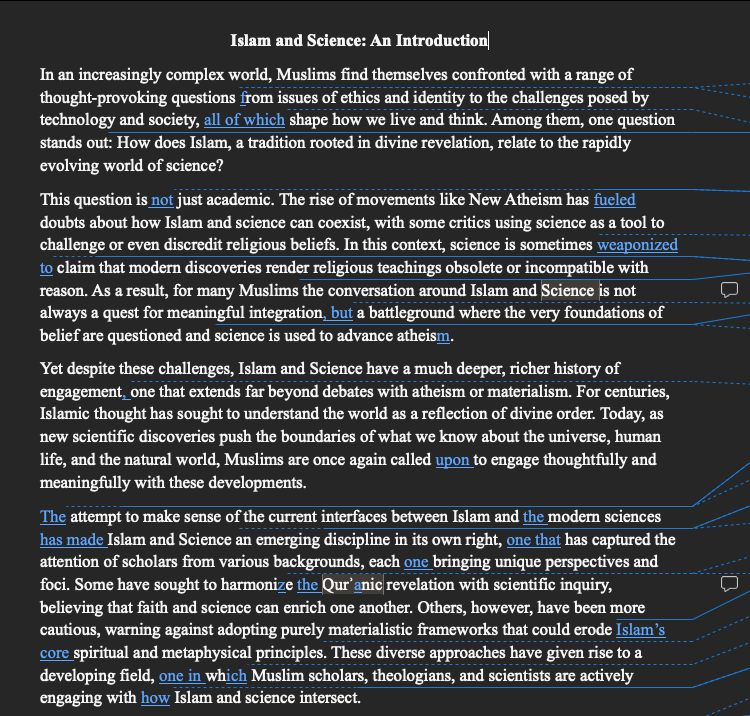
This is an accessible, 10,000-word summary of the entire field of Islam and Science. Copyediting is done, and it is one step closer to being published. Coming out soon, isA.
Love old, rare books & manuscripts?
Kabikaj is offering an internship in Hyderabad!
19th-21st c. Urdu & Persian texts, digitize folios, catalogue, label, read, write, and explore.
7–15 days | Unpaid | Certificate
Apply: DM / https://t.co/i9b1rZwISy
Our latest piece explores how global literature reached Hyderabad via Urdu in the early 20th century. @MaleehaFatima15 & @riaaasath delve into two rare Urdu translations — of Doyle and Goethe — preserved in our collections.