@scmedicinals I know you’re getting into sprinting, do them barefoot in the sand (my favourite) or on grass, it makes all the difference. When I do them on a hard surface I don’t go all out cause if I fall it will be ugly.
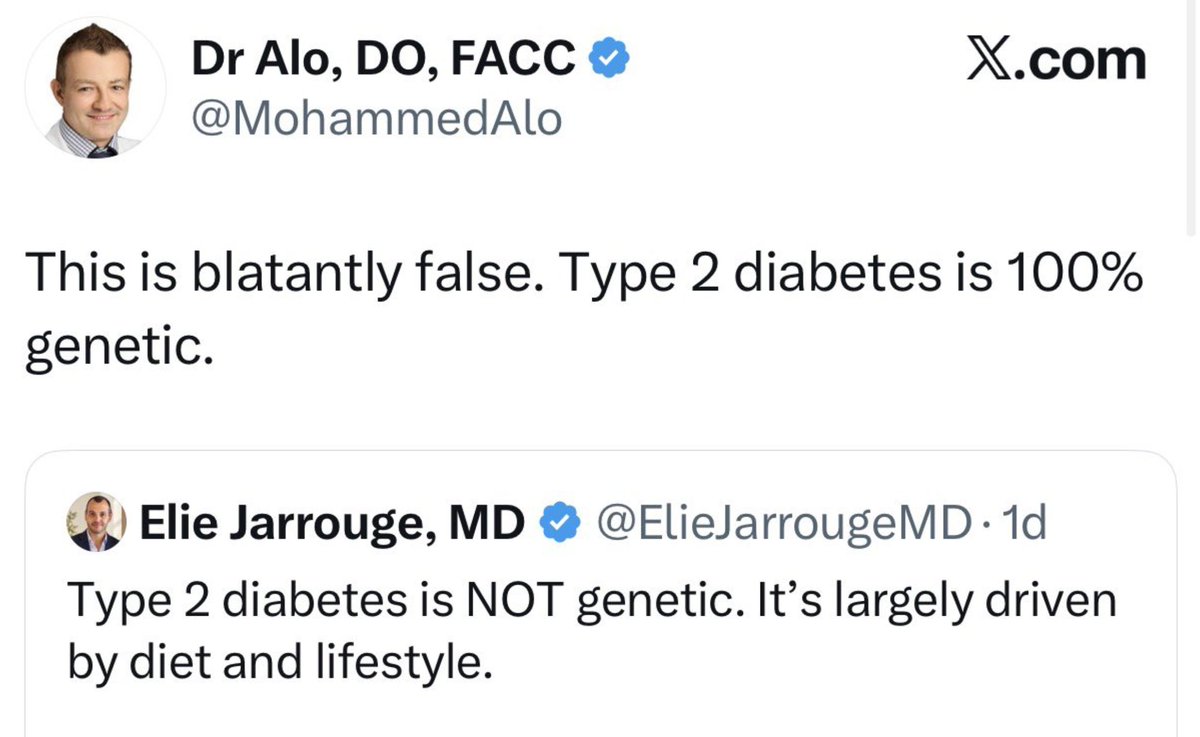
This is a joke, right?
Please put your hand up if you have reversed type 2 diabetes with diet and movement so we can educate this mainstream cardiologist.
Diabetes, like so many chronic diseases is completely reversible if you improve what you eat and move your body. Full stop.
Things that make you fatter than sugar does:
Chronic blue light from screens and modern indoor lighting
EMF from phones, wifi and 5G signals
Being disconnected from the sun (indoor lifestyle)
Bad environment (physical and social)
Excess polyunsaturated fat
Sedentarianism
We’ve come a long way from thinking that:
Stuffing salad, suspending sugar, slowly starving, and self straining was the core foundation to health, when in reality it is:
Steak, sugar, sunlight, steps, sleep, and sociality.
I genuinely LOVE eating POTATOES - extremely tasty and delicious!
Potatoes can help to increase testosterone and T3 since it’s rich in potassium. Adequate intracellular potassium is essential for steroidogenesis
Optimal thyroid function, magnesium, calcium, and sodium intake and low PUFA intake help to keep potassium inside the cell.
Milk, orange juice, potatoes (and other tubers) and leafy greens are great sources of potassium.
Take peptides❌
Take potatoes✅
Peptides leave you nutrient deficient from under eating and leave you pinning yourself with unknown, not well researched compounds, and getting weird apathetic emotional side effects.
Runners not having muscle mass is a function the body adopts for faster speed and performance.
Having a boatload of mass is just unnecessary and taxing on the body for long distance running.
I do think sprinter physiques are better and I enjoy sprinting myself.
10 sunlight myths most people still believe:
⠀
1. "Cloudy days don't count"
A gray sky is still at least 10,000 lux. The inside of your house is around 500.
⠀
2. "Sitting by a sunny window is basically the same"
Glass cuts the signal hard. Sunlight through a window is about 50x less effective at setting your body clock than being outside.
⠀
3. "You need direct sun to get the benefits"
Shade still surrounds you with red and infrared bouncing off everything around you.
⠀
4. "Sunlight is only about vitamin D"
It also releases nitric oxide, makes beta-endorphin, builds melanin and sets your body clock. A vitamin D pill does none of that.
⠀
5. "A vitamin D pill gives you the same benefits"
People with high vitamin D tend to live longer and get less cancer and heart disease, but giving people pills didn't reproduce most of those benefits.
⠀
6. "Midday sun is always the enemy"
Midday is the only time the sun is high enough for UVB, the part your skin uses to make vitamin D.
⠀
7. "More sun means more melanoma deaths"
In a 20-year Swedish study, women who avoided the sun died at about twice the rate of the women who got the most.
⠀
8. "Winter sun is useless"
It won't make vitamin D up north, but it still sets your body clock, lifts your mood and delivers red and infrared.
⠀
9. "A light box replaces sunrise"
Your clock evolved to read a slow ramp from darkness to full daylight. A lamp just flips on at one flat brightness.
⠀
10. "Sunglasses protect you in the morning"
At sunrise there's basically no UV yet, so all they're blocking is the sunlight your clock needs.
@emmasteuer1 Warm bath for at least half an hour very dark and only use red light. Have carbs prior to sleep, a starch in the evening for dinner and something like milk and honey before bed