ENFERMEDAD RELACIONADA A IgG4
➡️Lancet Rheumatol
📌Prednisona ≤30-40 mg/d por ≤3 meses
💡Grave o riesgo de recaída: esteroide + anti-células B
✅28 recomendaciones con nivel de evidencia
📍Vacunas antes de depleción B
doi: 10.1016/S2665-9913(26)00312-7
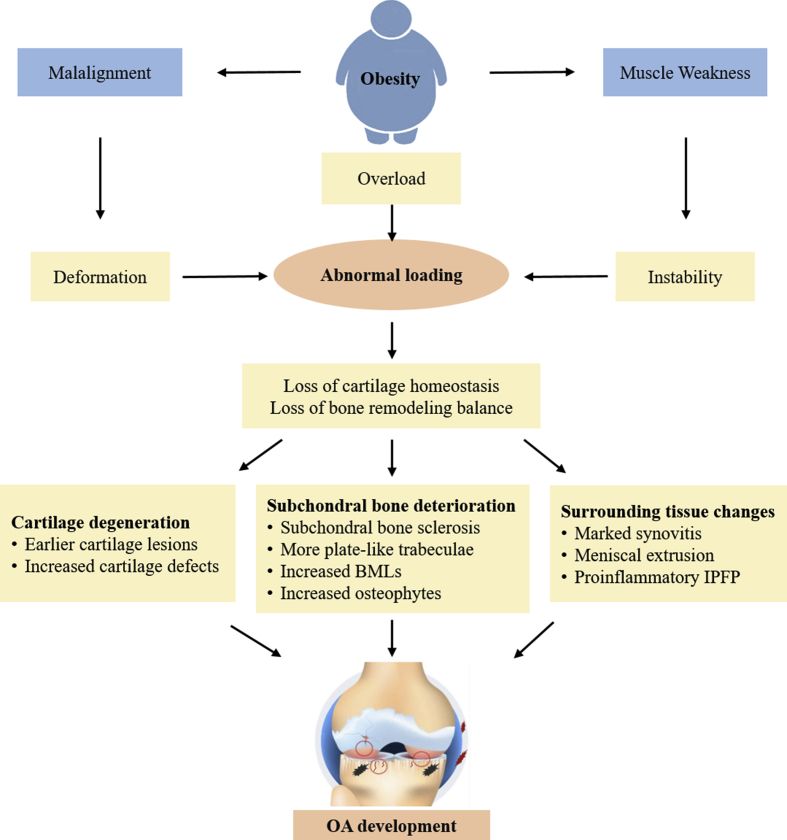
Weight loss is not surprisingly an effective treatment for knee osteoarthritis, but the magnitude of its impact is astounding.
Every pound of weight lost results in a 4-fold reduction in load exerted on the knee per step during daily activities.
This makes effective obesity medications all the more relevant in the world of osteoarthritis, particularly in light of retatrutide's newly published TRIUMPH-4 and TRIUMPH-1-OA data .
In addition to the relief of mechanical overloading, the direct anti-inflammatory properties of GLP-1 receptor agonism likely also plays a role.
Mechanical load on knee source: https://t.co/gFaj7XTT0z
Figure source: https://t.co/GWxqAlT7AX
Retatrutide trial: https://t.co/y02BKWhC1A
Sprint-interval exercise lasts less than 5 minutes but triggers more profound metabolic changes than 90 minutes of moderate cycling. A new study reveals why intensity, not duration, reshapes how your organs communicate.
Researchers tracked nearly 3,000 proteins in blood before, immediately after, and 3 hours following two types of exercise in young, healthy males. Sprint-interval exercise consisted of six 30-second all-out cycling bursts with 4-minute rests between sets. Moderate-intensity exercise was 90 minutes of continuous cycling.
The difference was striking. Sprint intervals altered 714 proteins immediately after exercise, more than 98% of which increased. Moderate-intensity exercise changed only 7 proteins at the same timepoint. The number increased to 19 after 3 hours, but remained dramatically lower than the sprint response.
Think of your bloodstream as a communication highway. After intense exercise, it floods with signals that travel to different organs. The study identified proteins originating from muscle, fat tissue, liver, brain, immune cells, pancreas, and other organs.
Skeletal muscle proved particularly sensitive to intensity. The researchers isolated human muscle cells and electrically stimulated them to mimic different exercise types. Simulated sprint exercise released 212 proteins into surrounding fluid. Simulated moderate exercise released only 9.
But muscle wasn't working alone. Sprint exercise increased proteins from the pituitary gland that regulate stress responses, factors from the brain involved in blood vessel relaxation, and immune proteins that modulate inflammation. The pattern suggested coordinated signaling across multiple organ systems.
The study also examined exercise metabolites, small molecules involved in energy production and cellular signaling. Sprint exercise immediately increased lactate, pyruvate, malate, and the obesity-suppressing compound N-lactoyl-phenylalanine (Lac-Phe). Moderate exercise showed a delayed response, with fatty acids rising primarily at the 3-hour mark.
To understand where these signals end up, researchers exposed human fat cells to blood plasma collected after each exercise type. Plasma from sprint exercise triggered extensive changes to fat cell gene activity, affecting 1,128 genes. Plasma from moderate exercise changed only 25 genes.
The remodeled fat cells showed activation of pathways controlling hormone responses, nutrient sensing, and fat breakdown. Several immune signaling receptors increased, suggesting exercise plasma primes fat tissue to respond to inflammatory signals differently.
The findings held up in real tissue. When researchers biopsied abdominal fat before and 3 hours after a maximal treadmill test, 418 genes overlapped with those changed by sprint plasma in isolated cells. This confirms circulating factors from intense exercise genuinely alter fat tissue biology.
Not all changes disappeared with training. After 8 weeks of regular exercise, the same intensity-dependent patterns persisted when participants repeated the acute tests. Growth hormone, von Willebrand factor, and POMC still increased more after sprints than moderate sessions.
The clinical relevance became clear when researchers cross-referenced exercise-responsive proteins with a database tracking 53,026 people for disease outcomes. They identified 143 proteins increased by exercise that associated with lower disease risk.
Of the 33 proteins specifically protective against type 2 diabetes, metabolic disorders, and obesity, 32 were elevated by sprint-interval exercise. Only 3 were elevated by moderate-intensity exercise. Proteins like ADGRG2, FGFBP1, and MXRA8 consistently showed strong protection across multiple metabolic conditions.
This isn't an argument against moderate exercise. The sustained energy demands of longer duration activity clearly stimulate different adaptive pathways, particularly in the liver. Proteins like IGFBP1 and follistatin increased exclusively after moderate exercise, likely reflecting sustained shifts in insulin and glucagon signaling.
The study reveals exercise intensity as a distinct variable that determines which protective signals reach your tissues, which organs respond, and potentially which disease risks decrease. The time-efficient nature of high-intensity exercise appears to work through fundamentally different signaling mechanisms than longer moderate sessions.
Key findings:
• Sprint-interval exercise altered 714 blood proteins immediately post-exercise vs. 7 for moderate-intensity exercise
• 25% of all detectable proteins changed after sprint exercise, with >98% increasing rather than decreasing
• Muscle cells released 212 proteins after simulated sprint exercise vs. 9 after simulated moderate exercise
• Sprint exercise plasma changed 1,128 genes in human fat cells vs. 25 genes for moderate exercise plasma
• Of 33 proteins protective against diabetes and obesity, 32 increased after sprint exercise vs. 3 after moderate exercise
• Intensity-dependent responses persisted after 8 weeks of training, suggesting they reflect relative intensity rather than training status
• Exercise metabolites showed distinct temporal patterns: lactate and Lac-Phe peaked immediately after sprints, while fatty acids increased later
• Moderate exercise uniquely increased liver-derived proteins (IGFBP1, follistatin) at the 3-hour timepoint
The mechanistic picture is incomplete. The study couldn't definitively prove which organs secrete which proteins, relying instead on tissue-specific gene expression databases and cell culture models. Blood volume shifts during exercise also complicate interpretation, though the findings held after correcting for plasma concentration changes.
The research focused on young, healthy, predominantly male participants. Whether the same intensity-dependent patterns occur in women, older adults, or people with existing metabolic disease remains unknown. The protective associations came from observational data that can't prove causation.
Still, the study offers a framework for understanding why brief, intense exercise produces adaptations comparable to or exceeding longer moderate sessions. The answer appears to lie in differential organ crosstalk triggered by metabolic stress signals that moderate exercise simply doesn't generate.
Berberine as a multi-hallmark modulator of aging: From AMPK and mitophagy to inflammaging and the SASP
https://t.co/n974ecEjvQ
[Agree or disagree with the title, comment below👇]
Review: skin aging has two clinical phenotypes, each with distinct histology and molecular drivers. The gut–skin, gut–liver, and gut–brain axes shape them and polyphenols, probiotics, collagen peptides, and n-3 fatty acids may modulate these pathways.
https://t.co/IBuSctKbrg
@Tu_IMSS Ok perfecto pero van dos meses que no me realisan exámenes de laboratorio, no sé en cuanto está mi creatinina, tracronimus ,el vienes fui por medicamento a clínica 46 y el medico no estaba que no me podían surtir ya que el doctor Abraham no estaba,iré mañana haber que me dicen
Hola @Tu_IMSS ya van para 2 m que no me dan para consulta de primera vez, ni de expontaneo me han querido consultar y soy paciente trasplantado , ya les pase mi caso , me mandaron hacer unos exámenes , para saber si tenía rechazo pero hasta ahí se quedó
@spideyof1@TuTiaSandra Pero recuerda en prep siempre es con condón , nunca sin , eso te lo dicen en la clínica , pero la gente cree que eso lo contrario . Y tener en cuenta EL PREP PREVIENE DE VIH PERO NO DE OTRAS ITS, POR ESO SIMPRE SI O SI, PREP MAS CONDON
🧠💪 ¿Por qué el ejercicio mejora la salud mental?
🔬 Una nueva revisión apunta a un mecanismo clave: una mejor oxigenación y utilización del oxígeno en el cerebro.
🏃♂️ Menos ansiedad y depresión, mejor salud cerebral.
🔗 https://t.co/aYt9roJYZF
💪🫀¿Ejercicio, dieta o ambos frente al síndrome metabólico?
🔬Metaanálisis de 78 ensayos (8.452 participantes):
✅ El ejercicio reduce la presión arterial
💪 La fuerza mejora la glucemia
🥗 Combinar ejercicio y dieta aporta beneficios específicos
🔗 https://t.co/SPfBMA0hbS
Dietary and Parenteral Nutritional Management of Short Bowel Syndrome with Intestinal Failure in Adults: A Narrative Review https://t.co/feMzQjP62V #mdpinutrients vía @Nutrients_MDPI
Y mientras tanto seguridad sin hacer nada un cochinero los de seguridad fumando y bebiendo alcohol en horas de trabajo a lado de las escaleras.En algunos casos hasta han quebrado los espejos. Plaza Ubika Calz. Independencia Norte 2655, Fovissste Estadio 44240 @Trafico_ZMG
@Profeco@SkandiaMexico saben porque motivo mi cuenta me aparece en $0 pesos ? Ayer quince hacer un retiro y creo que era problema de la aplicación , pero sigue igual , ya no hay dinero @SkandiaMexico