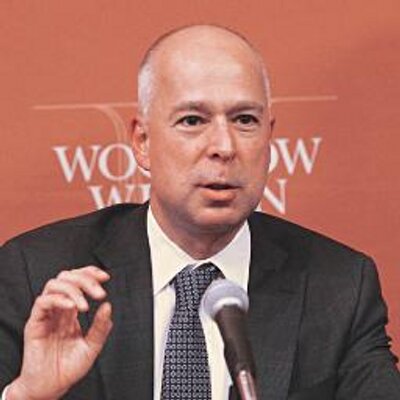
I'm honored to be thanked by Sen. Manchin, along with @derektmuller@Nedfoley@jacklgoldsmith and Brad Smith, Michael McConnell, and Bob Bauer, for our work on the Electoral Count Reform Act of 2022.
@CassSunstein
New draft paper on SSRN: "Fact Avoidance," forthcoming in @HarvLRev Supreme Court Issue.
This Essay identifies a recurring feature in SCOTUS case law, where the Court decides presidential power cases entirely on legal grounds without engaging at all with the facts /1
My proposal is an American version of the German system, known as mixed-member PR. I've long been interested in the German system, back to when I first wrote about it in the first edition of our Law of Democracy casebook in 1998.
I want to keep this within the two-party system as much as possible, which is why I would have a 10% or so threshold for the statewide vote before a party would be entitled to any of the at-large seats.
I was unaware of your short blog posts when I wrote.
"the partisan gerrymandering wars, combined with recent Supreme Court decisions, are pushing our system of political representation to the breaking point. Members of Congress in both parties recognize that the current process has reached a point that alienates voters"
Next up in our new series on Congress—an essay by Faculty Director @RickPildes on "A Politically Realistic Approach to Fair Political Representation"
@nyulaw's series features proposals & ideas on Congress from across the political spectrum
Read here: https://t.co/QYi8G7wi2S
Kicking off our new series on Congress with an essay by Frances Lee @Princeton - "Before You Tear Down Congress, Understand What It Does."
@nyulaw's new series features ideas, critiques, & proposals on Congress across the political spectrum
Read it here: https://t.co/4a8UYNahSY
Not sure I understand your point. In Free Enterprise, the Court had already held that the double for-cause structure was unconstitutional, despite that the SEC had all these other levers of control. So not sure what you think the Court discarded about FE in Arthrex.
This provision never had any practical significance in any event. The SEC had many levers in the statute to exercise as much control over the Board as the SEC wanted.
Is the PCAOB removal provision (which afik has not been repealed) back to being good law now that SEC commissioners are at-will under Slaughter? Double for-cause removal problem solved!
Congressional maps are being redrawn in the middle of the decade. The Supreme Court has narrowed a core piece of the Voting Rights Act. And both parties are racing to lock in seats before 2028.
On the new episode of @EarlyReturns podcast, host Jan Baran sorts through what's actually happening with two lawyers who have argued these cases:
@RickPildes, professor of law at NYU and former legal advisor to the Obama and Biden campaigns, and @jbtorc, partner at Holtzman Vogel and counsel in the recent Louisiana case before the Court.
They trace how redistricting got here and what the Court's decision in Callais changes going forward.
The conversation also covers partisan motivation in map-drawing, the population shifts expected to move 10 to 15 House seats from blue states to red after the 2030 census, and where the fights head next.
🎧 https://t.co/fi1nervH8P
#Redistricting #VotingRightsAct #SCOTUS #MapWars
I think today’s Supreme Court decision on political parties and campaign finance was correct and I appreciate being cited twice in the majority’s opinion. I rarely find myself on the opposite side of Justice Kagan, but this is one case in which I do.
Election Law at the International Conference on Constitutional Law: I'll be speaking at two panels today in Dublin.
The first is on judicial disqualification of candidates and annulment of elections. Here's the panel for that:
Chair: Eugene Mazo,
Commentator: Rick Pildes
Eleonora Bottini – The Disqualification of Le Pen
Franco Pierone – The Disqualification of Berlusconi
Mwiza NKhata – Election Annulment in Malawi in 2019
Vicky Miyandazi – Election Annulment in Kenya in 2017
Thanks to @EyalMirit for this thorough & thoughtful review of "Madisonian Nonprofit Law," forthcoming in @HarvardJOL. Read the review here -- https://t.co/tJMz51H14a -- & the whole essay here -- https://t.co/nOFjIvx1i0.
This op-ed by @baseballot shows that the anti-competitive impact of redistricting (which @RickPildes and I document in https://t.co/PNSOv0sk8Q) could get even worse -- even if the House as a whole remains fair.
https://t.co/WWzlGI8k8N
Here's another Bill Clinton view of Macbeth. He attended with Chelsea opening night performance of the Public Theater's Macbeth in 2006. After, there was a reception at Belvedere Castle. In the receiving line for the cast, I happened to behind Clinton when he greeted Liev Schreiber. Clinton said: "It made me want to be back in power."
Quite a comment about Macbeth.
In a new Stanford study, law professors by far preferred Gemini 2.5 Pro's responses over those written by their peers when they were unaware of who wrote the answers.
Appreciate this recognition in @adamliptak's NYT deep dive into how the presidency came to be such a different institution than the Framers envisioned:
"But [the Framers] failed to anticipate a development that would make impeachment improbable: the rise of political parties.
The classic account of this constitutional blind spot is “Separation of Parties, Not Powers,” a 2006 article in The Harvard Law Review by Daryl J. Levinson and Richard H. Pildes.
“To this day, the idea of self-sustaining political competition built into the structure of government is frequently portrayed as the unique genius of the U.S. Constitution, the very basis for the success of American democracy,” they wrote. “Yet the truth is closer to the opposite.”
“As competition between the legislative and executive branches was displaced by competition between two major parties,” they added, “the machine that was supposed to go of itself stopped running.”
Links in reply