Important article by @Iftikharfariha
India’s PhD graduates face a job paradox—overqualified for some roles, inexperienced for others
https://t.co/jLtJzbYVy3
The fatigue of constantly experimenting and then getting tired of the process and not feeling intrested in outcomes should be named Scientists block, similar to writers block.
"In the end, I have come to realize that being authentic at work is not a weakness, but rather a strength." #ScienceMagArchives https://t.co/xXF9s1QUnj
When you type an unpublished idea into a chatbot or coding agent, could it end up being used by the company that built the model—or a rival who asks the right question a year later? And what can you do to reduce the risk?
No setting makes a chatbot fully private, but experts suggest steps that can make leaks much less likely: https://t.co/knZzcmSD7x
Nobody notices how much your laptop supports your research until it suddenly fails. Failure of your primary research devices can lead to a level of emotional breakdown or slow down your research progress.
Stories to tell. Voices to hear. Memories to revisit. Join us to understand what literature means to the youth & how it shapes their world view. This along with a vibrant display of art & soulful cultural performances over 16th & 17th October, 2026 at TISS Mumbai. #TISSLitFest
Exclusive: “The instant I saw the picture my mouth fell open and my pulse began to race.” So wrote James Watson in The Double Helix: A Personal Account of the Discovery of the Structure of DNA, his controversial account of how he and Francis Crick deciphered the structure of DNA in 1953.
The image, now known as photograph 51, showed an elegant, symmetrical pattern of spots formed by x-rays diffracted from strands of DNA—the fingerprint of the molecule's helical structure.
Rosalind Franklin, an x-ray crystallographer, had produced the image in the spring of 1952. But Watson's 1968 book, amid other slights and sexist language directed at Franklin, implied the flash of insight was his alone.
Popular accounts still routinely suggest Franklin missed the significance of the photo. She never had a chance to challenge Watson's dismissive narrative; she died of cancer in 1958, a decade before his memoir was released and became a bestseller.
But a new analysis of her notes on another x-ray image, which she made just days earlier using the same DNA sample, offers a firm rebuttal.
Learn more: https://t.co/GelhBz9Sb5 @NewsfromScience
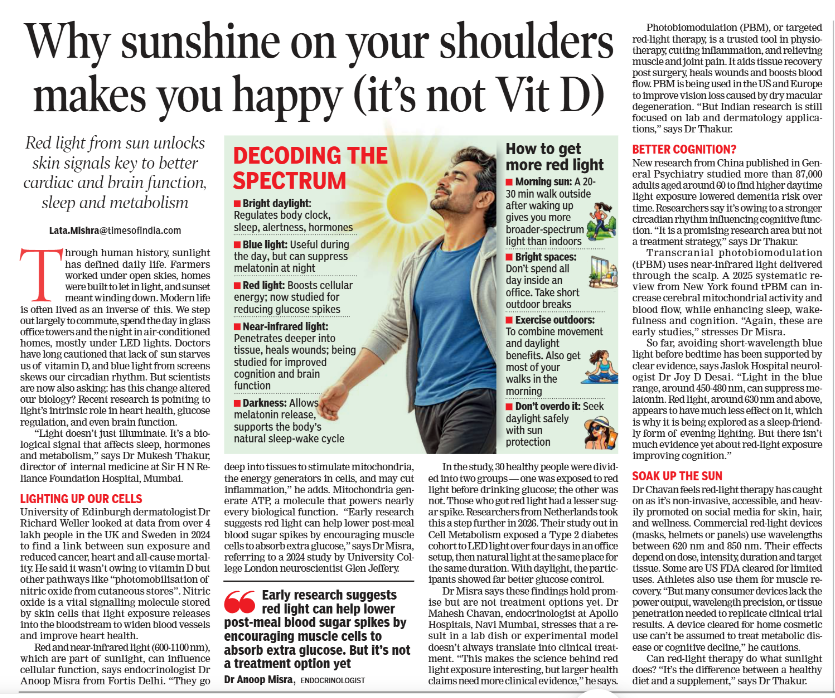
Sunlight does far more for your health than just synthesize Vitamin D!
This article highlights fascinating science showing why natural sunlight boosts mood, cardiac health, and metabolic balance:
1. Nitric Oxide Release:
Sunlight triggers the skin to release nitric oxide into the bloodstream, widening blood vessels and improving heart health.
2. Red & Near-Infrared Light:
Penetrates tissues to stimulate cellular mitochondria, helping reduce inflammation, improve cellular energy (ATP), and potentially blunt post-meal blood sugar spikes.
3. Circadian Alignment:
Morning light exposure anchors your body clock, enhancing daytime alertness and nighttime sleep quality.
Practical Takeaway:
Get 20–30 minutes of natural outdoor light every morning!
(Credits: @TOIHyderabad)
@NobelPrize Henri B. Kagan trained in chemistry in Paris and built much of his career at Université Paris-Sud, while Kenso Soai earned his degrees at the University of Tokyo before establishing his research group at Tokyo University of Science.
BREAKING NEWS
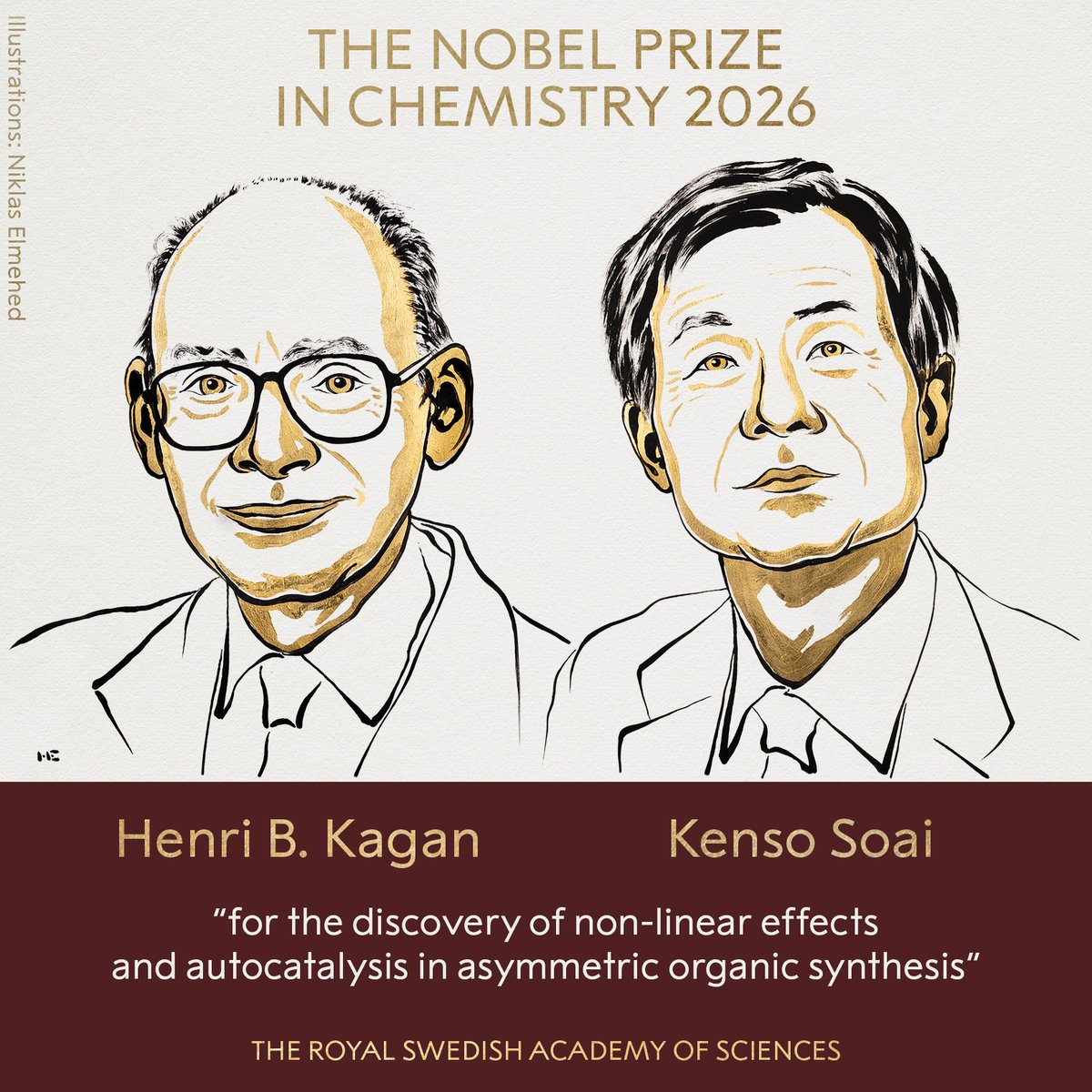
The Royal Swedish Academy of Sciences has decided to award the 2026 #NobelPrize in Chemistry to Henri B. Kagan and Kenso Soai “for the discovery of non-linear effects and autocatalysis in asymmetric organic synthesis.”
“I will miss the creativity of teaching.”
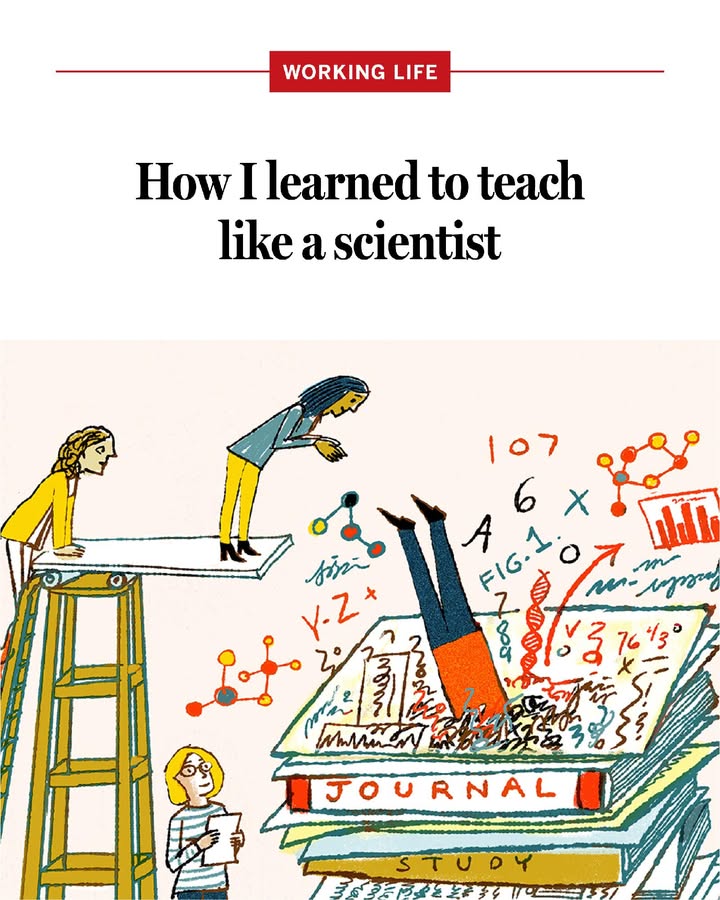
On #WorldTeachersDay, check out this Working Life from a retired professor emeritus on how she challenged students to think beyond facts—and how she learned to teach like a scientist. https://t.co/ln8M62PN2V
“Do your own research” is excellent advice.
Just remember:
Googling isn’t research.
Watching videos isn’t research.
Finding a paper that agrees with you isn’t research.
And reading scientific literature doesn’t magically give you the expertise required to interpret it.
Access to information is not the same thing as expertise.
3 of the biggest academic publishers in the world sued a photocopy shop.
The shop charged 50 paise a page. It sat inside a university campus in Delhi and had 1 owner.
The case ran for 4 years. The shop won, and the law changed.
His name is Dharampal Singh.
He set up Rameshwari Photocopy Service in 1998, in a small licensed space inside the Delhi School of Economics at the University of Delhi.
The work was simple. Professors would prepare a reading list. For a course like Agrarian Sociology, that might mean 33 different readings, scattered across 33 different books, most of which cost more than a student's monthly budget and some of which the library had 1 copy of.
Singh photocopied the relevant chapters, bound them together, and sold the bundle. It was called a course pack. The price was 50 paise per page.
That is less than 1 American cent.
He explained it in 1 sentence. If a student needs 33 readings for a course, he said, it could take months to collect them from different books. I make life easier for students by giving them all the material in 1 pack.
In August 2012, Oxford University Press, Cambridge University Press and Taylor and Francis filed suit in the Delhi High Court against the shop and against the University of Delhi. They wanted a permanent injunction.
By the end of 2012 the court had granted a temporary one. A commissioner was sent to the shop without warning, made an inventory, and seized copies.
Then something unusual happened.
Students organised. 2 groups, one of students and one for educational access, formally applied to join the case as defendants, on the side of the photocopy shop. The court allowed it.
In March 2013, 309 authors and academics from around the world wrote an open letter to the publishers asking them to withdraw the case.
33 of those 309 had written the very books whose copyright was allegedly being infringed.
The authors were siding with the shop copying their books.
On 16th September 2016, Justice Rajiv Sahai Endlaw dismissed the suit entirely. He wrote that copyright in literary works is not an inevitable, divine or natural right conferring absolute ownership on authors.
The publishers appealed. On 9th December 2016, a 2 judge bench of the Delhi High Court delivered the final ruling.
It held that reproducing copyrighted material for the purpose of educational instruction is not infringement under Indian law, and that no licence or permission from the publisher is required for a course pack, however much of the book is copied, as long as it is justified by teaching.
Then the publishers withdrew from the case entirely.
The shop is still there.
The next time you are told that intellectual property law always favours whoever has the most expensive lawyers, remember that 3 of the largest publishers on Earth spent 4 years trying to shut down a photocopy shop charging half a rupee a page.
And lost.