₹57 LAKH A MONTH. That is the gap we need to close. 🚩
For FY 2026–27, Hindu Fund has pledged ~₹7.5 Cr towards Dharmic projects.
~₹1.9 Cr has already been granted to grantees. The remaining commitments and campaigns can be seen transparently on the Hindu Fund website.
Expected collections this FY: ~₹2.25 Cr.
The shortfall: ~₹4 Cr.
Or roughly ₹57 lakh/month till March.
It sounds enormous.
Until @RahulDewanV2 breaks down what happens when thousands of Hindus divide that responsibility among themselves.
Watch this video.
Then choose the segment you can belong to and make your Sankalpa.
Sanatan doesn't need one person to give ₹57 lakh.
It needs enough of us to say: “I will do my part.”
Contribute: https://t.co/1QmKLOZfvF
#HinduFund #SanatanDharma #Dharma #hinduism
@Neerudangwal@Anubhav_Nirmohi
The wall hit by ancient medicine was simple: If a patient cannot speak, how do you diagnose their pain?
For centuries, across ancient Greece, Rome, and Mesopotamia, medicine relied heavily on verbal interrogation. When an infant screamed continuously, physicians often resorted to guesswork.
Then came Viddha Kashyapa and his masterwork, the Kashyapa Samhita.
Kashyapa recognized that while an infant lacks speech, the body possesses an innate, involuntary reflex language. In a dedicated section titled the Vedana Adhyaya (The Chapter on Knowledge of Pain Signs), he systematically mapped non verbal behavioral cues to precise internal organ distress.
Without electronic telemetry / pulse oximeters / behavioral software, Kashyapa documented specific clinical patterns:
- Earache (Karna-Shula): He observed that an infant with middle ear agony does not just cry. The child repeatedly clutches or pulls the ear, shakes its head side to side, and refuses to nurse.
Swallowing forces open the Eustachian tube, creating a sudden, agonizing pressure surge across an inflamed ear drum. The rejection of mother's milk was a mechanical defense mechanism.
- Abdominal Pain (Kukshi-Shula): He recorded infants drawing their knees tight against their chest, displaying abdominal rigidity, and breaking into sudden cold sweats while uttering sharp, high-pitched cries.
Flexing the knees relaxes the rectus abdominis muscles, instantly dropping intra abdominal pressure to relieve visceral muscle spasm.
- Headache (Siroruk): He mapped photophobia and eye-squeezing alongside continuous forehead rubbing, identifying trigeminovascular pain responses 1000s years before modern neurology mapped the cranial nerve pathways.
In modern Neonatal Intensive Care Units (NICUs), nurses use validated observational metrics like the FLACC Scale (Face, Legs, Activity, Cry, Consolability) and the NIPS (Neonatal Infant Pain Scale) to actually decode what Kashyapa did already long back.
What makes Kashyapa's work extraordinary is not just that he noticed these signs, but that he codified them into a differential diagnosis manual. He proved that an infant’s body has an explicit, readable language. By systematically recording how specific internal pathologies map to external motor reflexes, he provided physicians with a tool to treat non-verbal patients rationally rather than speculatively.
Lets count all the blunders Congress has costed the Indian Semiconductor Industry.
(1/5)
>1960s: Fairchild wants to build chip fab here
>Govt hits them with red tape and foreign restrictions
>Fairchild leaves for Malaysia instead
@narendramodi 2 most important things to be done. 1) dismantle the colonial goverment and make the nation more decentralised. 2) reform bureaucracy and judiciary. Aap se to aasha bhi hai, baaki logo se to woh bhi nahi
The anti-memorization movement has left millions of students unable to think because every elementary operation consumes working memory.
For instance, solving equations feels smooth when basic arithmetic is automatic. It's like moving puzzle pieces around, and you just need to identify how they fit together.
But without automaticity on basic arithmetic, each puzzle piece is a heavy weight. You struggle to move them at all, much less figure out where they're supposed to go.
It’s the same all the way up the ladder of math: from arithmetic, to algebra, to calculus, to all sorts of university-level math and beyond.
gotta agree with Bloom's taxonomy here in that being unable to memorize and rapidly recall information, is prohibitive to more advanced forms of thinking e.g. evaluating complex problems, and synthesising seemingly unrelated concepts.
somewhat relatedly, this is also why people tend to get more creative and have interesting insights when they are both well read in terms of both breadth and depth.
40M+ people worldwide have thrown away their eyeglasses, bifocals & contact lenses forever thanks to LASIK laser eye surgery. Every single day, 1000s of patients lie flat on an operating table while a cold laser beam vaporizes tissue off their cornea with sub-micron precision, fixing their vision in < 10 mins w/o a single drop of blood/a single scalpel.
Ask any patient who invented LASIK, and they will guess a team of American/German eye surgeons. They are wrong. The foundational physics that made laser surgery on living human tissue possible was invented by an unsung Indian physical chemist working late nights in a computer company’s research lab.
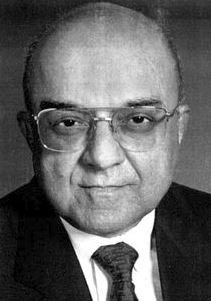
His name was Dr. Rangaswamy Srinivasan.
in 1929, Srinivasan earned his bachelor's & master's degrees from the University of Madras before traveling to the United States for his doctorate at the University of Southern California. By 1961, he joined the IBM Thomas J. Watson Research Center in New York. While most IBM scientists were focused on silicon microchips & computer hardware, Srinivasan was obsessed with photochemistry: how high-energy light interacts with organic molecules and synthetic polymers.
In 1981, IBM acquired a new toy for its physics lab: an UV Excimer laser. At the time, conventional wisdom in medicine stated that firing a laser at living biological tissue was a terrible idea. Lasers generate intense thermal heat; hitting human skin/organs with 1 would simply incinerate, char & burn the tissue like a blowtorch.
Srinivasan believed UV light behaved differently. He hypothesized that at short UV wavelengths (193 nm), the light was breaking molecular bonds directly. He just needed a piece of organic tissue to prove it.P
On Nov 27, 1981, during the American Thanksgiving holiday, while the IBM labs were quiet & empty, Srinivasan brought his leftover Thanksgiving turkey dinner into work. Taking a piece of leftover turkey cartilage from his lunch container, he placed it under the Excimer laser & fired a brief sequence of 193 nm UV pulses.
When he looked under the high-powered microscope, he saw something that left him speechless.The laser had not burned the turkey meat. There were no charred edges, no heat damage & no melting. Instead, the UV laser had cleanly sliced through the cartilage with microscopic, surgical precision, evaporating sub-micron layers of organic tissue instantaneously.
Srinivasan named this phenomenon Ablative Photodecomposition (APD). Because the UV light pulses broke molecular bonds in tiny fractions of a sec, the organic matter evaporated before thermal heat had time to spread to the adjacent cells. It was the ultimate "cold knife."
Recognizing the earth-shattering medical potential, Srinivasan teamed up with IBM colleagues Bodil Braren & James J. Wynne, alongside New York ophthalmologist Dr. Stephen Trokel. Together, they applied Ablative Photodecomposition to the human cornea, proving that an Excimer laser could precisely reshape the curve of the human eye to correct myopia (nearsightedness) w/o damaging the delicate ocular structures beneath.
That single experiment on a piece of Thanksgiving turkey gave birth to modern refractive eye surgery, including PRK & LASIK.
The global scientific community showered Srinivasan with accolades: In 2002, he was inducted into the US National Inventors Hall of Fame, joining legends like Thomas Edison & Nikola Tesla. In 2013, US President Barack Obama awarded Dr. Rangaswamy Srinivasan the National Medal of Technology & Innovation at the White House: the highest honor for technological achievement in the United States.
He holds 21 US patents, with his papers cited 1000x across laser physics, chemistry & ophthalmology literature.Y et, back home in India, where 10s of 1000s of people undergo LASIK every month, his name is practically nonexistent in school curricula/public memory/popular culture.
The next time you watch a friend throw away their thick glasses after a 10 minute laser procedure, remember the Indian chemist who brought his Thanksgiving dinner into a lab in 1981. He was not an eye surgeon, but he gave 40M people the gift of sight, 1 microscopic beam of light at a time.
Justice for Tanishka — A Mother Seeks Truth for Her 10-Year-Old Daughter’s Death at School - Sign the Petition! https://t.co/PYVwZ2Yxeq via @ChangeOrg_India
The word "rabies" traces back through Latin rabies, meaning rage/madness to a shared Proto-Indo-European root of violence & fury. That same root pulses in the Sanskrit रभस् (rabhas), evoking raw impetuosity, violent force & uncontrollable frenzy.
In the Ayurvedic texts ancients described Alarka Visha, the poison of the mad dog, with chilling precision: the wound, the creeping madness, the hydrophobia (jalasanthapa/fear of water), the inevitable descent into frenzy & death.
They saw what we now know as a neurotropic virus hijacking the brain, turning victims into vessels of rage.
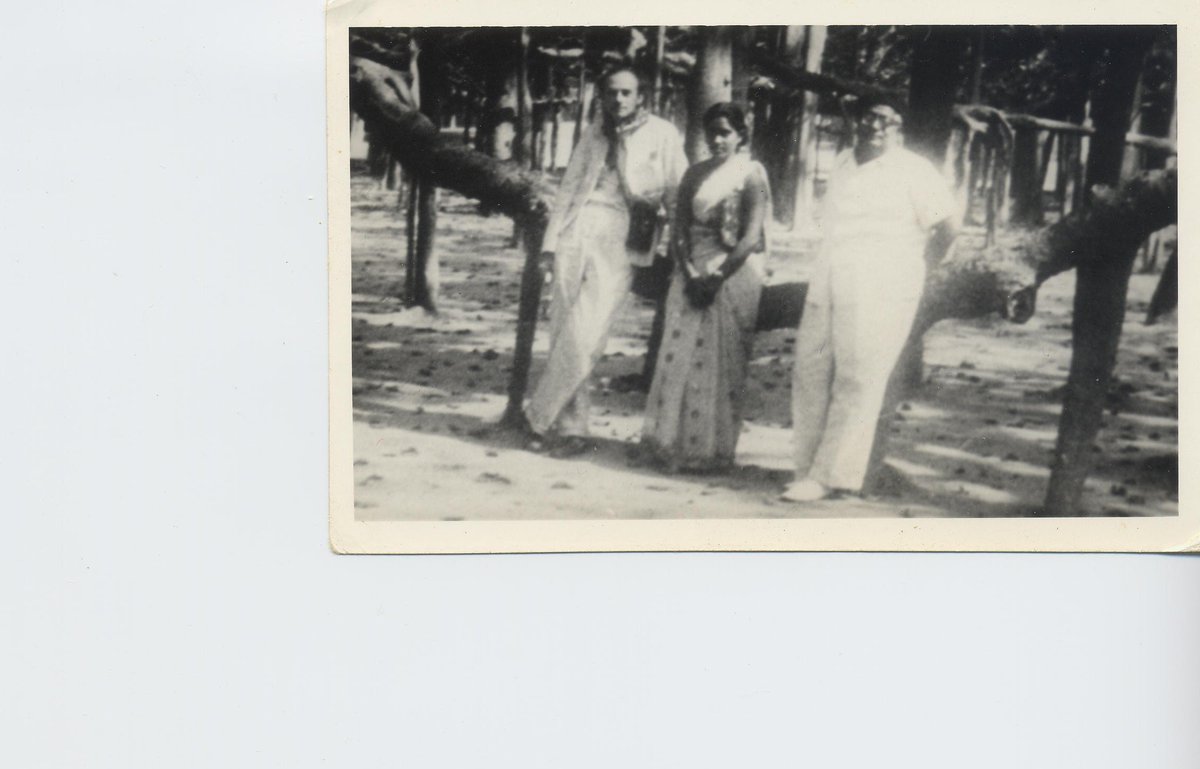
In the autumn of 1950s, the streets of North Calcutta are a chaotic maze of refugees, political protests & military surplus shops. Walking through this dust & noise is a young Bengali woman in a simple cotton sari.
Her name is Purnima Sinha (soon going to become the 1st woman to earn a doctorate in Physics from Calcutta University). She is a postgrad physics student searching for junk.
Purnima has just joined the laboratory of the legendary Satyendra Nath Bose, the man who co-authored the quantum mechanics of light with Albert Einstein (Bose-Einstein statistics). But Bose’s lab at Rajabazar Science College is not an elite, shiny Western sanctuary. It is a drafty, underfunded space in a newly independent nation with empty coffers.
When Purnima asked Bose for a doctoral research topic, he did not hand her a neat project file. He looked at her and laid down his golden, unyielding rule:
"If you want to do experimental physics here, you must 1st build your own equipment. If you cannot build the machine, you have no right to use it."
In post partition India, there is no budget to import state of the art X-ray crystallographic equipment from Europe. Purnima has no choice. If she wants to peer into the atomic structure of matter, she will have to build an X-ray tube & a high-voltage transformer out of trash.
For a long time, Purnima’s primary research ground is not the library, it is the flea markets of Dharamtala & Wellington Square, where British Army surplus from World War II is sold as scrap.
She spends her days digging through boxes of discarded military radio parts, burnt out copper wiring & rusted metal sheets. Slowly, piece by piece, she drags her haul back to the University of Calcutta on public trams.
With her own hands, she begins to construct the machine:
- She winds heavy copper coils manually to build a massive 50 KV transformer.
- She blows glass & seals metal joints to construct a functional vacuum X-ray tube.
- She uses discarded grease, wax * military scrap to seal leaks in the vacuum pump.
The work is physically brutal & toxic. She inhales noxious fumes, handles lead shielding & risks electric shocks from her hand wired, high voltage creation. In 1955, after yrs of trial & error, she flips the switch. The hand built, scavenged machine hums to life, generating a highly concentrated, steady beam of X-rays.
Using this home brewed setup, she begins analyzing the atomic geometry of clay minerals from different regions of India, research that is crucial for understanding soil mechanics & early geological formations. Her structural map of kaolinite & bentonite clays is so precise that it matches the data produced by multimillion dollar labs in the West.
In 1956, Purnima Sinha submits her thesis, titled "X-ray and Differential Thermal Analysis of Indian Clays."
When she defends her research, the academic board is stunned. She has not just analyzed the samples; she has documented the exact engineering blueprints of the machine she built to do it.
At a time when female physicists are virtually non-existent in Indian academia, Purnima Sinha becomes the 1st woman to earn a Doctorate in Physics from Calcutta University.
She does not stop there. Her mastery of X-ray diffraction catches the attention of the global scientific community. She is invited to Stanford University, where she pivots from clay to biophysics.
Yet, despite her international success, Purnima remains deeply connected to her roots. She returns to India, refusing to join the "brain drain." She spends decades at the Central Glass and Ceramic Research Institute, using her deep knowledge of clay minerals to help build India's indigenous ceramic and clay industries.
While she spent her days solving complex mathematical structures of crystals, her evenings were spent in a completely different realm of mastery. She was a deeply accomplished writer, a translator of scientific texts into Bengali & an expert in classical music.
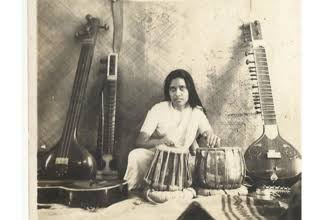
In a culture where the classical tabla was considered an exclusively male domain, Purnima mastered the instrument, defying social norms just as easily as she defied the laws of underfunded physics.
She proved that science does not belong to those with the biggest budgets/the most expensive imports/the loudest credentials. It belongs to the minds stubborn enough to build a path to the truth using nothing but scrap metal, a cotton sari & an unbreakable will.
I taught JEE physics for years. That paper breaks strong kids in three hours.
This exam is five hours of theory and five hours of lab work, and these five did close to perfect scores on it.
Let me tell you what actually happened.
The International Physics Olympiad is the world championship of school physics. It was the 56th edition. Held in Bucaramanga, Colombia, from July 5 to 12.
381 students. More than 85 countries. Every one of them the best physics student their country could find.
India sent five kids.
All five came back with gold.
Their names are Kanishk Jain from Pune. Riddhesh Anant Bendale from Indore. Rishit Garg from Dwarka in Delhi. Shresth Suraiya from Mumbai. Svarit Joshi from Ahmedabad.
We know a hundred cricketers by their nickname and not one of these boys. :)
That clean sweep put India at joint World Number One. Tied with China, Russia, Kazakhstan, South Korea and Taiwan.
Those are countries that pour serious money and national pride into science education. We are standing level with them.
Now here is what the exam actually was.
Two papers. Each five hours long.
The theory paper had three problems. One on the thermodynamics of paramagnetic cooling. One on the photoionisation of ozone. One on the dynamics of electron positron pairs.
The experimental paper was another five hours in a lab, working through heat transfer and thermodynamic processes in fluids.
That means you get given equipment you have never seen, and you have to design your own experiment, take your own readings, handle the errors, and reach a real answer.
Not multiple choice. No shortcuts. No pattern recognition. You either understand physics or you sit there for five hours.
HBCSE says the Indian students were near perfect on theory and excellent on the practical too.
Now, this was India's 27th appearance at the IPhO.
Across all those years, about 44 percent of Indian students have won gold, 41 percent silver, 10 percent bronze.
In the last ten years, every single Indian student has come home with a medal. 62 percent gold, 38 percent silver.
Not one kid has gone and come back empty handed in a decade.
Five golds in one year has happened only twice. This year, and in 2018.
So who built this.
The programme is run by HBCSE, the Homi Bhabha Centre for Science Education. It sits under TIFR, which sits under the Department of Atomic Energy.
They run the whole funnel. A national exam, then a national olympiad, then a brutal selection and training camp, and out of everyone in the country, five kids get on a plane.
The team was led by Professor Anwesh Mazumdar of HBCSE-TIFR and Dr Leena Joshi from St Xavier's College, Mumbai.
The scientific observers were Professor Ananda Dasgupta from IISER Kolkata and Nisha Kelkar from Gogate-Joglekar College in Ratnagiri.
Yes. Ratnagiri. A college in a small coastal town in Maharashtra.
This is public education doing something the private coaching industry could never do on its own.
The coaching industry is very good at one thing. Teaching you to solve a known problem fast.
That is what JEE and NEET reward, and I say that with love because I was part of that world.
But an olympiad paper does not have a known type. There is no shortcut chapter. There is no formula sheet that saves you. You have to sit with a problem you have never seen and think.
That is a completely different muscle. And a government funded centre has been quietly building it in Indian teenagers for 27 years.
So yes, be proud. Loudly.
HBCSE also shared that around 64 percent of India's olympiad medallists go on to do a PhD.
But only about 32 percent of medallists end up settling in India.
I do not say that to spoil the moment. These kids owe the country nothing. They earned every option they have.
But it should tell us something. We are excellent at finding this talent. We are excellent at training it. We are still not great at giving it somewhere worth staying.
Congratulations Kanishk, Riddhesh, Rishit, Shresth and Svarit. This is one of the best things an Indian did this year and most of the country will never hear about it.
@HardeepSPuri Mantri ji, your statement just means that you are going to disregard the genuine concerns, lack of transparency, lack of proper infra and monitoring, like what the government did with NEET and other issues. Feedback loop is completely broken and this doesn't augur well.