When I was getting my @StanChartUGA ATM card, it was delivered upcountry since I wasn’t in Kampala. I don’t remember ever stepping in a standard chartered branch. @dfcugroup now wants me to go to a branch just to reset an “online banking” password 🙂↔️
🇺🇬 Why is Uganda building BOTH a Refinery and the @EACOP_ ?
Uganda’s oil plan is about balance: refining oil at home and selling crude abroad.
🔹 The Refinery (Hoima, 60,000 barrels/day)
Provides fuel for Ugandans
Creates jobs & supports local industries
Cuts the money spent on importing fuel
🔹 The @EACOP_ (Hoima–Tanga, 219,000 barrels/day)
Opens Uganda to international markets
Brings in revenue for the country & investors
⚡ Together, they make Uganda’s oil sector stronger:
If one project pauses for maintenance, the other keeps production steady.
Uganda benefits both at home and abroad.
👉 In short: Refinery = energy security. Pipeline = global profits. Uganda wins on both fronts.
#CreatingLastingValue #PAUAt10 #UGOilJourney
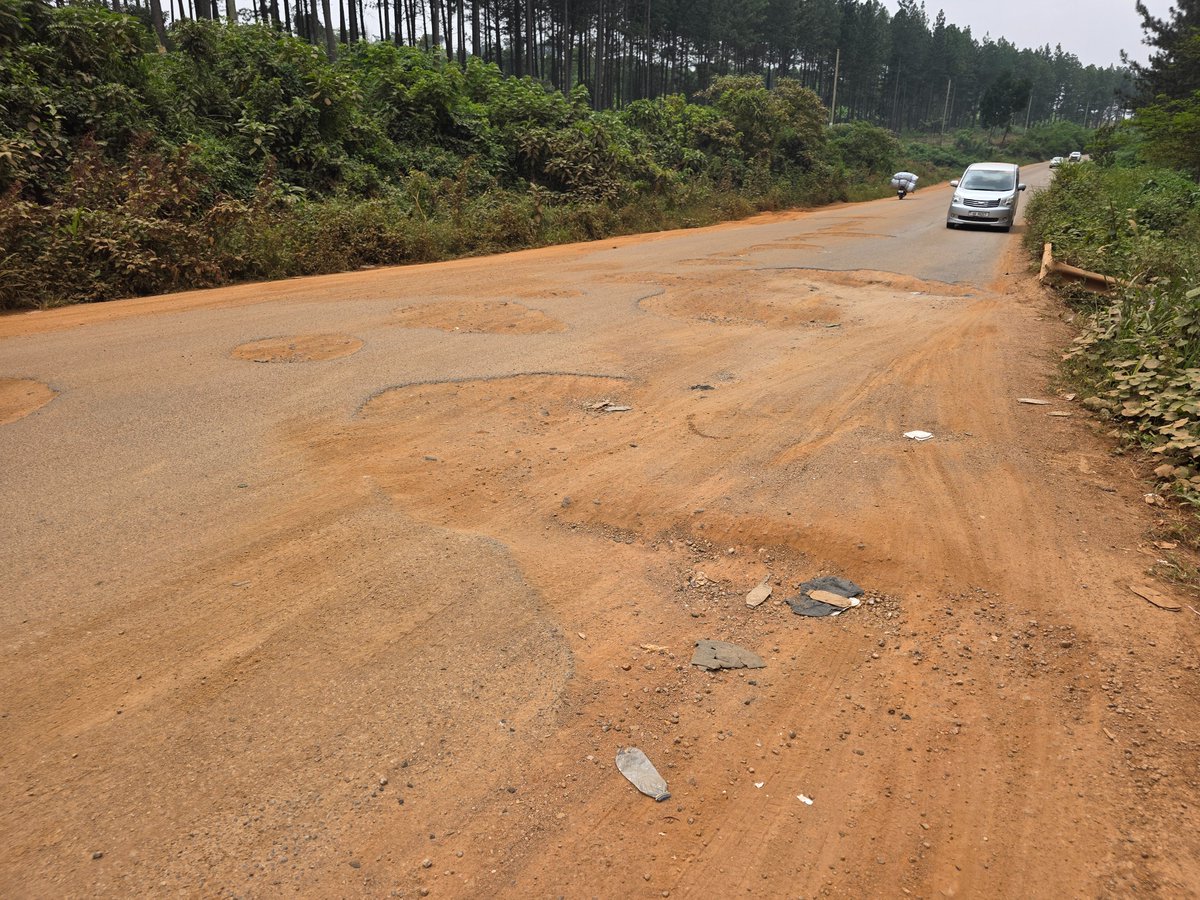
5 years on, the 86km road rehabilitation project being undertaken by Serbia’s Energoprojekt remains incomplete. The contractor, who, the gov't claims has been fully paid the Shs 395bn contract sum, had initially committed to deliver the works within 3 years HT @alonmwesigwa
In 1879, Ugandan healers were performing cesarean sections with a survival rate that stunned European doctors—while much of the "civilized" world still saw the procedure as a death sentence.
British explorer Robert Felkin documented the operation in detail. The surgeon used banana wine as an antiseptic, herbal anesthetics to manage pain, and cauterization with a hot iron to control bleeding. The mother survived. The baby survived. The technique worked.
This wasn't primitive luck. It was sophisticated medical knowledge passed down through generations—refined, systematic, life-saving.
Yet the dominant narrative tells us modern medicine arrived in Africa with colonizers and that before European intervention, the continent had no science, no innovation, no expertise.
But here's the contradiction: if African medical practices were so "backward," why were European observers documenting them with awe? Why were these techniques—rooted in empirical observation and botanical knowledge—producing outcomes that Europe itself struggled to achieve until the late 19th century?
The Buganda Kingdom had what the British Empire didn't: working cesarean sections that saved lives.
So what else were we doing that got erased, ignored, or rebranded as "discovered" by someone else?
Sources:
- Felkin, R. W. (1884). "Notes on Labour in Central Africa." Edinburgh Medical Journal
- Ajayi, J. F. (1965). Christian Missions in Nigeria 1841-1891. Northwestern University Press
Credit: African Echo
By 1879, Uganda 🇺🇬 was the only place in the world where C-section were performed to save both mother and baby.
European observers documented this practice, which used local tools, herbal anesthetics, & antiseptics.
The number itself (1 USD = 3,650 UGX vs. 1 USD = 16,773 IDR, for Indonesia, a Trillion dollar economy 19x larger than Uganda) is almost meaningless for comparing economic strength. Don't despair(for lack of a better word) because you don't know/understand this.
First wait,so Rwandans also have this sentiment that their president Paul Kagame is actually a Ugandan, munyankore by origin, just watched some Rwandan podcast on YouTube and died 🤣🤣🤣🙌🙌🙌
Uganda has become Africa's largest coffee producer. The country earned $2.4 billion from 8.4 million bag of coffee exports from October 2024 to October 2025.
It's the largest in the country's history.