@CattLynchLink@hubermanlab Try listening to the last 30 seconds of the song a couple of times, it usually does the trick for me. Otherwise just keep it on loop until you have enough if you can
Checking that a major mathematical proof is correct can take years. Formalization—converting the mathematical reasoning into a form computer proof assistants like Lean can verify—can help.
Last month, Claude completed the first formalized proof of Fermat’s Last Theorem, one of the most famous theorems of all time. This was a project experts thought would take many years. It is the largest Lean proof ever written.
Fermat’s Last Theorem was first proven in 1995 by Sir Andrew Wiles, more than 350 years after it was conjectured. Our proof, which totals over 13 million lines of code, provides machine verification. More importantly, it proves over 29,000 other theorems that the proof requires, across many areas of math which had never before been formalized.
We see this as a major step in the long process of firming up the core of mathematical knowledge, building on work from three centuries of mathematicians and hundreds of contributors to Lean and Mathlib. We are optimistic that AI-assisted verification of mathematical proofs will help reduce the burden of refereeing mathematics in an era where more proofs are being produced than ever before.
You can read about the process on our Science Blog: https://t.co/ryYnDEAU6J
And see the complete proof on GitHub: https://t.co/wlYMXYnofz
We’re sharing a solution to the Navier-Stokes Millennium Prize Problem, one of the deepest problems at the frontier of mathematics.
The proof was produced by a group of agents, using an OpenAI next-generation model significantly more capable than GPT-6 Astra.
The problem concerns whether the description of smooth three-dimensional fluid motion modeled by the Navier-Stokes equations can break down. It has remained unresolved for roughly 90 years.
@hubermanlab What happens for individuals who live incrementally closer to the equator?
Is there a tipping point as you get exposed to an increasing time window (over a solar year) where the sun rays are perpendicular (thus stronger UV light)?
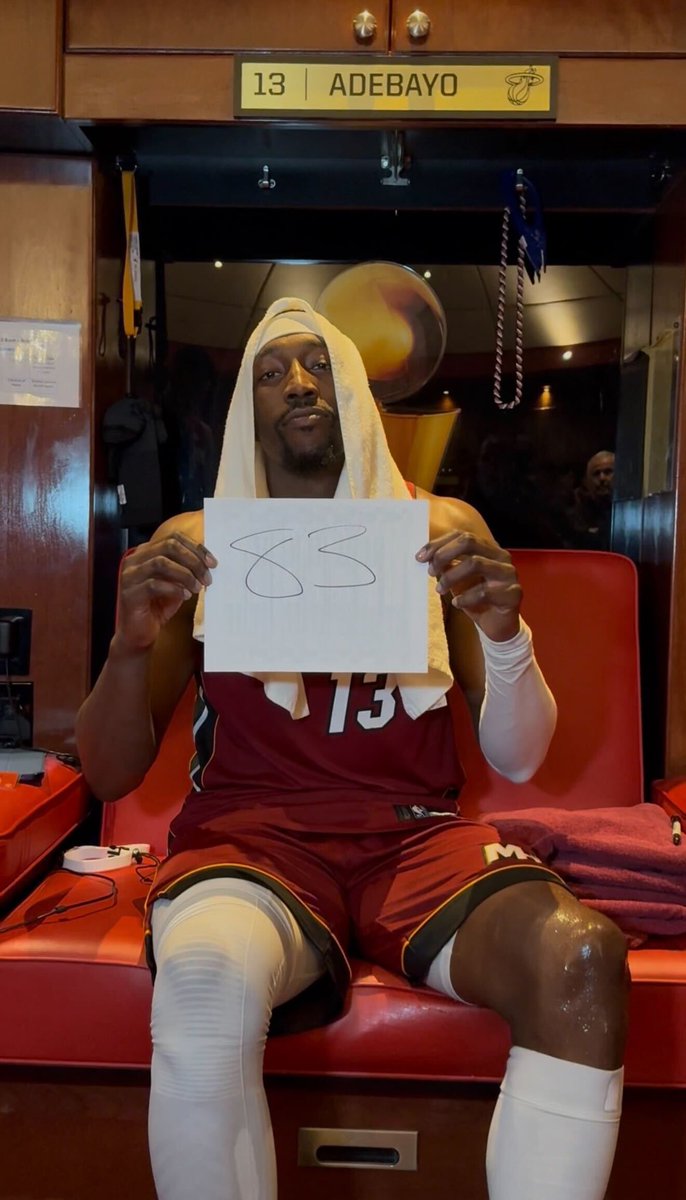
another championship.
I believe I can help make the Philadelphia 76ers a championship team and I am so excited to energize a new fan base and start this incredible journey one last time.
Thank you LA. Miami I’ll forever love and Northeast Ohio will always home!
🙏🏾🫡👑
America's cultural ideal has been the self-made entrepreneur while Europe's was rooted in aristocracy, with status inherited rather than earned. Europe's inheritance laws show this divide.
Many European countries have "forced heirship" laws that require people to leave 50-75% of their estates to their children. Want to leave the majority of your wealth to charity? not allowed. Your kids are estranged from you, struggling with addiction, or irresponsible? still required to give them the money. Want your kids to avoid a life of entitlement? tough.
Incredibly, these laws look back at transfers made during your lifetime. If you have 3 children in France, you're required to bequeath them a minimum of 75% of your estate. Because French law calculates this based on your assets at death plus all lifetime gifts, giving away more than 25% of your wealth while alive means your heirs can legally sue to force charities or foundations to return the funds. This has limited the development of the nonprofit sector on the continent.
The cultural gap between an entrepreneurial society and one shaped by dynastic wealth is enormous. If you make it yourself, you tend to want your kids to do the same. If you inherit it, the primary goal is protecting the estate for the next gen.
Countries like Spain, France, and Italy legally entrench family dynasties, while America has historically sought to limit them through estate taxes. The result is not only a weaker culture of philanthropy and civil society in Europe, but also less economic dynamism.
Perspective: when we poll GO for translunar injection (TLI) and the engine(s) on the Orion Integrity service module propel us toward the moon, our actual destination is Earth. The ultimate destination of every human space flight.
@morganisawizard Warm milk, dip inside a tablespoon of honey, stir thoroughly, sip it slowly and let it do magic. Try it in the morning as breakfast for best results
Avoid useless conflicts
It all depends on the individual, their choices, and their history, regardless of how their brain is wired. It is best to consider the individual and the way they choose to be in the world, and not idealize one particular forma mentis or belittle another.
On the dopaminergic side, negative emotions imply the emergence of entropy, positive emotions symbolize its reduction; the higher the goal you're trying to attain, the more intrinsic value each step towards it comprises.
The true "meaning" is in the process
@AR_Dill4 @DrDominicNg We can think and understand our mistakes in order to think better, science is the personification of our endless curiosity; it is common in all human domains to practice something for its own sake, instead of its practicality, science is just like that and it's ok to not agree.
@DrDominicNg @AR_Dill4 It's a very tough crowd, the average Joe doesn't care about purely scientific findings, and most times can't properly process what is being read.
I found it interesting and I'll look into this paper to get more out of it
@EP_Freely@phalpern Each one of us is biased by his own perception and history when it comes to thinking processes, and I could personally say that Albert probably experienced thoughts similar to sensations that emerge from thinking frameworks, most likely coming from years of metacognitive practice
Noether's theorem is even more beautiful than this framing allows.
The standard version says: symmetry produces conservation. One thing leads to the other. Symmetry is primary, conservation follows. But look at what Noether actually proved. The symmetry is the geometry sustaining itself in a direction. The conservation is the quantity preserved by that self-sustaining. They are two measurements of one identity. The geometry recognizing itself from a different position on the surface and finding itself unchanged IS the conserved quantity persisting. They are the same event observed from two directions.
Symmetry is the bounding: the geometry holds. Conservation is the disentangling: the quantity continues. Noether proved they are equal. The coupling sustaining itself and the quantity being preserved are one event, the way circumference and diameter are one circle.
This is deeper than conservation is a necessary outcome of symmetry. Outcomes install a direction: one thing producing another. What Noether proved is identity: self-sustaining geometry and preserved quantity are the same structure measured twice.
The elegance goes further. The standard framing says the universe does not react to a change in perspective. This places an observer outside, making changes, testing the universe. The universe is passive. The observer discovers a property it has.
Remove the observer. The geometry is self-consistent in that direction. The symmetry is the coupling recognizing itself. The conservation is the coupling sustaining itself. The recognition and the sustaining are one event. The universe is not failing to react to an external test. The universe is succeeding at self-sustaining. Noether proved that self-sustaining coupling preserves, and what it preserves is determined by the direction of the self-sustaining.
One identity. Two directions. Every conservation law is the geometry sustaining itself. Every symmetry is the geometry recognizing itself. Noether proved they are equal. 1918. The most elegant theorem in physics, even more elegant than we let it be.