Interested in starting a PhD in astrophysics @Unibo@inafoasbo? check out new opportunities available thanks to #NextGenEU@EU_Commission#PNRR
⏳Deadline Aug 2⌛️
https://t.co/0S7Jav6cL4
https://t.co/6rAlHMhLRx
1/3
if you're interested in any combinations of: cosmic age standards, asteroseismology, globular clusters, stellar modelling, or (tuneless) sounds of stars, check out Marco Tailo's talk tomorrow morning at #coolstars21 ... and this preview (🌟🔊audio on! 🔊🌟)
Bye Valencia! 👋🏽 Had a great time at #EASValencia2022 connecting 💬 with old friends + astrophysicists from different fields 🌌. A *big* thank you 🙏🏽 to @EAS_meeting participants for selecting my work for the "best ePoster prize" and for the lovely present 🎁 that came with it ✨
Intense #EAS2022 days. Will catch up with posters on Wed and Thursday. I miss a proper poster time slot (like in old times) when we would find the author next to it instead of trying to figure out who the author is in middle of the crowd. Here some great ones!
Now at @EAS_meeting in Valencia the Gaia session S12 "The (two) billion star Galaxy census: the dawn of #GaiaDR3 with full info on the latest #GaiaMission release. Join us today and tomorrow! Find lots of additional plots and videos on all subjects from https://t.co/auB8iOmORr
I will participate in #EASValencia2022 next week, and my ePoster is now out!
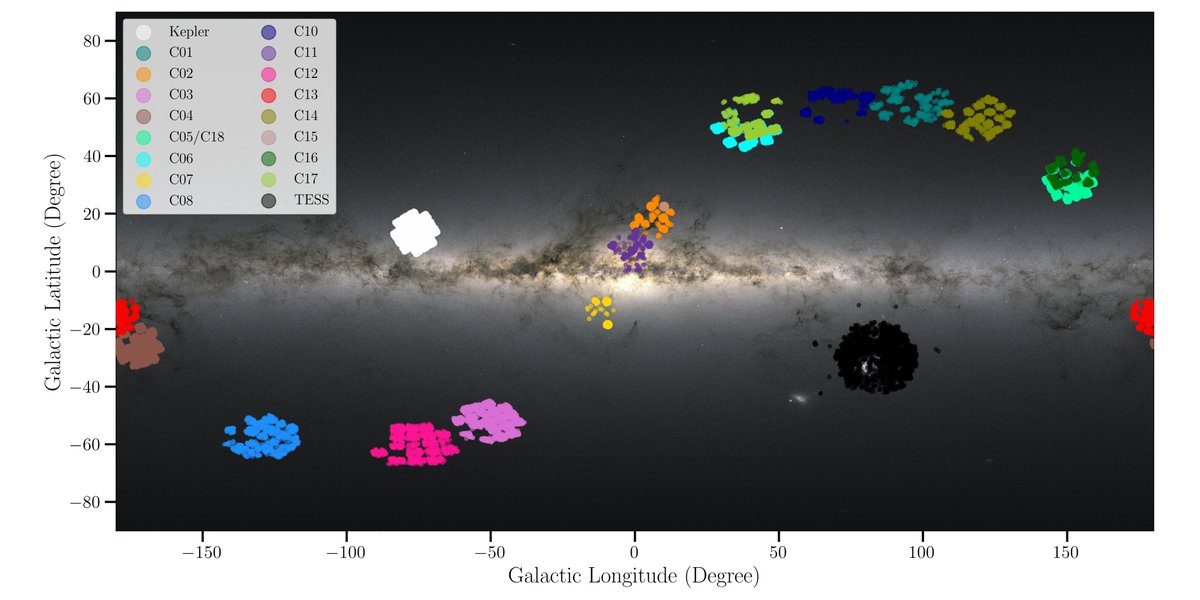
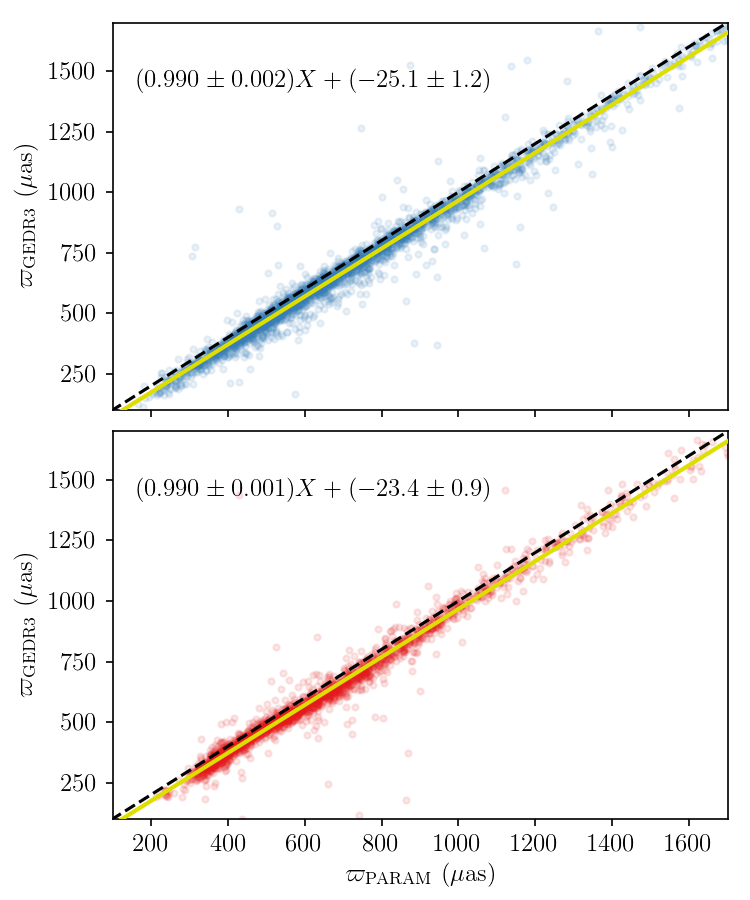
✨We revisit the Gaia parallax systematics using asteroseismic data in the Kepler, K2, and TESS-SCVZ fields. Filtering binaries thanks to #GaiaDR3 does not affect our results.✨
👉🏽https://t.co/0x0vESV8gV
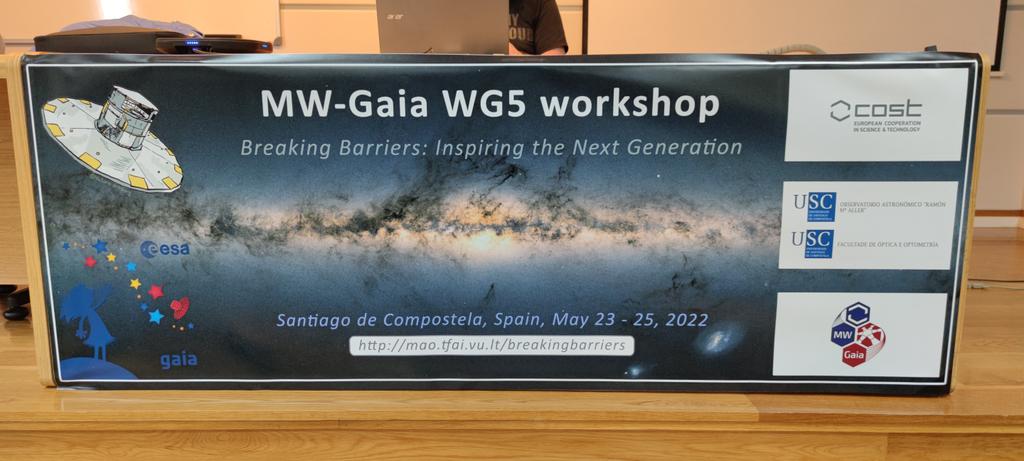
Breaking Barriers: Inspiring the Next Generation workshop is kicking off today at 14h in Santiago de Compostela in hybrid format.
More info at: https://t.co/x15hfakALP
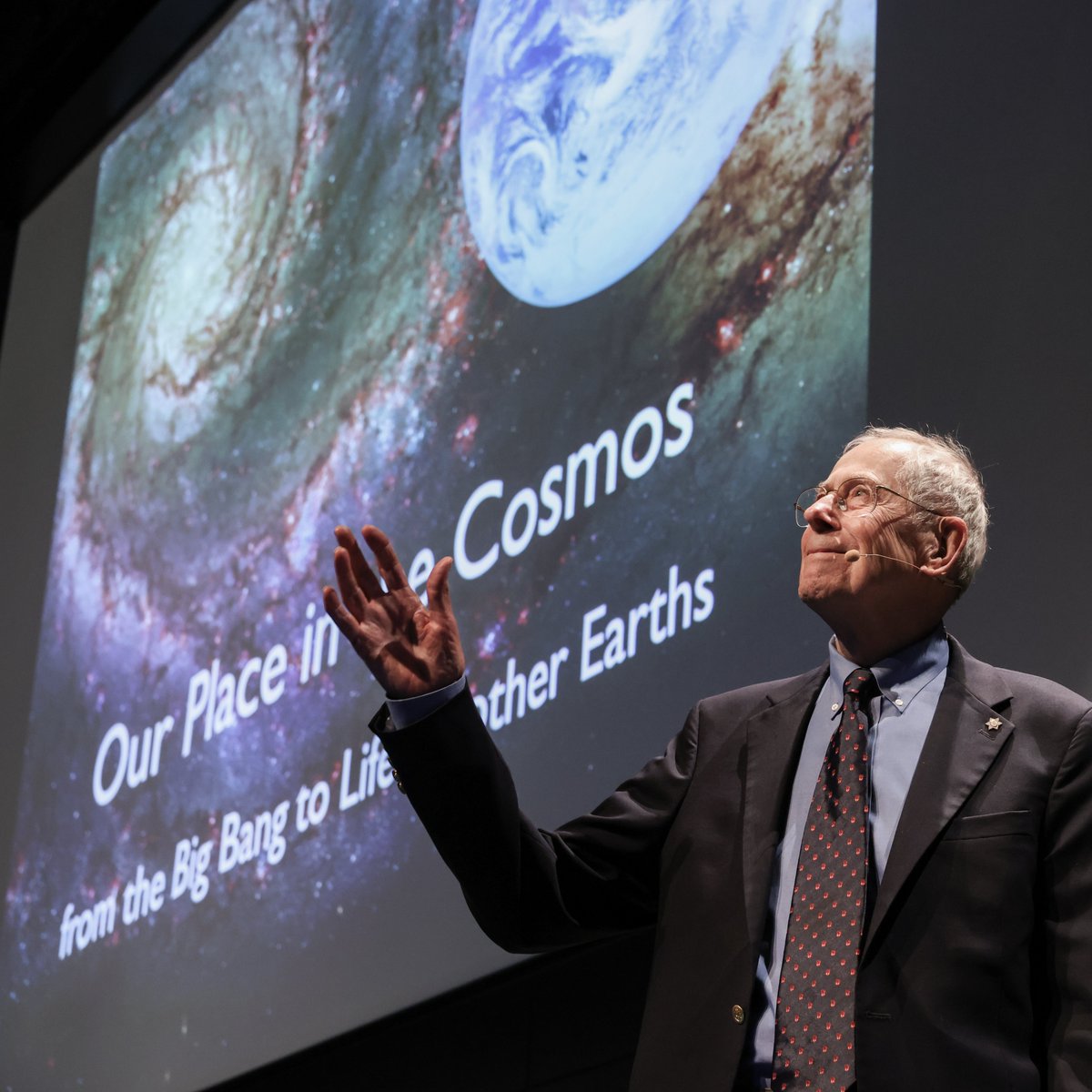
Thanks so much to Jim Peebles, Michel Mayor, @Astroclaude, @Galactic_Chloe, Michaela Hirschmann, @jpkneib, the audience, and everyone at @EPFLevents for a very special evening on Our Place in the Cosmos!
Recording of the presentations & discussion here: https://t.co/FV8LpwdLQc
StarHorse 2021 results combining EDR3, photometric catalogues and new priors. New density maps now probe a much greater volume! We are now busy updating our large 4MOST 4MIDABLE-LR catalogues which will be one of the largest Gaia spectroscopic follow-ups. Thanks Gaia!
By age-dating a sample of in situ and accreted stars using asteroseismology, it seems evident that the Milky Way initially formed a large proportion of its stars very rapidly, prior to the Gaia-Enceladus/Sausage merger. Montalbán et al.: https://t.co/v2GSQWCPkl @asterochronome2
few days left to apply for the 2-yr postdoc "Chemodynamical evolution of the Galaxy at high temporal resolution”
https://t.co/Xqcs3akhK7
and a little less than a month to apply for a PhD @UniboMagazine
https://t.co/cfF3wESNGA
https://t.co/QxT9xs0R2v "high-precision" project
now published with @SpringerNature , here’s HAYDN: a proposal for an @esa space mission to continue our quest for a better understanding of 🌟, the environment they live in (aka clusters, galaxies), and the environment they provide for planets
https://t.co/XSrWDUxKgm
1/n
Join us at @UniboMagazine!
We’re looking for 3 postdoctoral researchers to work on Galactic structure and evolution, #asteroseismology, and stellar structure and evolution. Deadline to apply is March 24. https://t.co/3JRyeyuWrL
https://t.co/wju0YS9oFB
#EUfunded@ERC_Research
Open postdoctoral positions in stellar physics and Galactic archaeology in Bologna (@UniboMagazine). Come and help us to better understand the Milky Way through precise ageing of stars 💫 !
For more details ➡️ https://t.co/IoWKkLFWuN
#EUfunded 🇪🇺 @ERC_Research
At @asterochronome2, we had a first take at comparing seismology (+ @APOGEEsurvey) and @ESAGaia’s #GaiaEDR3 in @KeplerGO, as a follow-up of our 2019 study (https://t.co/HRJBZbQFo6). Preliminary results already look promising – the HRD features are more nicely defined with GEDR3!