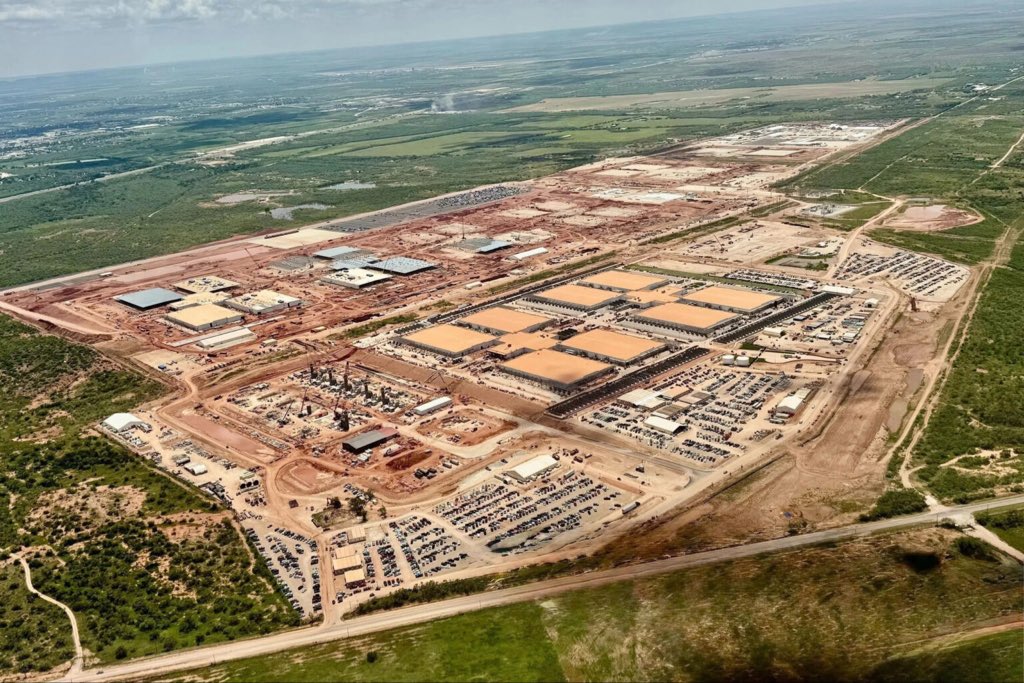
AI's bottleneck isn't chips. It's permits and power.
• $130B of US DC projects blocked/delayed in Q1 • Only ~5 of 12 GW announced for 2026 under construction • 4–7 yr grid waits
@chamath on All-In: ~$50B GW campuses won't get built under permit uncertainty.
@bgurley Power isn’t the true bottleneck, a lack of innovation is. Everyone keeps ignoring the more than 100GW of power from offshore gas that is entirely wasted today. Oil companies need to sell it, but export is too expensive. Let’s move compute offshore.
Flaring is one of the most overlooked sources of emissions in energy.
In 2025 the world flared 167 bcm of gas, releasing ~429 MtCO₂e. That's almost half of all CO₂ from aviation (~970 Mt).
Source: World Bank Global Gas Flaring Tracker 2026
@OilandEnergy Coming from an oil and gas major, the parallel is clear: offshore already solved putting critical hardware in the water and bringing it back. We put compute inside risers in the water column, installed and recovered with standard offshore practice, not left on the seabed.
@PaulKrueger_ Natick's reliability numbers are the part that stuck with us too. The catch is servicing a sealed seafloor box. We think the water column is the better American path: compute inside risers, recoverable with standard offshore practice, no permanent seabed footprint.
@WSJ The ocean does solve land and freshwater. The harder test is service: a sealed box on the seafloor is difficult to work on, and a barge still has to ride out storms. We put compute in the water column, inside risers the offshore industry already knows how to install and recover.
Elon bets on space. Palmer bets on the ocean. 🚀🌊
@elonmusk and @PalmerLuckey have very different visions for future data centers.
Both make compelling arguments.
Where do you think the future of compute lies: on land, in space, or under the ocean?
https://t.co/WMurEw6W6o