One of the craziest records in cricket history. 😂🤯
Mohammad Yousuf bowled just ONE ball in his entire ODI career and somehow took a wicket with that very ball! 😂
The innings ended immediately, and even umpire Simon Taufel couldn’t control his laughter. 😂😭
And the craziest part? He never bowled again in his ODI career. 💀😂
He remains the only cricketer with such a bizarre ODI record. 🔥😂
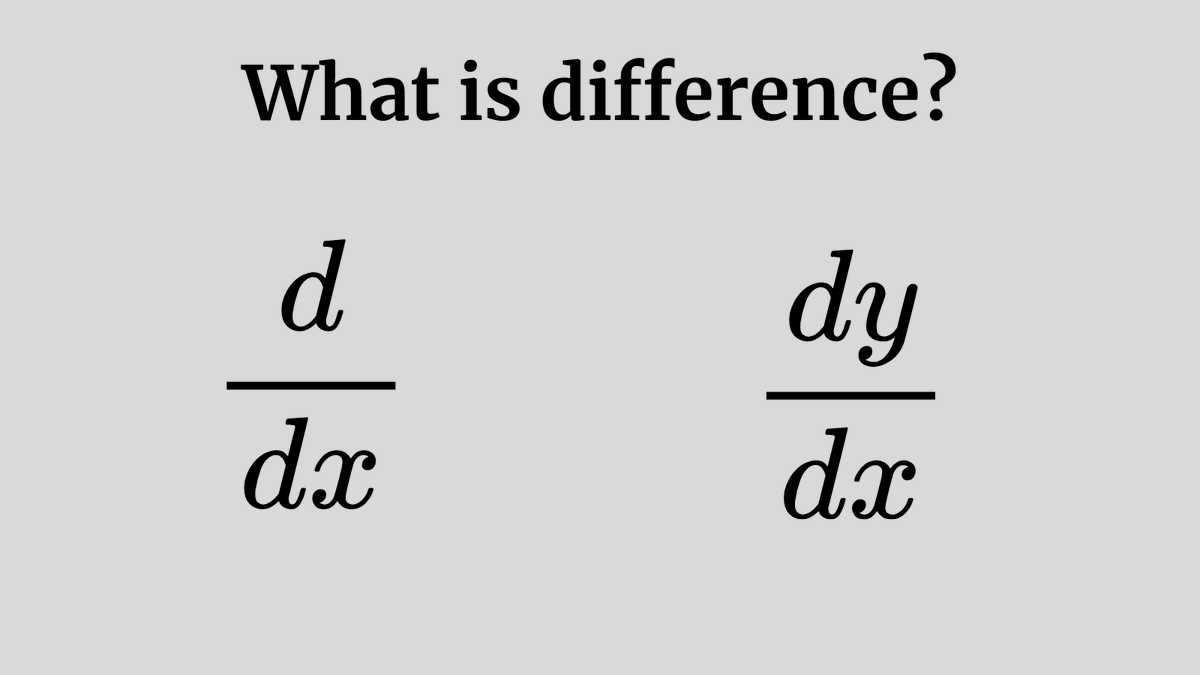
Do you know the difference between 𝘥/𝘥𝘹 and 𝘥𝘺/𝘥𝘹? Most calculus students don’t.
𝘥/𝘥𝘹 is the derivative operator. Now, “operator” might sound confusing, but it’s really not.
For example, + is the addition operator—it tells you to add two things. × is the multiplication operator—it tells you to multiply two things.
Similarly, 𝘥/𝘥𝘹 is the derivative operator—it tells you to take the derivative with respect to 𝘹.
To see how this works, suppose we have the equation:
𝘺 = 𝘹²
If we want to find the derivative of this equation, we apply the derivative operator to both sides:
𝘥/𝘥𝘹 (𝘺) = 𝘥/𝘥𝘹 (𝘹²)
On the right-hand side, we use the power rule:
𝘥/𝘥𝘹 (𝘹²) = 2𝘹
On the left-hand side, 𝘥/𝘥𝘹 (𝘺) is written as:
𝘥𝘺/𝘥𝘹
So we get:
𝘥𝘺/𝘥𝘹 = 2𝘹
That’s exactly where 𝘥𝘺/𝘥𝘹 comes from—it represents the derivative of 𝘺 with respect to 𝘹.
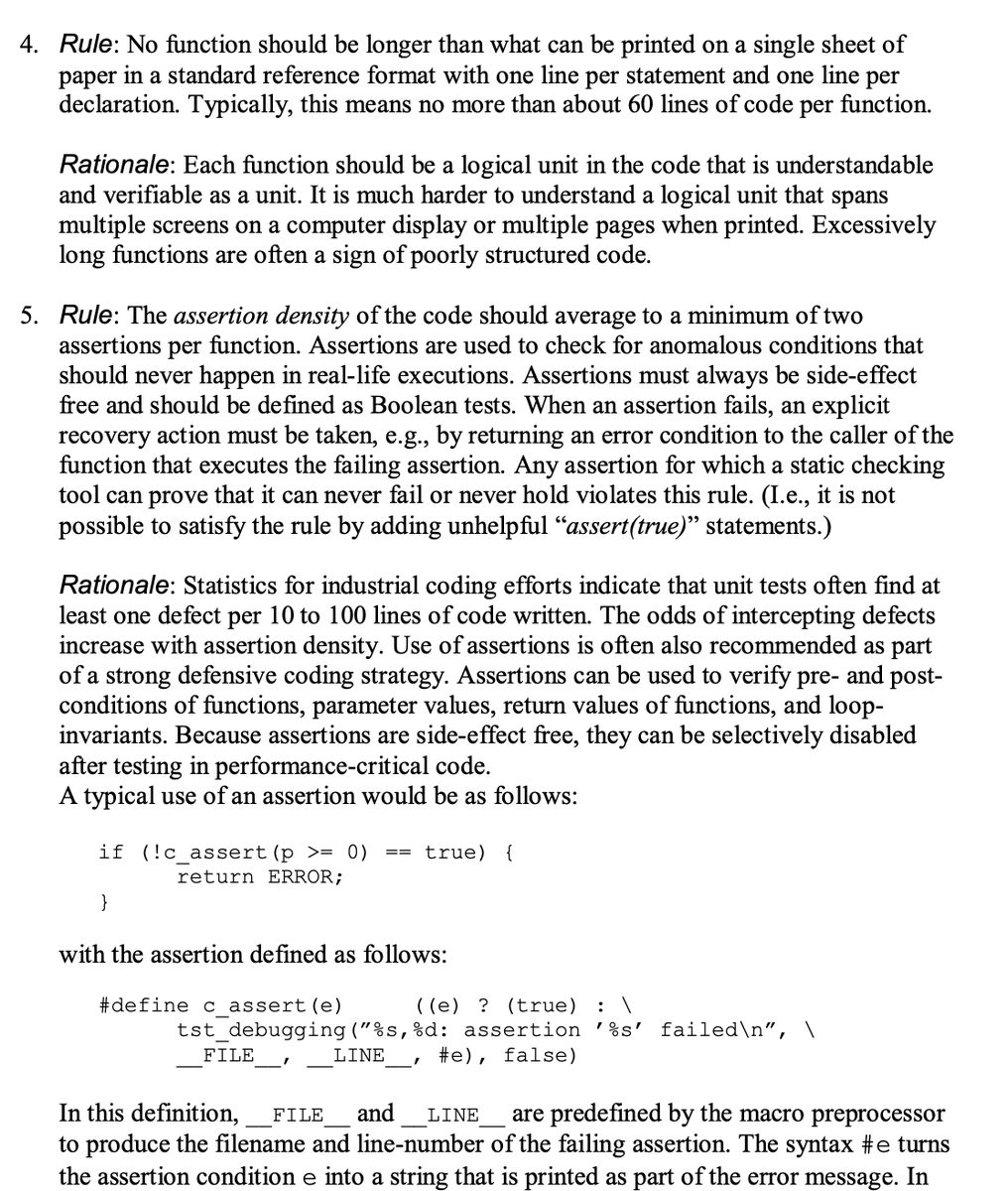
NASA writes mission-critical flight software in C.
And the rules are absolutely INSANE.
> No recursion. Ever.
> Every loop must have a provable upper bound.
> No dynamic memory allocation after initialization.
> Max ~60 lines per function.
> Minimum 2 assertions per function.
> Every return value must be checked.
> Zero compiler warnings allowed.
> Daily static analysis. Zero warnings there too.
> No function pointers.
> Restricted pointer dereferencing.
This is how they write code at NASA / JPL for mission-critical systems.
Random musings T20 WC:
This tournament feels like a proper global event. Something beautiful about Italy and Nepal playing cricket at Wankhede.
Crowds have been amazing even for non India games.
ICC has done a great job with the pitches. They’re not how Indian bilateral pitches are (flat) this has reduced the gap between India and other teams a bit. India still look the strongest team though.
Got to feel for Afg, they got a tough group and first two matches were against NZ and SA.
Importance of Hardik cannot be overstated. Most important white ball player for India.
Varun is a trump card. Should be part of ODI team consistently too.
#T20WorldCup
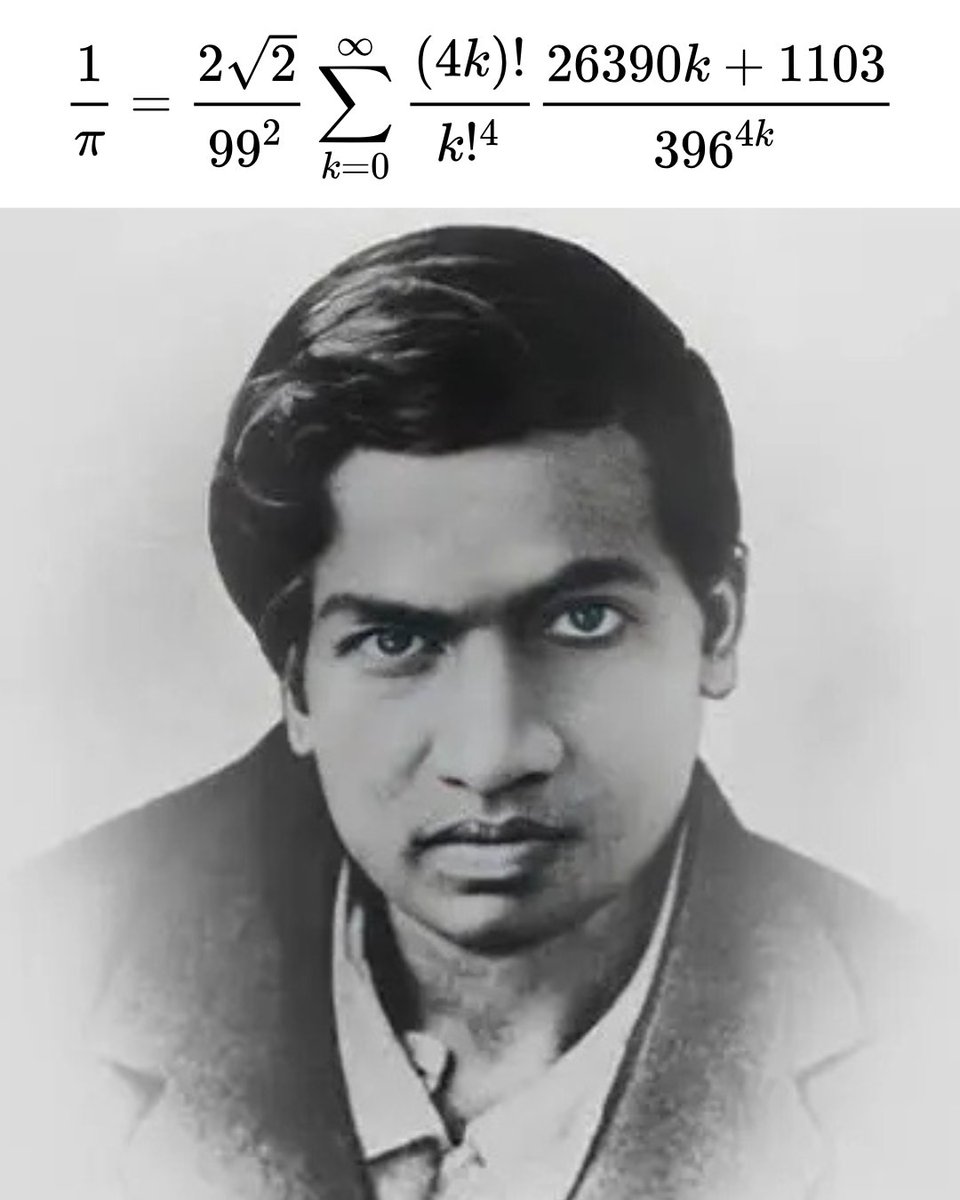
Ramanujan's formula for pi gives the accurate value of pi up to 6 decimal places, but this is only the first term in an infinite series.
This number alone is sufficient to calculate the circumference of the Earth with a maximum error of just 1 meter.
It is to be noted that while Ramanujan's formula takes one term to calculate up to six decimal places, it takes Leibniz about 5 million terms.
Ramanujan's formula could do it in one term, and each successive term adds another eight decimal places to the value of pi.
This formula holds absolutely true for finding the value of pi, but there is no clear understanding of how he came up with the numbers in his formula, like 9801 and 1103.
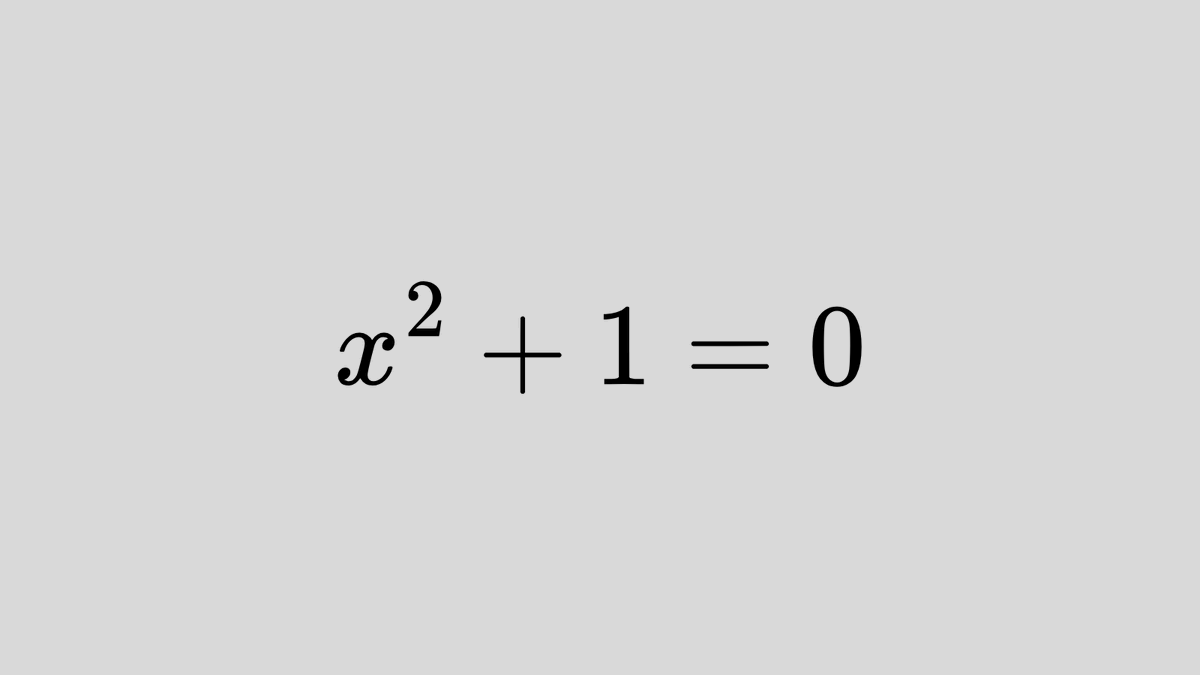
For over 2,000 years, mathematicians tried to solve the simplest-looking equation:
x² + 1 = 0.
But every attempt failed.
Why?
Because in the world of real numbers, no square can ever be negative. This tiny equation defied the greatest minds for centuries until finally the imaginary unit i was born, defined as √−1.
That invention didn’t just solve an equation. It cracked open an entirely new dimension of mathematics.
From that day forward, numbers were no longer just real. They became complex: a + bi, where a, b are real.
With complex numbers, mathematics became stronger.
The Fundamental Theorem of Algebra declared that every polynomial has a solution—but only inside the world of complex numbers. They transformed math from a puzzle into a universal language. And entire industries owe everything to this “imaginary” invention.
Complex numbers fuel signal processing in your smartphone, secure communication in fiber optics, the design of power grids, the control of airplanes, and even earthquake-resistant skyscrapers.
In short: no complex numbers, no modern technology.
But the real jaw-dropper came in 1926. Physicist Erwin Schrödinger was battling the mystery of electrons—tiny particles that refused to obey classical physics. They weren’t orbiting like planets. They were rippling like waves.
To describe them, Schrödinger unleashed his iconic wave equation, built on complex numbers:
iħ ∂ψ/∂t = Ĥψ
Here, ψ is the electron’s wave function. It’s not real—it’s complex. Only when you take the square of its magnitude, |ψ|², does it collapse into something real: the probability of finding an electron.
Without complex numbers, quantum mechanics would never exist, and the atomic world would still be a mystery.
Only 3 Indian players have made it to the cover of the Wisden Almanack. Sachin in 2014, Kohli in 2017 and now Siraj, since they started featuring players on the cover in the 21st century.
Grey hair isn't aging. 1 in 4 people go grey before 30. It's your cells screaming for help. Grey hair is a stress response. Each hair follicle has pigment-producing cells called melanocytes. They create color. But when your body is under chronic stress, those cells burn out. Once they stop producing pigment, the hair turns grey. Permanently. Studies show that people who grey early often have: Low B12 or iron levels. Thyroid dysfunction. High cortisol from chronic stress. Autoimmune conditions attacking hair follicles. One study tracked people who went grey rapidly after trauma. Their melanocytes showed markers of accelerated cellular aging. The body was prioritizing survival over appearance. But early intervention can slow it. If you catch it early, you can reverse the root cause before it spreads
14 individuals have scored 20k+ runs in international cricket.
41 individuals have claimed 500+ wickets in international cricket.
10 individuals have scored 50+ centuries in international cricket.
200+ individuals have 5+ 5w hauls in international cricket.
5 individuals have 50+ Man of the Match Awards in international cricket.
There's only one cricketer to have achieved it all, and that's Jacques Kallis.
@jacqueskallis75@ProteasMenCSA
Dear @ICC,
It is with a heavy heart that we now announce our unavailability to replace Pakistan in the upcoming T20 World Cup. Regardless of whether they now withdraw, the short timescales ensure it is impossible for our squad to prepare in the professional manner necessary to compete effectively in this global cricketing spectacle. We are not like Scotland and able to turn up on a whim, with no kit sponsor.
Our players are from all walks of life and cannot simply drop their occupations to fly halfway around the world to experience temperatures only normally felt in Finnish saunas. Our captain, a professional baker, needs to attend to his oven, our ship captain needs to steer his vessel, and our bankers need to go bankrupt (again). This is the harsh reality of cricket at the amateur level of the game.
This news will be extremely disappointing to our fans. Despite being the most peaceful nation on Earth, we maintain an army of online followers, and are the world's 14th most followed national board on X. We were ready to give the Dutch the biggest shock they have experienced since William of Orange lost the Battle of Landen in 1693. And the Americans were looking forward to taking on Greenland, or so their orange-dyed leader thought.
Our loss is likely Uganda's gain. We wish them well. Their kits cannot be missed unless you have epilepsy, in which case they are probably best avoided.
The future is always ice, until it isn't.
Yours sincerely,
Icelandic Cricket Association
Back in the early days of mobile phones, some computer speakers could “predict” incoming calls not because they were smart, but because phones leaked signals before they rang.
When a GSM phone was about to receive a call or text, it first communicated with the nearest cell tower to set up the connection. That handshake happened seconds before the phone actually rang. During this process, the phone emitted short, powerful bursts of radio frequency signals.
Cheap or poorly shielded speakers were especially sensitive to this. The internal amplifier wiring acted like an accidental antenna, picking up those GSM bursts. When the signal hit the amplifier, it got converted into that familiar buzzing or clicking sound usually before the ringtone started.
So it felt like the speakers were predicting the call, but in reality, they were reacting to radio noise from the phone negotiating the connection. Once modern phones improved shielding and speakers got better electromagnetic protection, the effect mostly disappeared.
It’s a perfect example of how everyday electronics can unintentionally reveal what’s happening behind the scenes; not magic, not surveillance but just physics doing its thing.
My wife and I went through the McDonald's drive-thru window, and I gave the cashier a $5 bill. Our total was $4.25, so I also handed her a quarter.
She said, 'You gave me too much money.'
I said, 'Yes, I know, but this way you can just give me a dollar back.'
She sighed and went to get the manager, who asked me to repeat my request.
I did so, and he handed me back the 25c, and said, 'We're sorry, but we don’t do that kind of thing.'
The cashier then returned 75 cents in change.
Do not confuse the people at McDonald's.
Sharjah, 2002. Batting on 70 in 40°C heat, Ricky Ponting ditched the helmet for a cap🤯
Then, a Mohammad Sami bouncer hit him flush on the jaw. Most would’ve walked. Punter? He just spat blood, adjusted his cap, and smashed 150🔥
Pure swagger. Pure grit. The ultimate fighter🤯
In 1705, an Irish woman named Margorie McCat was thought to have died of a fever and was hastily buried to prevent contagion. She was interred wearing a valuable ring that her husband John, a physician, could not remove because her swollen finger made it impossible, drawing the attention of grave robbers.
That very night, before the earth had fully settled, body snatchers began digging up the grave. Unable to slip the ring free, they attempted to cut off her finger. When blood flowed, Margorie suddenly revived from a coma, sat upright, and screamed. Accounts differ on the robbers’ fate, though one claims they fled in terror and abandoned their trade.
Margorie climbed out of the grave and walked home. Hearing a knock, John reportedly joked that if his wife were alive, he would swear it was her. Opening the door to find Margorie in burial clothes, bleeding but alive, he collapsed from shock and died. He was later buried in the grave prepared for her.
Margorie went on to remarry and have several children. When she eventually died years later, she was buried at Shankill Cemetery in Lurgan, Ireland. Her headstone bears the inscription: “Lived Once, Buried Twice.”
The Complaining Monk
A monk went to the master and said,
“Life is very difficult.”
The master looked at him and asked calmly,
“Compared to what?”
The monk opened his mouth…
and then closed it.
He searched his memory.
Another life?
An easier universe?
A different set of parents, body, fate?
Nothing concrete appeared.
The master waited, amused.
Finally he said,
“Life feels heavy only when you imagine
it was supposed to be lighter.”
The monk bowed, suddenly relieved,
not because life had changed,
but because the argument with it had ended.
Suffering grows when reality is compared
to an imaginary alternative.
#Wisdom
Back In 1937, Charlton were playing Chelsea on a night swallowed by heavy fog.
By the 60th minute, visibility was gone. Players vanished into the mist.
But Charlton's goalkeeper, Sam Bartram, stayed at his post, locked in, waiting for the next attack.
Minutes passed. Then more. Still no action. Still no teammates. Still no whistle.
For fifteen full minutes, Bartram stood alone in his goal... not knowing the match had been abandoned.
The referee had blown the whistle.
The players had left the pitch.
The crowd had gone home.
But Bartram was still there, guarding a goal in the fog, waiting for a game that was already over.
"They call him the Ghost Keeper, because only a ghost would've stayed that long."
"Fifteen minutes. No players. No ref. Just one man, still doing his job."
There's a YouTube channel I like called Brick Technology. The videos are simple: a machine made from LEGOs must conquer an obstacle, like a wall, moat, or soapy ramp. When the machine inevitably fails, an engineer (always offscreen) modifies it to overcome the obstacle. Then, the obstacle gets bigger, and the engineering must continue. This happens again and again. The walls get bigger, the moats get wider, and the machines keep evolving in iterative loops. It is addicting to watch.
In one video, a LEGO car is engineered to scale a wall. At first, the wall is only two bricks high; the car climbs it easily. Then the wall goes up to 25 bricks, and the car is affixed to a ladder. Using an electronic motor, it throws this ladder against the wall and pulls itself up the rungs. Then the wall goes to 50 bricks (or 55, or 60; too many to count on-screen) and even the ladder now falls short. The engineer mounts a propeller on top of the car, but the battery can't generate enough lift. So they add a grappling hook instead. This LEGO car, now mounted with cannon, shoots the hook up and over the wall. The hook sticks, and the car pulls itself up at a 90 degree angle. All of this happens in the span of nine minutes.
Why LEGOs? My guess is because they are easy to move around, to assemble and disassemble. Bricks can be snapped, changed, replaced. It's much faster to iterate with plastic bricks than metal pieces, and faster still to iterate with metal than, say, a living organism. (Everything I write is ultimately about biology, isn't it? Surely you didn't think this was actually about LEGOs…)
This YouTube channel got me thinking about fast iterations and the sense of accomplishment we feel upon finding solutions to a difficult problem. The feeling is addicting, not only for scientists but for little kids, too. At the start of any given Brick Technology video, it's hard to imagine how a little machine, so humble at first, could possibly be modified to scale a towering wall. And yet, by video's end, it has. Each iteration, every change, every solution is recorded and made visible. The fast cycles of trial and error are mesmerizing. The car scales the wall.
Kids seem to like LEGOs and computers because these things move quickly. The kids can iterate upon ideas, try stuff that doesn't work, and learn from failures in a few minutes. But in biology, everything takes too long. Cloning a single gene takes about a week, and we rarely disclose our failures and iterations; papers merely report the final solutions. Everything in biology is portrayed as a clear "story," with all five figures neatly planned out months in advance (and no failed experiments, of course.)
Just because biology is slow and opaque, though, doesn't mean we can't emulate faster fields; if not in practice, then at least in educational terms. I'd like to see a YouTube channel that recreates Brick Technology for biology. After all, this YouTube channel is the encapsulation of what biology research actually is! All a bioengineer is really doing is asking a question and seeking a solution.
We start with a goal, like "engineer a gene circuit to make cells flash in oscillating patterns of green and red," and begin building towards it. Most experiments end in failure: the cells don't flash at all, or they only flash green, or everything is dead. But I think it'd be wonderful to watch a video where a scientist sets such a challenge, tries and fails to solve it, records everything, and explains how each iteration is made. Imagine how good it would feel, as a viewer, to see those engineered cells at the end, beautifully flashing. It would be addicting to watch and, I suspect, make biology seem more tangible, approachable, common.