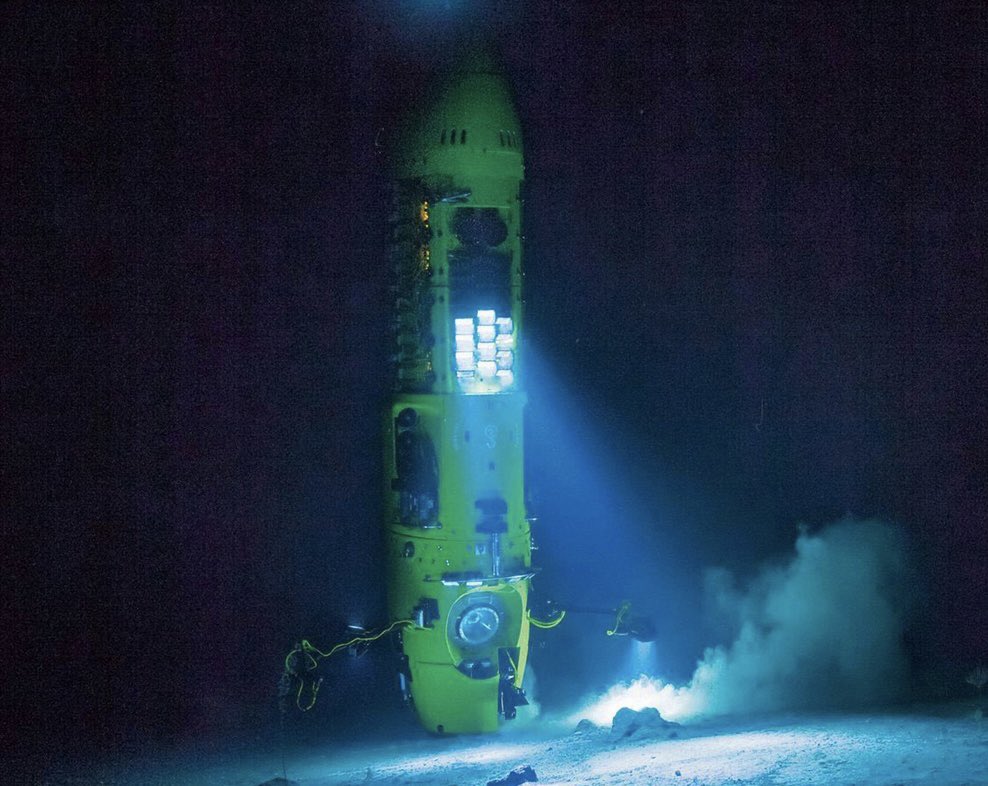
to use an analogy he loves: there’s totally unexplored territory the size of North America at the bottom of the oceans.
I’m not sure how he defines that - it’s all mapped but only a small amount to better than ~5km resolution, and the portion ever seen by humans is tiny.
but I think it’s cool and human to want to go. one day!
the most fascinating thing I learned about deep sea exploration - before we all move on - is how rare it actually is.
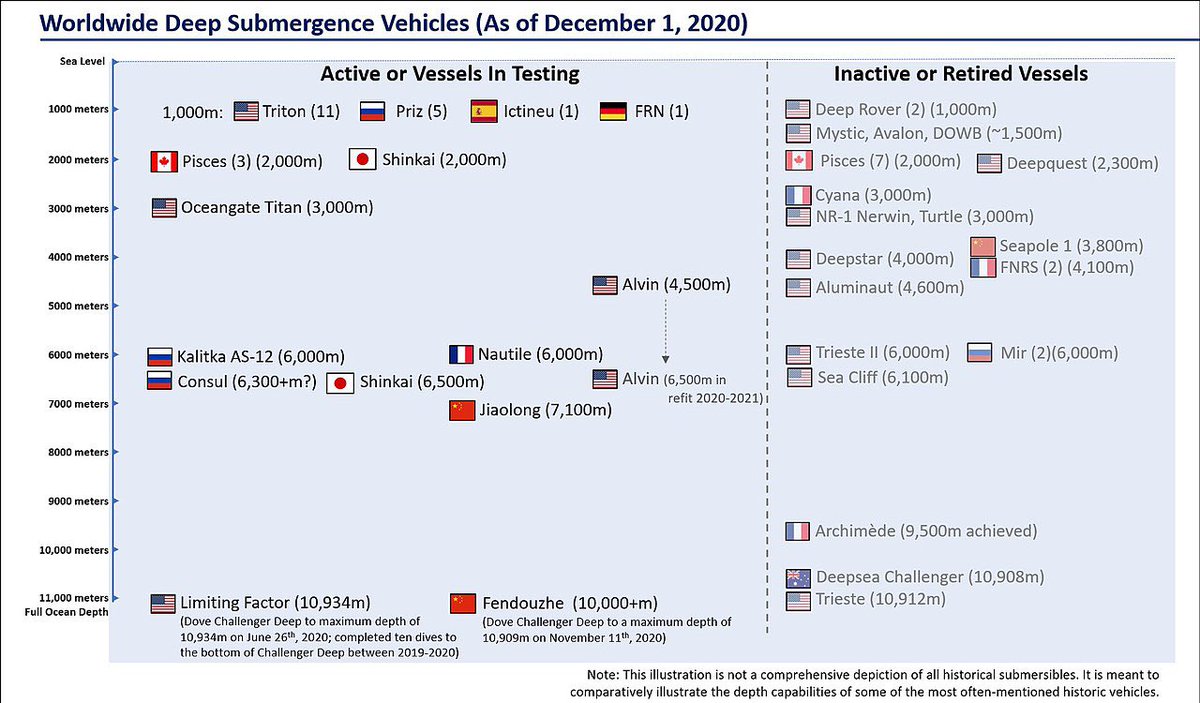
even fancy military subs only dive to 250-500m, and only a few “deep submergence vehicles” have ever been built that can go to Titanic depths (3800m) or beyond. they’re used for a combination of science, submarine rescue, and espionage (think tapping ocean cables).
notably, per Cameron - world champion flexer on top of being a badass explorer - no one had died doing deep exploration before OceanGate’s irresponsibility. the tech is pretty mature.
https://t.co/92IdoKooFZ
‘Titanic’ director James Cameron on the ‘catastrophic implosion’ of Titan submersible: “I’m struck by the similarity of the Titanic disaster itself, where the captain was repeatedly warned about ice ahead of his ship and yet he steamed at full speed into an ice field."
@kar_nels@RodneyTickle@alexthekulak Yeah to all this. Even new multifamily in the US is often built of wood instead of concrete, for reasons I don’t fully grasp.
@smithsj Just in time for more websites to switch to the annoying “login with email code” thing
(which is better for people who don’t use a password manager, but way more taps for those that do)
@SidKhurana3607 Metropolitan area makes more sense to use and less dramatic (Boston 11, Baltimore 20, Providence 38). But the point stands, other areas grew a lot more than the Northeast
@dimbletrack @MarcBodnick@rfradin@mattyglesias Marc’s being sarcastic - he’s been very critical of center left types he sees as harder on leftists than the right