Indian MSMEs run on WhatsApp, Excel, and trust. AI hasn't touched them. Yet.
India has 63 million MSMEs. 31% of GDP. 250 million jobs. ... Real AI deployment ... is essentially at zero in Indian MSMEs. ... The gap between enterprise and MSME on AI is not a technology problem. It is a deployment problem. ... This is the biggest untapped market in India right now.
Indian MSMEs run on WhatsApp, Excel, and trust. AI hasn't touched them. Yet.
India has 63 million MSMEs.
31% of GDP. 250 million jobs.
Ask any owner in Surat, Ludhiana, Tirupur, or Nagpur if they use AI in their business.
Most will say yes. They mean WhatsApp. Or someone on their team opened ChatGPT once.
That is not automation. That is not a workflow. That changes nothing about how the business actually runs.
Real AI deployment, the kind where a process runs without a human triggering it, where data moves between systems automatically, where follow-ups go out without someone typing them, that is essentially at zero in Indian MSMEs.
Not 7%. Not 2%. Essentially zero.
Why this is the biggest untapped market in India right now.
India's large enterprises are moving fast. 47% of them have AI running in production (EY-CII, 2025).
Their MSME suppliers, distributors, and vendors? Still on Excel. Still on manual data entry. Still on phone calls to confirm orders.
The gap between enterprise and MSME on AI is not a technology problem.
It is a deployment problem.
The tools exist. n8n, Make, Claude API, GPT-4, Zapier. All available. Most either free or under Rs 5,000 a month.
What doesn't exist is a person who walks into the MSME, understands the workflow, and builds it.
That person is the AI Workflow Architect.
What this person actually does.
Real example.
A garment exporter in Tirupur processes 200 orders a week. Each order needs:
Buyer email parsed
PO data entered into Tally
- Production schedule updated
- Shipping documents generated
- Buyer follow-up sent
Currently: 2 data entry operators. 8 hours each. 5 days a week.
- An AI Workflow Architect builds this in 4 weeks:
- Email parser using Claude API or GPT-4
- Tally integration via API
- Auto-generated shipping docs
- WhatsApp follow-up bot
Cost to client: Rs 2-3 lakh one-time. Rs 15,000 per month to maintain.
Savings to client: Rs 40,000 per month in salaries. ROI in 6 months.
This is not complicated. It is not being done because nobody is walking in to do it.
The IT crisis and the MSME gap are the same story.
Fresher IT hiring: 600,000 in FY22. Down to 120,000 by FY25. An 80% drop in three years. (Source: Xpheno)
TCS cutting 12,000 jobs. NITI Aayog warns of 15-20 lakh IT jobs at risk.
Everyone is looking at that number and panicking about what's ending.
Nobody is looking at the 63 million businesses that need someone to deploy AI into their operations.
The same disruption that kills the BPO seat creates the AI deployment market. These are not separate events. They are the same event, viewed from different angles.
The skill set is learnable. In months, not years.
- No CS degree needed. No advanced Python.
- Prompt engineering learning time: 2 weeks
- One automation platform like n8n or Make: 3-4 weeks
- API basics, connecting tools to each other: 3-4 weeks
- Reading a business process and mapping it: ongoing
Three months of focused learning. Then you go find one MSME that has a painful manual process and you fix it.
This is the time, this is the opportunity. India's future for next 3 decades will depend on this.
The Govt initiative focuses on enabling MSMEs to use AI and digital technologies for operational efficiency and growth. The initiative is being driven under the IndiaAI Mission... with a total budgetary allocation of ₹10,371.92 crore. The mission focuses on strengthening the AI ecosystem across multiple fronts, including... Application Development Initiative, Future Skills Programs, and Startup Financing to support AI-driven entrepreneurship
https://t.co/zmITCvZUnf (Published ~March 31, 2026)
https://t.co/DqvsFuDL1F
Vibe coding is getting roasted for the same reason generic AI tools disappoint most business owners: it promises weeks-to-hours magic but forgets the real work is in the actual data and processes behind the scenes.
I’ve watched this play out across two decades at Siemens, IBM, HP, and P&G. What compresses time dramatically isn’t skipping fundamentals - it’s feeding the system your own past proposals, estimates, client emails, and pricing rules. Suddenly it stops hallucinating generic outputs and starts generating quotes that actually reflect your margins, terms, and style.
The owners winning right now aren’t chasing the next flashy tool; they’re grounding the AI in their real documents first. One contractor I know started with just 10 completed jobs and cut quote time from 2 hours to 12 minutes - same website, same phone number, no new tech skills needed.
What’s the one workflow in your business where “vibe” alone has fallen short and real data grounding would actually move the needle?”
1. Tell everyone fundamentals don't matter
2. Sell a vibe code tool that delete prod data
3. mislead newbies so they won’t learn
That’s exactly what I’d do/say if I were the CEO of a vibe coding startup.
Sell the shortcut and charge to fix prod.
It’s a great business model.
The next 6–12 months aren’t about finding a smarter chatbot.
They’re about turning AI into the reliable nervous system of your actual business, with step-level verification on every action, least-privilege access, and policies that prevent hallucinations before they ever touch your Tally, CRM, or bank.
From two decades running ops at Siemens, IBM, HP, and P&G, I’ve learned the hard way: raw intelligence without governance is expensive chaos. The owners pulling ahead right now aren’t chasing frontier models - they’re feeding their real documents and workflows into systems that verify every single step against their own rules.
Proposals that used to take days now compress to minutes. Invoices chase themselves. And nothing moves without explicit sign-off. No tech skills required. Just your actual business data doing the heavy lifting safely.
For owners still doing manual admin that quietly kills margin - what’s the first workflow you’d want an agent to handle with that kind of built-in verification?
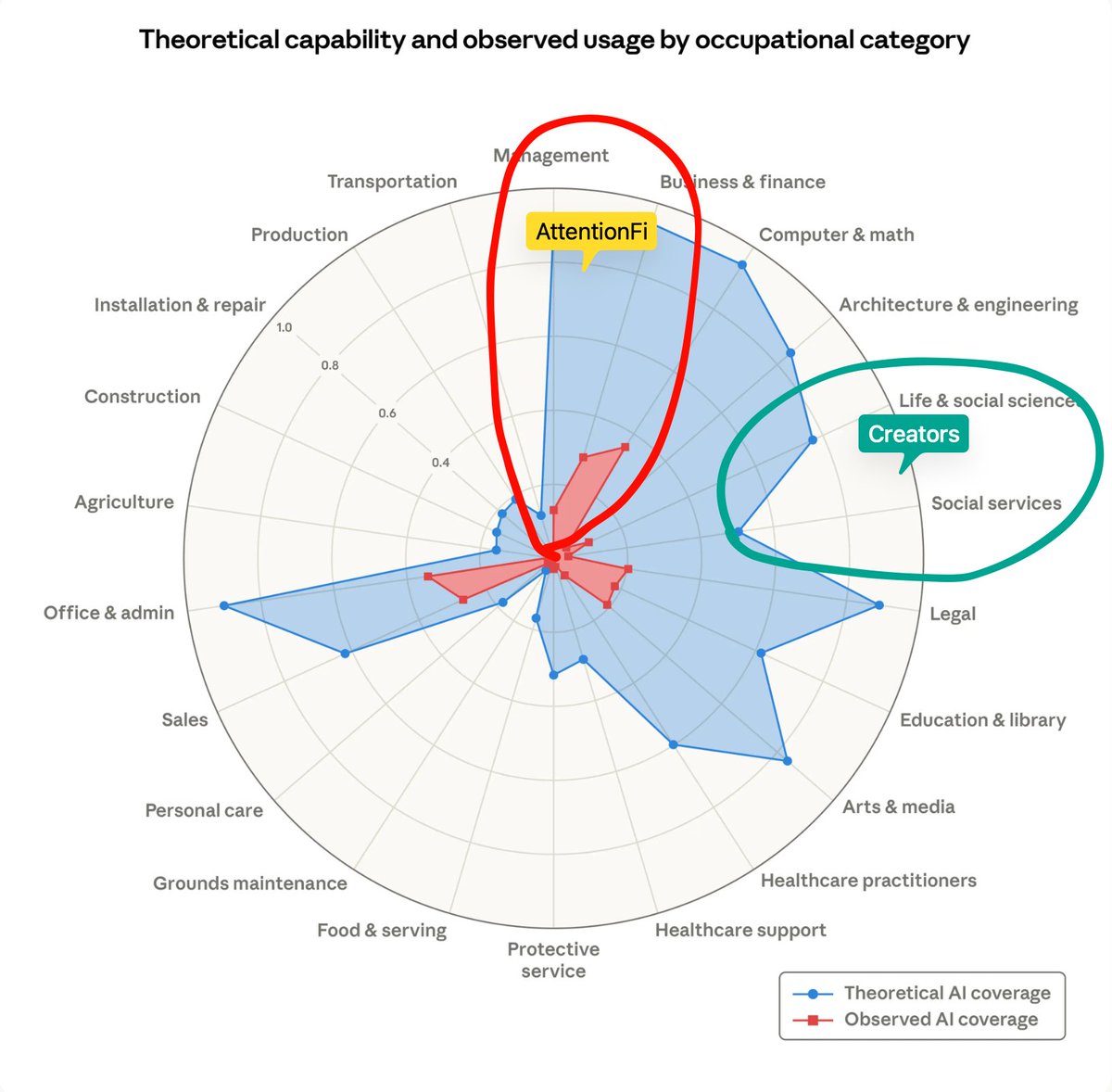
The Anthropic research showing we’re only at 1% of automating business and management processes really puts the current shift into perspective for owners everywhere.
From decades navigating ops across Siemens, IBM, HP, and P&G, I’ve seen generic tools deliver quick surface wins, but the real acceleration kicks in when AI learns directly from your actual documents and workflows - past proposals that closed deals, refined estimates, contracts with your industry nuances, and client emails.
It starts spotting patterns no one else sees and compresses repetitive tasks dramatically. Owners often begin with just a small set of recent files and watch the ROI appear fast, no tech skills required.
Where in your business do you see the biggest opportunity for this kind of grounded automation first?
Attention fi in the future of the creator market
Anthropic just published research on how AI will impact the future of work.
Here is what it means for AttentionFi:
– We are at 1% of the journey. Business and management processes for creators are moving toward automation. We are only at ~1% of this shift - this is the direction AttentionFi is leading in creator economy.
- The Human Premium: While AI handles the back-end, the "social," the "life," and the "human brand" remain yours. That part cannot be replaced.
- The Real Revolution: People are overexcited, but the transformation is just getting started.
The landscape is shifting. Choose your character and play it right.
Anything that was 'wait for someone else' is getting compressed first."
This is the cleanest way to describe what's happening.
Building an entire business operating system with AI pair programming.
What used to be a 20-person dev team roadmap is now founder + one engineer shipping production code daily.
The leverage is insane.
"Vibe coding" shrinking design from weeks to hours is spot on.
Same shift happening in business ops. What used to be days of manual proposal/estimate drafting or contract tweaks now compresses massively when AI learns from your own past files and style.
Agencies (and owners) ignoring this are getting lapped.
What's one workflow where you've seen the biggest time compression so far?
Vibe coding is compressing the brand design cycle from weeks to hours. What used to require a full agency brief, 3 rounds of revisions, and a $5K invoice now happens in an afternoon. The agencies aren't ready for this conversation yet.
Plumbing companies (and many service businesses) losing hours to quote generation, booking chases, and invoice follow-ups is such a common pain point - owners end up doing admin instead of the work they love or growing the business.
What stands out from my years optimizing operations at places like Siemens and P&G is how much more powerful these automations become when the AI is grounded in the company's own real data.
Training it on past job tickets, actual pricing sheets, previous quotes, and client communication patterns means it doesn't just follow generic rules - it generates estimates that truly reflect your margins, terms, and style, while proactively handling the workflow end-to-end.
Many owners start seeing compression by uploading a handful of completed projects first. It turns what feels like constant firefighting into smooth, predictable operations.
For those in trades or service businesses, what's the single admin step around new jobs or quotes that currently takes the most time each week?
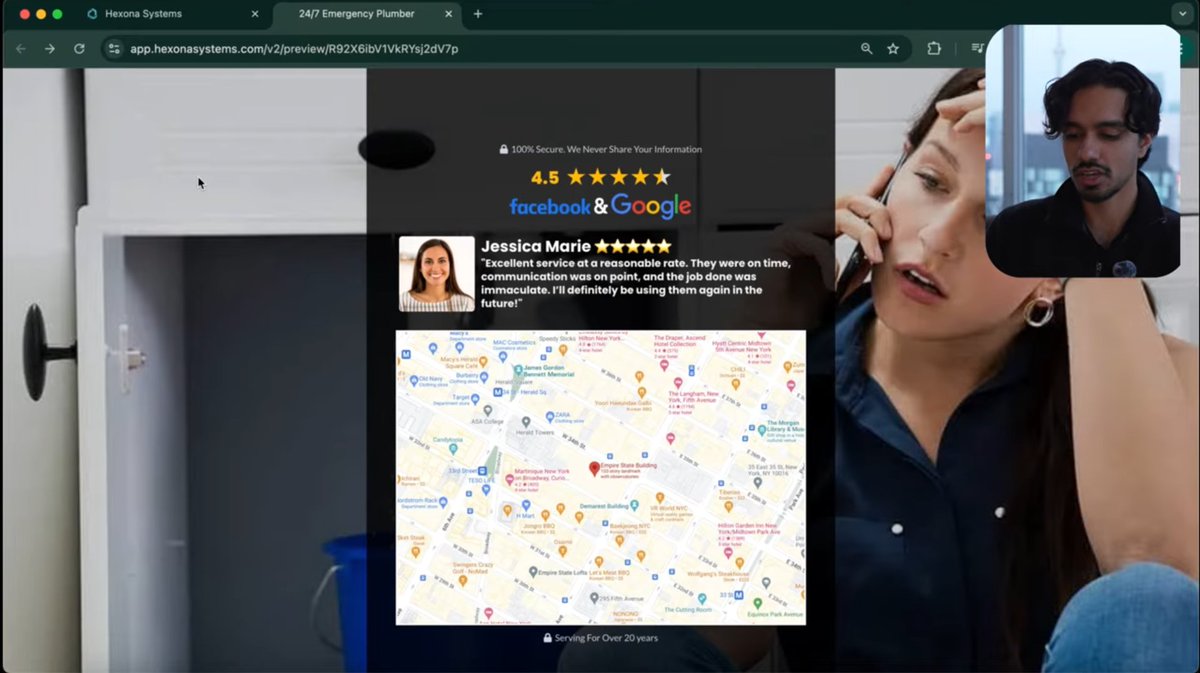
I BUILT A $5,000 AI AUTOMATION FOR PLUMBING COMPANIES
And it runs the entire admin side of the business without the owner touching their phone.
- It reads new job requests
- extracts the details
- generates a quote using their pricing rules
- proposes available time slots
- books the job
- sends confirmations automatically
After the job is marked complete, it sends the invoice, payment link, and a review request — all without the office staff chasing anything.
Same website.
Same phone number.
Same tools they were already using.
Just a system handling the work that usually eats hours every day.
If you want to see the full breakdown — how the automation works, the logic behind it, and how to build one yourself:
Comment “701” + Like + Repost and I’ll send it over.
(must follow for DM)
Seeing a young builder like this jump straight into helping real business owners integrate AI for workflows and proposals is refreshing.
From two decades across Siemens, IBM, HP, and P&G, I've witnessed how generic AI gives initial wins but the transformative compression happens when the system learns from your actual historical documents - past proposals, estimates, client emails, and contracts.
It starts speaking your language, spotting patterns unique to your business, and turning days of work into hours.
Owners often reclaim significant time this way without needing tech skills.
What's one workflow you're focusing on with the business owners you're supporting?
I'm a 17 y/o giving myself 6 months to hit $50,000 in revenue.
Day 1 | Revenue: $50 / $50,000
Wow. 32K views on my last post. Now let's get to work.
Today:
→ Met with 2 business owners to implement AI in their workflow
→ Working on a proposal doc for a potential client
→ Reaching out to 2 warm leads through referrals
Also, I'm presenting at SXSW next week about AI.
Day 1. Just getting started.
Updates throughout the week 👀
This nails why so many processes stay broken: humans in the loop drop balls on docs/follow-ups/check-ins.
AI shines here when trained on the actual workflow/docs. It can proactively flag missing pieces or auto-chase without anyone babysitting.
Seen it cut weeks off similar delays.
I'm going through an insurance claim process right now, and business processes in Jamaica are so broken. I'm wondering if people realize that if you're not careful, AI can literally replace all of these roles because the process I'm in is stalling because three weeks ago someone was supposed to give me three documents, they only gave me two, said the process would be completed, and now everything is three weeks behind.
People have to realize: these are literal case studies for automation. As a human in the loop as a human in the process, you are supposed to be deeply in tune with your workflow. Checking back proactively. I had no proper check-ins. I had to reach out every single time. It's just crazy. And this is exactly why executives are going to automate these roles.
@bethanyjbabcock Totally get the excitement, even basic AI giving 5 hours back is huge for real estate workflows.
In my experience, the jump to "much more" happens when it learns from your own past listings, comps, or emails. Suddenly it's spotting patterns generic tools miss.
Completely agree. The real gap is turning generic AI into something that actually understands their unique data and processes.Most progress I've seen happens when teams start simple, feeding the AI their own past reports, memos, and workflows. Suddenly it stops being generic and becomes a true co-pilot.
Which area are these fund managers usually trying to automate first?
@heyrimsha Local + knowledge graph is a game-changer for anyone with client-sensitive docs. No data leaving the machine and still getting context-aware outputs is huge.
@damianplayer Exactly. The ‘aha’ moment when it pulls context from their own docs in seconds is priceless. Seen the same shift in mid-size teams moving from copy-paste hell to real focus time. Have you noticed it scaling best when they start with just 2-3 document types first?
5/ I'm not building the next SaaS tool.
I'm building the operating system for India's economic backbone.
Competition is for losers. I'd rather build a monopoly.
https://t.co/Ae07w4RJdi
4/ AxonBOS - a self-evolving Business Operating System.
It grows because you talk to it.
It compounds because every business makes it smarter.
It wins because once you're the infrastructure, nobody rips you out.
3/ 63M Indian MSMEs are trapped between spreadsheets and enterprise software they can't afford.
That's not a market gap.
That's a $100B infrastructure problem nobody's solving.