You can now use your ChatGPT Plus/Pro subscription inside Claude Code (no API key needed)
Quick heads-up for anyone who, like me, was paying for ChatGPT *and* a separate OpenAI API key just to run GPT models behind `claude`.
If you're already paying $20/mo for ChatGPT Plus and you live in claude, you've been double-paying. Now you don't have to.
https://t.co/PdSOgnU6X0
You can now use your ChatGPT (Codex) subscription within Claude Code. So no API keys needed, just connect your ChatGPT subscription to Modyak.
Modyak is a Mac menu-bar app. Pick a preset. Done. Point Claude Code, Claude Desktop, Codex CLI or the Codex Desktop app at DeepSeek-V4-Pro, Kimi 2.6, Qwen, ChatGPT or local Ollama, without touching a config file.
https://t.co/PdSOgnU6X0
#codex #openai #claude #claudecode
I created a MacOS app which enables the option to switch between all AI models in the world with one click in Claude and Codex. Without changing any settings, JSON, etc.
So did you burn your tokens? Just use a cheaper provider
https://t.co/PPtNBIkhXh
#claude#codex#vibecoding
What happens when you put 1500 kids, the best Vibe coding tool, a great agency, two AI entrepreneurs, and the best organizer in one room?
This video tells more than 1000 words.
Lear more at https://t.co/1VIiNh6ToC.
Thanks @lovable@brthrsagency , @Thom_Wolf, @antonosika and Fabian Hedin for making this happen ❤️
GitHub repo:
https://t.co/Cpm3Dc44rY
A lot more detailed and technical walkthrough:
https://t.co/YmHaZfNjcJ
Example conversation with the $100, 4-hour nanochat in the WebUI. It's... entertaining :) Larger models (e.g. a 12-hour depth 26 or a 24-hour depth 30) quickly get more coherent.
Excited to release new repo: nanochat!
(it's among the most unhinged I've written).
Unlike my earlier similar repo nanoGPT which only covered pretraining, nanochat is a minimal, from scratch, full-stack training/inference pipeline of a simple ChatGPT clone in a single, dependency-minimal codebase. You boot up a cloud GPU box, run a single script and in as little as 4 hours later you can talk to your own LLM in a ChatGPT-like web UI.
It weighs ~8,000 lines of imo quite clean code to:
- Train the tokenizer using a new Rust implementation
- Pretrain a Transformer LLM on FineWeb, evaluate CORE score across a number of metrics
- Midtrain on user-assistant conversations from SmolTalk, multiple choice questions, tool use.
- SFT, evaluate the chat model on world knowledge multiple choice (ARC-E/C, MMLU), math (GSM8K), code (HumanEval)
- RL the model optionally on GSM8K with "GRPO"
- Efficient inference the model in an Engine with KV cache, simple prefill/decode, tool use (Python interpreter in a lightweight sandbox), talk to it over CLI or ChatGPT-like WebUI.
- Write a single markdown report card, summarizing and gamifying the whole thing.
Even for as low as ~$100 in cost (~4 hours on an 8XH100 node), you can train a little ChatGPT clone that you can kind of talk to, and which can write stories/poems, answer simple questions. About ~12 hours surpasses GPT-2 CORE metric. As you further scale up towards ~$1000 (~41.6 hours of training), it quickly becomes a lot more coherent and can solve simple math/code problems and take multiple choice tests. E.g. a depth 30 model trained for 24 hours (this is about equal to FLOPs of GPT-3 Small 125M and 1/1000th of GPT-3) gets into 40s on MMLU and 70s on ARC-Easy, 20s on GSM8K, etc.
My goal is to get the full "strong baseline" stack into one cohesive, minimal, readable, hackable, maximally forkable repo. nanochat will be the capstone project of LLM101n (which is still being developed). I think it also has potential to grow into a research harness, or a benchmark, similar to nanoGPT before it. It is by no means finished, tuned or optimized (actually I think there's likely quite a bit of low-hanging fruit), but I think it's at a place where the overall skeleton is ok enough that it can go up on GitHub where all the parts of it can be improved.
Link to repo and a detailed walkthrough of the nanochat speedrun is in the reply.
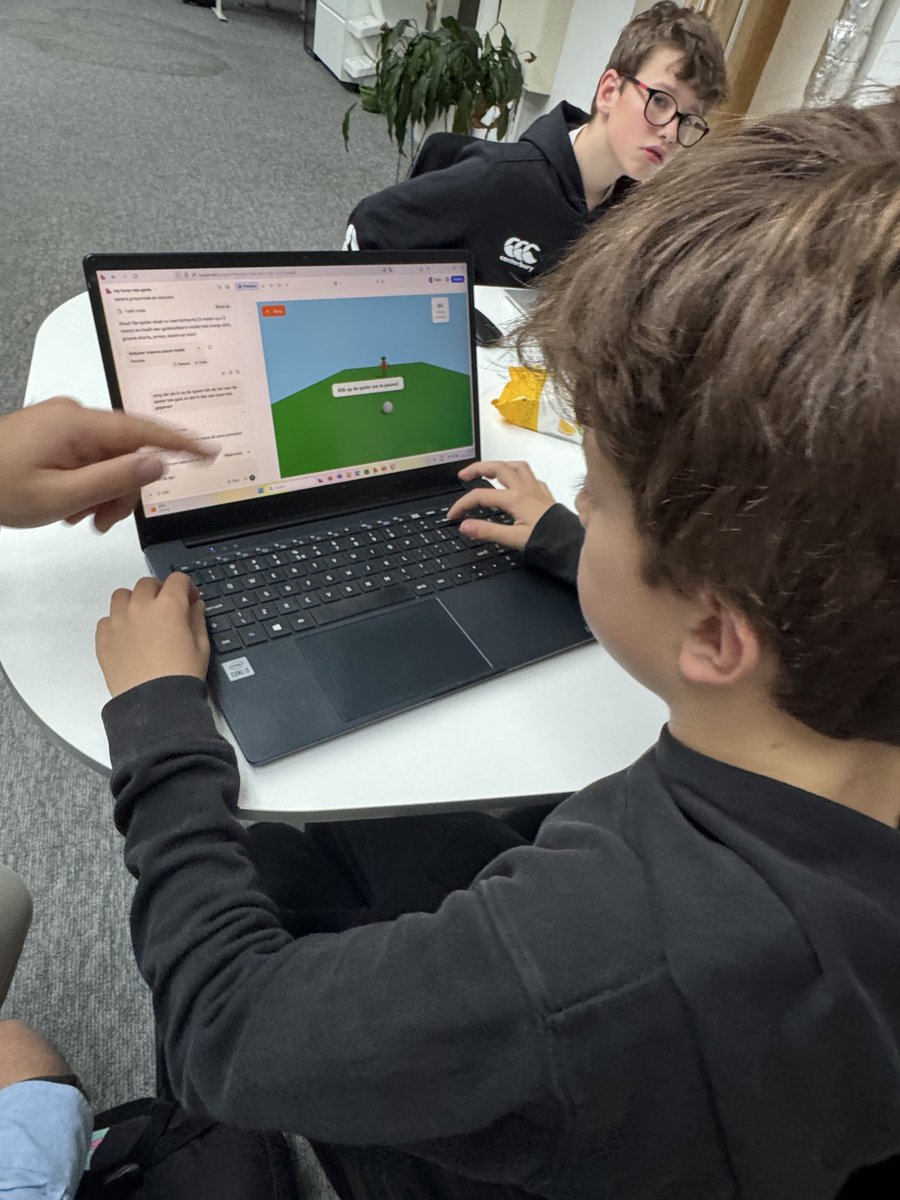
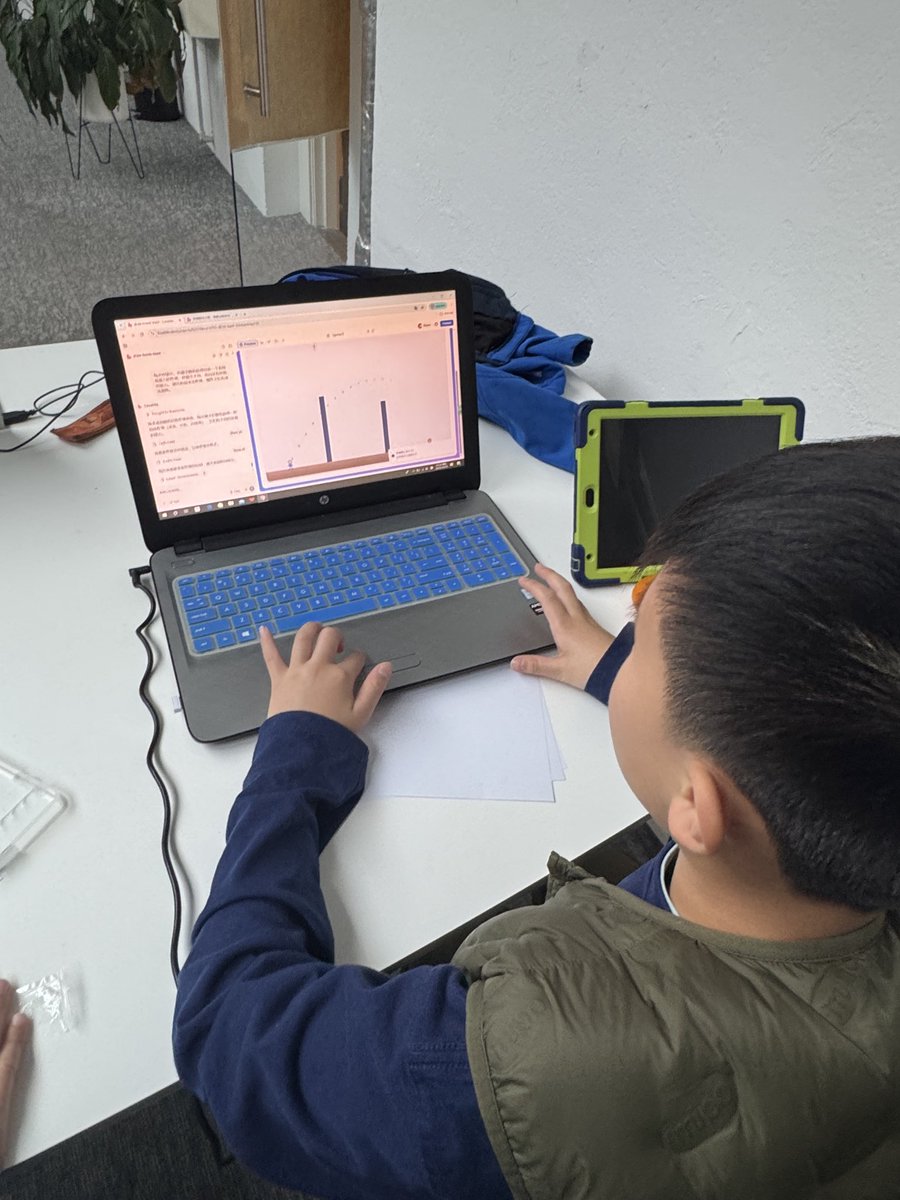
Yesterday was a blast. 25 kids were vibe coding for 3.5 hours, laughing, building, and especially sharing a lot of positive energy. They were unstoppable!
I especially like this creation:
🍔 Burgers Invaders 👾
The concept is simple: shoot with ketchup at the burgers!
https://t.co/AAqbxMewXH
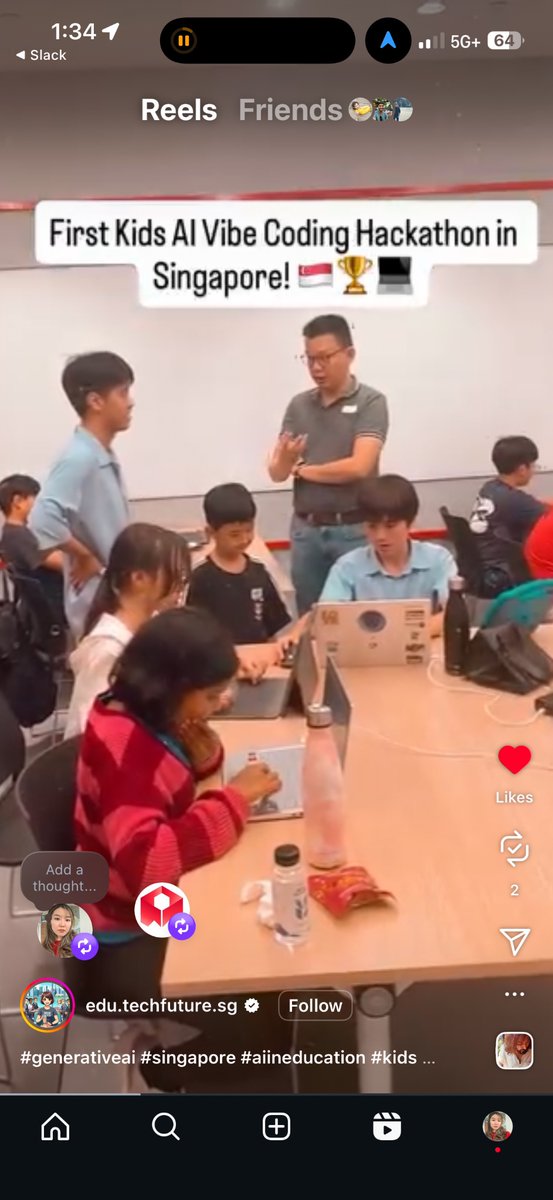
Today day two! Kids AI Coding. 80 locations, 1500+ kids and 300 mentors 💪
And a special thanks to @lovable@Rosebud_AI
Today is Kids AI Coding Day!
Kids (1500+ 🤯) from all over the world, India, Singapore, Australia, the USA, Belarus, Canada, Belgium, France, Germany, Ghana, Egypt, etc. are going to vibe code today and tomorrow.
Seeing kids have so much fun while exploring their creativity and learning how to use AI in a fun way is one of the coolest things to do.
And, of course, a shout‑out to our partners @lovable and @Rosebud_AI.
In a few days, several thousand (!) kids around the world will join the first Worldwide Kids Vibe-Coding Hackathon!
I’m so excited to see what they’ll come up with. During our first small event, I was mind-blown by how quickly kids picked up these tools and how they used them with the kind of unbridled creativity we can only dream of as grown-ups.
You can still join! Contact @marine_caous she’ll get you set up in no time.
When my daughter asked me how she could start coding with AI, I realized how important it is to give kids the right space to explore and create.
That’s why we started the Worldwide Kids AI Coding Hackathon.
In just 7 days, thousands of kids will be coding together in a global hackathon.
In this video, @Thom_Wolf and I explain why we started this.
If you want to be part of this journey, Marine Caous can get you set up quickly or checkout our website: https://t.co/pmKUAE460g
The versions in the Netherlands (Utrecht) at Brthrs Agency are already fully booked.
P.S. It’s so hard to see yourself in a self‑made video. How are all these TikTok kids doing this? 😂