My essay does not assert continuity.
In fact, the entire first section is devoted to acknowledging the disruptive impact of China's export-led industrialisation. And in the very last section, I explicitly converge with people like Brad himself on how the US and Europe should respond with industrial policy.
The point of my essay is twofold. First, to show how the "China Shock 2.0" narrative glosses over the many benefits of China's export-led model — benefits the West is still reaping. Second, to show that Western pushback stems mainly from China climbing the value chain, not simply from its growing trade surplus.
Honestly, the framing around imbalances and national security, while legitimate to a degree, has been heightened to absurd levels.
The framing is a convenient way to disguise double standards around the use of trade policy and industrial policy, and to obscure what the China Shock argument really conveys at its core: that US and European dominance is the natural state of affairs, and any challenge to that dominance must be contained.
Next step: release a paper along with an interactive tool that allows a reader to quickly move through the code and see how results change with different design choices
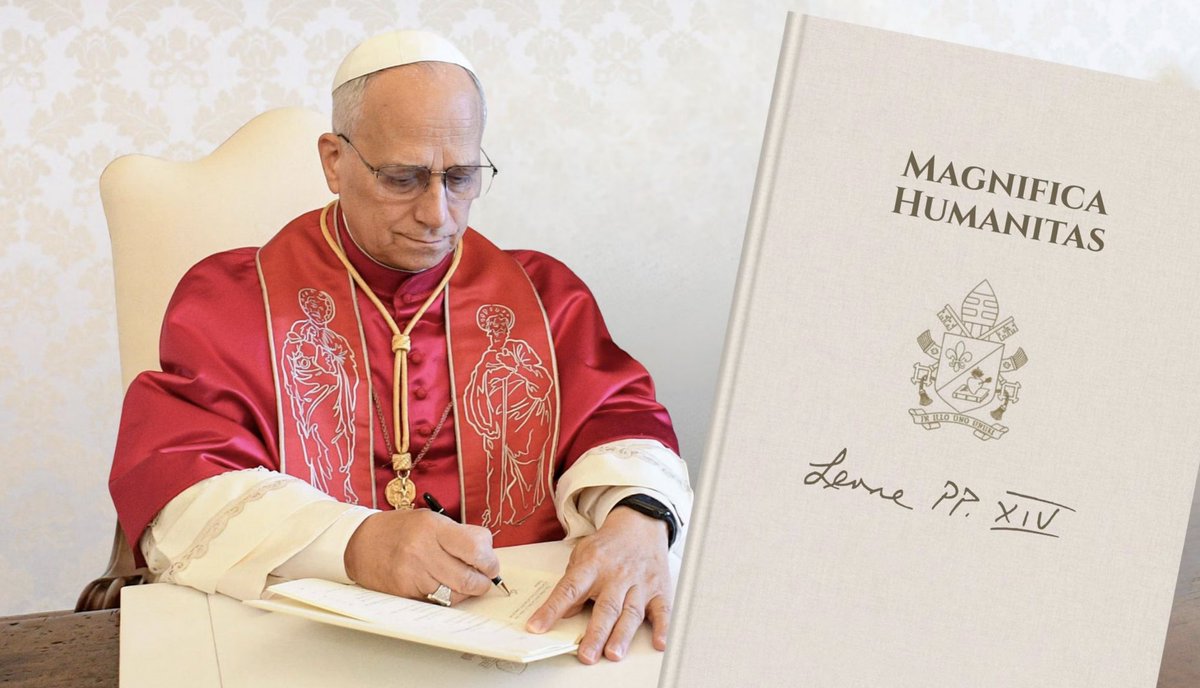
JUST IN: Vatican announces that Pope Leo XIV’s first encyclical — titled Magnifica Humanitas, on the safeguarding of the human person in the age of AI — will be presented at 11:30am on Monday, May 25, in the Vaticanʼs Synod Hall, in the presence of the Holy Father.
Speakers at the presentation will include:
Cardinal Víctor Manuel Fernández, Prefect of the Dicastery for the Doctrine of the Faith;
Cardinal Michael Czerny, Prefect of the Dicastery for the Service of Integral Human Development;
Professor Anna Rowlands, Political Theology, including Catholic Social Teaching, and theological ethics of human migration, Department of Theology and Religion, Durham University, United Kingdom;
Christopher Olah, co-founder of Anthropic (USA) and head of interpretability research for artificial intelligence;
Dr. Leocadie Lushombo, Political Theology and Catholic Social Thought, Jesuit School of Theology / Santa Clara University, California.
Concluding remarks will be delivered by thel Secretary of State, Cardinal Pietro Parolin.
The presentation will also include an address by Pope Leo XIV.
Magnifica Humanitas was signed and dated on May 15, the 135th anniversary of the promulgation of Pope Leo XIII’s Encyclical Letter Rerum Novarum.
JUST IN: Vatican announces that Pope Leo XIV’s first encyclical — titled Magnifica Humanitas, on the safeguarding of the human person in the age of AI — will be presented at 11:30am on Monday, May 25, in the Vaticanʼs Synod Hall, in the presence of the Holy Father.
Speakers at the presentation will include:
Cardinal Víctor Manuel Fernández, Prefect of the Dicastery for the Doctrine of the Faith;
Cardinal Michael Czerny, Prefect of the Dicastery for the Service of Integral Human Development;
Professor Anna Rowlands, Political Theology, including Catholic Social Teaching, and theological ethics of human migration, Department of Theology and Religion, Durham University, United Kingdom;
Christopher Olah, co-founder of Anthropic (USA) and head of interpretability research for artificial intelligence;
Dr. Leocadie Lushombo, Political Theology and Catholic Social Thought, Jesuit School of Theology / Santa Clara University, California.
Concluding remarks will be delivered by thel Secretary of State, Cardinal Pietro Parolin.
The presentation will also include an address by Pope Leo XIV.
Magnifica Humanitas was signed and dated on May 15, the 135th anniversary of the promulgation of Pope Leo XIII’s Encyclical Letter Rerum Novarum.
@NakedKeynes It is obviously both. I think of it as a gear shift; when reorganisation of Labor and Production reaches some form of resistance capitalist and the state can resort to global trade and State sponsored violence to appropriate profits
Same here! I developed actual disgust as of late and often stop reading the piece altogether as a consequence. even when there are only slight phrases that where suspicious
We are starting to see hybrid AI/human texts with actually useful content.
But I hate it, I hate reading these things, the AI style is so formulaic.
You have to experience aesthetic injury in order to absorb the information. It’s not worth it for me.
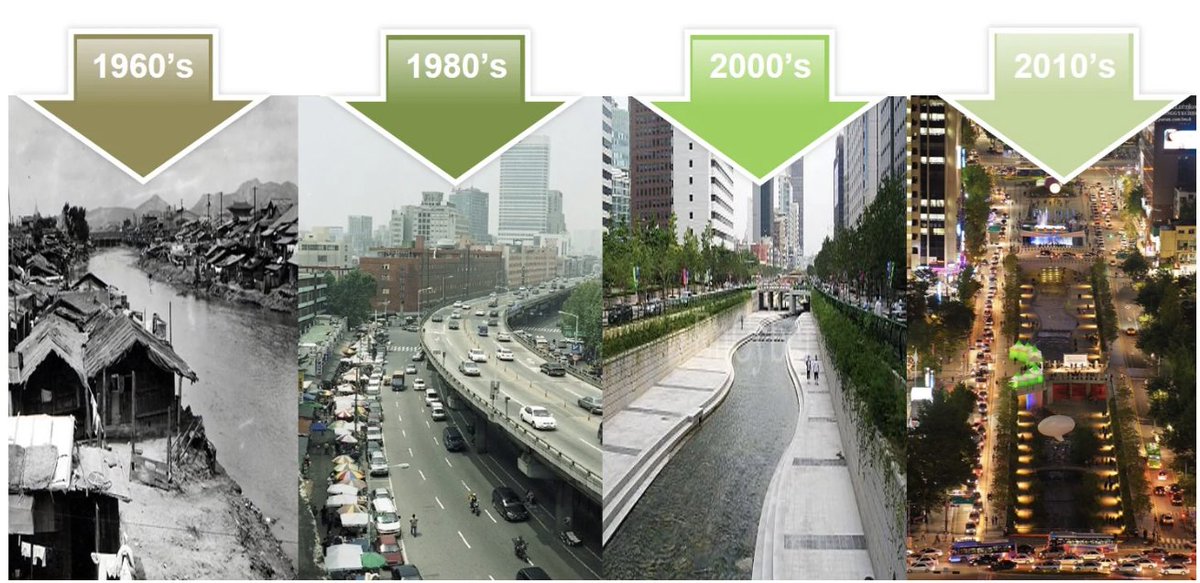
A fundamental lesson from my posts these last two weeks on modernization, industrial policy, and development is that development economics should be about understanding why South Korea got rich but Bolivia did not.
The current field has largely given up on that question. Sharply identified RCTs on small micro programs are a fine way to publish in the AER and get tenure at a fancy university, but a profession that knows everything about microfinance impact evaluations and almost nothing about industrialization has misallocated its own intellectual capital on a pretty heroic scale.
Four images of Seoul:
Slightly unrelated but if you are a PhD student, you should take a look at Peter's metric notes on his website. They often cover applied topics that are usually hard to find elsewhere.
So, this is actually a common mistake! Frisch-Waugh-Lovell works by residualizing on the *right* (i.e. the x-axis), not only on the left. In this case you'd only recover the regression relationship by residualizing the HHI measure (with or without residualizing the rebellious activity measure)
I wrote a note about this a few years ago (link below)