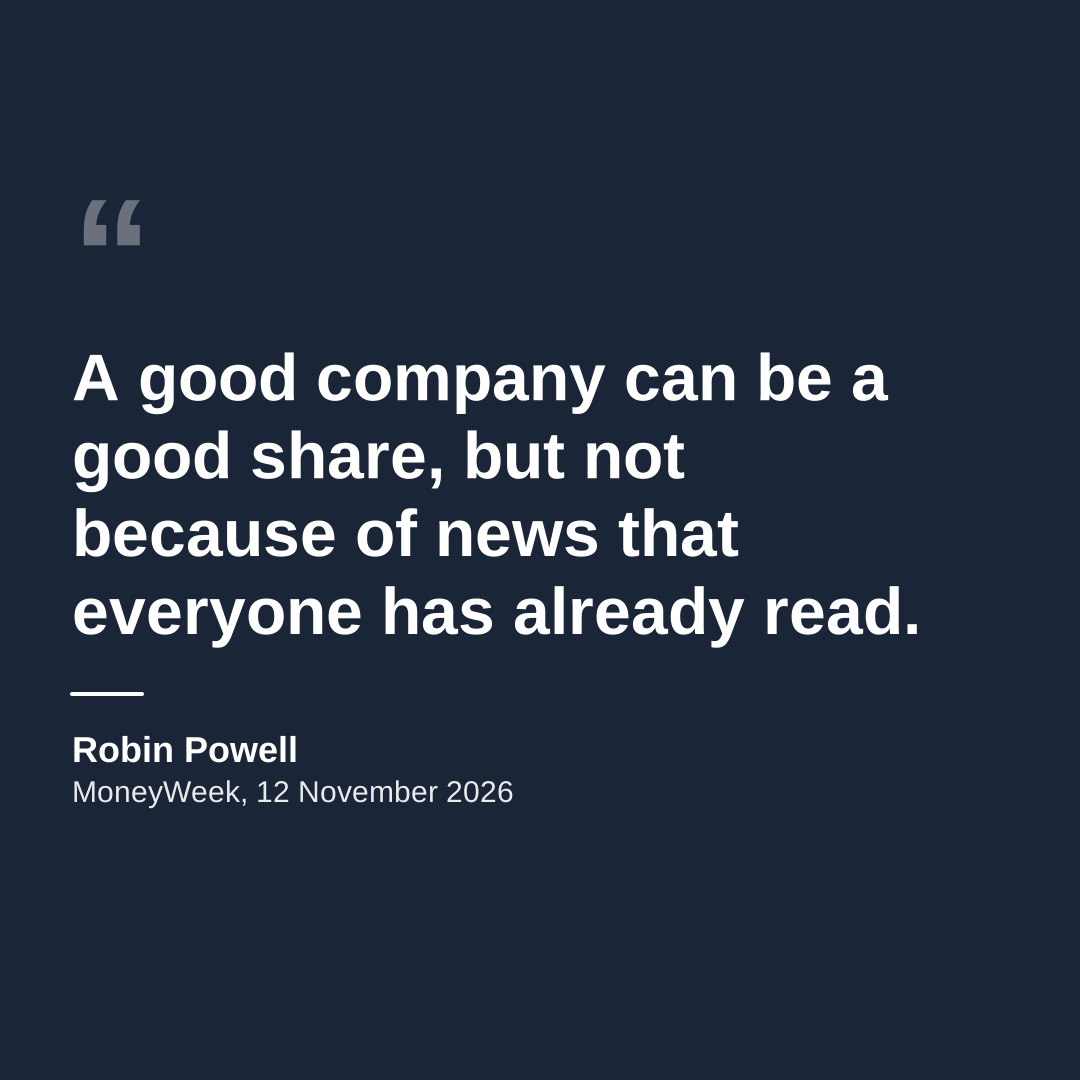
You might assume that great companies make great investments. But, as I explain in MoneyWeek, it's not necessarily true.
The problem is that good companies are priced accordingly. Their shareholders know what they own, and they demand a high price for giving it up. So a buyer pays for the company’s strengths in full, up front. And because the market sees a great company as a safe bet, buyers accept a lower expected return for holding it.
Take Anthropic, which made its stock market debut this week in the largest IPO in history.. I haven’t met a single person with a bad word to say about Claude. If ever there was a great company, Anthropic is it. And that's why, at the time of writing, the company is valued at $1.76 TRILLION!
With an out-of-favour company, it works the other way round. Buyers see more risk, so the price falls until the expected return is high enough to tempt them. That’s why, historically, unloved companies have tended to make the better investments.
None of this means Anthropic will be a bad investment. Nobody knows. But from here, its shares will only do better than expected if the company beats the expectations already built into that price.
This is a hugely important concept for investors to understand.. and yet so many don't.
Really interested to hear people's thoughts. I've linked to the article in the comments.
#Anthropic #ANT
@67Dodge Thanks, Dale. You’re right.. FP Canada's planning guidelines say a couple in their 60s has about a one in four chance that at least one of them lives beyond 98.
One of the problems we face when planning for retirement is not knowing how long we need our money to last.
As I explain in @TheTimes, it's compounded by the fact that most people underestimate how long we're going to live for.
Researchers asked 1,000 working-age adults in northern Italy how long they expected to live. Half were then told the official life expectancy for someone of their age, sex and geographical area.
It made no measurable difference to their expectations or to their retirement plans. People treat the official figures as describing other people, not themselves.
Instead of forecasting your own life expectancy, it’s better to plan to a deliberately late age, such as 95.
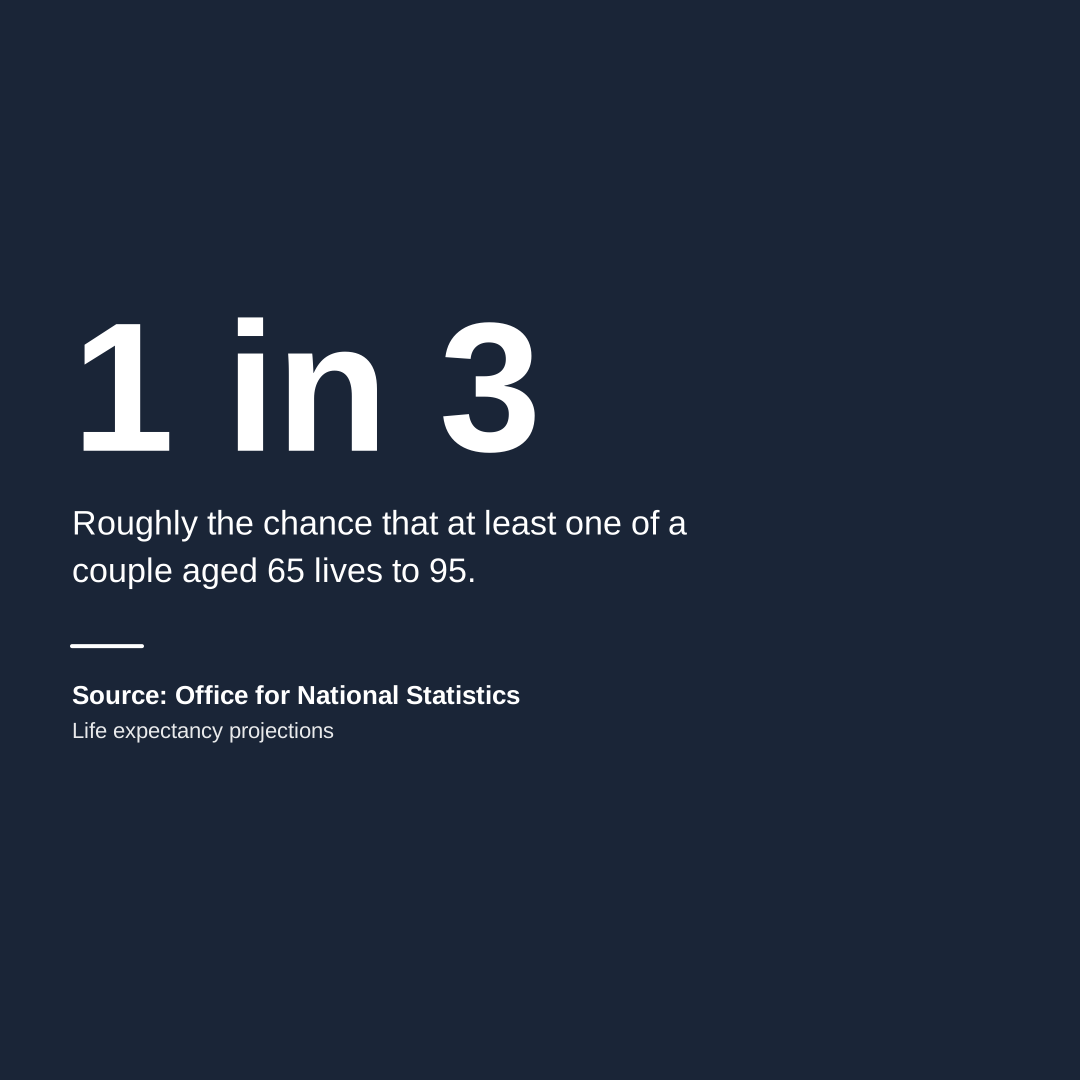
For a couple both aged 65, the chance that at least one of them reaches 95 is roughly one in three.
I’m interested to hear what people think. How many years do you expect your pension to have to last? And advisers: what age do you plan to when you model retirement income, and has it changed?
#Retirement #FinancialPlanning
@myersbradley@thetimes That's really interesting, Bradley. You've basically combined the two checks in my piece. Why 80 for the guaranteed income, out of interest?
@robokick@thetimes Thanks Mohammed, that's a proper bit of planning! The tools vary depending on where you live, but testing to 100 is exactly the mindset I was getting at.
The UK retail offer for Anthropic shares closes at 3pm today.
The IPO is reportedly about six times oversubscribed. If you apply, you may get fewer shares than you hoped for, or none at all.
You could buy on Nasdaq tomorrow instead. But by then you may have missed any first-day price jump.
I have no view on how Anthropic shares will perform. But an FT analysis found that this year’s ten biggest Wall Street flotations are down an average of a fifth from their offer prices.
And if you own a global tracker fund, you may well soon own a slice of Anthropic anyway, without doing anything.
In my column for @TheTimes today, I look at whether to apply, wait or stay out.
If you’ve applied, what made you decide to?
#AnthropicIPO #AnthropicShares
For 20 years, most people found a financial adviser through a friend, an accountant, or a Google search.
That's changing. Increasingly, they're asking AI to find one for them.
And that could be very good news for firms with nothing to hide.
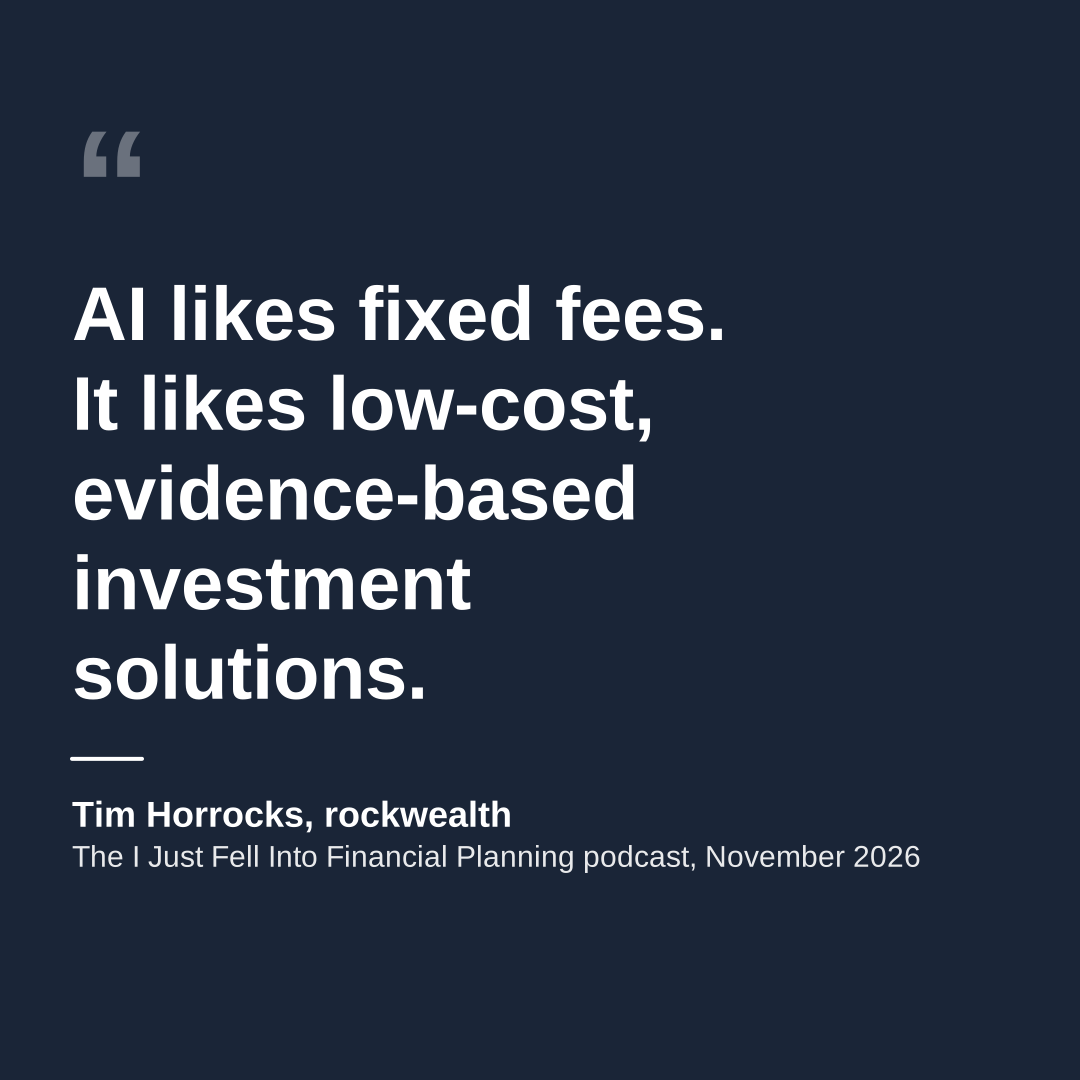
As @rockwealthUK founder Tim Horrocks explains in the latest epsiode of Jamie Bradbury"s podcast, a significant proportion of new enquiries now come through AI, helping new offices establish themselves in months rather than years.
AI doesn't have longstanding relationships with advisers. It doesn't earn referral fees. And it can't be taken to lunch.
It can compare charges, examine investment propositions and scrutinise claims of independence.
Of course, AI can get things wrong. But as more people use it to choose an adviser, firms will have less control over how they're presented to prospective clients.
For an industry that has sometimes relied on consumers not looking too closely, that could be a very healthy development.
#FinancialPlanning #FinancialAdvice
@CARBABOGLEHEAD@Eduardo17125154 ¡Gracias por la recomendación! Y gracias por seguirme, Eddie. ¿Hay alguna cuestión concreta sobre la inversión en UK que te gustaría que tratáramos en The Evidence-Based Investor?
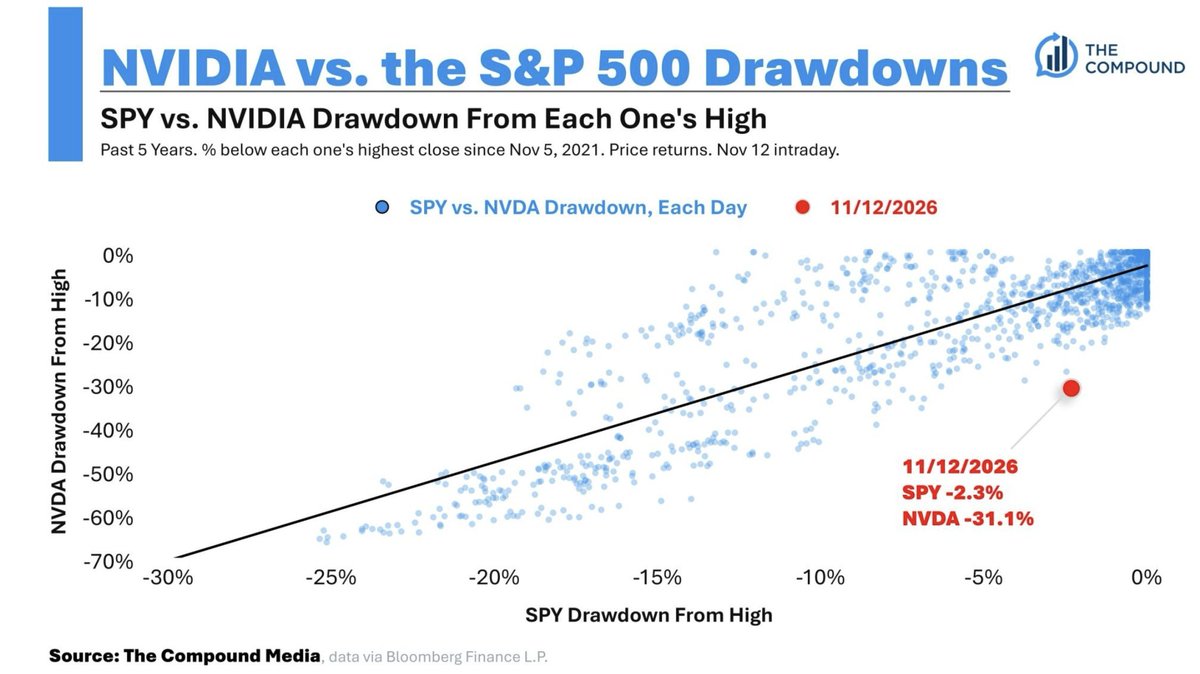
Nvidia has lost almost a third of its value since early October. Yet the S&P 500 has barely moved from its high.
What does that tell us about the case for index investing?
For two years, investors have been warned that an S&P 500 index fund is increasingly a bet on a handful of tech giants. Given Nvidia’s enormous weighting, you might expect its collapse to have dragged the whole index down with it.
But look at this chart from Michael Batnick, CFA at The Compound.
Each blue dot represents a trading day over the past five years, showing how far Nvidia and the S&P 500 tracker SPY were below their respective highs. The red dot is Thursday 12 November: Nvidia down 31.1 per cent, SPY just 2.3 per cent.
An S&P 500 index fund owns Nvidia, but it also owns hundreds of other companies. Investors felt Nvidia’s fall, but only in proportion to its weighting. That weighting shrinks automatically as the price falls, without anyone having to sell. And gains elsewhere can offset some or all of the damage.
Does that mean the concentration warnings were misplaced? Not necessarily.
The bigger concern is what happens when several of the largest companies fall together, particularly when their valuations depend on the same expectations about AI.
We had a taste of that on 5 November, when AI-related stocks sold off sharply and the S&P 500 fell 4.4 per cent in a single day.
An index fund can’t protect you from a falling market. Nor does it eliminate the risks of concentration. But it does mean your financial future doesn’t depend on the fortunes of any one company, however dominant that company might appear today.
Index investors felt Nvidia's fall, but only in proportion to its weighting. That weighting shrinks automatically as the price falls, without anyone having to sell. And gains elsewhere can offset some or all of the damage. The overall impact on the S&P 500 and global equity trackers has been minimal.
Anyone who has lost a parent or a partner knows grief is hard enough on its own. It’s harder still when they haven’t left their affairs in order.
Matthew Hutton, my latest guest on the TEBI podcast, says that although leaving a will is essential, there are all sorts of things you can do now to relieve the burden on those you leave behind.
For example, you can prepare a list of people you’d like to be told when you die, securely leave a record of your passwords and make sure your family can get into your mobile phone, for reasons he explains here.
Our own death isn’t something we like to think about. But your loved ones will thank you for spending half an hour listening to what Matthew has to say.
There's a YouTube link in the first comment. Or you can watch and listen wherever you normally get your podcasts.