Vibe coders are getting sued.
People are launching apps with real users but skipping the boring stuff that can actually kill the product.
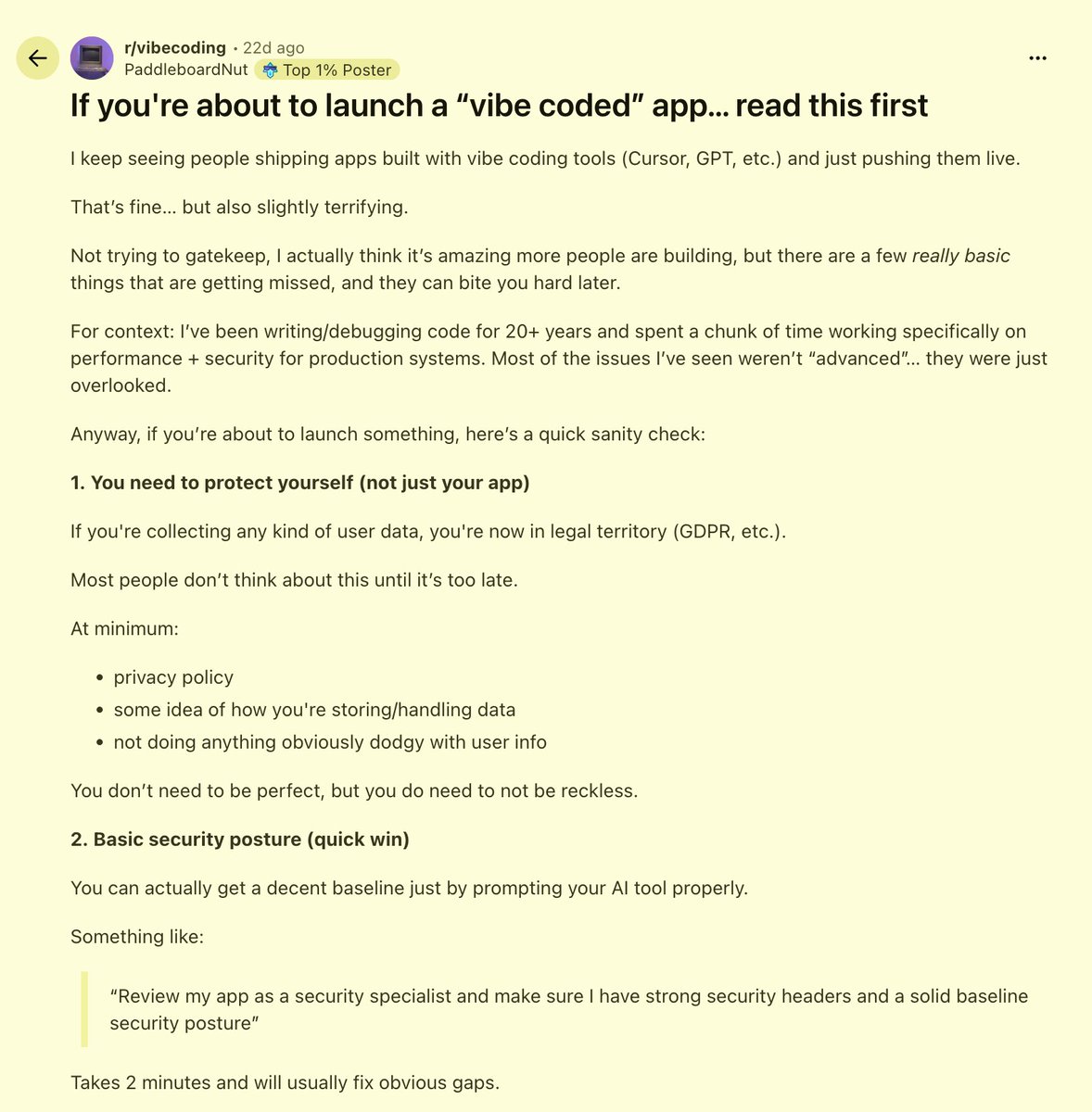
A developer with 20+ years of experience just shared the pre-launch checklist every AI builder should run:
→ privacy policy if you collect user data
→ know where user data is stored
→ check security headers
→ scan against OWASP basics
→ look for SQL injection / XSS / auth issues
→ make sure .env values are not leaking
→ check API responses for sensitive data
→ remove secrets from logs
→ never expose API keys in frontend code
→ move keys server-side or behind a proxy
→ add rate limits before someone burns your API bill
This is what most vibe coders are missing.
AI can help you build the app.
But if you launch without security, privacy, and abuse checks...
you didn't ship a product.
you shipped a liability.
Most AI conversations are still centered on LLMs. GenBio AI Co-Founder & Chief Scientist @ericxing is already three steps ahead.
@ben_guggenheim@washingtonpost just sat down with him to break down why LLMs are "book smart" and how GenBio AI's world model can simulate an entire cell, run virtual drug trials, and potentially compress decades of drug discovery into a computational prompt.
Full interview 👇
https://t.co/wlB7vXCXUM
What if AI could build its own biology models — and beat human experts?
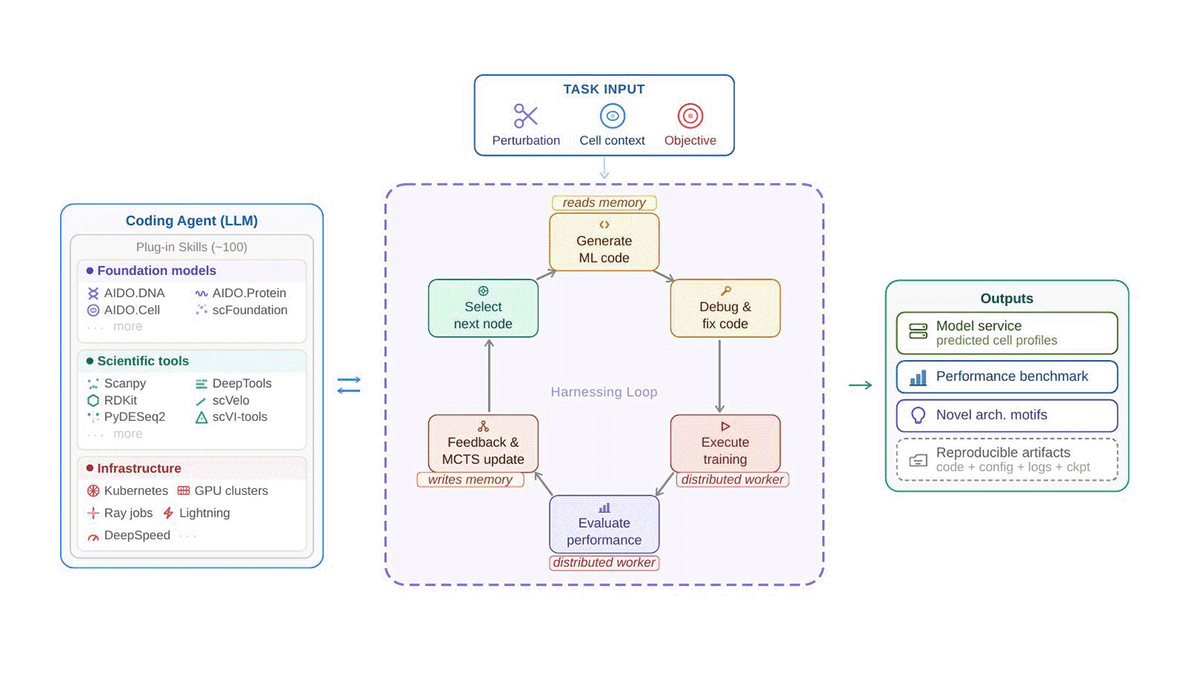
We built VCHarness: an autonomous system that proposes models, writes code, runs experiments, and learns from results in a closed loop.
Tested on CRISPR gene knockdown across 4 human cell lines — it outperforms expert-designed baselines.
From months of manual model-building → days of autonomous search.
🔬 Blog: https://t.co/XhhhbfeSR3
📄 Paper: https://t.co/kluV3aqRvq
🌐 Website: https://t.co/iEEji3uuHs
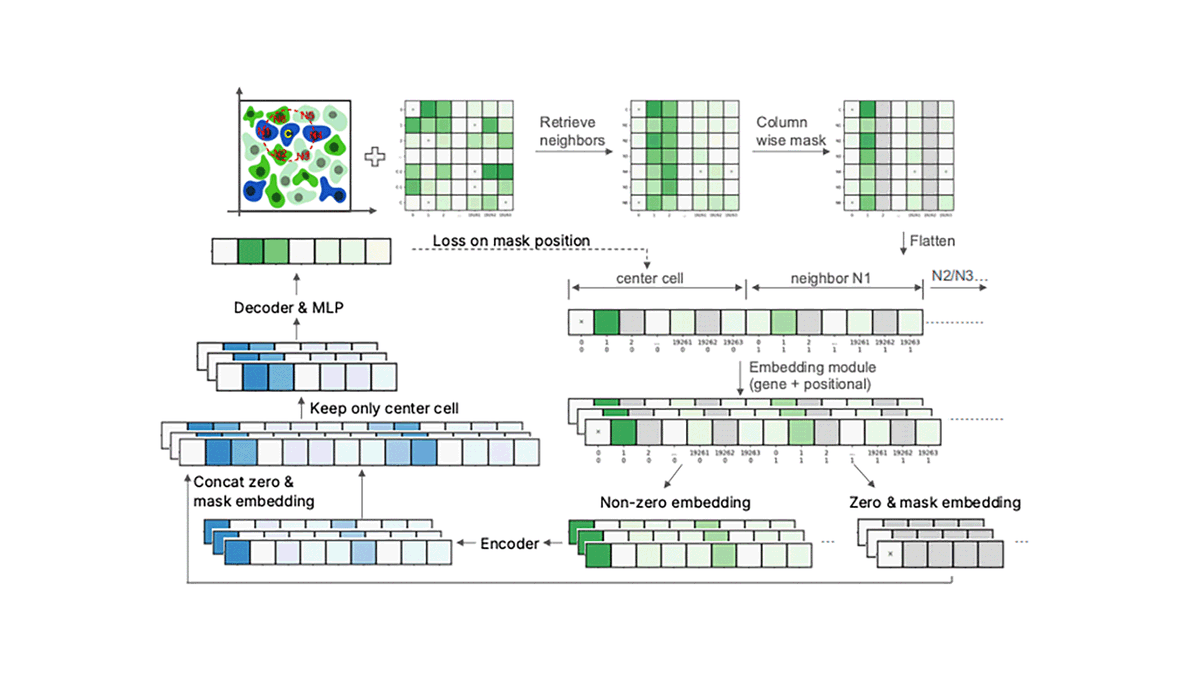
Cells aren't islands. Their representation and function depend on neighbors.
We introduce AIDO.Tissue, a foundation model that learns biology by thinking in cellular neighborhoods. It not only outperforms competing models but also demonstrates a scaling behavior with neighboring context.
Learn more👇
https://t.co/Kfn28QF76X
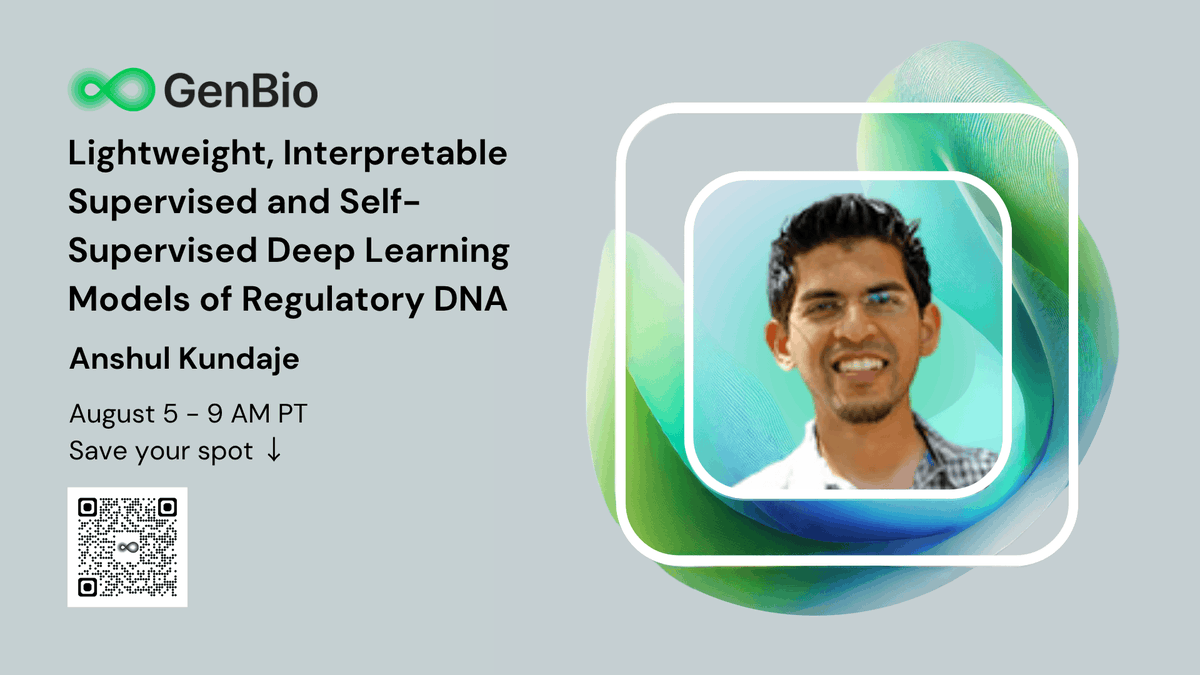
Big thanks to our presenter @anshulkundaje, our host @probablybots, and everyone who joined today's #FM4Bio seminar.
We'll be posting the talk "Lightweight, Interpretable Supervised and Self-Supervised Deep Learning Models of Regulatory DNA" on our YouTube channel soon.
Stay tuned: https://t.co/WTiW1PzeWj
Bigger isn't always better in genomics AI
Join us Tue, Mar 24 at 9 AM PT for the next #FM4Bio Seminar with Professor @anshulkundaje@Stanford — on building smarter, interpretable models of regulatory DNA that outperform massive foundation models.
https://t.co/FOFQmq9iZV
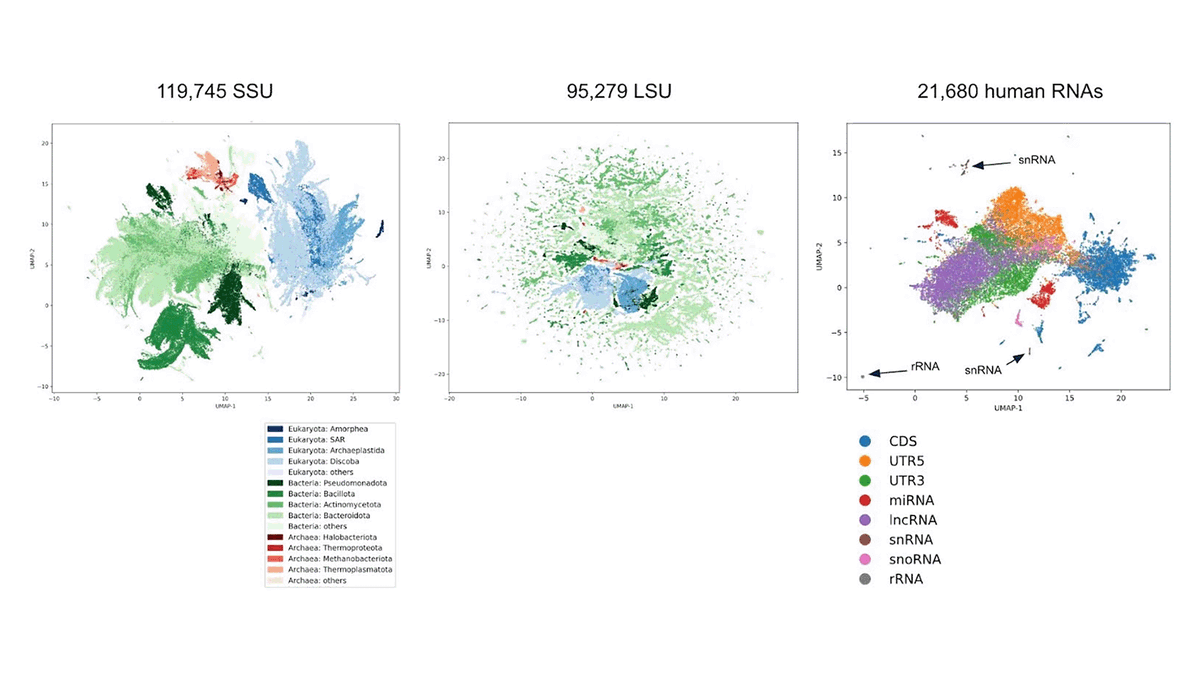
Many “virtual cell” efforts restrict themselves to cell-level assays like scRNA-seq. To build a true world model for biology, we need to move beyond the individual cell and model the tissue context as well.
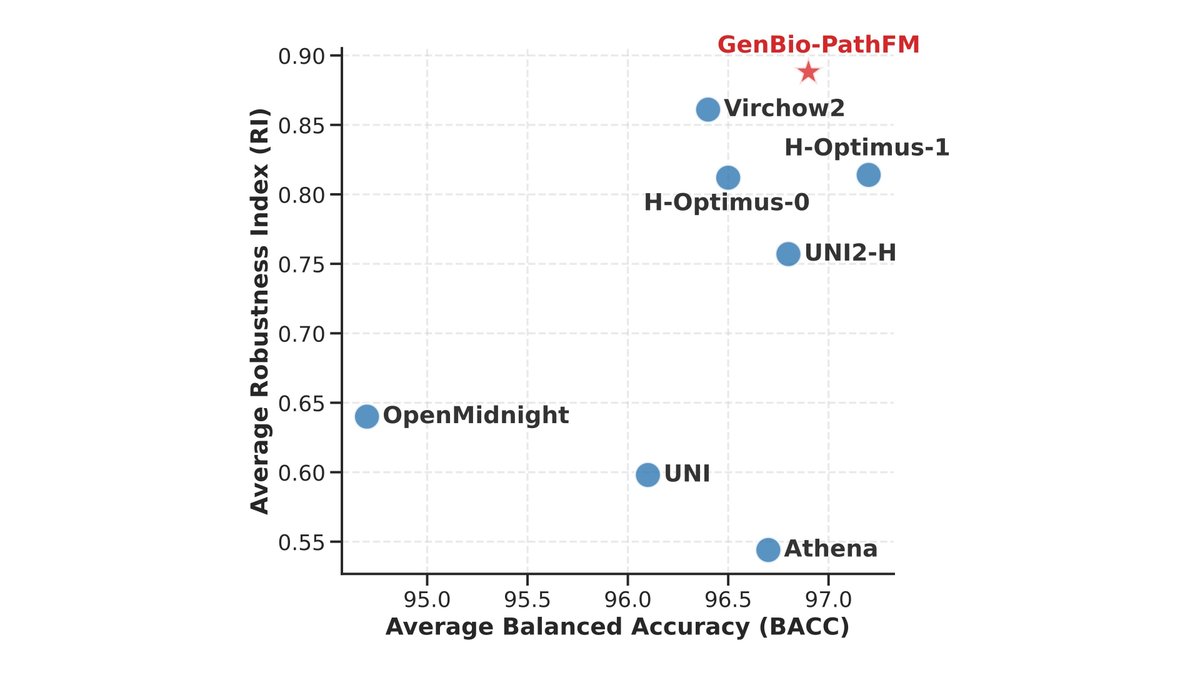
GenBio-PathFM is a new histopathology foundation model from GenBio AI. It is the only SOTA model trained without using proprietary image archives, and the strongest open-weight model to date.
Highlights:
- SOTA performance on public pathology benchmarks (THUNDER, HEST, PathoROB - shown below).
- Unprecedented data efficiency, requiring 5x-15x fewer WSIs for training.
- Novel two-stage pretraining strategy combining DINO and JEPA.
Blog post: https://t.co/vb5uoLzkcn
Paper: https://t.co/stnc4NbBU8
GitHub: https://t.co/mvnGPk4iW5
Super excited to see that @genbioai was highlighted in Dr. @LisaSu's keynote talk.
Thank you so much, @AMD — we look forward to what we will achieve together in 2026!
GenBio AI Co-Founder and Chief Scientist @ericxing is speaking today at the World Economic Forum in Davos on The Next Phase of Intelligence.
The discussion explores how AI systems learn, plan, and act at scale, questions central to how we think about modeling complex systems in biology.
Tune in 👇 #WEF26
https://t.co/RRp4EAsfYJ
Insightful remarks from GenBio AI Co-Founder and Chief Scientist @ericxing at #WEF26 on why the next phase of AI will be defined by world models, reasoning, and interaction, not just larger language models. Learn more 👇
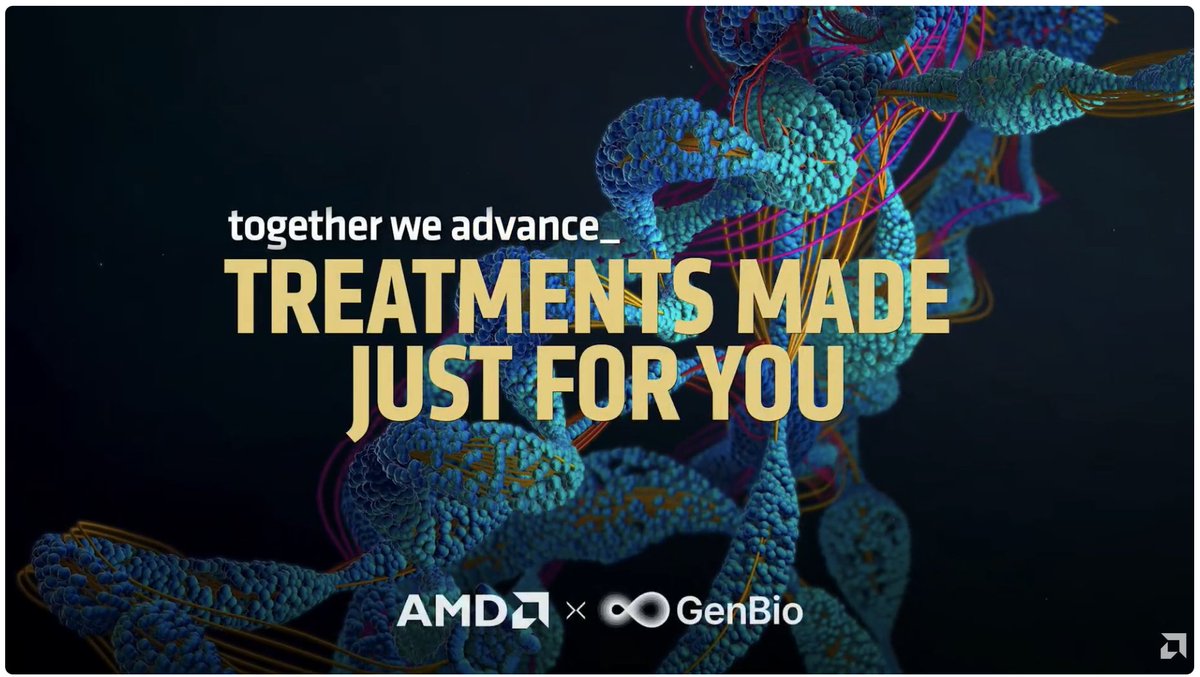
Chair and Chief Executive Officer at AMD, Dr. @LisaSu, highlighted our partnership during her CES 2026 keynote.
At #CES2026 in Las Vegas, GenBio AI joined @AMD to share a vision for advancing biology with AI.
Together, we are building the foundation for personalized treatments made just for you.
Learn more and stay tuned → https://t.co/4q7gbuzGZ5
We’re humbled and honored to share that GenBio AI and @MBZUAI have received the UAE AI Award 2025 for Scientific Research! 🏆
Congratulations to our Co-Founder and CTO, Professor of Machine Learning at MBZUAI @dasongle, and his team for their pioneering work on the Unified Protein Language Modeling Framework.
Learn more ↓
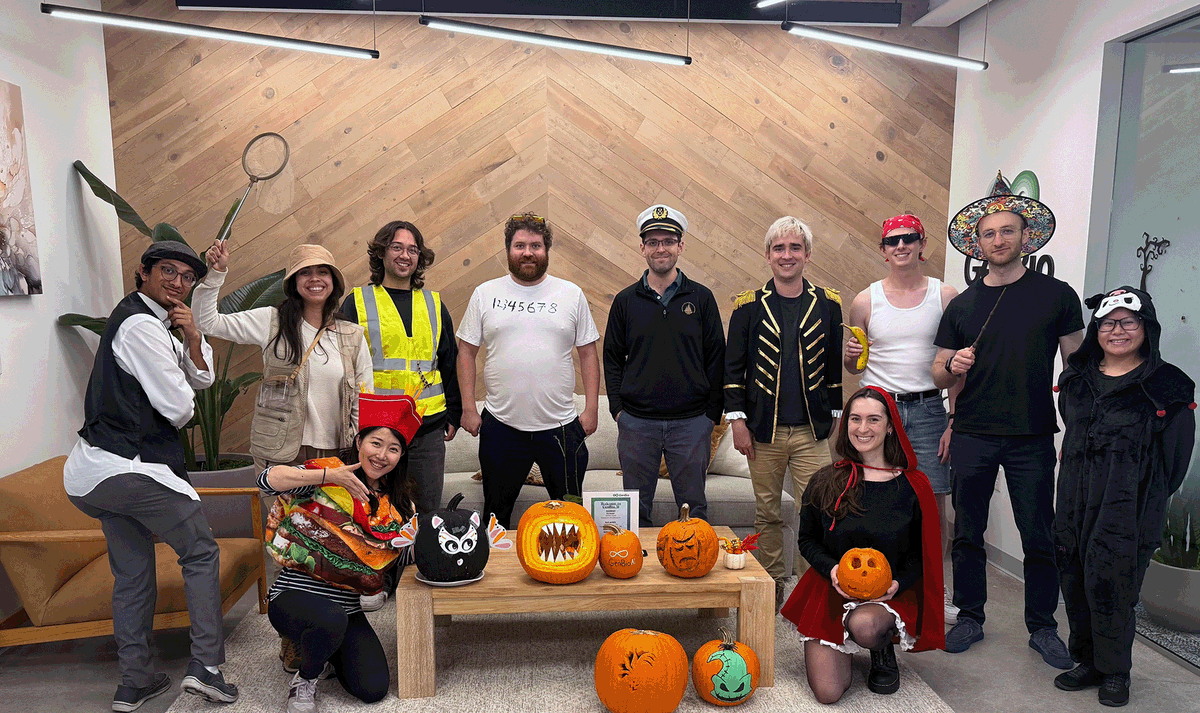
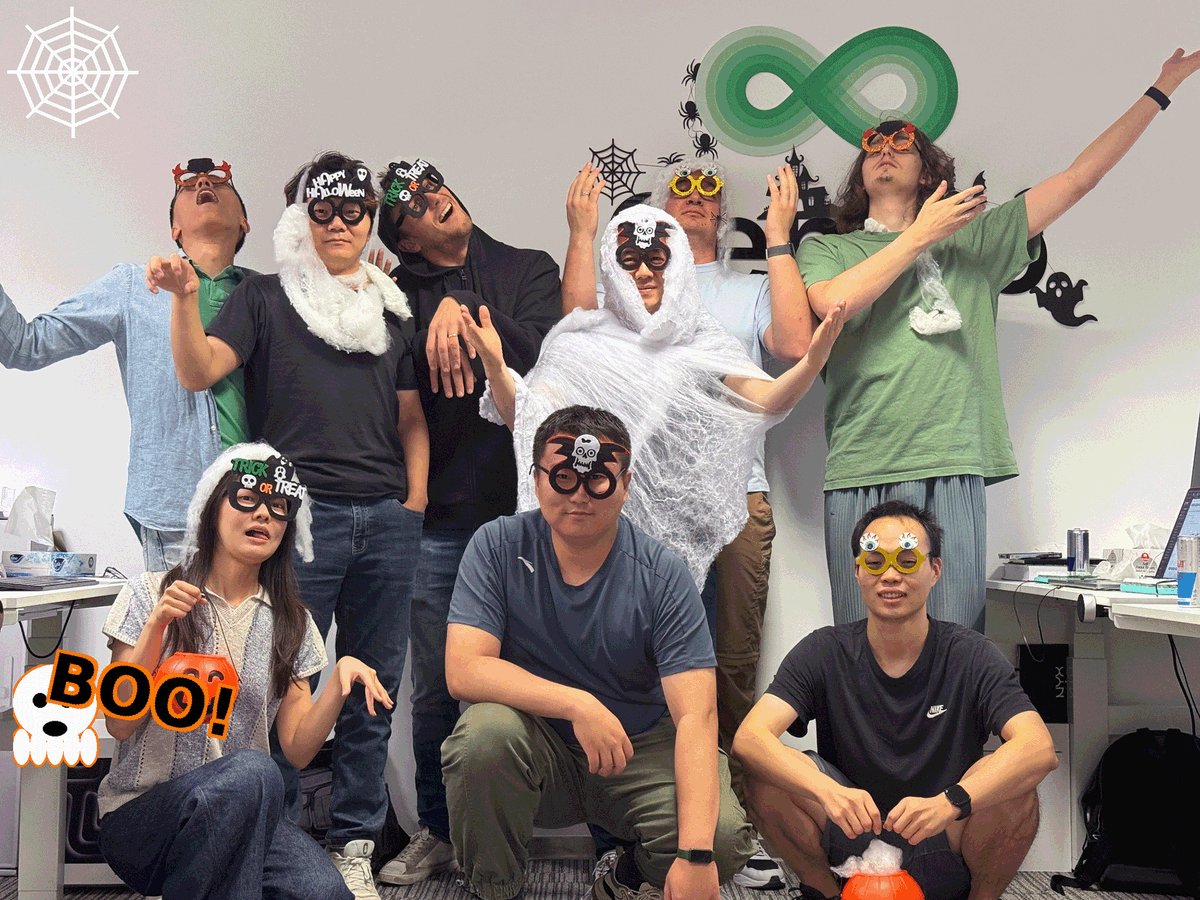
Halloween around the world at GenBio AI 🎃
Our teams in Palo Alto, Paris, and Abu Dhabi got into the spirit with costumes, pumpkin carving, and plenty of spooky fun.
#HappyHalloween from all of us at GenBio AI! 🌍 🧬
🚀 Introducing AIDO.DNA2, GenBio AI’s next-generation multi-species genomic foundation model.
Built with a Mixture-of-Experts architecture and trained on the massive OpenGenome2 dataset, AIDO.DNA2 delivers higher accuracy, better efficiency, and stronger generalization across species, from variant prediction to regulatory genomics.
Explore how it outperforms baselines and advances clinical genomics:
🔗 https://t.co/1Ok4TUesXD
📡 Join us for the next #FM4Bio Seminar on Sept 17 at 9 AM PT featuring @HAOTIANCUI1
Haotian will present “Large Models for Single-Cell Omics and Drug Discovery: Data, Pretraining, and Closed-Loop Environment.”
Save your spot → https://t.co/1nbSMlvkGU
1/ 🚀 New from the Foundation Models for Biology Seminar Series (#FM4Bio) at GenBio AI:
🔬 @manntis4 introduces Egret-1, a family of large pretrained neural network potentials (NNPs) for efficient & accurate bio-organic simulation.
🧵 👇
https://t.co/OlcAgf7tbd
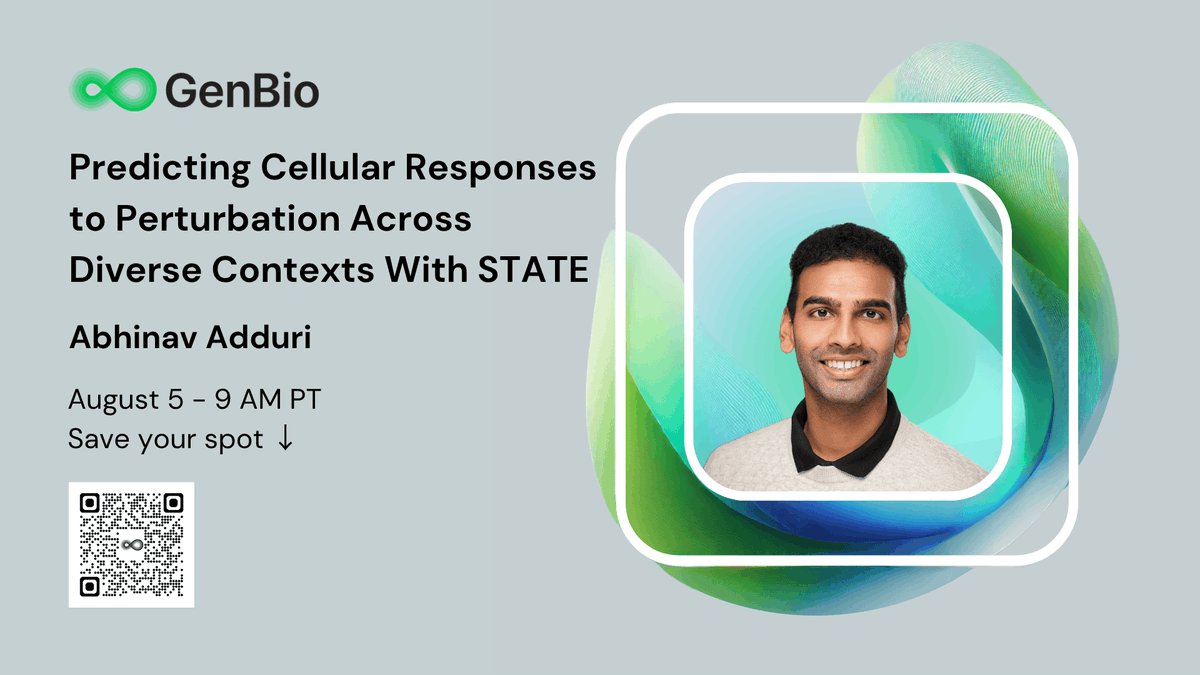
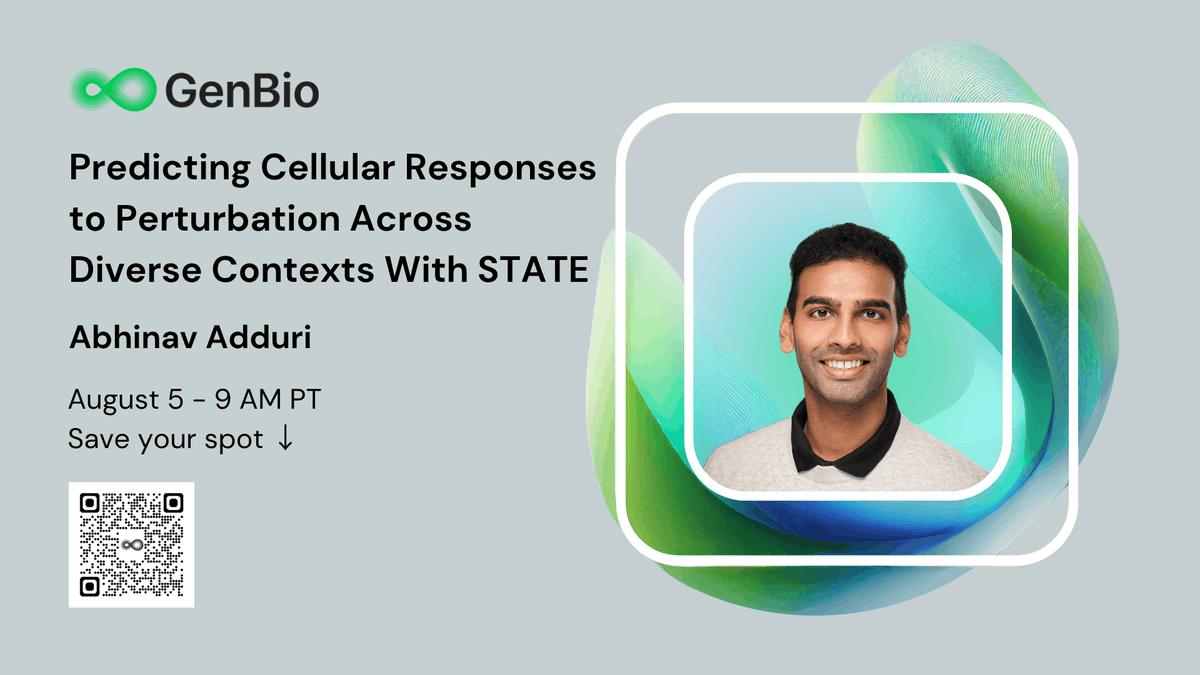
⏰ Happening tomorrow! Don’t miss the next Foundation Models for Biology (#FM4Bio) Seminar on Aug 5 at 9 AM PT.
@abhinadduri will present “Predicting Cellular Responses to Perturbation Across Diverse Contexts With STATE.” STATE is a machine learning architecture for predicting cellular responses to perturbations, trained on over 100M perturbed cells and 167M single‑cell profiles.
Secure your spot now → https://t.co/354YRl4Wyq
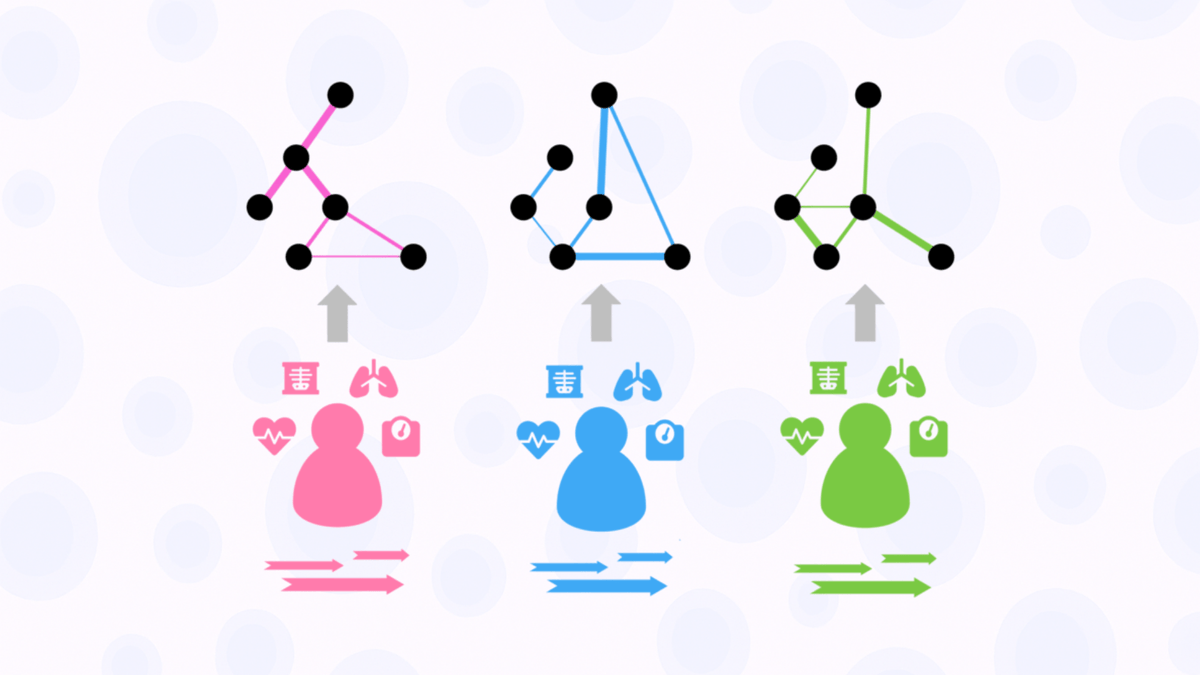
1/ How can we model each tumor’s unique biology instead of relying on one-size-fits-all approaches?
In our latest blog post, we highlight findings from the recent PNAS paper with GenBio AI Research Scientist @probablybots and Co-Founder and Chief Scientist @ericxing, showing how contextualized networks pave the way for an interactome module in AIDO.
📡🧬 Join us for the next #FM4Bio Seminar on Aug 5 at 9 AM PT featuring @abhinadduri
Abhi will present “Predicting Cellular Responses to Perturbation Across Diverse Contexts With STATE.” This work introduces a machine learning architecture that predicts cellular responses to perturbations across diverse contexts with over 50% improved accuracy, enabling scalable development of virtual cell models.
🔗 Save your spot → https://t.co/354YRl4Wyq