Let's talk Vehicle Dynamics Control (VDC). With high resolution sensing and precise multi-motor controls developed in-house, the Tesla Semi provides torque and stability even on the trickiest of winter surfaces.
For any hotels thinking about putting chargers in your parking lots, or garages. It actually works better if you put them in the back of the parking lot so that they are usually always available for charging. If you put them in the front where the entrance to the building is, large ICE vehicles love to use them.
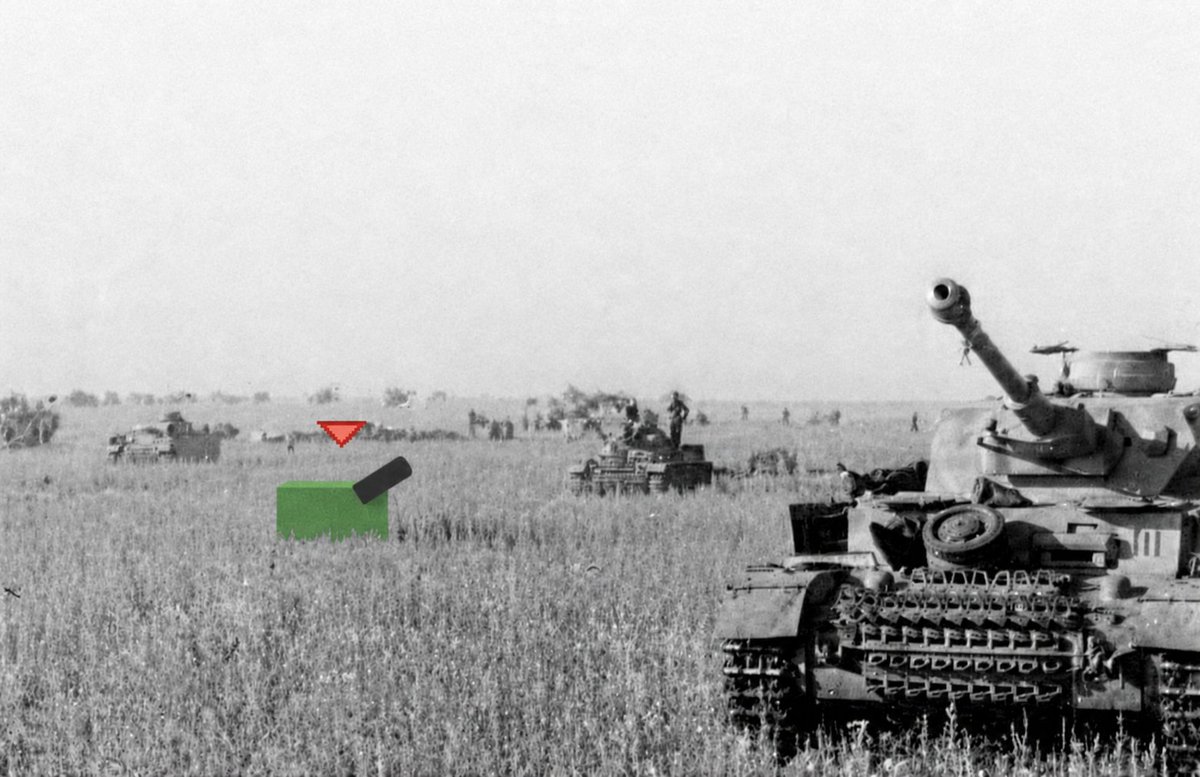
new @tanksdotfun release
- now on hyperEVM, bet with stablecoins
- match replays, sharable with a link
- stock, up to 5
- custom avatars
- bots reloaded with 500 USDH
sign up with twitter and play for free at https://t.co/4zxPfYX1kJ, no gas needed
Tesla FSD v14.3: The Removal of a Bottleneck
Most people looking at FSD v14.3 see a familiar story: incremental improvement. A bit faster, a bit smoother, a bit more refined. The headline number - roughly 20% faster reaction time - sounds like a solid upgrade, but nothing revolutionary.
That interpretation misses the point entirely.
v14.3 is not about improving the model. It’s about replacing the system underneath the model.
To understand why this matters, you have to separate two parts of Tesla’s AI stack.
First, there is the training environment. This is where Tesla uses massive compute clusters to build increasingly powerful neural networks. In this environment, the models can be as large and as sophisticated as Tesla wants.
Second, there is the runtime environment inside the car. This is where those models actually have to operate - in real time, under strict constraints of compute, memory, and latency.
Historically, the gap between these two worlds has been a major constraint.
Tesla could train a highly capable model on the server side, but when it came time to deploy that model into the vehicle, compromises were unavoidable. The model had to be compressed, simplified, and optimized to fit within the limitations of the vehicle hardware. In the process, some of its capability was inevitably lost.
The result was not a lack of intelligence, but a bottleneck in how that intelligence was delivered.
With v14.3, Tesla rebuilt both the compiler and the runtime from the ground up using MLIR (Multi-Level Intermediate Representation).
The compiler is responsible for taking a trained model and translating it into a form that can run efficiently on the vehicle. The runtime is responsible for executing that model in real time inside the car.
By rewriting both layers, Tesla has fundamentally improved how models are converted and how they are executed.
This is why the improvements show up not just in raw speed, but in qualitative behavior. Early testers are reporting smoother responses, more natural decisions, and a noticeable increase in responsiveness. These are not just signs of a better model - they are signs of a better system delivering that model.
For the past several versions - v12 through v14 - progress was largely driven by improving the model itself. But the underlying inference framework remained largely the same.
That meant progress was increasingly constrained. Even as the model improved, the system responsible for running it became the limiting factor.
So, v14.3 marks a shift in approach.
Instead of continuing to push only on model performance, Tesla upgraded the entire stack. The focus is no longer just on how smart the model is, but on how efficiently that intelligence can be translated and executed in the real world.
Elon Musk has referred to this kind of change as a “final piece of the puzzle.” That phrasing can be misleading if interpreted as an endpoint.
In reality, this is a reset.
By replacing the underlying system, Tesla has removed a key constraint that was limiting future progress. The implication is not that FSD is complete, but that future versions - v15, v16, and beyond - can advance much more rapidly and with fewer compromises.
In practical terms, this means larger, more capable models can be deployed more effectively. It means improvements made in training are more likely to carry through to real-world performance in the vehicle. And it means iteration cycles can accelerate.
One of the more underappreciated aspects of this change is its potential impact on existing vehicles, particularly those running HW3.
The new MLIR-based system is designed to take better advantage of available hardware through techniques like quantization, operator fusion, and heterogeneous optimization. In simple terms, it allows Tesla to extract more performance from the same physical chips.
A potential “v14 Lite” for HW3 vehicles: With a more efficient runtime, older hardware may be able to run more advanced capabilities than previously thought possible.
So, the real story here is that Tesla has addressed a structural limitation in its AI system. It has improved the way intelligence is packaged, delivered, and executed. This is not just an upgrade. It is the removal of a bottleneck.
v14.3 should not be viewed as the culmination of Tesla’s FSD efforts. The visible changes today may seem incremental. The invisible changes beneath them are anything but. Tesla did not just make the system faster. It made it ready for what comes next.