I’m a retired brain surgeon and I wanna tell you why you feel like life is passing by. I just need one minute to explain this to you so hang in there.
Repetitive daily routines stop the brain from recording clear detailed memories. When every day looks the same, your brain does not track time the same as a clock does. It tracks change. If nothing new happens then days, months, and years start to blur together.
This is know as Time compression. When life lacks variety, your brain compresses past days together, making it feel like time is sped up.
To stop feeling like life is passing you by, add new experiences to your life. Break routine habits, like changing your daily home routine, taking a different route to work, or trying a new hobby.
Schedule small trips or plan new adventures so your days do not blend together.
Practice mindfulness by staying fully focused on what you are doing right now and not trying to race off to the next task.
Keep a journal and write down happy memories or memorable parts of the day before you go to sleep.
Take deep, calm breaths when you feel anxious or rushed to return your focus to the moment.
You can and you will retrain your brain to not feel like life is passing you by by following these few simple measures.
आज मैंने 13 वर्षों की अविस्मरणीय यात्रा को अपनी इच्छा से विराम देते हुए IAS से त्यागपत्र दे दिया है।
साधारण परिवेश में पलते हुए मैंने एक अच्छे, सफल जीवन का सपना देखा था। दिन-रात एक कर IIT दिल्ली और IIM बैंगलोर से पढ़ने के बाद, लंदन में नौकरी लग गयी। पर 'सब कुछ' पा लेने पर भी कुछ अधूरा था। अपने देश में न होना खलता था। मेरी पढ़ाई, आत्मविश्वास, दुनिया में कहीं भी सिर उठाकर चलने की ताक़त, सब इस मिट्टी का कर्ज़ था मुझ पर। वो कर्ज़ चुकाना था। चाहती थी जिस भारत का सपना देखा था, उसे बनाने वाली ईंटों पर मेरे भी हाथों के निशान हों। सो लौट आई, और IAS अधिकारी बनने का सौभाग्य मिला।
बहुत कुछ करने का मौका मिला और बहुत सीखा। देवरिया ने सिखाया कि सही के साथ खड़ा होना विकल्प नहीं, कर्तव��य है। मीरजापुर ने सिखाया कि 'असंभव' कोई तथ्य नहीं, बस एक राय है। और माँ विंध्यवासिनी के चरणों में बैठकर सीखा कि शक्ति किसी पद से नहीं, उनकी कृपा और लोगों के विश्वास से आती है। सबसे बड़ी सीख यह थी कि अपने लिए देखे सपने तो पूरे हो चुके थे, अब अपने लोगों के लिए देखे सपनों को जीना था। इस जीवन का असली सुकून उन आँखों में दिखा, जिस परिवार को पहली बार ज़मीन का हक़ मिला, जिस दिव्यांग को सम्मान से जीने का अवसर ���िला, और जिस किसान के खेत को पानी मिला। उनके संघर्षों में साथ चलते हुए मैंने सीखा कि हर सरकारी फ़ाइल के पीछे एक व्यक्ति है, और उसकी गरिमा बनाये रखना ही न्याय है।
मूर्ख थी जो सोचा था कि कुछ देने आयी हूँ। सच यह है कि सबसे ज़्यादा मैंने ही पाया, और वो कर्ज़ और भी बढ़ता गया��� लोग मेरी ख़ुशी में मुझसे ज़्यादा ख़ुश हुए। उन्होंने मुझे तब भी उसी विश्वास से देखा, जब मैं खुद ही थकी या टूटी थी। और इसी ने आगे बढ़ते रहने की हिम्मत दी। इतना प्यार, इतना सम्मान, इतना अपनापन मिला, कि मेरी झोली पूरी भर गयी। और इसमें उन साथियों, अधिकारियों और कर्मचारियों का भी बहुत बड़ा श्रेय है जिन्होंने मेरे कंधे से कंधा मिलाकर काम किया और साथ डटे रहे।
आज आभार से आँखें नम हैं। बस एक दृश्य इनमें बसा है। लहुरिया दह की पहाड़ी की वो वृद्ध माँ, जो अपने गाँव में पहली बार पानी पहुँचता देख कुछ नहीं बोली, बस काँपते हाथों से मेरा सिर छूकर आशीर्वाद दे गई। पद तो आज छूट गया, पर वह स्पर्श जीवन भर नहीं छूटेगा। और वह सपना भी नहीं छूटेगा, जो देश की इस मिट्टी ने मुझे दिया है।
आपकी अपनी,
दिव्या मित्त��
One of the best recent podcasts on AI. Neil has a gift for explaining all of the jargon and insights simply.
(I’m not involved, just found it unusually educational).
I have seen patients in their 90s even 95 walk into the hospital, answer every question themselves and leave without anyone holding their hand.
Whenever I meet someone ageing that well, I pay attention.
Five habits stand out:
1. KEEP A PET
When you buy your next pair of spectacles, don't merely check whether the frame looks good on your face. Also check if it sits well.
One small but important detail is called pantoscopic tilt.
Look at yourself from the side while wearing your spectacles. Ideally, the frame should not sit perfectly vertical like a wall.
The bottom of the spectacle frame should usually be slightly closer to your cheeks than the top. This slight forward tilt is called pantoscopic tilt.
How much tilt is normal?
For most spectacle wearers, a pantoscopic tilt of approximately 8–12 degrees is commonly considered appropriate. The exact amount can vary depending on your face, frame, prescription and the type of lenses.
Why is it important?
Your spectacle lenses are designed to work best when you look through their optical centre or the viewing zone. If the frame sits at the wrong angle, the lens position in relation to your eyes can change.
This becomes particularly important if you have:
1. A high spectacle power
2. Progressive or multifocal lenses
3. A strong cylindrical power
4. Special occupational lenses
Too much or too little tilt can sometimes affect visual comfort and may contribute to blur, distortion or difficulty adapting to the glasses.
What can you check when buying spectacles?
Put on the frame and look at yourself from the side. Ask:
Is the frame sitting slightly tilted forward, with the lower rim a little closer to my face?
Also check whether:
*The frame is not touching your cheeks.
*Your eyelashes are not constantly touching the lenses.
*The frame is sitting comfortably on your nose.
*The lenses are positioned correctly in front of your eyes.
*The frame does not slide down when you look down.
Again, don't assume that a frame sitting straight is necessarily sitting correctly.
#myopia
Image from google
Osteoporosis has become so normalised in Indian households, especially among women past 40, that it barely gets a second thought. But women can lose up to 20% of their bone density in just the first 5-7 years after menopause.
That's a lot, and most people don't know it's happening this fast. They start taking calcium supplements at random dosages, nobody really checks if any of it is working. It doesn't have to be this vague. Here's what's actually going on, and what can be done about it.
1. Improve calcium absorption. Tea and coffee contain compounds that interfere with it, so keep a gap of atleast an hour between your chai/coffee and calcium rich meals.
LEARNING AGENTIC AI 🔖
Stanford Launched full free course of Self Improving AI Agents 🤖 🤖
Best 9-lecture practical series on building self improving agents on YouTube
Bookmark, Learn and share - good karma 👍
Link - https://t.co/d8BnWvfWcR
Follow @DealsDhamaka 🙏
Sam Altman (CEO of OpenAI):
"You no longer need to write prompts."
In just 38 minutes, he explains how to use ChatGPT at a level that most people can't even imagine.
It's a talk he gave to Stanford students. A friend sent me the recording last night.
After watching it, I realized I was only taking advantage of about 15% of what this tool can really do.
Watch it in full and then read the guide I leave below on how to create a system that prompts itself.
Follow @AnishJaitwar for more
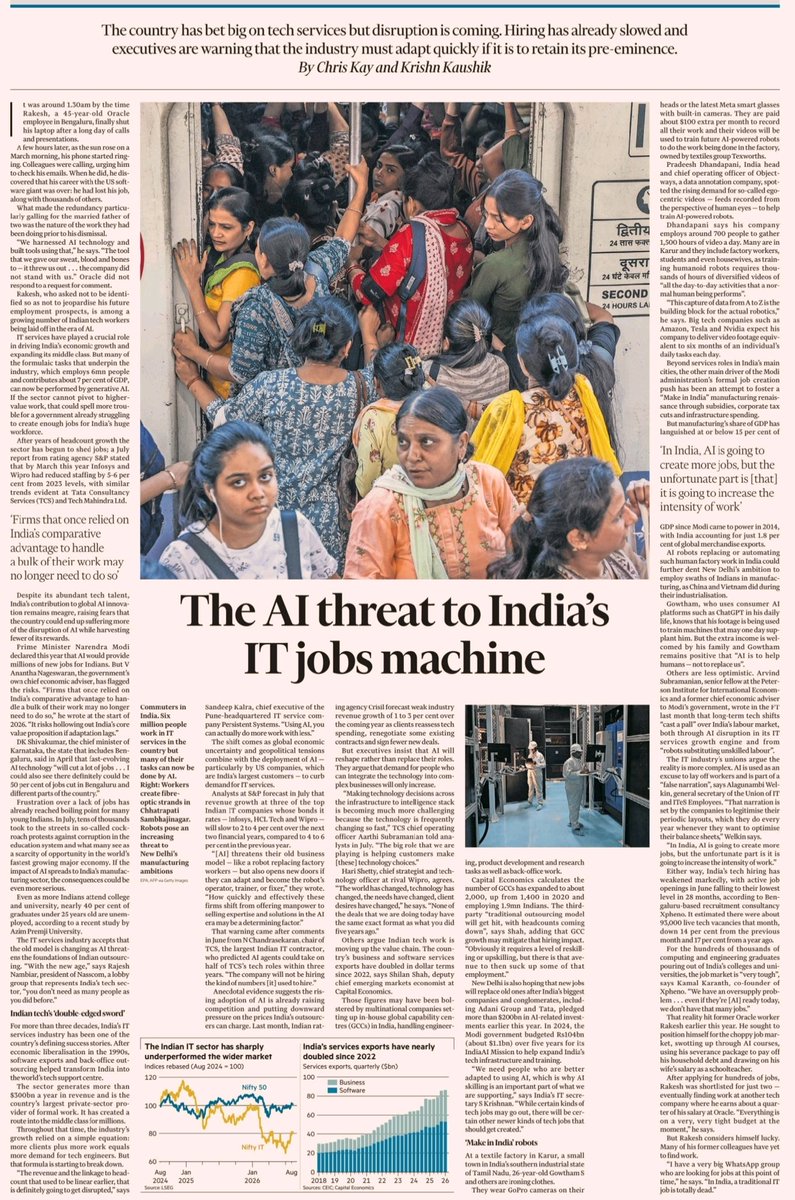
Advice for people in tech.
> Keep an emergency fund of 9-12 months with you
> Avoid taking loans, unless necessary
> Upskill post job hours, in weekend, whenever you can
> Take the job that comes your way if pay is decent
> Be interview ready as much as possible
> Ask for work, if you feel you aren't contributing enuf
Consider yourself lucky if you a job, tough times for people who haven't upskilled much in last few years.
90% of Java in 2026 is still 10 concepts, done under load, deploys, and on-call:
1) JVM memory model + GC basics. Know heap vs off-heap, allocation rate, and why fixing pauses can increase CPU.
2) Threads, pools, and virtual threads. Understand blocking vs async, pinning, and how a bad pool size turns into p99 latency.
3) Exceptions and failure semantics. Checked vs unchecked matters less than consistent mapping to retries, 4xx/5xx, and idempotency.
4) Collections + complexity. HashMap/ConcurrentHashMap behavior, iteration costs, and why accidental O(n²) shows up at 10M rows.
5) I/O and backpressure. Sockets, timeouts, connection pools, and how unlimited concurrency melts downstreams.
6) Dependency management. Maven/Gradle locking, BOMs, shading, and the real pain of CVEs and transitive conflicts.
7) Debugging in prod. Thread dumps, heap dumps, JFR, async-profiler; learn to answer why CPU is 400% without guessing.
8) Observability design. Structured logs, trace IDs, RED metrics, and sampling that still catches rare 1% failures.
9) Security hygiene. TLS validation, secrets handling, deserialization risks, and why JWT bugs become auth outages.
10) Data access tradeoffs. JDBC vs ORM, N+1, transaction boundaries, and the classic mistake: holding DB locks while calling another service.
[generated using my AI agent, hope this was useful]
Roadmap to get 40 LPA in the next 6 months:
• Master DSA until solving hard problems feels normal.
• Build 3-4 production-ready projects, not tutorial clones.
• Learn System Design from the basics.
• Get comfortable with Low-Level Design.
• Strengthen CS fundamentals (OS, DBMS, CN, OOP).
• Become really good at one backend and one frontend stack.
• Write clean, maintainable code every single day.
• Practice mock interviews every week.
• Contribute to open source.
• Optimize your resume and LinkedIn.
• Network with engineers instead of only applying.
• Apply consistently without waiting to "feel ready."
This is the roadmap everyone shares.
Now the reality...
I wrote this entire thread, but even I don't know how to get 40 LPA.
At this point, even getting a 3.6 LPA developer job feels like a dream.
That's the current market.
I want to create a small group of nerds who'll motivate each other to learn, build, and stay consistent every day. 🚀
If you're into AI/ML, Data Science, Full Stack, Cloud/AWS, DevOps, or DSA and are serious about growing your career, drop a comment.
Q3 REMINDER !!
Minimum salaries as per experience in software development in India that you should aim for in 2026 :
2 years experience - 10 LPA
5 years experience - 22 LPA
7 years experience - 30 LPA
10 years experience - 42 LPA
12 years experience - 50 LPA
15 years experience - 70 LPA
I think these are the minimum numbers that you should be looking at. If you are earning below this , you need to fix it.
Before investing in a mutual fund, understand how the fund manager invests.
1] S. Naren - ICICI MF
Contrarian investing, dynamic asset allocation & valuation driven decisions.
2] Rajeev Thakkar - PPFAS MF
Long term value investing focused on quality, margin of safety & capital preservation.
3] Samir Arora - Helios Capital
Elimination based investing by avoiding weak businesses before selecting winners.
4] Sunil Singhania - Abakkus MF
GARP - Growth at a Reasonable Price, investing in scalable businesses.
5] Sandeep Tandon - Quant MF
VLRT framework. Valuation, Liquidity, Risk & Timing, with data driven allocation.
6] Shailesh Raj - Nippon MF
Quality growth investing in scalable businesses at reasonable valuations.
7] Ajay Khandelwal - Motilal Oswal
QGLP - Quality, Growth, Longevity & Price. Investing in high quality businesses with long growth runways.
If you had to pick one, which investing philosophy would you choose?
Why your phone use may be making your neck age faster
Your phone might be giving you a "phone body", a cluster of posture and nerve issues doctors are now seeing in patients as young as their 20s.
Tilting your head ~45° to scroll adds an estimated 22kg of load on your neck.
A thread on what is happening and how to fix it.
1/n
(Credits: @TOIIndiaNews, Eshan Kalyanikar)