A mathematician at Bell Labs noticed that the scientists who won Nobel Prizes and the ones who never amounted to anything were equally smart, equally hardworking, and equally credentialed, and the only thing that separated them was a single question almost nobody is brave enough to ask themselves before they die.
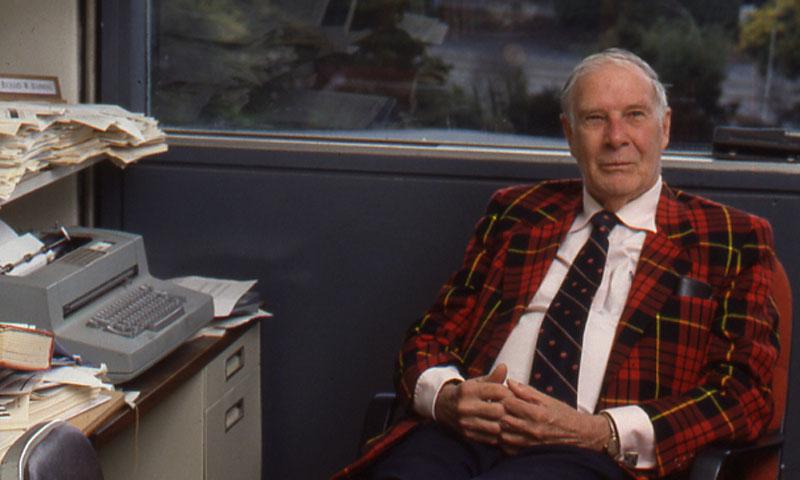
His name was Richard Hamming.
He spent 30 years at Bell Labs, in the same building as John Tukey, Walter Brattain, and a long list of physicists who took home Nobel prizes for work they did down the hall from his office, including the legendary Claude Shannon.
His invention of error-correcting codes made modern computing possible. He has won the Turing Award. And all the while he was creating his own legacy he was secretly doing a study on the people around him.
The study was straightforward. 2 Teams. The legends and the lost. Same I.Q.s. Degrees same. Same desk hours. Same access to the world’s best resources.
And yet, at the end of 40 years in their careers, one group had changed entire fields, and the other group could not be remembered by their own colleagues five years after retirement. He wanted to discover what the actual difference was.
In March 1986, he stood before 200 researchers in a Bellcore auditorium and told them what he had seen.
He said it all came down to one question. And hardly anyone he ever met was willing to ask it directly.
He called it the Friday-afternoon ritual. He spent years blocking out his Friday afternoons and not doing anything productive with them every week. No experiments. No meetings. No deliverables.
He called it Great Thoughts Time. He sat down with a notebook and asked himself a couple of questions in order. What are the most relevant problems in my discipline? And why I am not working on either of them.”
Most weeks, the answer was the same, he said. For a week now he had marched confidently in a direction he did not think was the most important direction. He was a goer. He worked a bit. He was getting clean results that would publish in respected journals. (
And for five days straight he'd been lying to himself about whether any of it mattered.
The reason almost nobody does this ritual is because the honest answer is unbearable. The thing is that if you sit down on a Friday afternoon and say out loud that you are not working on the most important problem in your field, now you have to do something about it.
You have an immediate change in direction, or you have to keep lying to yourself every week from that point on. Most people choose the lie.
In the short term it’s cheaper, but over a career it’s more expensive.
Hamming took the ritual a step further in the Bell Labs cafeteria. He began approaching scientists he barely knew, asking them what they thought the most important problems in their field were.
A week later he would ask them why they had not worked on these problems. Eventually people wouldn't have lunch with him. “I had to keep finding new tables,” he said.
Nobody had a good answer for that, and being around someone who kept asking it made every meal feel like a performance review.
The line that broke me is the line that most people skim over in the transcript. His words: If you do not work on an important problem you are unlikely to do important work.
That’s not motivational line. It is a rational one. You cannot make a great result from a problem that does not matter. Input restricts the output. The choice of the problem is the ceiling of the career.
The transcript has been freely available on the internet for almost 40 years. Stripe Press published the complete lectures as a book. Naval Ravikant quotes it all the time. It’s still given out to new hires at every serious engineering lab in Silicon Valley.
Most people will not run the ritual this Friday. They will be busy. They always are.
Dear Mr. Armin Papperger, CEO of Rheinmetall,
When you referred to Ukrainian drone manufacturers as “Ukrainian housewives with 3D printers” you revealed just how deeply the European defense establishment still fails to understand the nature of modern warfare.
This is not about emotion. It is about battlefield reality. Here are the facts your industry refuses to acknowledge:
In 2025 alone, Ukrainian drones carried out 819,737 confirmed strikes. They caused 90 percent of all Russian combat losses, more than all other weapons systems combined.
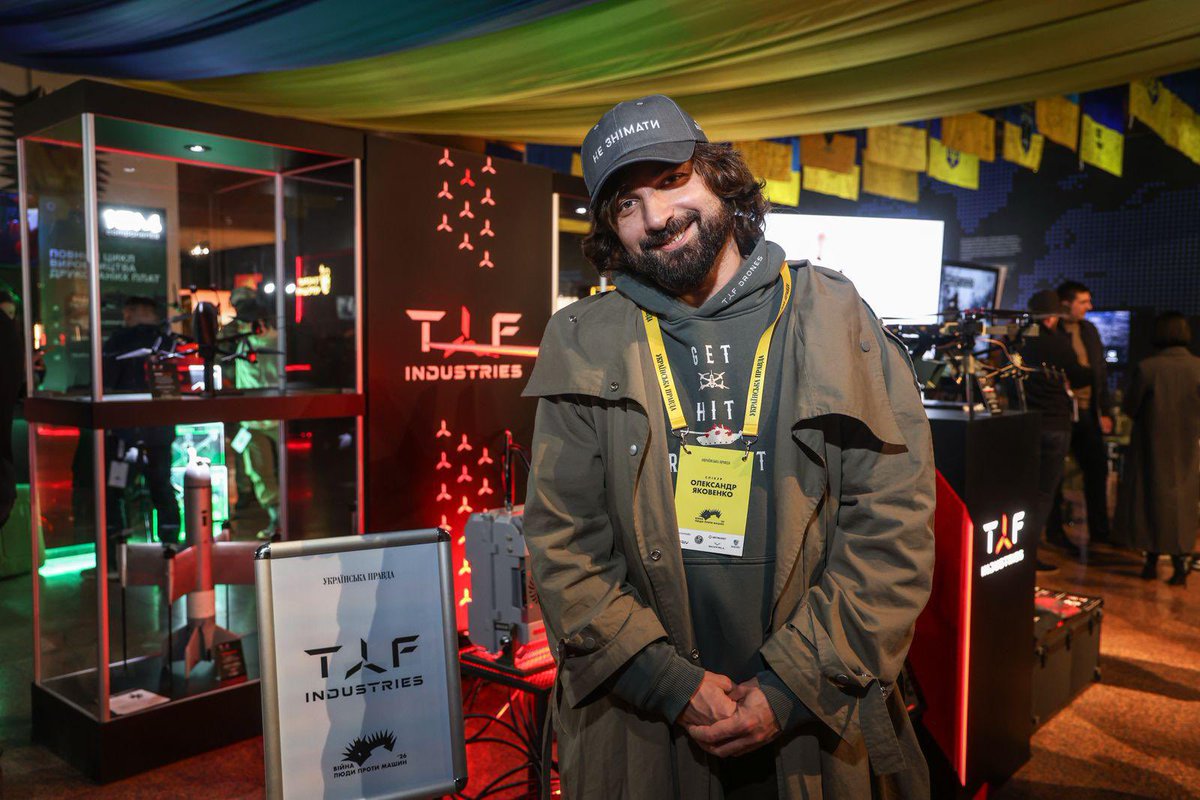
TAF alone produces up to 100к FPV drones monthly. In any given 90-day period, my company’s products alone achieve more confirmed strikes than your entire fleet of equipment has across its full combat history in every conflict. And most importantly, I built this company and achieved these results in two years, not fifty. Think about that.
Our drones generate more kinetic effect in three months than your flagship platforms have in half a century.
Why? Because the battlefield has changed, and your business model has not.
•Russian electronic warfare has made GPS-guided Western munitions such as Excalibur and GMLRS nearly ineffective.
•Expensive and complex systems designed for wars with air superiority and traditional peer-to-peer combat have become easy prey for drones costing $500, attacking them from above.
•The cost-to-effect ratio has been turned upside down: one 120 mm Rheinmetall shell or one anti-tank missile costs more than a dozen of our drones, and yet our drones still win.
This is not a “Lego game.” It is industrial Darwinism in real time. We iterate every week. We print parts in basements and ship 100к strike systems per month, while your engineers still require three to five years and hundreds of millions of euros in certification costs for even a minor upgrade.
The war in Ukraine is not a temporary anomaly. It is the first true drone-industrial war. And it has already proven that outdated European platforms, no matter how expensive or “serious” they may seem, are becoming less and less relevant unless they integrate the very technologies you mock.
So when you say, “this is not innovation,” I hear something else: “We do not want to admit that the future is being written in Ukrainian workshops, not in Düsseldorf boardrooms.”
#MadeByHousewives is trending for a reason. Because these “housewives” destroy more enemy equipment every month than entire European armies do in full campaigns. And they do it while your industry continues to sell 20th-century solutions at 21st prices.
The invitation remains open, Mr. Papperger. Stop laughing at the kitchen table. Come and learn how tomorrow’s war is actually being fought. Because the next time someone asks, “Who needs tanks in the age of drones?”, the answer may be simpler than you think: Whoever still believes in 1979 will lose to whoever is building in 2026.
With respect, but with facts,
Oleksandr Yakovenko “Ukrainian housewives”
Founder TAF
Germany Energy Minister Katherina Reiche:
The phase-out of nuclear power was a huge mistake — a huge mistake.
We now miss that energy.
So, the only way to secure supply is gas.
Everyone is watching the oil price. Nobody is watching the water.
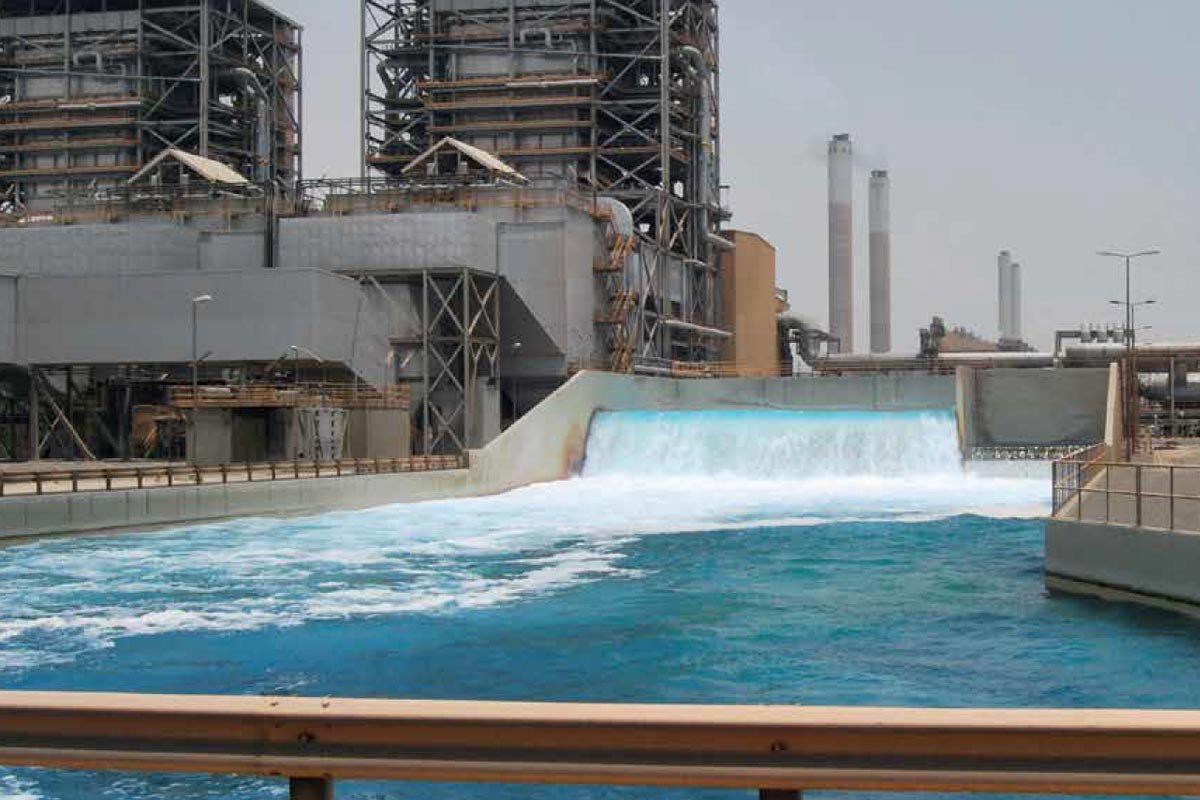
Eight of the ten largest desalination plants on earth sit on the coast of the Arabian Peninsula. They produce roughly sixty percent of all desalinated water on the planet. One hundred million people drink what these facilities manufacture from seawater every single day. Kuwait gets ninety percent of its drinking water from desalination. Oman eighty six percent. Saudi Arabia seventy percent. Without these plants, the most powerful petroleum states on earth become uninhabitable within days.
On March 2, Iranian missile debris struck a power station in Fujairah that feeds one of the world’s largest desalination facilities. Interceptor fragments started a fire at Kuwait’s Doha West power and water desalination complex. Neither plant was destroyed. Neither was directly targeted. Both incidents were classified as collateral damage from nearby interceptions.
That distinction is the most important signal in the entire war and almost nobody has framed it correctly.
Iran has the coordinates of every desalination plant in the Gulf. The IRGC has struck Fujairah, Kuwait City, Riyadh, Abu Dhabi, Doha, and Bahrain with ballistic missiles and drones over the past seven days. It has hit refineries, military bases, embassies, and power stations. It has not hit a single desalination plant directly.
This is not incompetence. This is calibration. Iran is telling the Gulf states something without saying it aloud: we can turn off your water supply whenever we decide the cost of restraint exceeds the cost of escalation. The near miss is the message. The power station next to the plant burns while the plant itself keeps running. That is not an accident. That is a threat delivered with engineering precision.
Now connect this to the structural fact that changes the entire risk calculus. Iran’s military operates under Mosaic Defense doctrine, restructured after studying America’s decapitation of Iraq in 2003. Thirty one autonomous provincial commands, each with independent targeting authority, each designed to continue fighting without orders from Tehran. Khamenei is dead. The central command that decided which targets to strike and which to spare has been destroyed. The restraint on desalination was a centralized strategic decision. The commanders who now hold independent authority over regional missile batteries inherited that restraint. They are under no institutional obligation to maintain it.
In 1991 Iraq pumped crude oil into Kuwait’s desalination water intakes during the Gulf War. Kuwait imported 750 emergency water tankers. Recovery took years. The Gulf states in 2026 are orders of magnitude more dependent on desalination than Kuwait was then. The population is larger. The consumption is higher. The alternative freshwater sources are zero.
The oil market is pricing a supply disruption. It is not pricing the possibility that the Persian Gulf’s most critical infrastructure is one autonomous IRGC commander’s targeting decision away from turning the richest countries on earth into humanitarian emergencies.
The restraint is the weapon. And the hand that held the leash is dead.
https://t.co/ULBgEzZ3A8
@garyadshade@mario4thenorth Advance/Official variance in Nov, Dec both 0.1%.
Official #s:
Feb +0.2% 72.9bn
Mar -1.4% 71.9bn
Apr -2.8% 69.6bn
May -0.9% 68.7bn
Jun +0.3% 68.5bn
Jul +2.5% 70.3bn
Aug -1.0% 69.4bn
Sep +3.3% 72.1bn
Oct -1.0% 71.5bn
Nov -1.2% 70.8bn
Dec +0.6% 71.0bn
Jan: -3.2/-3.3%, 68.7bn
Bad.
@Tablesalt13 Cut her some slack. She brought Justin down; for that she deserves our gratitude. Rhodes CEO gig starts July 1. She's resigning as an MP in the next few weeks. Her future token job is shilling to help rebuild a country infrastructure destroyed by war; not exactly a glamour gig
@ikwilson It is now Jan 2026. Next BC election must occur by Oct 2028. TMX expansion opportunities using Drag reducing agent + pump stations could accommodate 2-300k additional capacity thru 2030. Post Eby BC will be in place for it.
My Venezuela experience as head of trading in the region for Cargill.
Cargill was/is the leading producer of critical staple ingredients such as flour, pasta, vegetable oil, and rice in VZ. I am not saying I agree with grabbing the dictator, but I did have a front row seat to the damage a kleptocracy did to innocent people.
1. The government took over our "minute rice" facility at gunpoint because we were "gouging" the nation's poor. The government was never able to run the plant. It never ran again. It was returned years later with no equipment inside
2. There are 1000's of generals in the army. They are each given a slice of the economy to loot. The large number of generals made it difficult to organize a coup against the regime.
3. The government opened grocery stores and sold staples below the cost we sold them to the government. In theory they used petro oil money to lower grocery prices. Our regular grocery outlets were forced out of business. When the government demanded we sell them products below cost we simply had to shut down. The populous became ever more dependent on the government handouts. (PS this is the mayor of New York City's proposal.
4. Dollars- We needed dollars to go buy raw materials like wheat from places like the US and Canada. The government would periodically allocate us some dollars that could only be spent for raw materials and freight. Eventually only the local companies that can and would pay bribes got dollar allocations. We had several facilities closed for lack of raw material
5. My employees liked working for Cargill. The office was an armed compound with access to a gym, high speed internet, global communications, and a weekly box of basic staples. Cargill provided a safe and secure environment if only for the working hours.
6. Employees became very close to others inside the apartment building. Going out on the street with a desperate population was not advisable.
7. I needed wood pallets for feed. We tried to export wood pallets to swap for grain. We refused to pay the bribes it would take to export the pallets
8. I once tried to set up a closed loop wheat planting to flour mill supply chain. A. They came and stole all the seed wheat for food. When we tried to ship in seed wheat in containers via US donors there was no way to get it out of the port without it being stolen
9. Livestock- Our feed business completely collapsed. Even if you could raise a pig, you couldn't defend it from being stolen. People with guns were hungry.
10. Employees- In the end my highly skilled team alone with other highly educated people chose to leave. Cargill often found jobs for them in other Latin countries. The regime was more than happy to see the well-educated leave the country. Setting these employees up with high quality stable jobs after fleeing remains one of the best things I ever did in my career. No one remembers millions in trading earnings.
This is a short list. In my opinion the first money spent needs to happen now and it needs to be food. The US is already on the clock. The current regime does not care if it starves the population. The orgy of theft will actually accelerate if they believe their days are numbered. VZ should be an outstanding customer of US grown ag products. Rice, bread wheat, veg oil ect. Feed the people first.
Jeff Kazin
Former head trading Cargill
Canadian implications? Canadian Heavy oil and Venezuelan aren't that different, I believe that Venezuelan is less sour. Largely interchangeable in the Gulf coast refineries.
Trump will not leave. He wants the oil assets back & to get paid for past expropriations, rightly so. That’s the strategy, in black & white.
PS: I’ve just expanded my previous write up now due to the presser Q&A. Please re-read & be very bearish oil.
https://t.co/OTtL0uOFWh
If you are curious why the Fed is once again choosing to favor growth over price stability, Read Arthur Burns from 46 years ago…
The Fed has completely lost its bearings and is no longer in control. The emperor has no clothes.
Powell’s uncertainty in the presser & his clear resignation to what has become a rudderless political process is clear.
The 🌎 where the simple 2 dimensional lever of monetary policy could reasonably be expected to navigate between growth & price stability is gone.
Enter the 1970’s👇