Satya Nadella says LinkedIn merged four job titles, product manager, designer, front-end engineer and back-end engineer, into one:
"I'll give you at LinkedIn, we used to have product managers, we had designers, we had front-end engineers, and then we had back-end engineers and so on."
"So what we did is we sort of took those first four roles and combined them. In fact, increased scope and said, they're all full-stack builders."
"So at the same time, as you can imagine, if we're to build an AI product today, there's a complete new workflow, right? It starts with evals, right?"
"So basically, there's this eval to science, to infrastructure."
"And so evals are done by these full-stack builders and what have you and product managers in the new form, the infrastructure is built by the systems engineers at the back-end because they support the science that supports the product."
"So in some sense, there's a new loop and you have to structurally change."
LinkedIn has already put this into hiring. Its Associate Product Manager program is finished, and the replacement, the Associate Product Builder track, teaches code, design and product management at the same time.
Evals sit at the front of that workflow rather than the end, so writing them is now part of building the product instead of a check before shipping.
- Satya Nadella (@satyanadella), Chairman and CEO of Microsoft (@microsoft), with the All-In Podcast (@theallinpod) at USA House, Davos 2026.
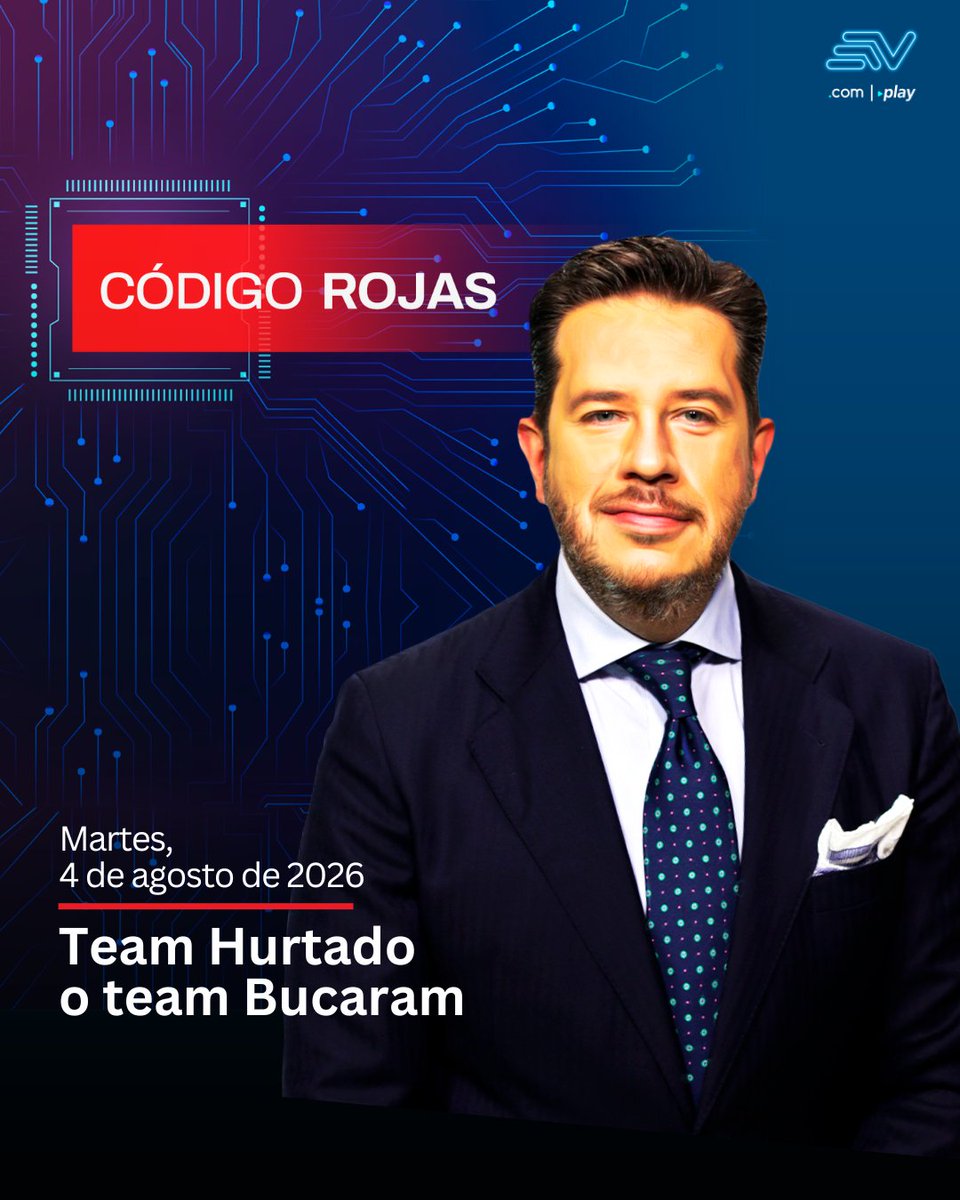
#OPINIÓN ✍️ ¿Algún legislador de ADN se ha tomado la molestia de exigir a los jueces que no haya más dilaciones en el caso Bucaram sobre la comercialización de las pruebas Covid o a los periodistas de Radio Centro se les ha sentido tan indignados por estas triquiñuelas como sí se les notó con las declaraciones de Osvaldo Hurtado?
Revisa el newsletter #CódigoRojas 👉 https://t.co/DlIR48BYOz
Este repositorio es una joya. Te da todos los pasos e instrucciones para proteger y asegurar tu servidor Linux.
Perfecto por si tienes un servidor propio o VPS:
https://t.co/yJD2GnXFPj
Where vitamins and minerals are stored in the body
Vitamins and minerals use different storage strategies. Some are stockpiled in organs and tissues, while others are used immediately and must be replenished often. Storage pattern explains why some deficiencies appear quickly and why a few nutrients can accumulate to toxic levels if overconsumed.
1️⃣ Water-soluble vitamins (B-complex, vitamin C)
Mostly circulate in blood and are not stored in large amounts. Excess is lost in urine, so steady intake matters. Vitamin B12 is the notable exception and is stored in the liver for years.
🟢 Example: a few weeks with little vitamin C can cause fatigue and gum irritation, while low B12 may not show up for months because liver stores buffer intake.
🟢 Example: intense sweating or diuretics can raise B-vitamin needs since these dissolve and leave with fluids.
2️⃣ Fat-soluble vitamins (A, D, E, K)
Absorbed with dietary fat and stored in liver, adipose tissue, and to a lesser extent skin. Deficiency develops slowly, and excess intake can accumulate.
🟢 Example: vitamin D stored in liver and fat can help maintain status through winter when sunlight is low.
🟢 Example: chronic high vitamin A intake from supplements can build up in the liver and cause headaches or skin peeling.
3️⃣ Major minerals (calcium, magnesium, phosphorus, potassium, sodium, chloride, sulfur)
Stored mainly in bone, muscle, and extracellular fluids. They maintain structure and electrical balance.
🟢 Example: about 99 percent of calcium is stored in bone; low dietary calcium draws from bone reserves over time, weakening bone density.
🟢 Example: magnesium is stored in bone and muscle; heavy sweating or stress can deplete it and trigger muscle cramps or irregular heartbeat.
🟢 Example: sodium and chloride are held in extracellular fluids; high salt intake increases extracellular volume and can raise blood pressure in salt-sensitive people.
4️⃣ Trace minerals (iron, zinc, copper, selenium, iodine, manganese, chromium, molybdenum, fluoride)
Required in small amounts with specific storage sites.
🟢 Example: iron is stored as ferritin in liver, spleen, and bone marrow; low ferritin reduces red blood cell production and causes fatigue.
🟢 Example: iodine concentrates in the thyroid gland to make thyroid hormones; low iodine intake slows metabolism and can enlarge the thyroid.
🟢 Example: zinc is distributed in skin, pancreas, and brain; low zinc impairs wound healing and blunts taste and smell.
5️⃣ Choline and other water-soluble nutrients
Choline is stored in the liver and incorporated into phospholipids and acetylcholine.
🟢 Example: inadequate choline raises risk for fatty liver and can affect memory because the body cannot synthesize enough to cover needs in many people.
Water-soluble vitamins are used quickly and need regular intake. Fat-soluble vitamins and many minerals can be stored for longer periods, which delays deficiency but increases the risk of buildup with excessive supplementation. The liver, bone, muscle, fat, and thyroid serve as the body’s nutrient vaults, releasing or storing what the brain and tissues need in real time.
Te busco Señor, y tu me buscas, ¿donde estas? Como a Adán me dices. Estoy en la muerte Señor, pedido. Cuanto quisiera estar contigo, cuanto quisieras estar tú conmigo, Satanás envidioso se interpone, pero cuan grande es tu Amor que todo lo vence.
Creatine and mitochondria:
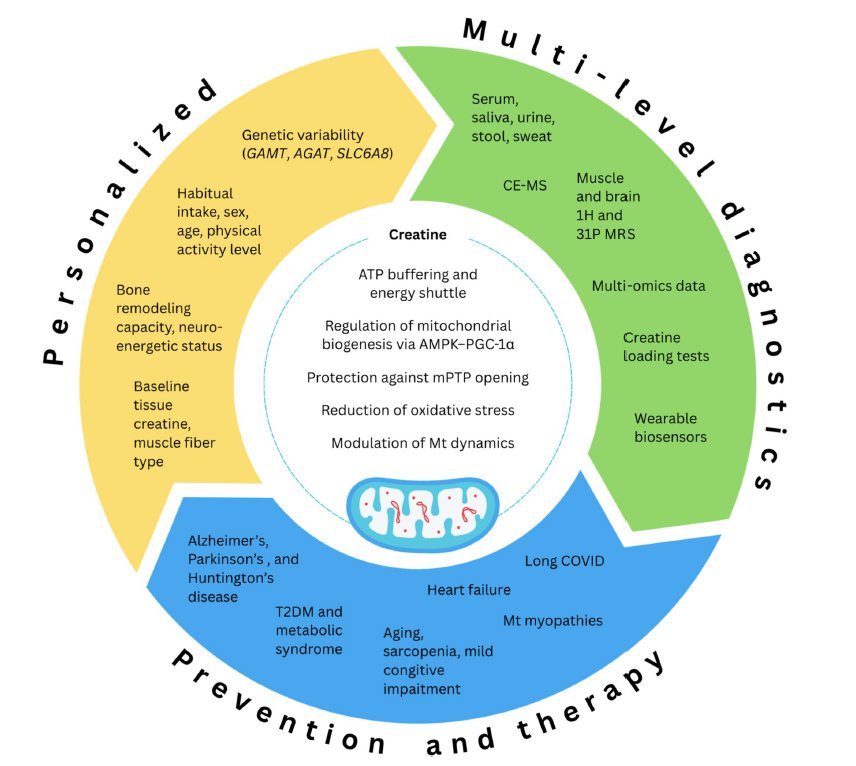
Creatine isn’t just a muscle supplement, it’s one of the body’s most important molecules for maintaining mitochondrial health. Inside nearly every cell, creatine works with your mitochondria to keep energy flowing, oxidative stress low, and membranes stable.
1️⃣ Creatine as an Energy Shuttle
Mitochondria make ATP - your cell’s energy currency. Creatine acts like a transport system, carrying that energy from the mitochondria to where it’s needed most (like contracting muscle or firing neurons).
🟢 Example: During intense activity, creatine rapidly recycles ATP so energy never runs out mid-effort.
2️⃣ Protection of the Mitochondrial Membrane
Creatine interacts directly with cardiolipin, a special phospholipid found only in the inner mitochondrial membrane.
Cardiolipin anchors key energy-producing proteins of the electron transport chain.
Creatine helps stabilize cardiolipin, preserving mitochondrial structure and preventing membrane leakage during stress.
🟢 Example: This protection supports healthy ATP synthesis and guards against mitochondrial “collapse” during energy crises.
3️⃣ Reducing Oxidative Stress
By buffering ATP and stabilizing cardiolipin, creatine reduces the buildup of reactive oxygen species (ROS) — harmful byproducts of energy metabolism.
🟢 Example: Less oxidative stress means healthier neurons, heart cells, and muscles over time.
4️⃣ Triggering Mitochondrial Biogenesis
Creatine supports the AMPK–PGC-1α pathway - the same signaling network activated by exercise and fasting.
This encourages your cells to make more mitochondria, improving endurance and metabolic flexibility.
🟢 Example: Creatine doesn’t just fuel mitochondria — it helps your body build more of them.
5️⃣ Why It Matters Clinically
These mitochondrial effects explain why creatine is being explored beyond sports - in conditions like heart failure, neurodegenerative diseases (Alzheimer’s, Parkinson’s), aging, and Long COVID.
🟢 Example: In these conditions, protecting mitochondrial membranes and energy balance may slow cellular decline.
Creatine isn’t only about strength. It’s mitochondrial support at the molecular level. By stabilizing cardiolipin, buffering ATP, reducing oxidative stress, and promoting new mitochondria, creatine helps protect the very engines of your cells.
How does energy keep us alive?
Our bodies are resistive energetic circuits where electrons flow from food→oxygen in our mitochondria. It's only through energy resistance (éR) - like electrical resistance - that transformation of energy into life is possible.
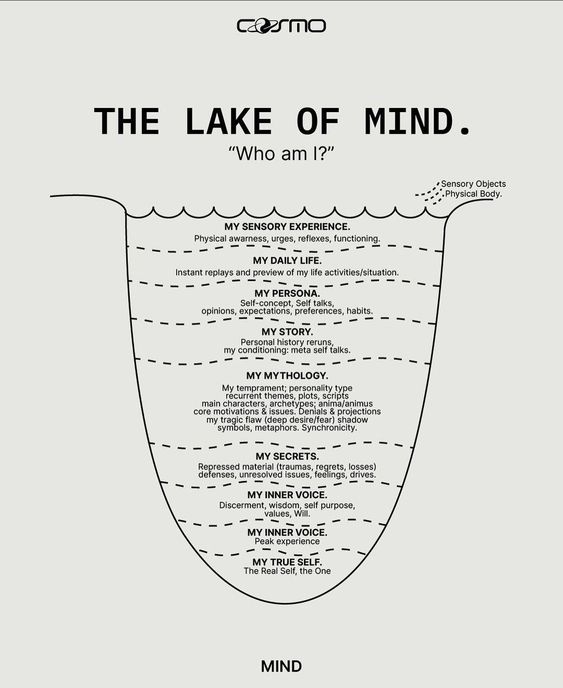
The Energy Resistance Principle ⎸ ERP explains how this happens. In this paper, we cover the implications of fine-tuning éR for health, disease, aging, and the human experiences make up the mind.
https://t.co/gjVRvA5q9K
They told you Warburg metabolism means cancer. Broken mitochondria, rogue glycolysis, but guess what? Your own eye proves them wrong.
The retina is the most photon-soaked tissue in your body. Every second, daylight detonates into it, driving reactive oxygen species (ROS) through the roof. If the retina ran oxidative phosphorylation at full tilt, you’d go blind by noon. So it doesn’t. It flips the switch. It runs aerobic glycolysis, the very “Warburg pattern” they call disease. Not for calories, but for control. To buffer light, slow the chain, and keep the signal coherent.
Warburg metabolism is not pathology like the system sees it. It’s photonic defense. A failsafe. In the retina, it protects your vision, and in the nucleus, it buys time when mitochondria drift too far. In cancer, it’s a desperate attempt to reset broken circadian timing.
Glucose here is not “fuel.” It is a brake pedal. A temporal lever. A master clockkeeper. Food gurus calling Warburg a death sentence never realized your vision is built on the same code.
Warburg didn’t discover disease.
He discovered how life bends time.
This liberal might be the worst one yet. The Left doesn't just want you dead, they want your children, your family, and everything you care about dead. This creature is completely possessed. I don't say this lightly: demonic.
timelapse #79 (14.5 hrs):
- completed flash attention chapter template
- thought about how many threads are worth issuing for certain kernels (launch + warp orchestration overhead for lightweight kernels like quant/dequant)
- finding ways to save myself time whilst not taking shortcuts to leave me worse off
- reflecting on this now i think today was an amazing day for me understanding the core issue of some technical problems much better
- lots of trial/error vibe coding where i learned not to take shortcuts and to cover just the material properly the first time around
- i have this problem of wanting to appear productive when all it does is make me "busy". the utility each hour is no where near where it needs to be (my standards)
- sure long hours is cool and all but having each one be very useful. i need to be more present. perhaps blocking social media
- too much time on X. bad idea for me to join discord calls or spaces as my focus meter drops to 10-20% of what it could be
- ordered food which was a stupid idea when i can just go upstairs and get an apple and feel great mentally/physically. i will not screw this up again
- need to stay on the hourly pushups i had going at FR8 since my strength has decreased due to lack of consistency
- at the end of the day theres so many things to do better on but the most progress happens when i learn, as opposed to build (i can build pretty fast once i know what im working with)
- annoyed with slow progress but happy to be alive ( this week has been tough for all of us <3 )
“We went to church today. It was the first time in 20 years..”
“We are raising 3 boys that will one day be men. And we want those boys to be as strong in their convictions as Charlie Kirk was.”
“It is because of Charlie Kirk that we went to church today.”
Love this!!! 🙏🏼👇🏼
This article needs to be spread and read by every single liberal
Idea of "white privilege" is racist
Black only dorms are racist
Latino segregated math classes are racist
Science is quite clear, we are all human beings
Race is made up. Stop using it
https://t.co/CzqFYNJXMV