#OperationAmistad
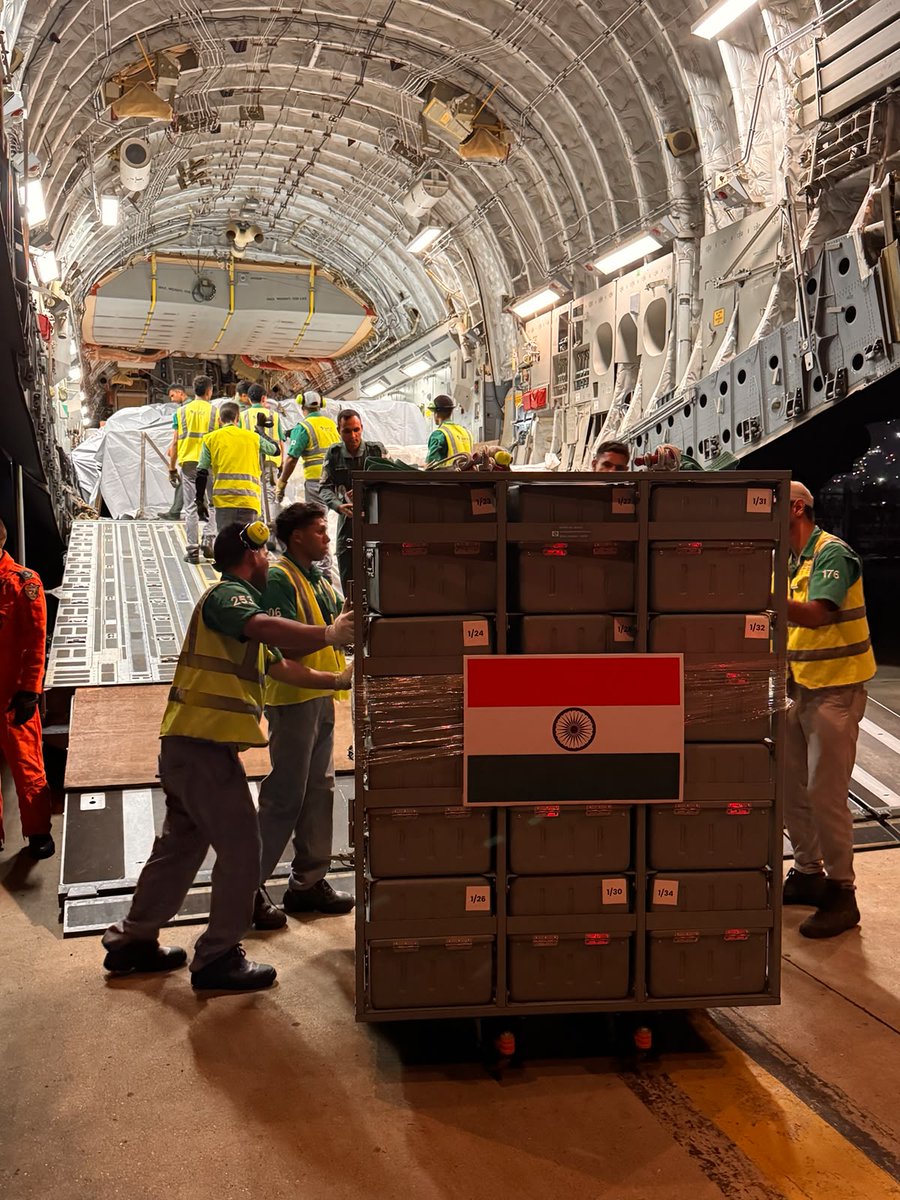
Responding with speed, reach and compassion, two #IndianAirForce C-17 Globemaster III aircraft completed a demanding 23-hour flight to Venezuela, covering an aerial distance of over 14,000 km from Delhi to Caracas.
The aircraft landed at Maiquetía International Airport, Caracas, carrying 66 tonnes of humanitarian aid- including an Indian Army Field Hospital, over 35 tonnes of relief supplies, medicines and medical equipment, and two BHISHM Cubes—demonstrating India's capability to deliver hope across continents whenever called upon.
This transoceanic deployment reaffirms India's growing role as a responsible first responder and a reliable humanitarian partner.
#HADR #HumanitarianAssistance #HarKaamDeshKeNaam
@DefenceMinIndia@DrSJaishankar@IndiaVenezuela@SpokespersonMoD@HQ_IDS_India@adgpi@indiannavy@CareerinIAF
Tanta güevonada que se habla de este país y mírenlos, pura gente seria y comprometida, la próxima vez que hablen de la India recuerden que esa gente en pleno mierdero envió un hospital de campaña
This is an unbelievable piece of work by Sarthak and something that requires amplification.
Let me explain what he found, in simple terms.
Sarthak is a Class 12 student from the 2025-26 batch, one of the 17 lakh students whose answer sheets went through CBSE's new On-Screen Marking system.
He spent days reading through CBSE's evaluation tenders, scraped all 576 tenders CBSE has issued, and tracked how the rules changed across three versions of the same tender.
The core finding is that the company that won the contract to scan and grade 17 lakh students' answer sheets is Coempt Eduteck.
Coempt used to be called Globarena Technologies. Globarena was the company behind the 2019 Telangana intermediate exam disaster, where software failures led to 3.8 lakh students getting wrong or missing marks, and 23 students died by suicide.
A government committee found systemic failure and negligence. Six months later, Globarena rebranded to Coempt Eduteck.
So a company with that track record won a contract to handle 17 lakh CBSE students. Sarthak's investigation is about how the rules were rewritten to let that happen.
The tender was issued three times.
> First tender, February 2025. It existed, then disappeared from the public GeM portal. Sarthak scraped all 576 CBSE tenders and this one was missing from the archive entirely.
> Second tender, May 2025. Four companies applied including TCS and Coempt. All four failed the technical evaluation. Cancelled.
> Third tender, August 2025. Coempt won. Between the second and third tender, a series of rule changes happened, and every single one made it easier for Coempt to qualify.
Here is what changed, one by one.
01. The old rules disqualified any company with a history of abandoning work, failing to complete contracts, or financial weakness. The new rules deleted this clause entirely. Coempt's Telangana history stopped being a barrier.
02. The old rules disqualified any company that was "blacklisted earlier." The new rules changed this to "currently blacklisted." Because Globarena rebranded after Telangana, removing the word "earlier" effectively erased their past.
03. The rules required Rs 50 crore average turnover over three years. Coempt's exact average came to Rs 50.86 crore. They cleared the bar by less than 1%. Earlier, a smaller company had asked CBSE to lower the bar to Rs 30 crore for fairer competition. CBSE refused. So the bar was kept high enough to block small players, but sat exactly low enough for Coempt to scrape through.
04. Software maturity is measured on the CMMI scale, 1 to 5. The old rules required Level 5. The new rules dropped it to Level 3. Coempt is a Level 3 company.
05. The cooling-off period for engaging retired CBSE officials was cut from two years to one. This makes it easier to use recently retired insiders to influence the process.
06. The old rules required experience with large projects of at least 5 lakh students each. The new rules removed the student count and counted cumulative answer-book volume across small projects instead. Coempt has many small fragmented university contracts. This helped Coempt and hurt TCS.
07. The old rules required bidders to own their own data centre and disaster recovery centre on Indian soil. The new rules allowed third-party MeitY-empanelled cloud hosting. Coempt runs on AWS and Azure. This helped Coempt and hurt TCS, which owns its own data centres. It also means student data is no longer on sovereign, Indian infrastructure.
08. The old rules required the bidder to own or control the complete source code of its software. The new rules deleted this. Coempt's platform runs on Microsoft's proprietary IIS, which they don't own.
09. A last-minute corrigendum, issued right before bid submission, removed CBSE's own power to blacklist the firm if its software failed catastrophically. So even a Telangana-scale failure couldn't get Coempt banned from future government tenders.
10. The penalty structure shifted from punishing mistakes to punishing delays. The old rules fined the vendor for wrong scanning, merged pages, and unscanned books. The new rules dropped those and instead levied Rs 50,000 per day for delays. This incentivises rushed scanning over accurate scanning.
11. The old rules had a hard accuracy threshold, error rate not to exceed 0.5%. The new rules removed this number entirely.
12. The old rules specified proper book and robotics scanners. The new rules just say "sufficient scanners." The definition was vague enough that, as Sarthak notes, the scanning could be done with a phone on a stand.
13. On the security side, the contract required a VAPT (vulnerability and penetration test) certified by CERT-In before go-live, and a restricted beta phase before launch. The system clearly wasn't restricted, because the other researcher, Nisarga, was able to access it and find vulnerabilities four days before go-live. So the mandatory security audit appears to have been bypassed.
These are more than a dozen rule changes, all between the failed tender and the winning tender, all pushing in the same direction, all benefiting the one company with the worst track record in the field.
The security holes Nisarga found last week now have an explanation. The system was built by a vendor that was specifically allowed to skip the security certification, the source code ownership, the data sovereignty, and the quality thresholds the original rules demanded.
Following things need to happen immediately;
1. An immediate CAG audit of the tender process.
2. A parliamentary debate on the topic.
3. An independent investigation into
> Why the first tender vanished?
> Why the disqualification clauses were deleted?
> Why the turnover bar was held exactly where it was?
> Why the security level was dropped?
> Why the blacklisting power was removed at the last moment?
Sarthak, this is genuinely exceptional investigative work. Far better than most journalists with full resources ever manage. Take a bow. :)
Dear Ms @HelleLyngSvends,
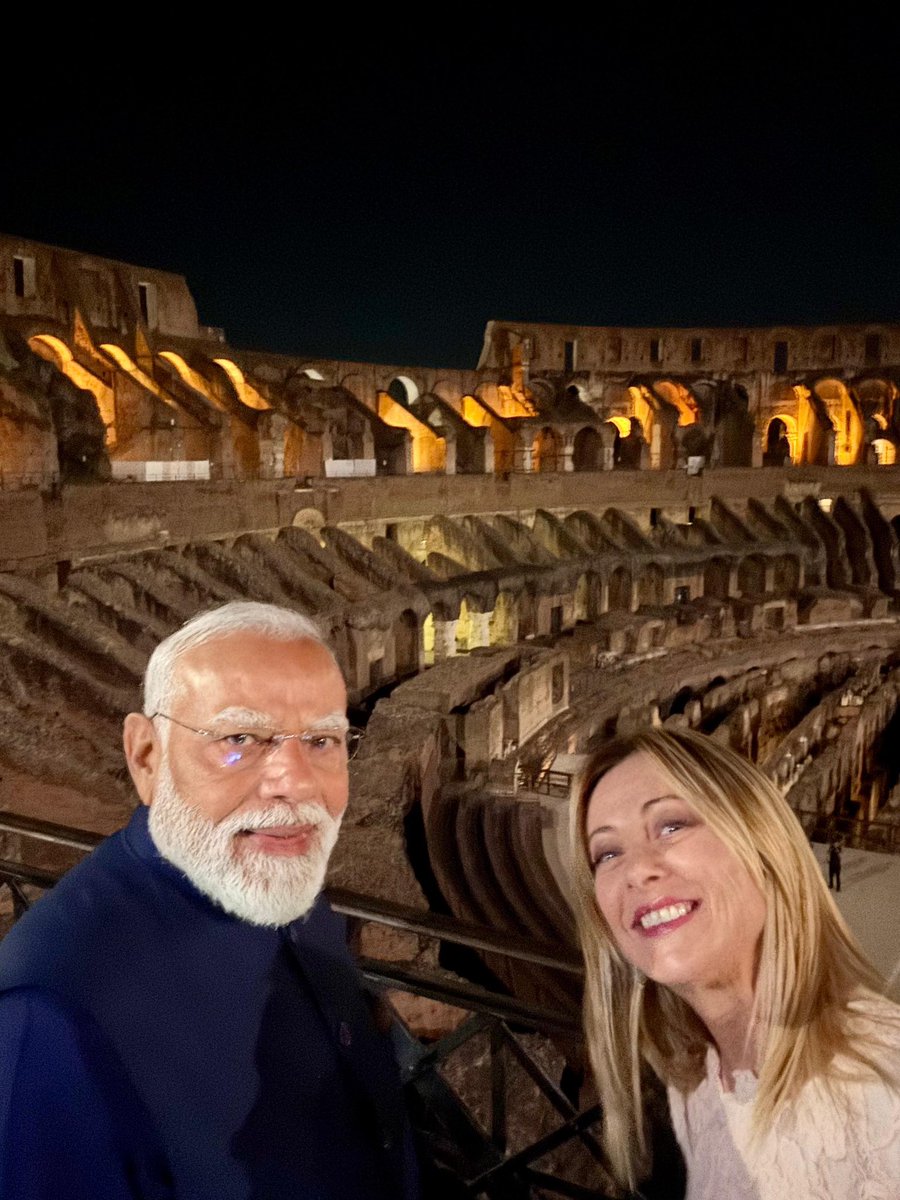
The Embassy is organizing a press briefing on the Prime Minister’s Visit this evening at 9:30pm at hotel Raddisson BluPlaza hotel. You are most welcome to come and ask your questions there.
This is totally false.
Not an iota of truth in this.
There is no question of putting such restrictions on foreign travel.
We remain committed to improving ‘Ease of Doing Business’ and ‘Ease of Living’ for our people.
I think Ravi Handa wakes up everyday and searches for stupid things happening in the country. The country that gave him the wealth and respect that he deserves.
Now his feed is customised for him, giving him negatives of the country that he so craves.
And when he sees such stupid acts from the feed that he so customised for himself, he writes his favourite lines
- leave country immediately
- I can't because I have made a great living here
- Kaisa desh hai ye
Etc etc.
Don't be Ravi Handa!
Dear Hon. Prime Minister @narendramodi,
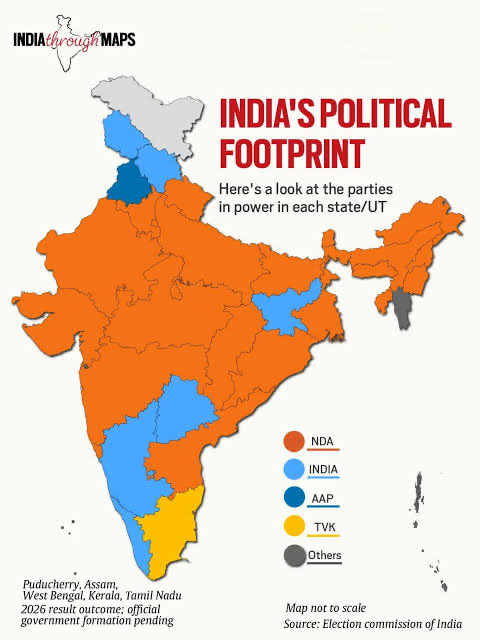
You are a three time PM leading a coherent coalition alliance with a comfortable parliamentary majority, BJP-NDA has 20 Chief Ministers under it across the whole country. There is no excuse for not moving on the reforms. https://t.co/CcU0x5gqsF
We don’t want entreaties to do this or that, we want changes in our own country. For example, making India a competitive economy for new age startups has stemmed the brain drain. Today youngsters are starting up and building ventures in India, and the old default option of shifting abroad is being abandoned. The reason is India has *become competitive*.
We want to travel in our country but the failures of airlines, lodging and hotels sectors (many of which are directly due to Union and state / local level government policies) are inexcusable. Citizens cannot carry the cross for these failures. We have repeatedly elected BJP-NDA governments across India now, to deliver on positive change and growth.
Dragging one’s feet brings consequences. For example, had Air India been privatized in 2015 or 2016, by now it would have become a strong privately held Indian airline. Why was it not done earlier?
Similar delays and prevarications in other domains will keep imposing heavy costs down the road.
A crisis is a great time to drive reforms, please take positive actions. We expect BJP-NDA Chief Ministers to also do the same. The modified political/governance map of India inspires higher expectations of performance.
Dear @coopuk can I get an update on my order number 7047886 which was to be collected on 03/05 but was never received by the store. As a member this is disappointing
Buy a train ticket from London to Manchester three weeks in advance. Costs you more than a return flight to Spain.
Get to Euston, the board flips to delayed. Then cancelled. Then 'we're sorry to announce this service has been altered.'
Stand on the platform with a few hundred other people while a bloke on a microphone reads out a list of stations that no longer exist on your journey. Half the platform is sat on the floor.
The replacement bus turns up 90 minutes later. You arrive at midnight. The compensation form online is 18 questions long and ends with 'this delay was partially weather related, no compensation due.'
The trains keep getting more expensive every year. The reliability never quite keeps up. Nobody in charge seems particularly bothered.