Wave-Particle Duality: In quantum mechanics, particles like electrons and photons can behave both as particles and as waves. This duality means their position and state are not fixed but exist in a superposition, spread across multiple possibilities. The wave function is a mathematical tool that describes this phenomenon, encapsulating the probabilities of a particle's position or state until it's measured.
Twice in a million – CMS reports the first observation of a rare decay of the eta meson into two muons and two electrons, which occurs only twice in one million decays!
👉 Read more in the CMS briefing: https://t.co/1INWORd9bT
Today is March 14 (3.14) – Pi day.
The date today resembles 3.14159, the common approximation of the mathematical constant Pi, or π. This concurrence has given rise to an annual celebration from 1:59 pm - also the time of publication of this post (CET).
What is Pi?
Understanding Pi is essential if you want to make calculations for circles, cylinders, spheres, and anything circular, even an ellipse. Pi is the ratio of the circumference of a circle to its diameter. It doesn't matter how big or small the circle is - the ratio stays the same. Properties like this that stay the same when you change other attributes are called constants.
How are you celebrating Pi day?
The Sun is constantly sending charged particles toward Earth. 🌞
Join the Space Umbrella project to help scientists understand how Earth’s magnetosphere responds to solar wind and storms, knowledge that can contribute to keeping astronauts and technology safe. Learn more: https://t.co/2wPtvAXTBC
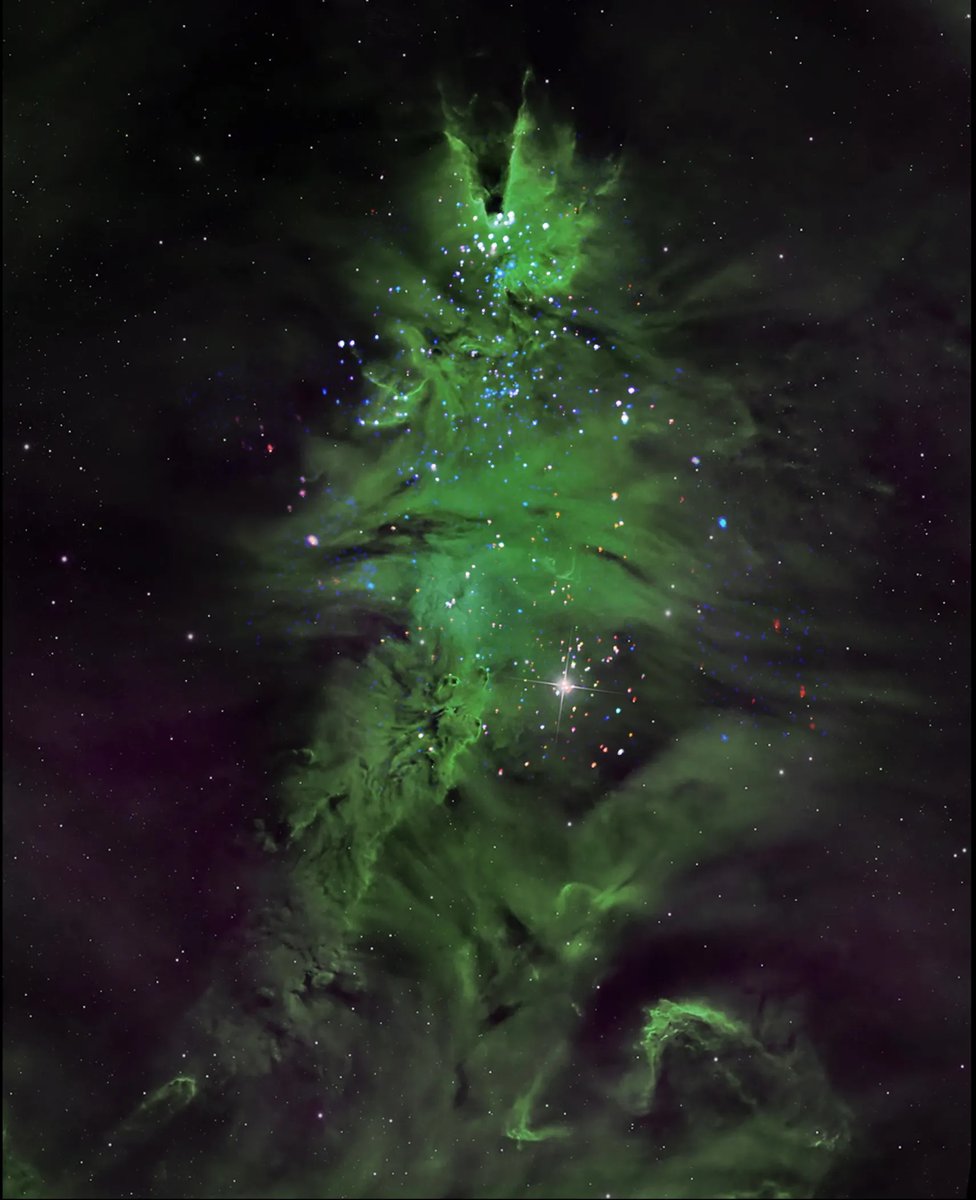
O Christmas tree, o cosmic tree 🎄
Located about 2,500 light-years from Earth, NGC 2264 is a cluster of young stars between one and five million years old. The stars appear as blue and white lights surrounded by swirls of gas—the “pine needles” of the tree—with green representing light in the visible spectrum.
Learn more:https://t.co/srOrqOnBqe
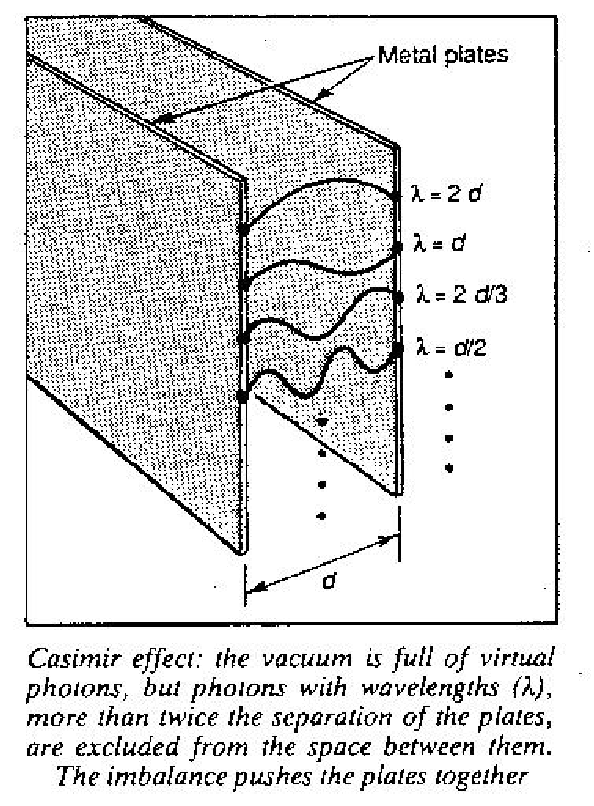
The Casimir Effect is a quantum phenomenon where two uncharged, parallel metal plates placed very close together in a vacuum attract each other. This happens due to quantum fluctuations in the vacuum, showing that even empty space has energy.